
Loading, please wait...
LOT 0491
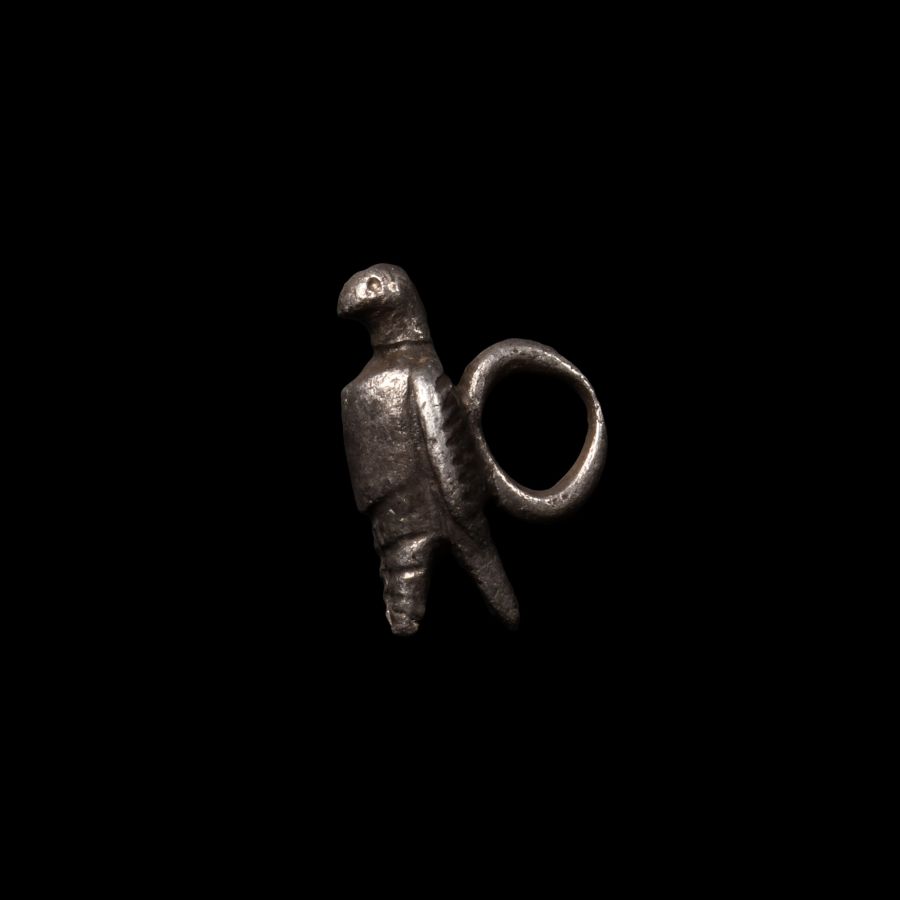
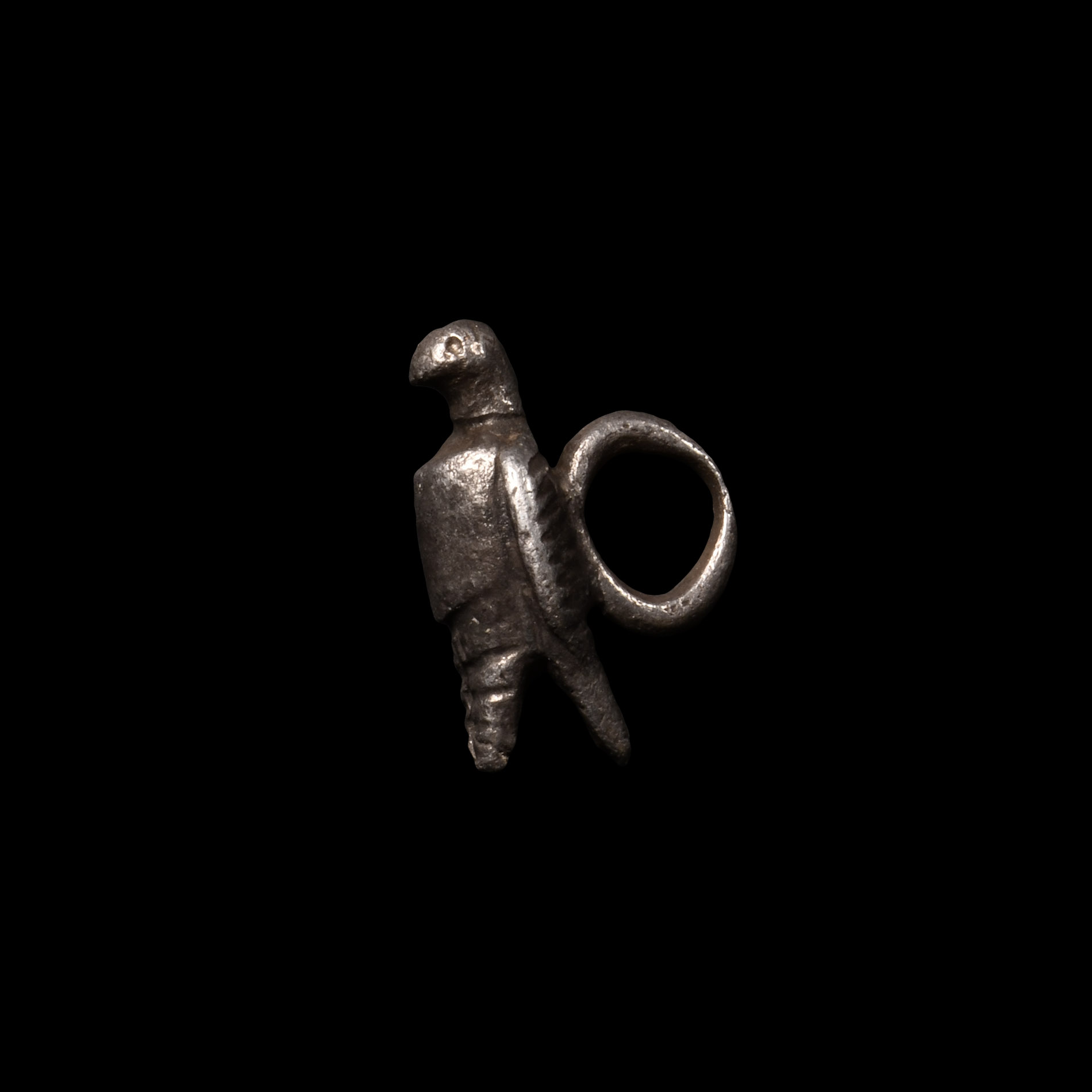
Egyptian Silver Amulet of Horus-Ra in the Form of a Falcon
LATE PERIOD, 664-525 B.C.
3/4 in. (3.47 grams, 18 mm high).
A silver amuletic pendant formed as a perching falcon with integral suspension loop. [No Reserve]
ProvenanceLondon, UK, art market, 1980s.
From the collection of G.M.R.H., London, UK.
Cf. Andrews, C., Amulets of Ancient Egypt, London, 1994, fig.25(a).
CONDITIONTimeLine Auctions follows a vetting process to ensure the authenticity and legality of all items, reinforcing our commitment to integrity and responsible trading. Each antiquity, antique, and coin lot undergoes thorough examination by a vetting committee of at least ten external specialists, professional trade association members, scientists, and archaeologists: Our Vetting Process
AUCTIONS:
TimeLine is a leading auction house specialising in antiquities, ancient art, collectables, natural history, coins, medals, and books. Our auctions offer museums, collectors, historians, and enthusiasts the opportunity to acquire unique and historically significant pieces.
LOT 0491
Egyptian Silver Amulet of Horus-Ra in the Form of a Falcon
Sold for (Inc. bp): £143
-
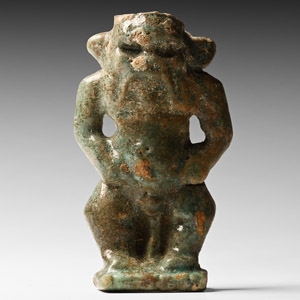
Egyptian Faience Figure of Bes
Ptolemaic Period, 332-30 B.C.Sold for (Inc. bp): £234
A green glazed composition figure of Bes standing on a base; plumed headdress and loop absent. 4.79 grams, 34 mm
Acquired early 1990s. Ex private American collection; thence by descent. Private Swiss collection since 1998. -
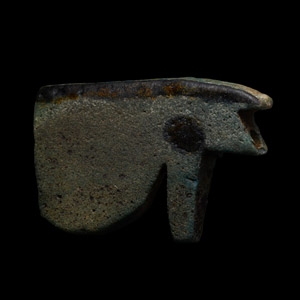
Large Egyptian Blue-Glazed Faience Wedjat Eye
Late Period, 664-525 B.C.Sold for (Inc. bp): £143
A blue-glazed faience wedjat, eye of Horus, amulet with detailing to one face; pierced for suspension. 7.15 grams, 38 mm
Essex gallery, early 2000s. -
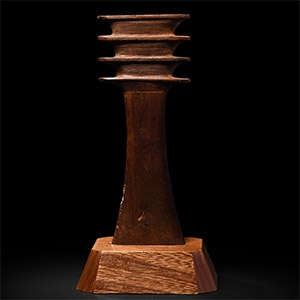
Egyptian Djed Pillar Amulet
7th-1st century B.C.Estimate: £2,500 - 3,500 (‡+bp*)
Opening Bid: £1,250
A large finely-made wooden amuletic djed pillar; old collector's accession number 'E.436' to underside; mounted on a custom-made display stand. 106 grams, 17 cm high
with ink inscribed 'E.436' to base. Acquired in 1970. Ex private European collection. This lot has been checked against the Interpol Database of stolen works of art and is accompanied by search certificate no.11602-199041.
The djed pillar symbolises stability and is usually understood to be the spine of the god Ptah although its origins are more probably in cult practices involving sheaves of reeds which were revered due to the general absence of trees from the Egyptian landscape. The djed later came to be symbolise Seker, the falcon god of Memphis and Ptah, the Memphite god of craftsmen, who carried a sceptre formed as a combination of the djed and the ankh. The cult of Ptah waned and gave way to that of Osiris so that by the New Kingdom (16th century B.C.), the djed had become associated with Osiris, part of whose cult included a ceremony for raising the djed representing Osiris's triumph over Seth.
