
Loading, please wait...
LOT 0022
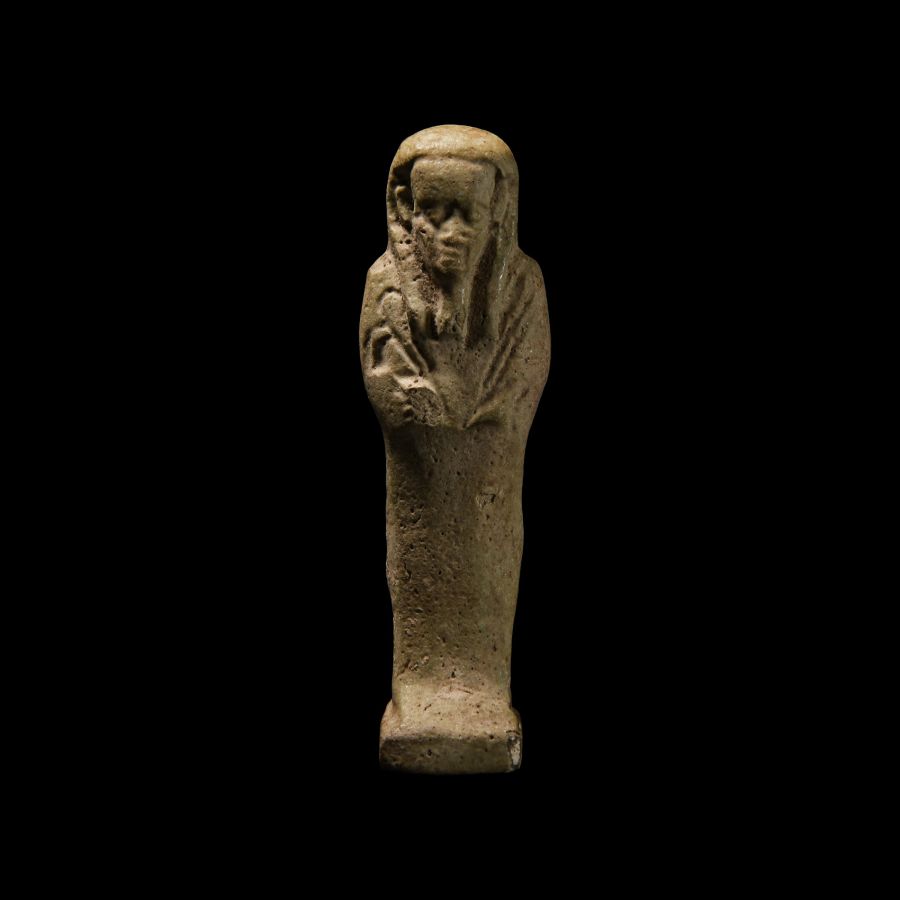
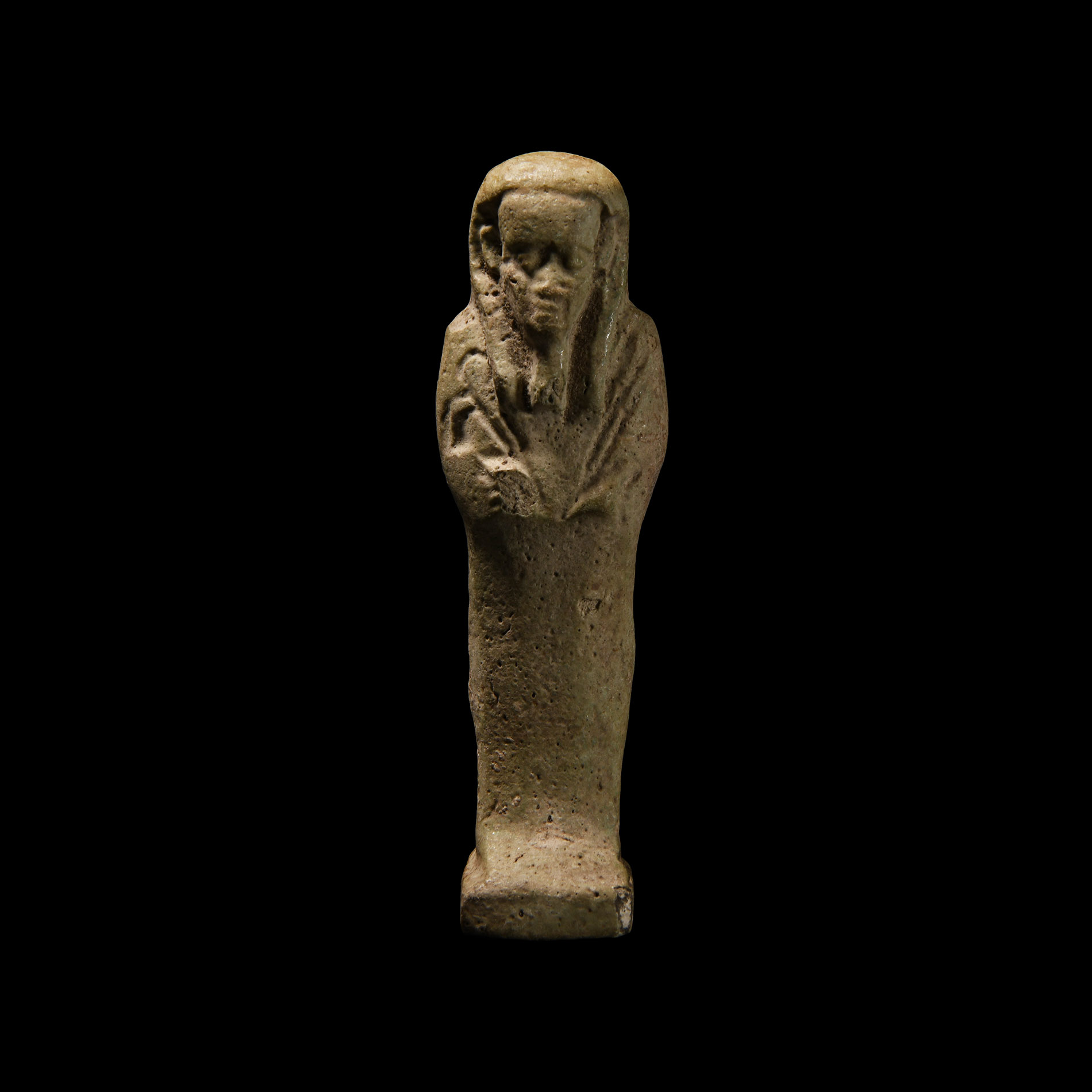
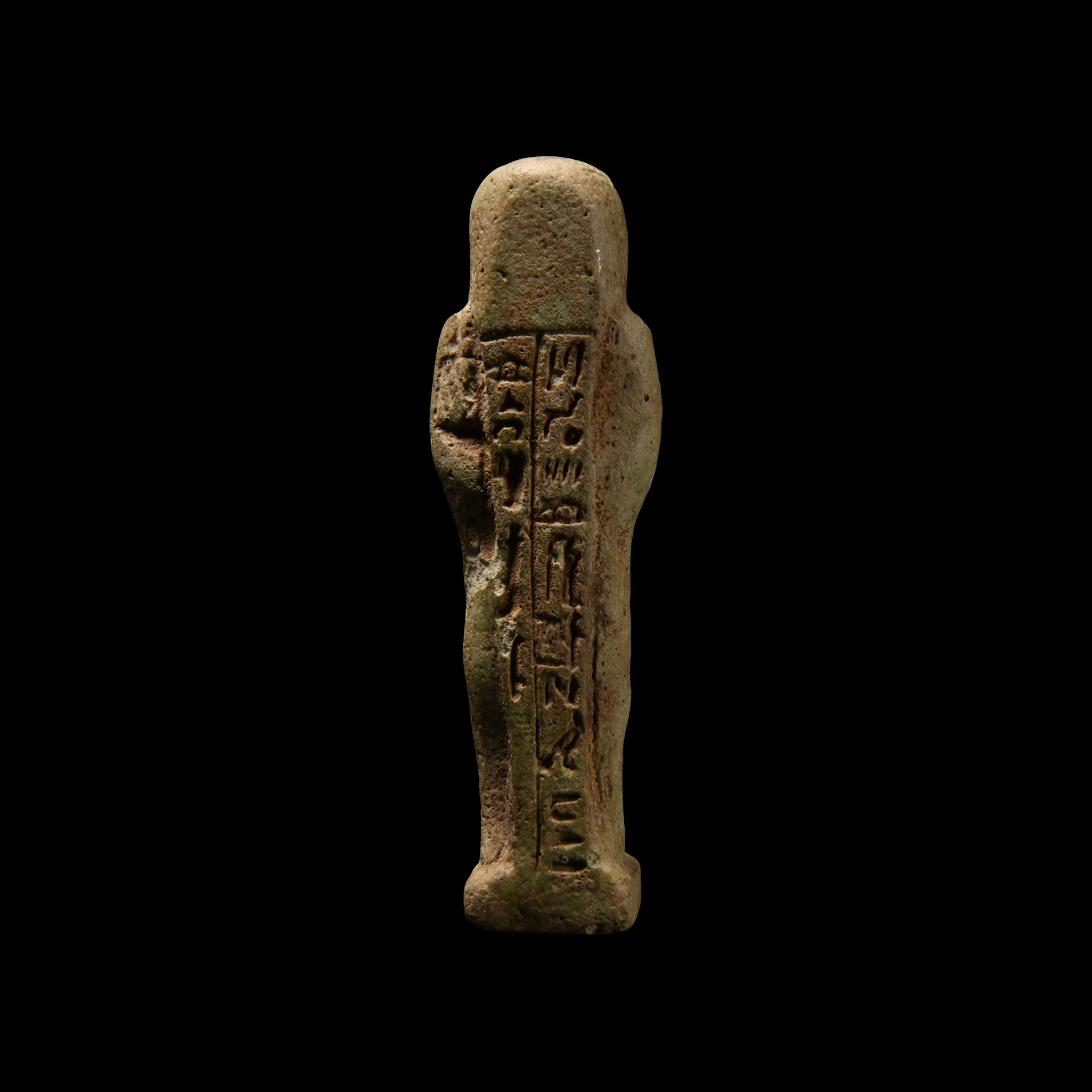
Egyptian Shabti of Psamtek
LATE PERIOD, 27TH-30TH DYNASTY, CIRCA 525-343 B.C.
3 3/4 in. (41.8 grams, 96 mm high).
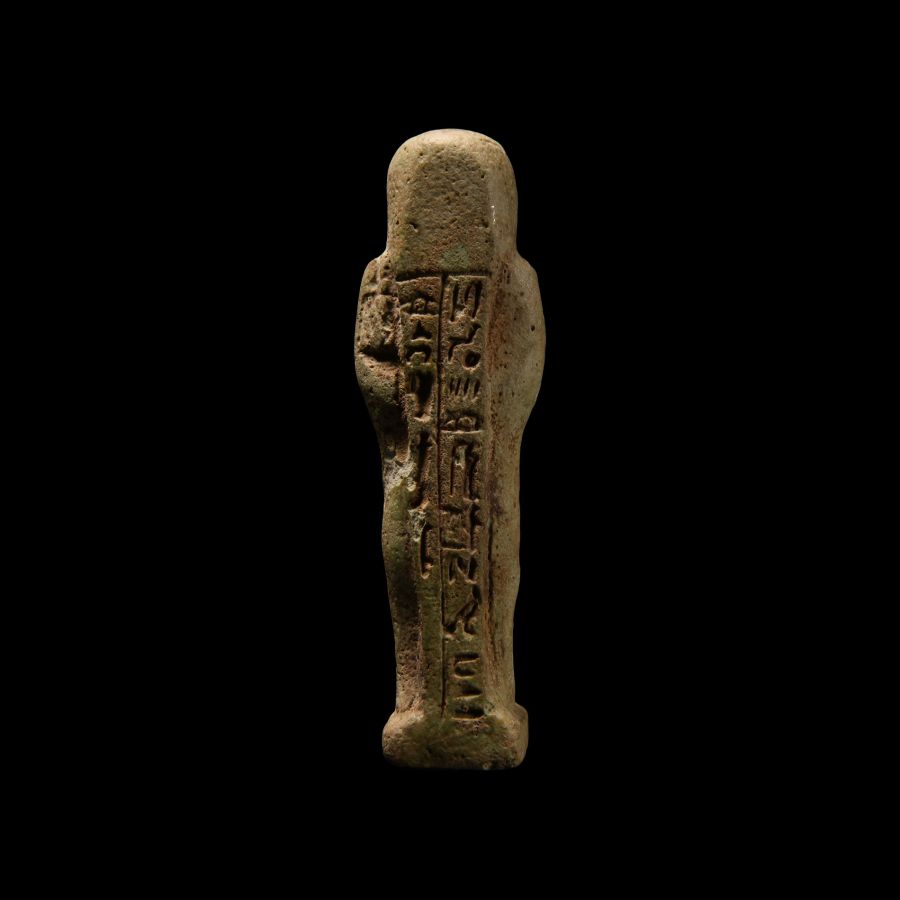
A pale green composition shabti standing on a rectangular base, the arms crossed over the chest, holding a pick and a hoe with a seed bag over the left shoulder, wearing a wig and false beard; two vertical columns of hieroglyphs to the dorsal pillar naming the Controller of the Estates, Psamtek.
ProvenanceFrom a Worcester deceased estate.
Property of a Cambridgeshire gentleman.
Accompanied by an academic report by Paul Whelan.
Cf. Janes, G., The Shabti Collections 5: A Selection from the Manchester Museum, Lymm, 2012, 375, no.206; see Manchester Museum, accession number MM 10776, for another shabti for Psamtek.
CONDITIONTimeLine Auctions follows a vetting process to ensure the authenticity and legality of all items, reinforcing our commitment to integrity and responsible trading. Each antiquity, antique, and coin lot undergoes thorough examination by a vetting committee of at least ten external specialists, professional trade association members, scientists, and archaeologists: Our Vetting Process
AUCTIONS:
TimeLine is a leading auction house specialising in antiquities, ancient art, collectables, natural history, coins, medals, and books. Our auctions offer museums, collectors, historians, and enthusiasts the opportunity to acquire unique and historically significant pieces.
LOT 0022
Egyptian Shabti of Psamtek
Estimate £600 - 800€700 - 930 (for guidance only)$810 - 1,080 (for guidance only)
-
.jpg)
Egyptian Limestone Fragment with Face
Old Kingdom, 2686-2181 B.C.Sold for (Inc. bp): £4,420
A carved limestone relief fragment with profile male head facing left, with close-cropped hair and detailed treatment of the eye, ear and mouth; inked inscription to the reverse 'E. H. Heckett.'; set in an old velvet-covered mount. 129 grams, 71 mm wide
From the estate of a deceased American, acquired between 1970-1989. with Bonham's, London, Knightsbridge, 28 October 2009, lot 23 [Part]. Accompanied by a copy of the relevant Bonhams catalogue pages. This lot has been checked against the Interpol Database of stolen works of art and is accompanied by search certificate no.11596-198972. -
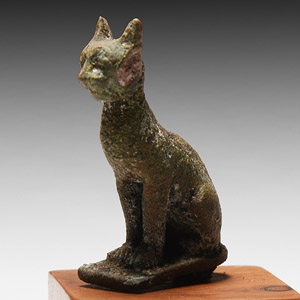
Egyptian Bronze Goddess Bastet as Seated Cat
Late Period-Ptolemaic Period, 664-30 B.C.Sold for (Inc. bp): £975
A bronze figure of the cat goddess Bastet, squatting poised and alert with her tail wrapped close to right side of her body, seated on a tongue-shaped base, short lug below; accompanied by a custom-made display base. 137 grams total, 10 cm high including stand
Acquired 1980s. Private collection of L.H., Staffordshire, UK. Property of a Sussex, UK, teacher.
Bastet was a powerful goddess of Lower Egypt, one who was protective and could bring about great prosperity. Cat statuettes were among some of the most common zoomorphic dedications of the Late and Ptolemaic Periods. Small statuettes like this one would have been dedicated as offerings to temples or deposited in catacombs alongside cat mummies, as at the extensive catacombs at Bubastis and Saqqara. Sometimes larger hollow examples held a cat mummy inside. -
.jpg)
Egyptian Shabti of Psamtek
Late Period, 27th-30th Dynasty, circa 525-343 B.C.Estimate: £600 - 800 (+bp*)
Opening Bid: £300
A pale green composition shabti standing on a rectangular base, the arms crossed over the chest, holding a pick and a hoe with a seed bag over the left shoulder, wearing a wig and false beard; two vertical columns of hieroglyphs to the dorsal pillar naming the Controller of the Estates, Psamtek. 41.8 grams, 96 mm high
From a Worcester deceased estate. Property of a Cambridgeshire gentleman. Accompanied by an academic report by Paul Whelan.
