
Loading, please wait...
LOT 0070
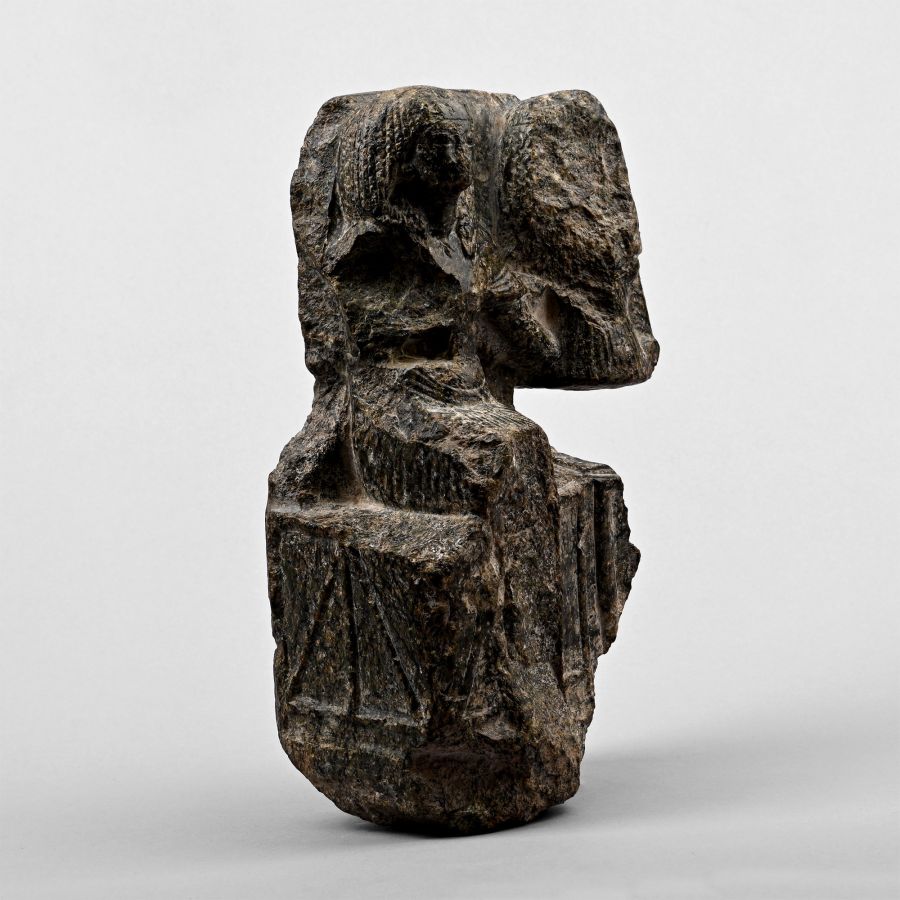
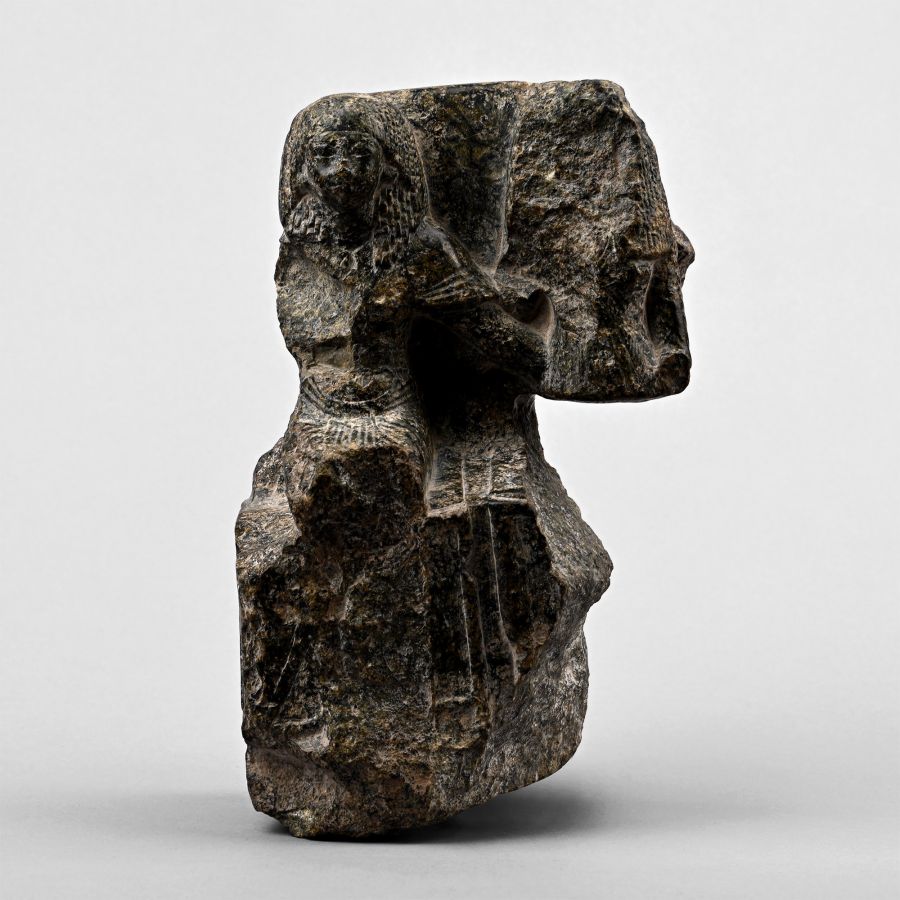
Egyptian Serpentine Statuette of a Seated Couple
NEW KINGDOM, 19TH DYNASTY, 1290-1279 B.C.
9 5/8 in. (3.89 kg, 24.5 cm).
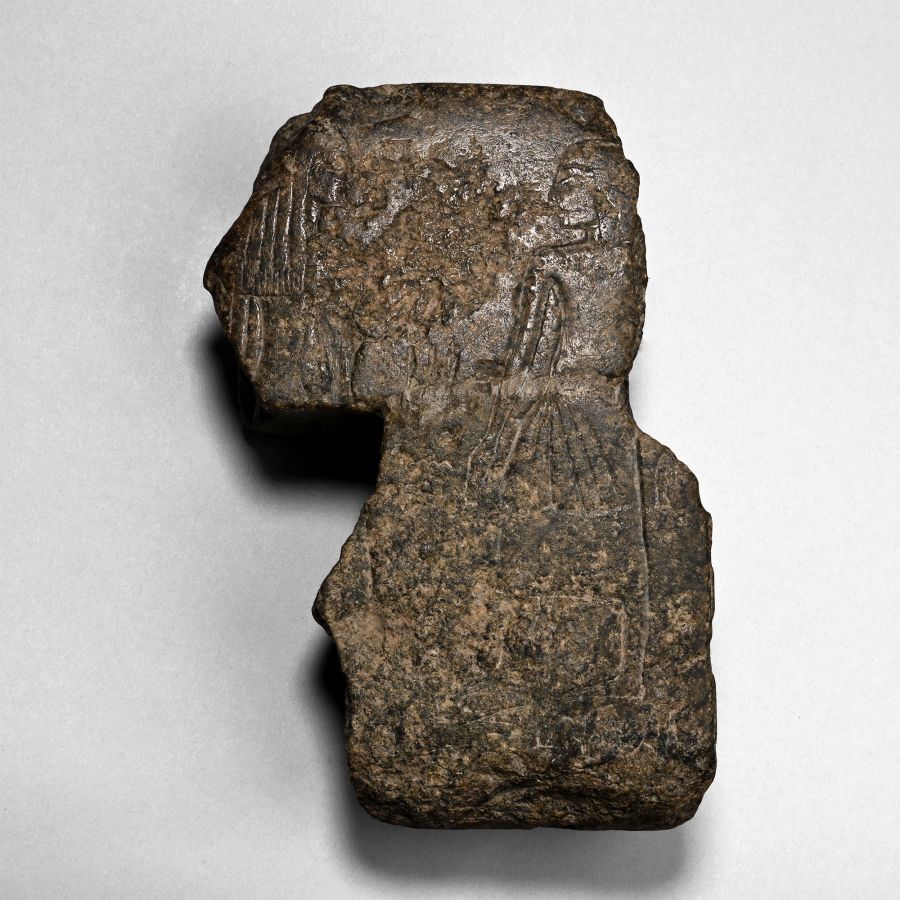
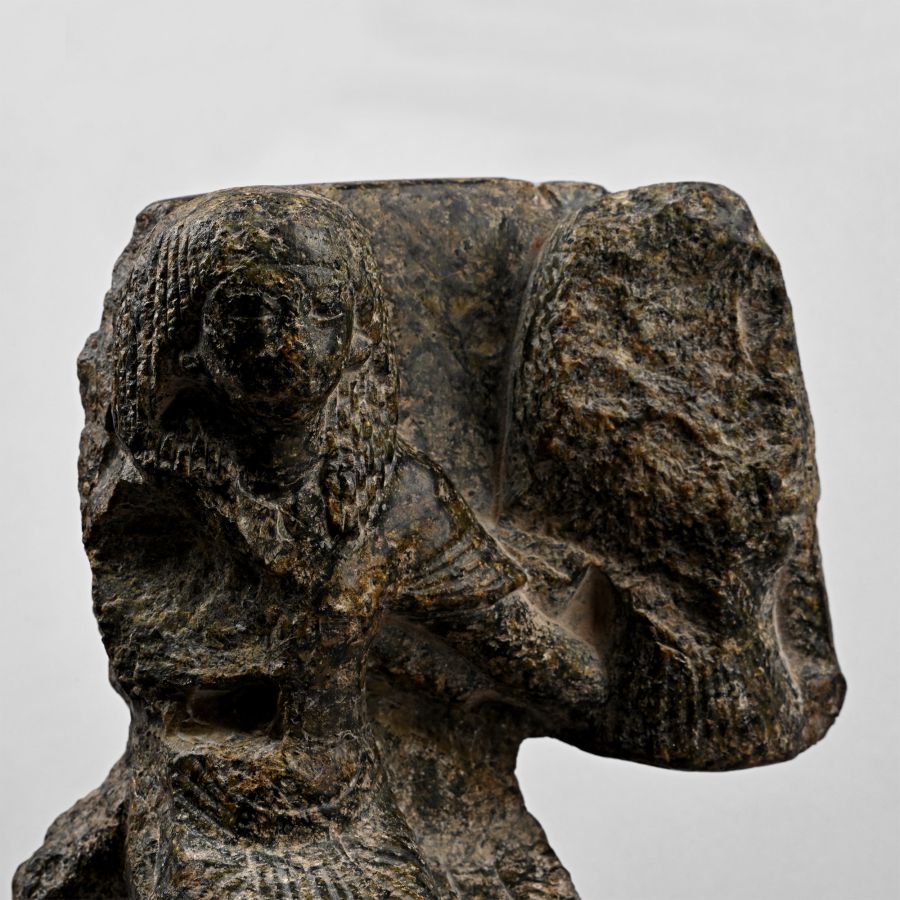
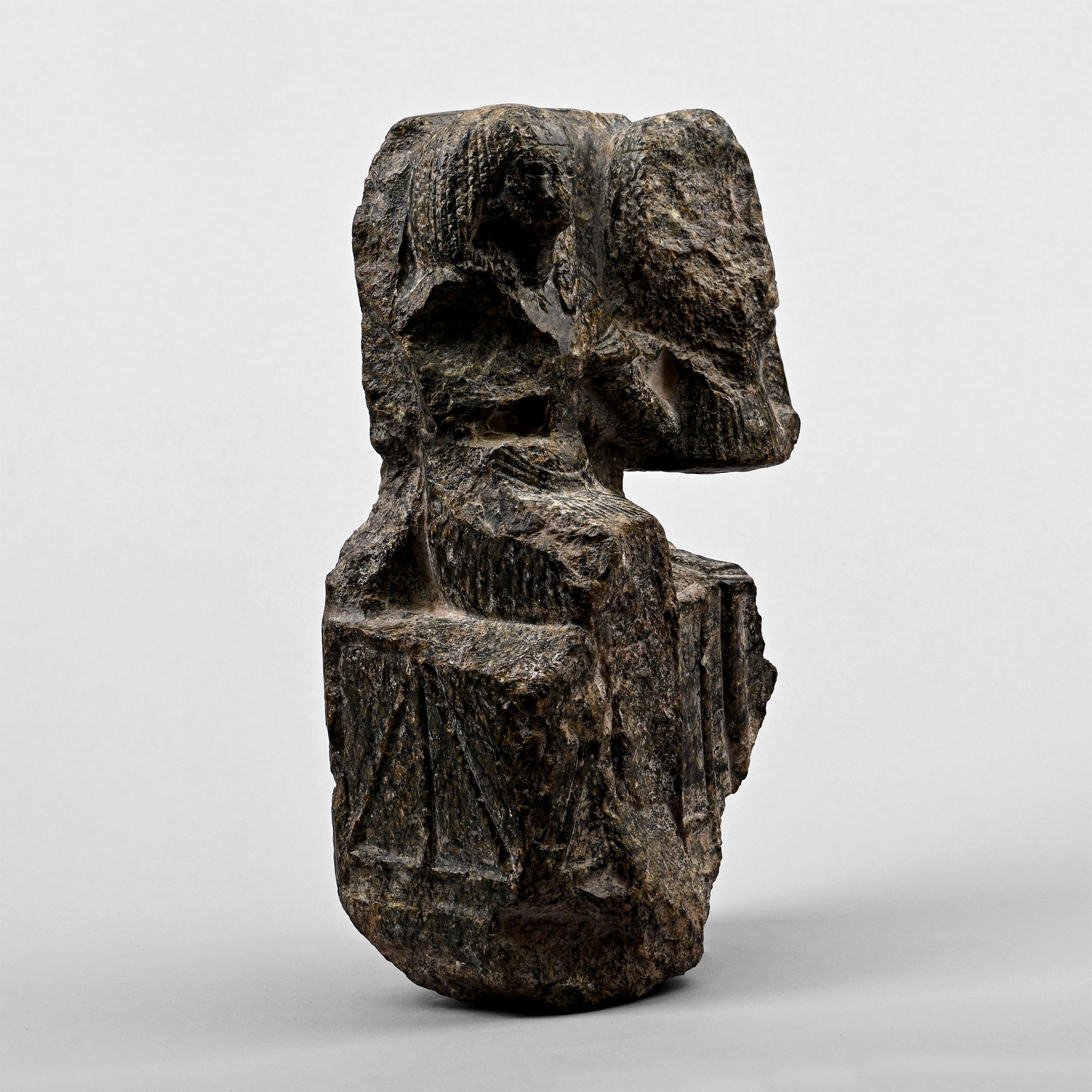
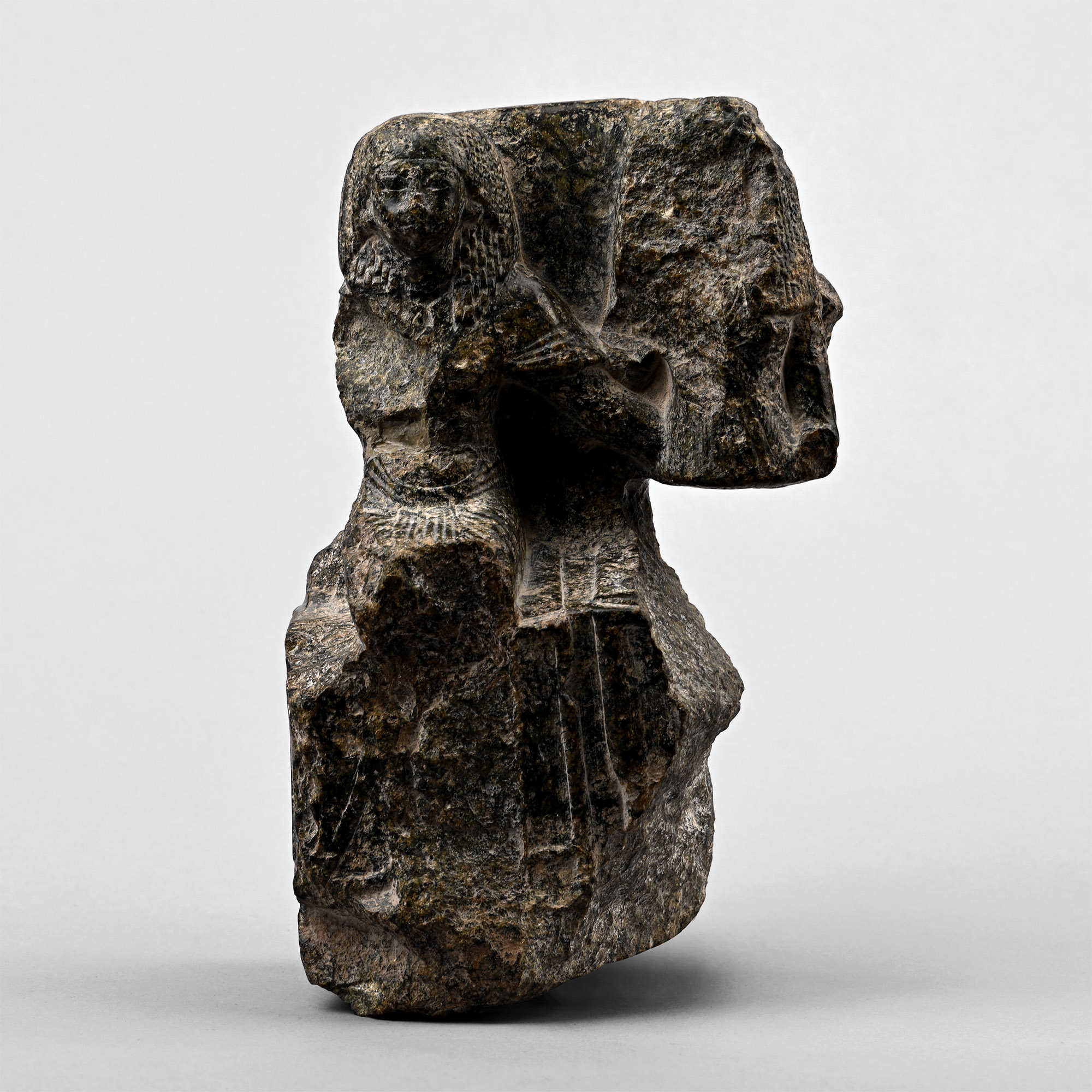
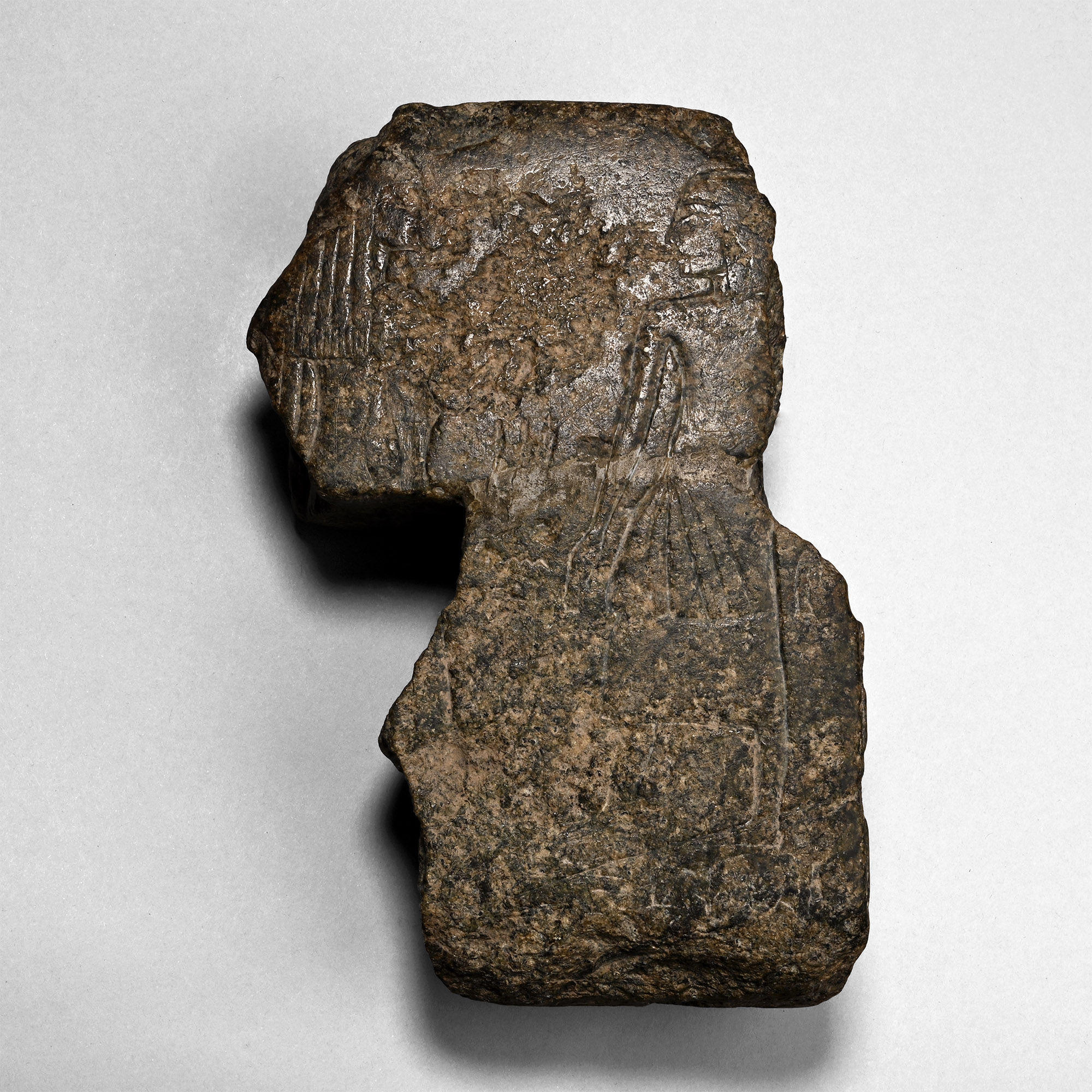
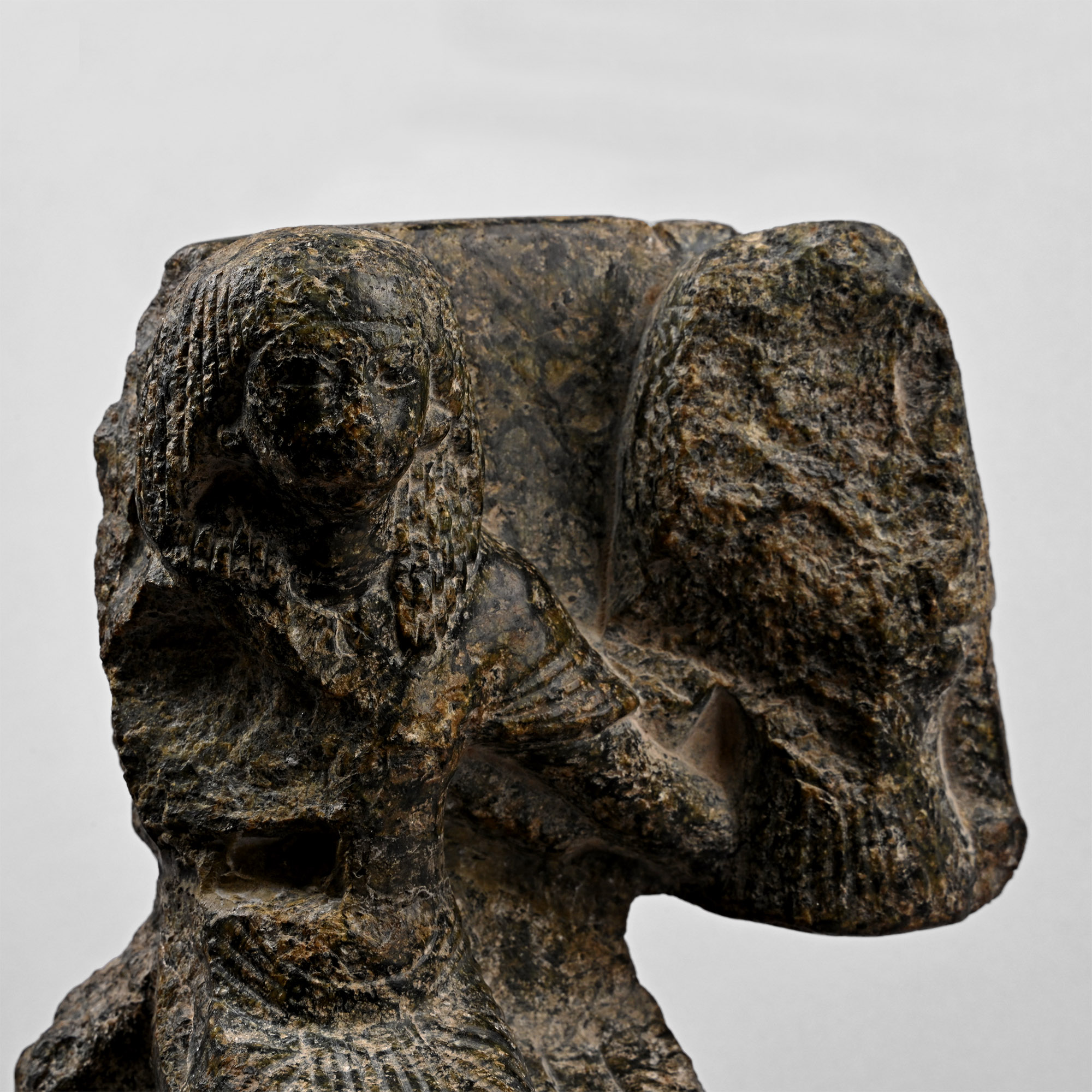
Depicting a husband and wife seated side-by-side on chairs, each with an arm around the spouse's waist as a sign of intimacy; both wearing richly pleated robes, the man sporting a duplex wig and earrings, the woman with a longer wig with tassel ends, both composed of long rows of tight curls; the back slab with low-relief depictions of a standing man and woman facing each other, with traces of a hieroglyphic inscription; the surface slightly worn and abraded in places; reassembled from two parts.
ProvenanceFrom the estate of the artist Margo Veillon (1907-2003), Lausanne, Switzerland.
LiteratureCf. Hayes, W.C., Scepter of Egypt II: A Background for the Study of the Egyptian Antiquities in the Metropolitan Museum of Art: The Hyksos Period and the New Kingdom (1675-1080 B.C.), Cambridge, Mass., 1959, p. 381, fig. 238, for a complete serpentine example of the type.
FootnotesThe statuette is delicately sculpted and of high quality. The fine facial features of the official, the individual strands of the wigs and the pleats of the robes exhibit exquisite craftsmanship. Remarkably, the reverse of the sculpture is decorated with a fragmentarily preserved scene, most likely of the couple, with traces of inscription.
CONDITIONTimeLine Auctions follows a vetting process to ensure the authenticity and legality of all items, reinforcing our commitment to integrity and responsible trading. Each antiquity, antique, and coin lot undergoes thorough examination by a vetting committee of at least ten external specialists, professional trade association members, scientists, and archaeologists: Our Vetting Process
AUCTIONS:
TimeLine is a leading auction house specialising in antiquities, ancient art, collectables, natural history, coins, medals, and books. Our auctions offer museums, collectors, historians, and enthusiasts the opportunity to acquire unique and historically significant pieces.
LOT 0070
Egyptian Serpentine Statuette of a Seated Couple
Estimate £15,000 - 20,000€17,400 - 23,200 (for guidance only)$20,250 - 27,000 (for guidance only)
Opening Bid
£8,200 (EUR 9,512; USD 11,070) ‡+BP*
-
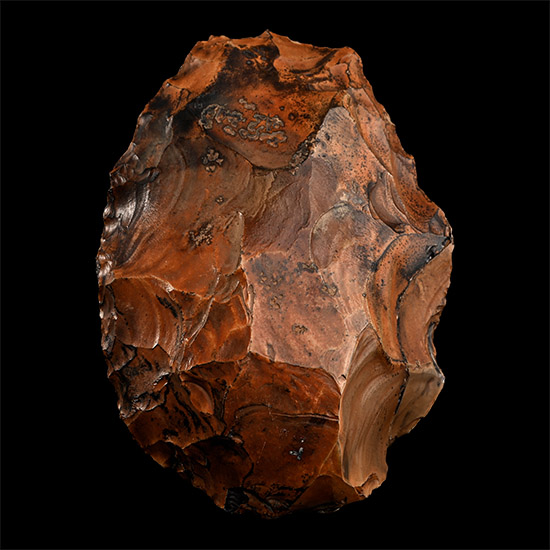
Egyptian Stone Age Knapped Handaxe
Lower Palaeolithic Period, circa 500,000-250,000 B.P.Estimate: £150 - 200 (+bp*)
Bids: 3 | Current Bid: £15
Expertly shaped through percussion flaking, creating zigzagging lateral edges, with a roughly ovate or teardrop form and a heavy, thick butt, tapering down to a distinct working edge. 363 grams, 12.5 cm
From the collection of A.D. Passmore (1879-1958), his collection of flints from the area of Stonehenge was donated to the Ashmolean Museum in the 1950s. From the private collection of Peter Clayton, FCILIP, Dip, Arch, FSA, FRNS, Hemel Hempstead, Hertfordshire, UK; formed since the late 1950s. Accompanied by a copy of an old handwritten information card by Peter Clayton.
The Egyptian flint hand axe, or biface, is a prehistoric stone tool with two faces. This tool holds the record for being the longest-used tool in human history. The technical term 'biface' comes from the archetypal model, generally a bifacial Lithic flake with an almond-shaped morphology. Hand axes typically have a pointed end and a rounded base, giving them their characteristic shape, and both faces have been knapped to remove the natural cortex, at least partially. -
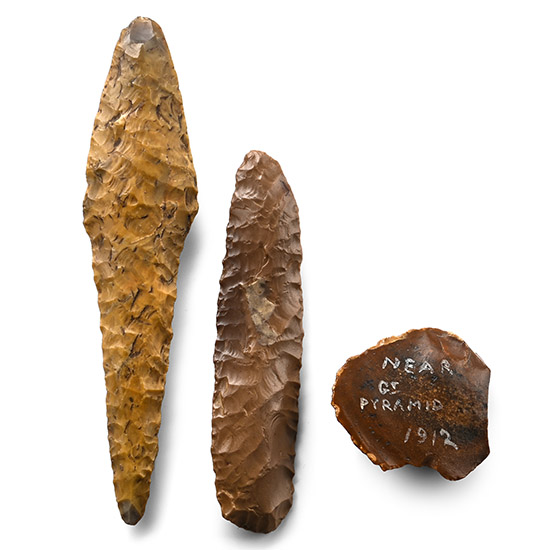
Egyptian Stone Age Knapped Daggers and Scraper
Neolithic Period, 11,000-5,200 B.P.Estimate: £150 - 200 (+bp*)
Bids: 1 | Current Bid: £5
Comprising: an elongated lanceolate blade tapering to a point at each end, a slightly shorter knife or specialised scraper with a rounded end and a gently curved cutting edge, and a tabular flint scraper with an inked collector's note. 67.4 grams total, 4.2-12.2 cm
Found Luxor and near the Great Pyramid. From the collection of A.D. Passmore (1879-1958), his collection of flints from the area of Stonehenge was donated to the Ashmolean Museum in the 1950s. From the private collection of Peter Clayton, FCILIP, Dip, Arch, FSA, FRNS, Hemel Hempstead, Hertfordshire, UK; formed since the late 1950s. Accompanied by a copy of an old handwritten information card by Peter Clayton. -
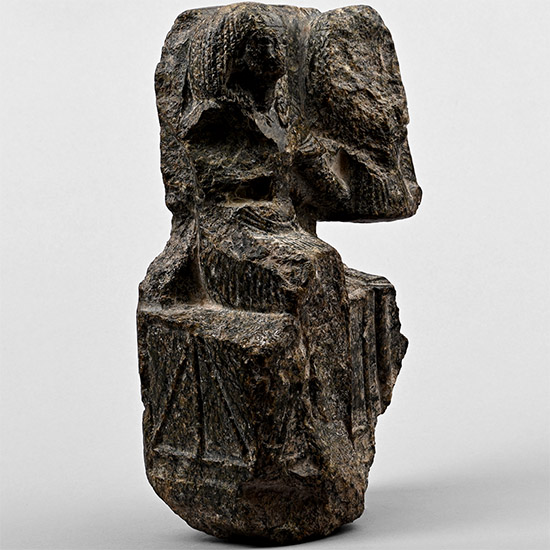
Egyptian Serpentine Statuette of a Seated Couple
New Kingdom, 19th Dynasty, 1290-1279 B.C.Estimate: £15,000 - 20,000 (‡+bp*)
Opening Bid: £8,200
Depicting a husband and wife seated side-by-side on chairs, each with an arm around the spouse's waist as a sign of intimacy; both wearing richly pleated robes, the man sporting a duplex wig and earrings, the woman with a longer wig with tassel ends, both composed of long rows of tight curls; the back slab with low-relief depictions of a standing man and woman facing each other, with traces of a hieroglyphic inscription; the surface slightly worn and abraded in places; reassembled from two parts. 3.89 kg, 24.5 cm
From the estate of the artist Margo Veillon (1907-2003), Lausanne, Switzerland.
The statuette is delicately sculpted and of high quality. The fine facial features of the official, the individual strands of the wigs and the pleats of the robes exhibit exquisite craftsmanship. Remarkably, the reverse of the sculpture is decorated with a fragmentarily preserved scene, most likely of the couple, with traces of inscription.
