
Loading, please wait...
LOT 0475
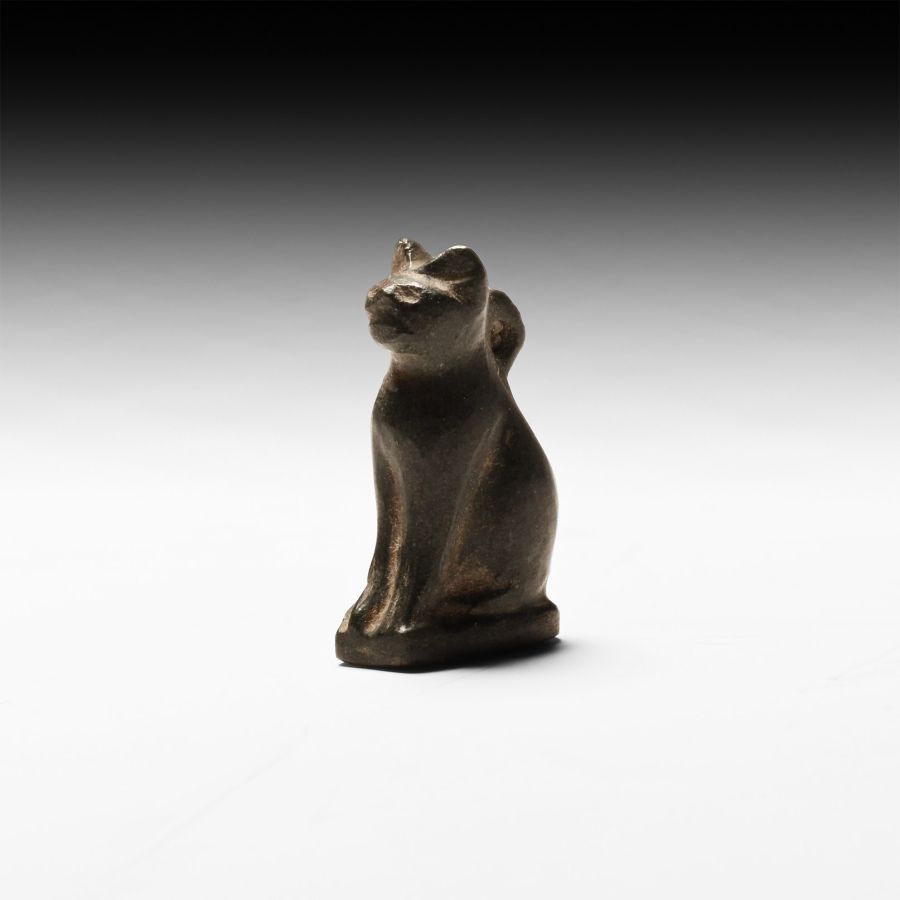
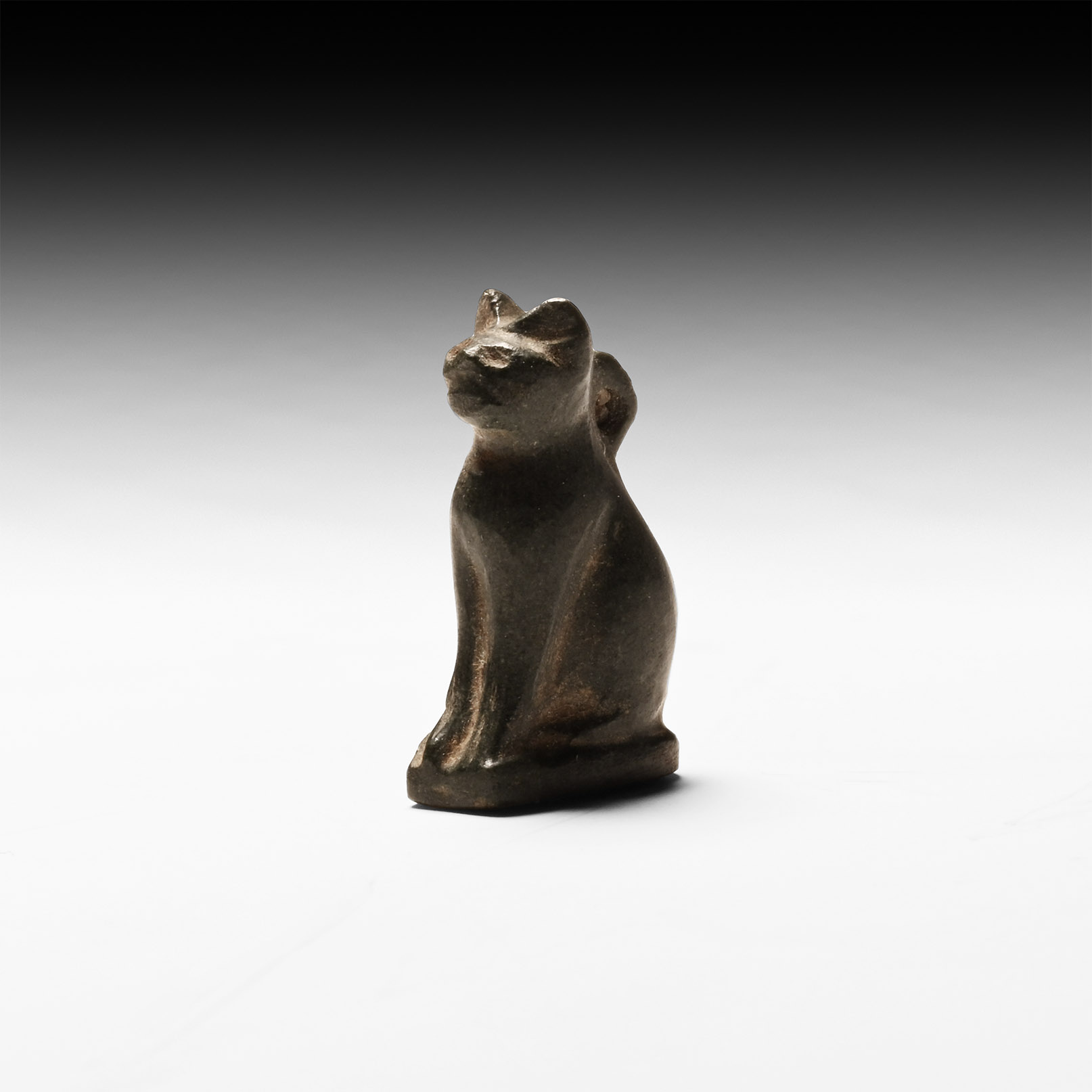
Egyptian Seated Cat Amulet
THIRD INTERMEDIATE PERIOD, 1069-702 B.C.
3/4 in. (2.17 grams, 20 mm).
A carved haematite amuletic pendant of the cat goddess Bastet, sitting on a rectangular base, suspension loop behind the shoulders. [No Reserve]
ProvenanceAcquired 1980s.
Private collection of L.H., Staffordshire, UK.
Property of a Sussex, UK, teacher.
TimeLine Auctions follows a vetting process to ensure the authenticity and legality of all items, reinforcing our commitment to integrity and responsible trading. Each antiquity, antique, and coin lot undergoes thorough examination by a vetting committee of at least ten external specialists, professional trade association members, scientists, and archaeologists: Our Vetting Process
AUCTIONS:
TimeLine is a leading auction house specialising in antiquities, ancient art, collectables, natural history, coins, medals, and books. Our auctions offer museums, collectors, historians, and enthusiasts the opportunity to acquire unique and historically significant pieces.
-
.jpg)
Egyptian Feldspar Scarab
New Kingdom, 1550-1069 B.C.Sold for (Inc. bp): £508
An amazonite feldspar scarab with simple detailing to the body and legs; drilled for suspension. 6.35 grams, 22 mm
Fine condition.
Acquired 1979-1999. London collection of the late Mr S.M., thence by descent. -
.jpg)
Egyptian Limestone Fragment with Hieroglyphs
Old Kingdom, 2700-2200 B.C.Sold for (Inc. bp): £780
A limestone fragment of provincial workmanship, displaying a partial column of titular naming hieroglyphs, possibly royal; repaired. 1.5 kg, 19 cm
London collection, acquired on the art market in the 1980s. From the collection of a West London, UK, gentleman. -
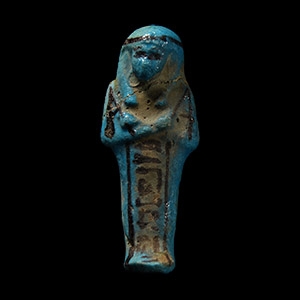
Egyptian Deep Blue Glazed Shabti of Pa-di-Khonsu-iy
Third Intermediate Period, 21st Dynasty, 1081-931 B.C.Sold for (Inc. bp): £780
A bright blue glazed worker shabti modelled on a rectangular base, arms crossed over the chest, detailing in black to the wig and eyes, holding a pair of hoes, a seed bag to the back, the hair tied with a seshed headband; a vertical column of hieroglyphs to the front of the body naming the wab-priest Pa-di-Khonsu-iy; repaired. 76 grams, 98 mm high
From a Worcester deceased estate. Property of a Cambridgeshire gentleman. Accompanied by an academic report by Egyptologist Paul Whelan.
As a wab-priest, Pa-di-Khonsu-iy would have assisted a higher-ranking hem-priest with the general maintenance and ritual activities in a temple, likely located either in Thebes in Upper Egypt or Tanis in the Delta.
