
Loading, please wait...
LOT 0422
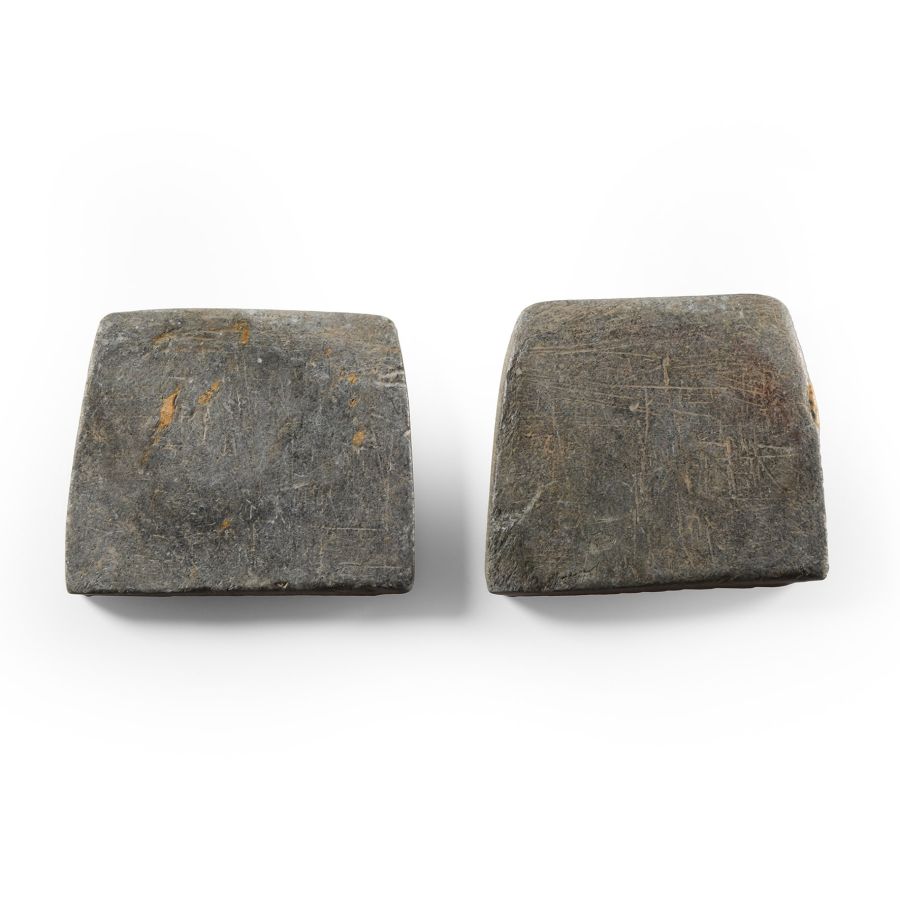
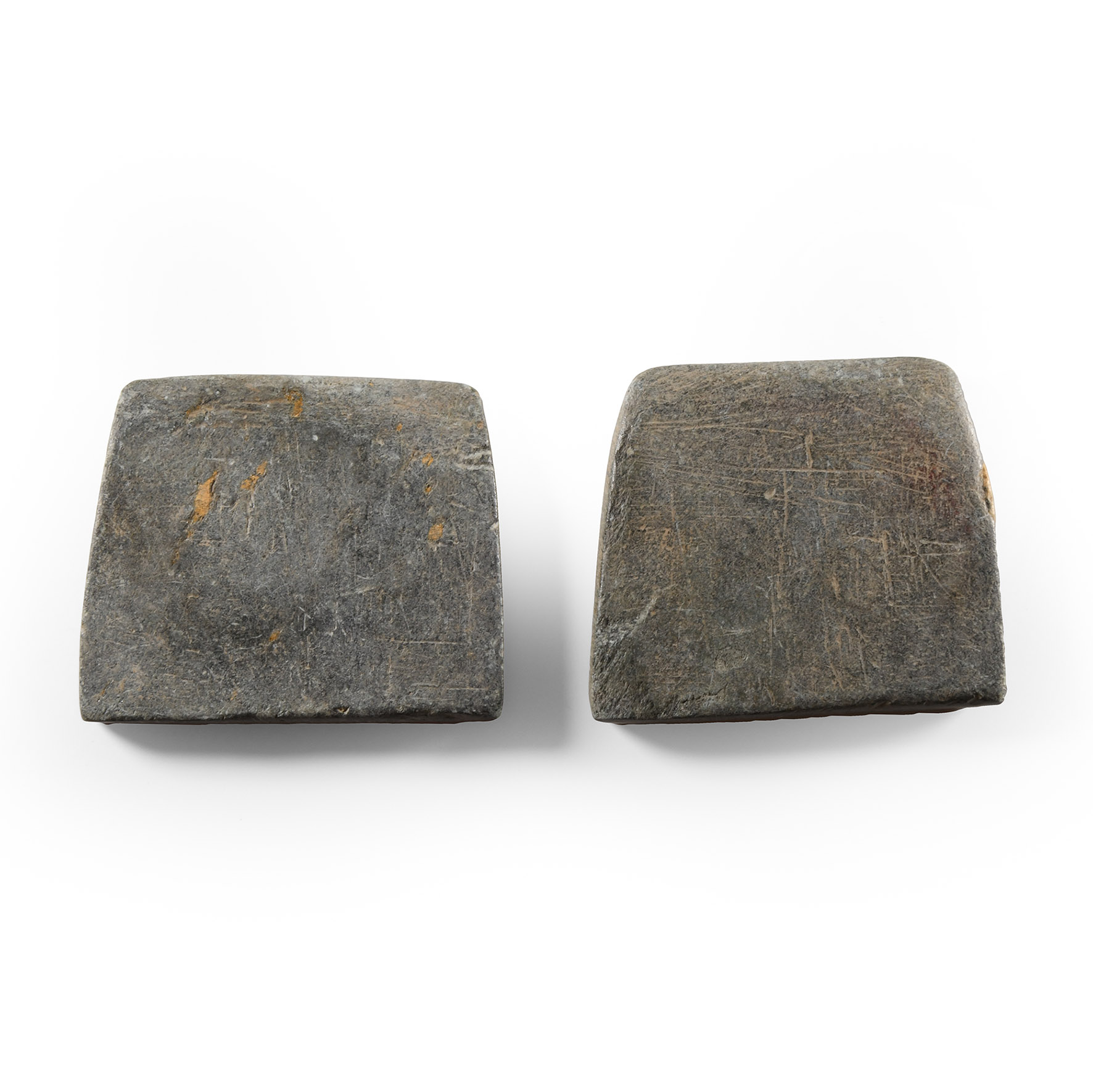
Egyptian Schist Cosmetic Palette Pair
NEW KINGDOM-LATE PERIOD, 1550-332 B.C.
2 7/8 in. (200 grams total, 73-74 mm).
Two flat schist panels, sub-rectangular in plan each with one tapering edge. [2]
ProvenanceFrom the private collection of the late Mr S.M., London, UK, 1969-1999; thence by descent.
LiteratureCf. similar in the collection of the British Museum under accession no.EA12779.
CONDITIONTimeLine Auctions follows a vetting process to ensure the authenticity and legality of all items, reinforcing our commitment to integrity and responsible trading. Each antiquity, antique, and coin lot undergoes thorough examination by a vetting committee of at least ten external specialists, professional trade association members, scientists, and archaeologists: Our Vetting Process
AUCTIONS:
TimeLine is a leading auction house specialising in antiquities, ancient art, collectables, natural history, coins, medals, and books. Our auctions offer museums, collectors, historians, and enthusiasts the opportunity to acquire unique and historically significant pieces.
LOT 0422
Egyptian Schist Cosmetic Palette Pair
Estimate £300 - 400€350 - 460 (for guidance only)$410 - 540 (for guidance only)
-
.jpg)
Large Egyptian Bronze Head of a Cat
Late Period-Ptolemaic Period, 664-30 B.C.Sold for (Inc. bp): £8,450
Modelled sleek and muscular in the round, the ears and eyes alert creating a dignified expression; piercings through the ears; hollow-formed; mounted on a custom-made display base. 629 grams total, 21.5 cm high including stand
Acquired from a French dealer, 1965. Swiss private collection. UK private collection, 1993. This lot has been checked against the Interpol Database of stolen works of art and is accompanied by search certificate number no.11838-206398.
Possibly intended as a container for the mummified remains of a cat, or from a statuette of the goddess Bastet. The feline's pierced ears likely once held earrings or other ornaments. In ancient Egypt, cats were the sacred animal of the goddess Bastet; such objects were often given as donations at her temples. -
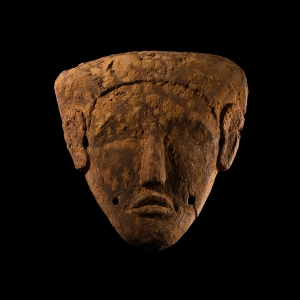
Egyptian Wooden Mummy Face Mask
Late Dynastic Period, after 500 B.C.Sold for (Inc. bp): £338
Triangular in form with carved facial detailing, thick tousled hair, full lips; pierced in four places for attachment. 716 grams, 27.5 cm
Acquired 1970s-1996. Property of a North American collector. London collection, 2016. -
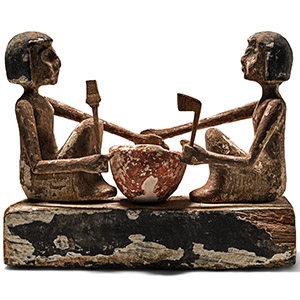
Egyptian Wooden Diorama with Model Makers
11th-12th Dynasty, 2023-1862 B.C.Sold for (Inc. bp): £3,900
Rectangular wooden base supporting two opposed crouching figures each holding a tool (axe, chisel) in one hand, working on a model boat; the figures wearing white linen kilts and with carefully painted hair and facial features. 436 grams, 18 cm
Acquired in the 1960s. From the collection of the late Egyptologist Surgeon Commander PHK Gray RN. From a Surrey, UK, collection. This lot has been checked against the Interpol Database of stolen works of art and is accompanied by search certificate number no.11832-207092.
Crafted for the tomb to accompany the deceased and provide for him in the afterlife.
