
Loading, please wait...
LOT 0431
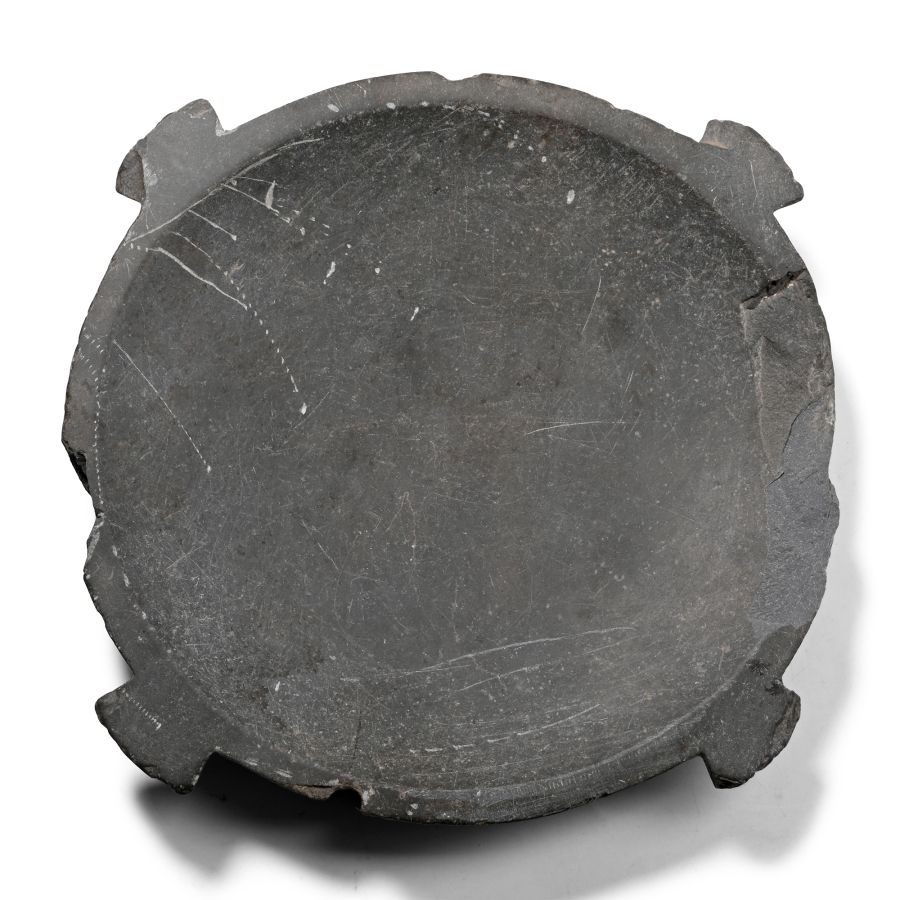
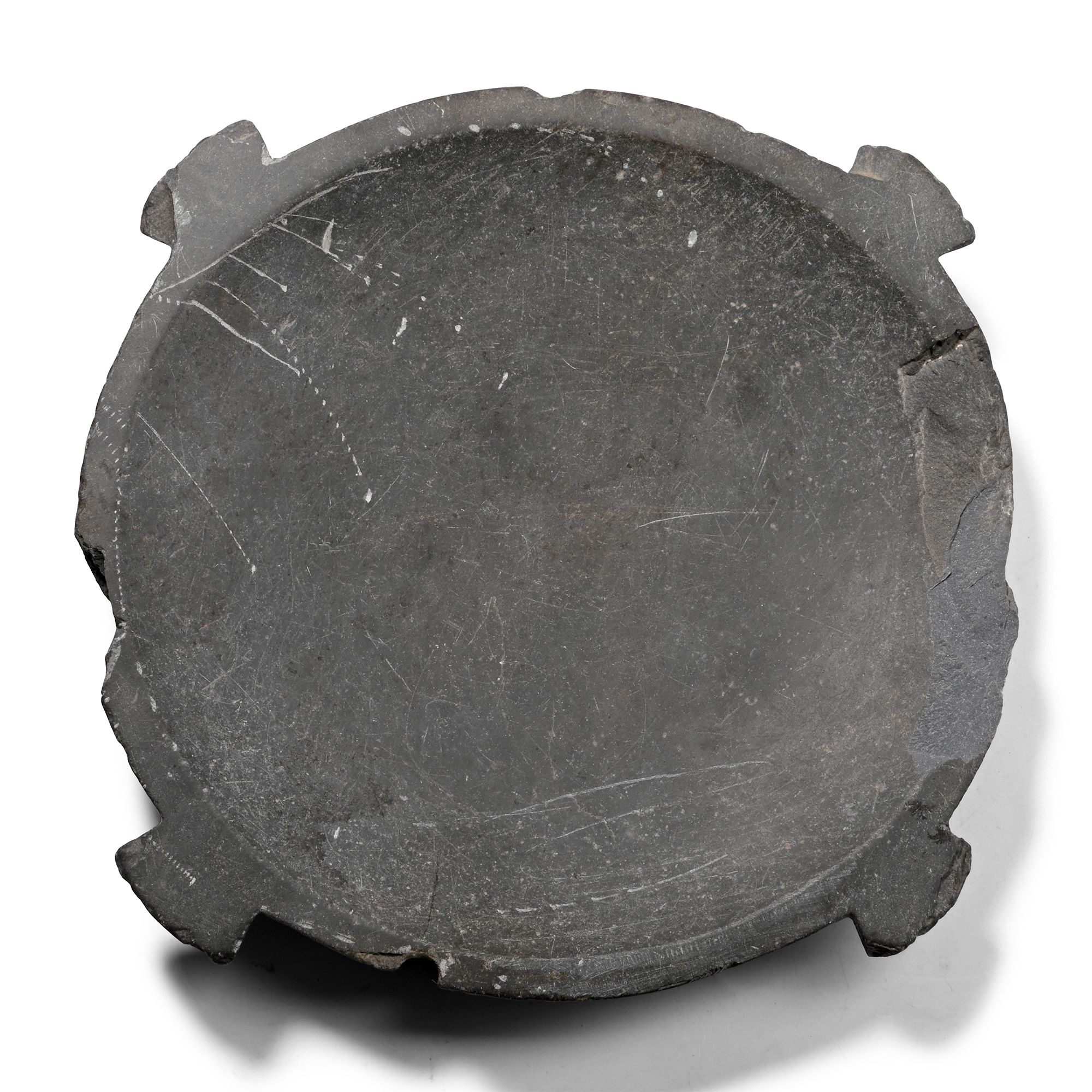
Egyptian Schist Cosmetic Mortar
PTOLEMAIC PERIOD, 332-32 B.C.
6 1/2 in. (450 grams, 16.4 cm).
Discoid palette with rounded underside and flat base, dished central field, flat rim with four radiating trapezoidal projections.
ProvenanceAcquired in the mid 1980s-1990s.
Private collection, Switzerland, thence by descent.
Private collection, since the late 1990s.
Accompanied by a copy of an Art Loss Register certificate no.S00038135.
TimeLine Auctions follows a vetting process to ensure the authenticity and legality of all items, reinforcing our commitment to integrity and responsible trading. Each antiquity, antique, and coin lot undergoes thorough examination by a vetting committee of at least ten external specialists, professional trade association members, scientists, and archaeologists: Our Vetting Process
AUCTIONS:
TimeLine is a leading auction house specialising in antiquities, ancient art, collectables, natural history, coins, medals, and books. Our auctions offer museums, collectors, historians, and enthusiasts the opportunity to acquire unique and historically significant pieces.
LOT 0431
Egyptian Schist Cosmetic Mortar
Estimate £500 - 700€580 - 810 (for guidance only)$680 - 950 (for guidance only)
-
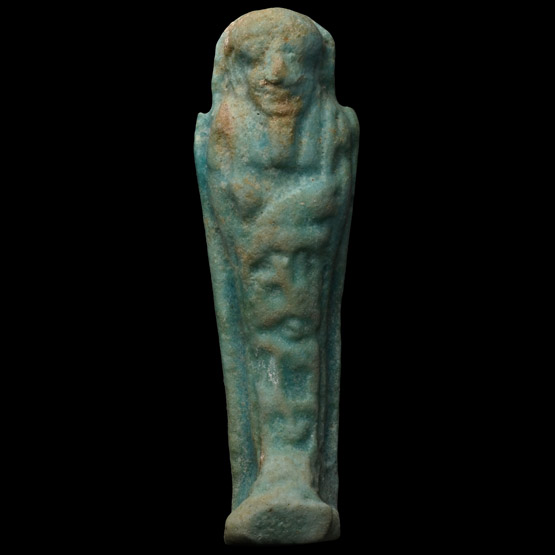
Egyptian Blue-Glazed Faience Shabti with Hieroglyphs
Late Period-Ptolemaic Period, 664-30 B.C.Sold for (Inc. bp): £144
Plano-convex in section with dorsal plaque, impressed hieroglyphs to lower body. 22.14 grams, 72 mm
Acquired on the UK art market before 2000. Property of an Essex, UK, gentleman. -
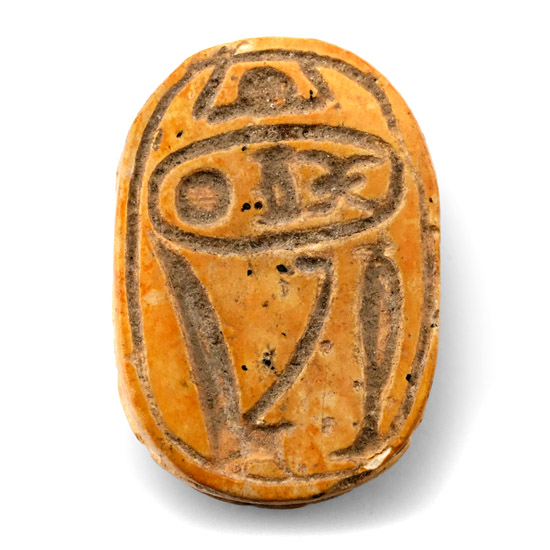
Egyptian Yellow Steatite Scarab with Cartouche
New Kingdom, 18th Dynasty, 1550-1292 B.C.Sold for (Inc. bp): £143
Incised anatomical detailing on the body, underside with a cartouche of Pharaoh Thutmose III, Red crown, hes-vase and sun disc. 1.06 grams, 14 mm
From a late Warwickshire numismatic collector, his collection formed from the early 1980s. -
.jpg)
Egyptian Green Glazed Somtous Seated on Lotus Flower
Late Period, circa 664-332 B.C.Sold for (Inc. bp): £780
Modelled in the round, the nude seated figure of the child Somtous, with one hand to his lips and a prominent sidelock, emerging from a lotus flower; mounted on a custom-made stand. 39.76 grams total, 68 mm high including stand
Noriuchi Horiuchi, Tokyo, Japan, 1993. Private collection, London, UK.
The earliest attestations of the cult of Somtous, known as Sematawy in ancient Egyptian, date back to the New Kingdom, although it became particularly popular during the Late Period. Associated with Horus (Horsomtous), the symbol of the child emerging from the lotus represented the (re)birth of the sun god. Thus, Somtous was regarded as a life-giving amuletic symbol, sometimes even referred to as 'Sematawy the child who gives life.'
