
Loading, please wait...

LOT 0709
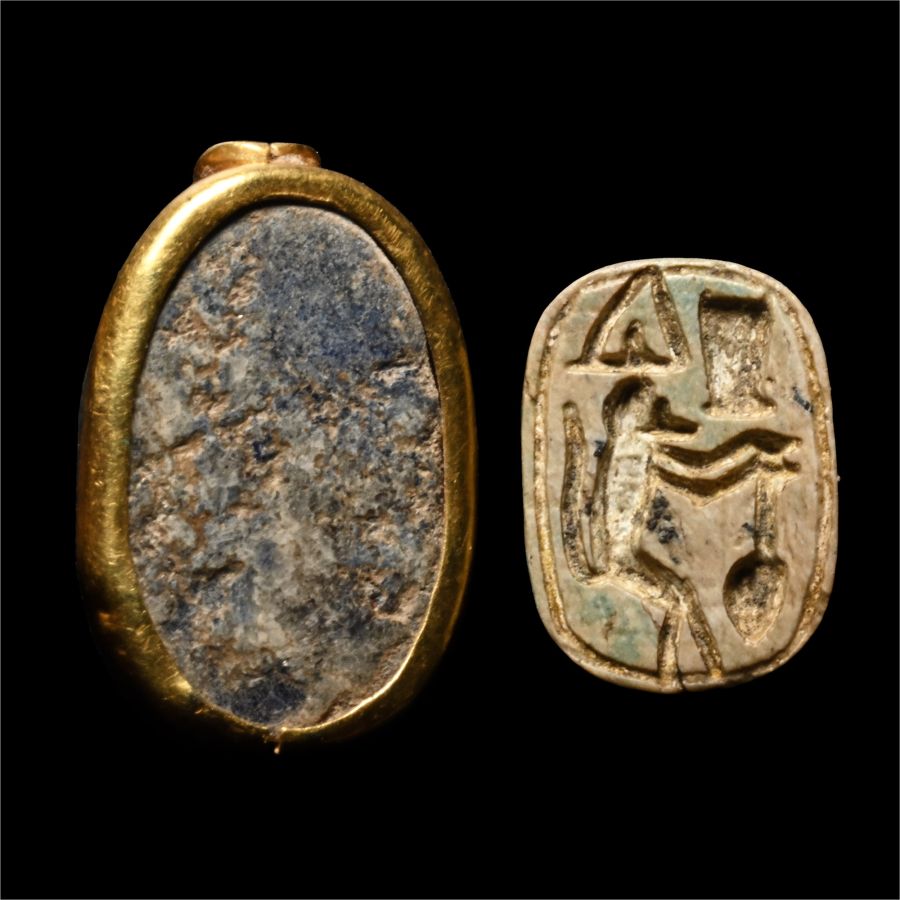
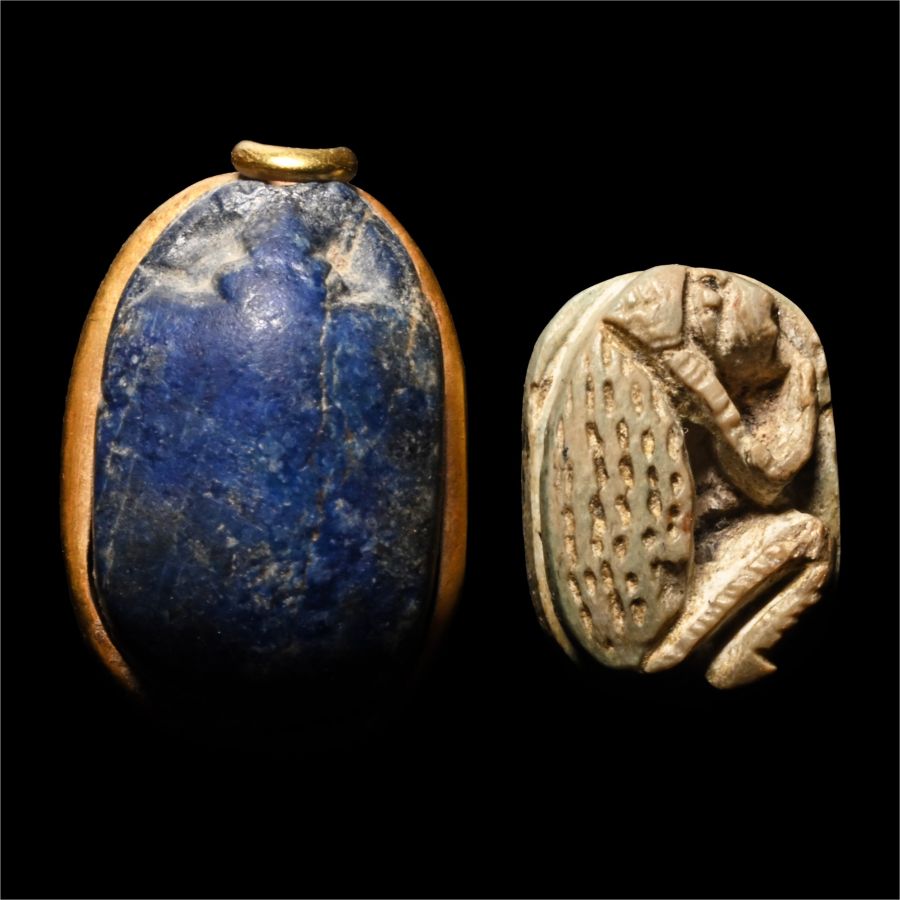
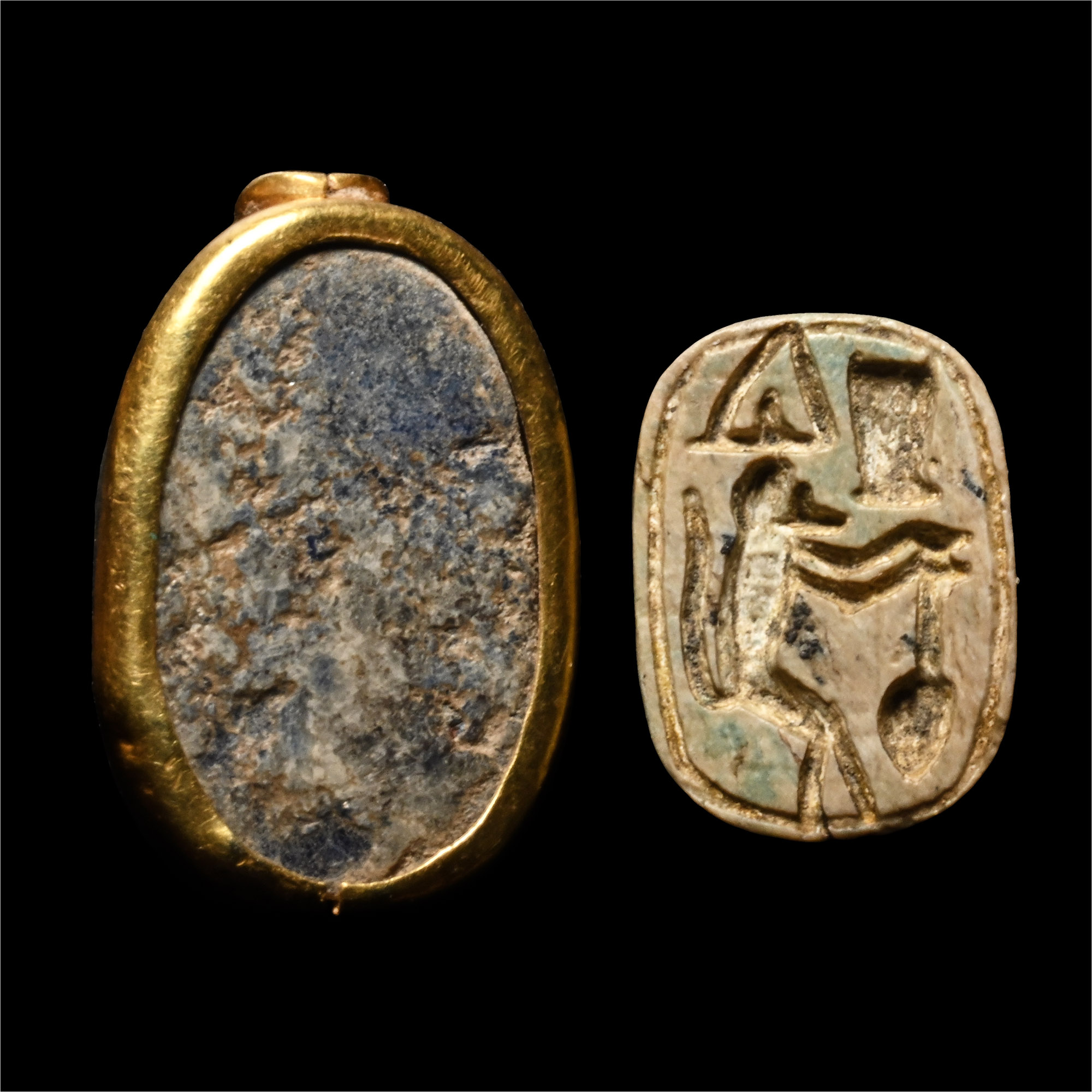
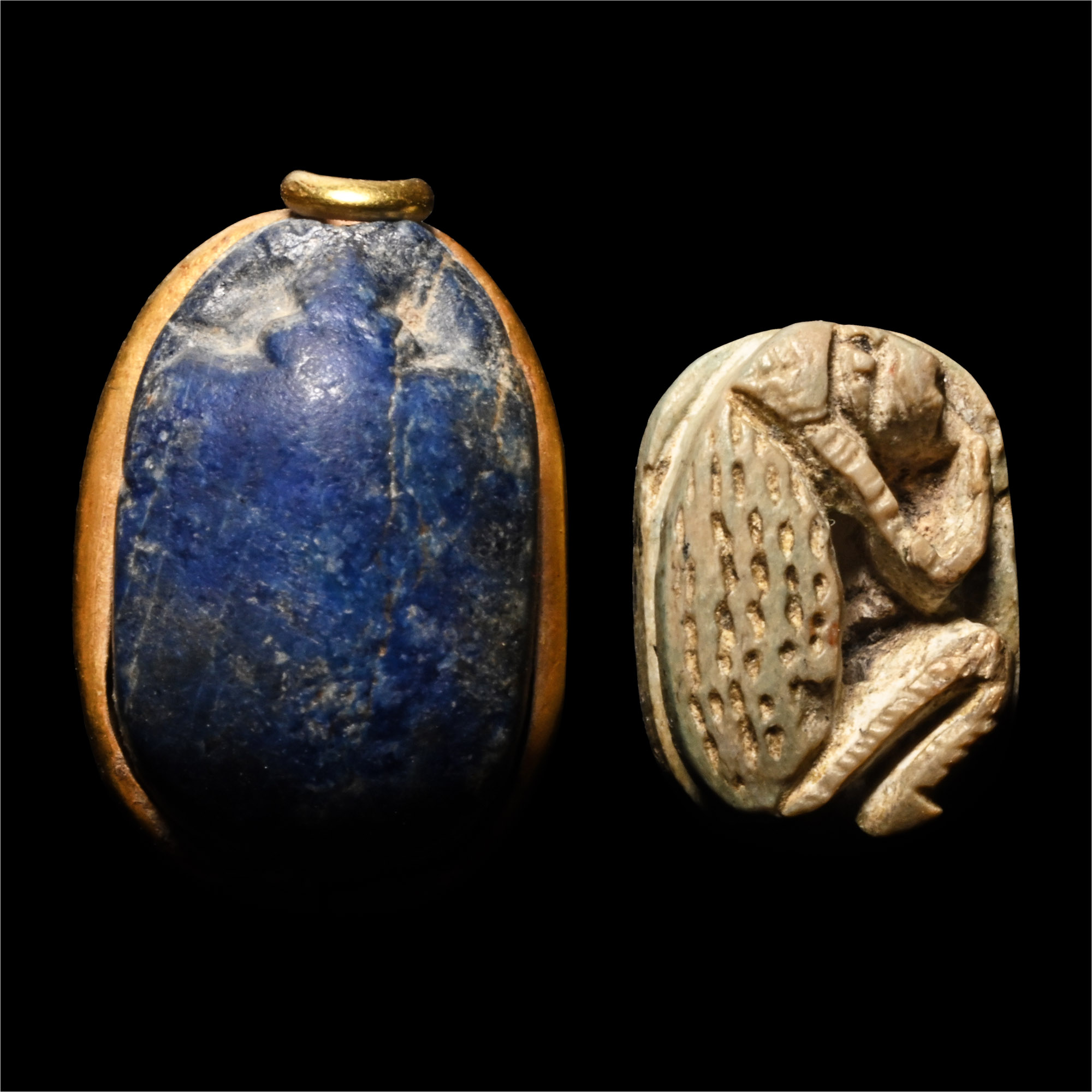
Egyptian Scarab Group
CIRCA 2ND-1ST CENTURY B.C.
1/2 - 5/8 in. (2.86 grams total, 12-17 mm).
Comprising: a lapis lazuli scarab in a gold funda from a ring; a glazed composition bead with a high-relief sleeping monkey motif on the obverse with a figurative and hieroglyphic legend on the reverse. [2]
ProvenancePrivate collection of Kal Noselson, New York, acquired between 1976 and the late 1990s; thence by descent.
CONDITIONTimeLine Auctions follows a vetting process to ensure the authenticity and legality of all items, reinforcing our commitment to integrity and responsible trading. Each antiquity, antique, and coin lot undergoes thorough examination by a vetting committee of at least ten external specialists, professional trade association members, scientists, and archaeologists: Our Vetting Process
AUCTIONS:
TimeLine is a leading auction house specialising in antiquities, ancient art, collectables, natural history, coins, medals, and books. Our auctions offer museums, collectors, historians, and enthusiasts the opportunity to acquire unique and historically significant pieces.
LOT 0709
Egyptian Scarab Group
Estimate £100 - 140€120 - 160 (for guidance only)$140 - 190 (for guidance only)
-
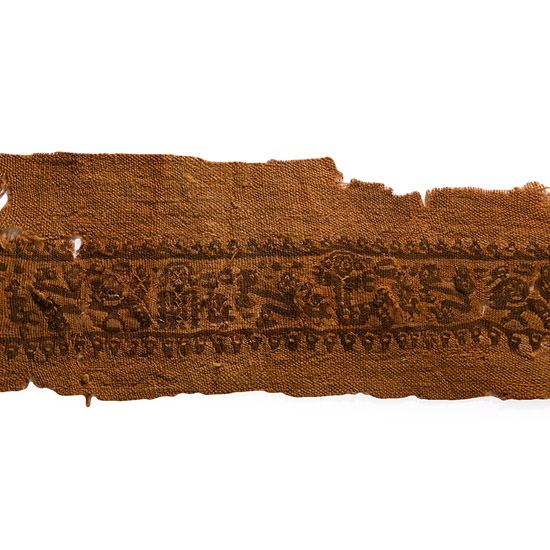
Egyptian Coptic Textile Fragment of a Clavus from a Tunic with Triton, Male Figure and Birds
Circa 5th-6th century A.D.Estimate: £60 - 80 (+bp*)
Bids: 1 | Current Bid: £5
Comprising a decorative tunic stripe (clavus) in purple wool over coarse linen, S-twist tapestry, embroidered with stylised plants, male figures, tritons and birds, borders decorated with meanders. 14.5 grams, 44 cm
Acquired 1970s-1996. Property of a North American collector. London collection, 2016.
Among the many fragments from wool tunics are several long strips that match to form nearly full-length central pectoral clavi. They are patterned with a profusion of small figures or interlaced abstract designs, birds, plants, and animals, with a contrasting border filled with geometric motifs. -
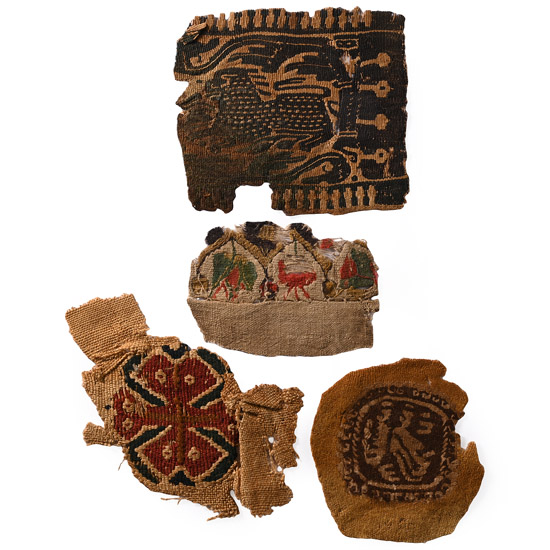
Egyptian Coptic Tunic Textile Fragments of Orbiculi and Segmenta with Vegetation, Animals and Geometric Ornament
Circa 6th-8th century A.D.Estimate: £80 - 100 (+bp*)
Bids: 1 | Current Bid: £5
Comprising a squared tablion or fragment of clavus representing a lion with a spotted body, of Sassanid style, the frame featuring geometric patterns; an orbiculus in brown-purple over white linen, S-twist, featuring a bird, frame decorated with meanders; a fragment of textile in red, green, black and yellow wool, representing flowers; and a red and black geometric ornament featuring a type of a flower. 11.69 grams total, 8.3-11.3 cm
Acquired 1970s-1996. Property of a North American collector. London collection, 2016.
A significant feature of this group of textiles is the fragment featuring a lion; it reveals strong Sassanid influences and may date to the brief period of the Sassanid conquest of Roman Egypt, between 618 and 628 AD. -
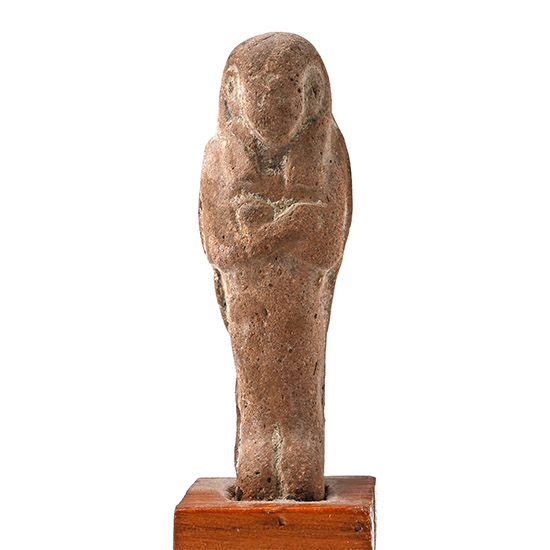
Egyptian Terracotta Shabti
New Kingdom, late 18th-19th Dynasty, circa 1332-1189 B.C.Estimate: £80 - 100 (+bp*)
Bids: 1 | Current Bid: £5
Mummiform figure wearing a lappet wig, arms crossed over the chest; back flat; traces of white pigment in places; supplied with a custom-made wooden stand. 45.3 grams total, 99 mm
Acquired Caledonian market, 16th March 1962, for 5 shillings. From the private collection of Peter Clayton, FCILIP, Dip, Arch, FSA, FRNS, Hemel Hempstead, Hertfordshire, UK; formed since the late 1950s. Accompanied by an old handwritten information card by Peter Clayton, collection no.93.
During the late New Kingdom, larger quantities of shabti figurines were provided for the deceased and were often mass-produced using open moulds, leaving the backs flat.
