
Loading, please wait...
LOT 0441
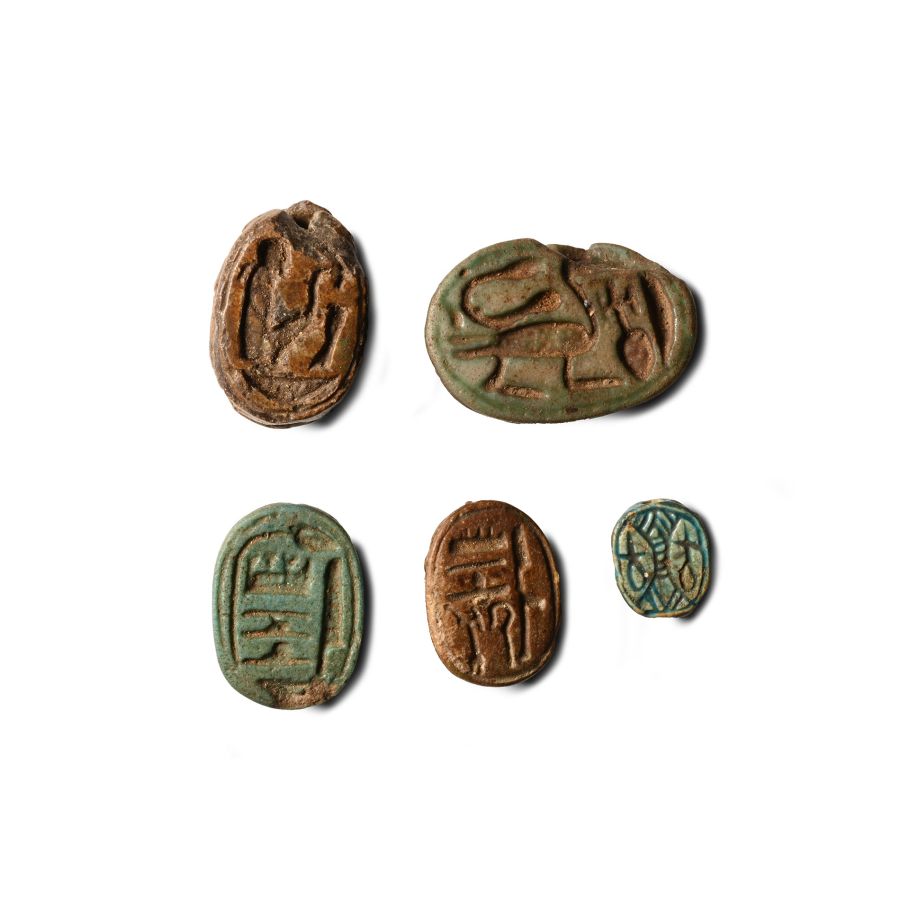
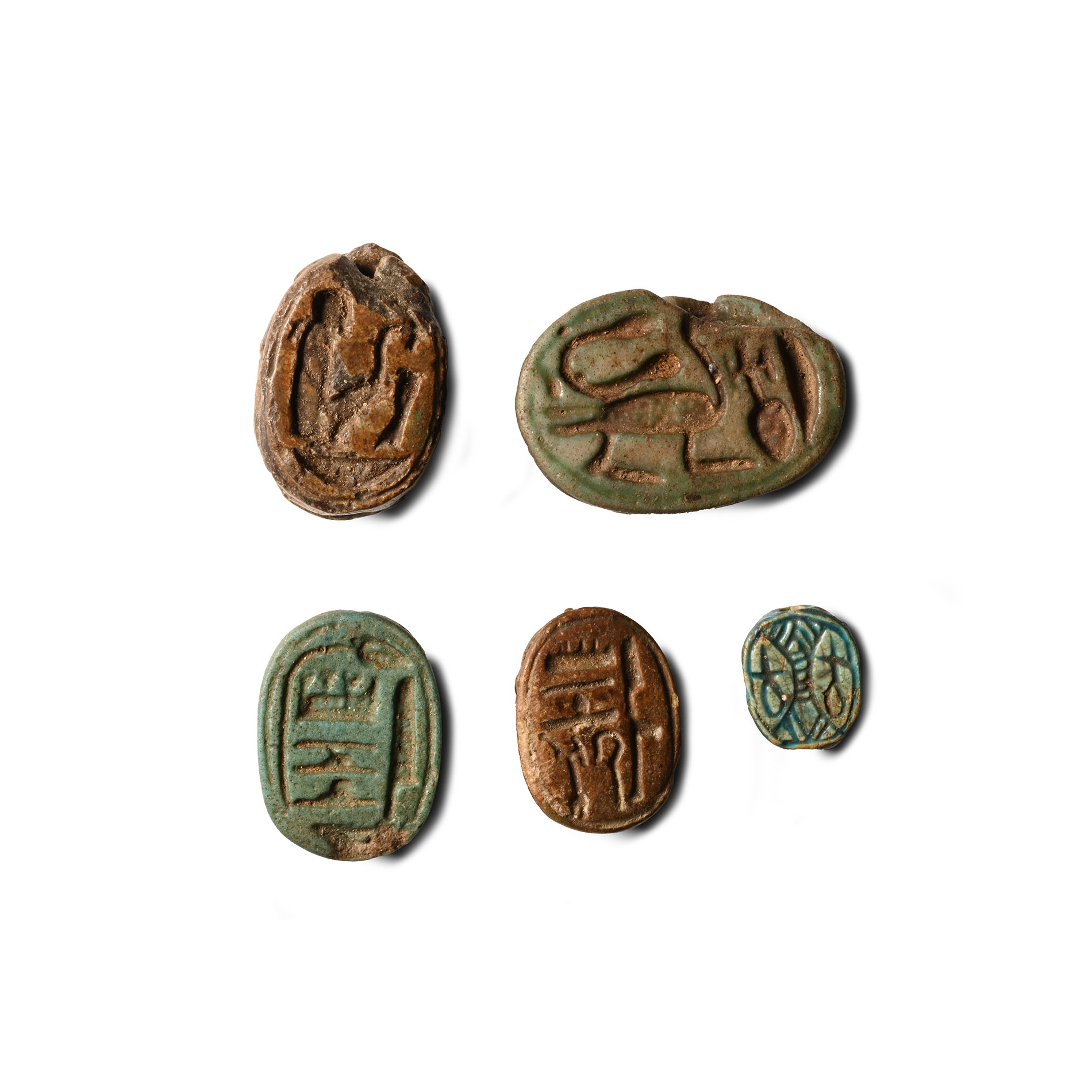
Egyptian Scarab Collection with Hieroglyphs
LATE PERIOD, 664-323 B.C.
3/8 - 7/8 in. (10.7 grams total, 10-23 mm).
Four with anatomical detailing and hieroglyphs or other motifs to base, including one example displaying a cruciform figure or other motif to the upper face; some chips; all pierced for suspension. [5, No Reserve]
ProvenanceFrom an early 20th century collection, Carnavon, North Wales, UK.
CONDITIONTimeLine Auctions follows a vetting process to ensure the authenticity and legality of all items, reinforcing our commitment to integrity and responsible trading. Each antiquity, antique, and coin lot undergoes thorough examination by a vetting committee of at least ten external specialists, professional trade association members, scientists, and archaeologists: Our Vetting Process
AUCTIONS:
TimeLine is a leading auction house specialising in antiquities, ancient art, collectables, natural history, coins, medals, and books. Our auctions offer museums, collectors, historians, and enthusiasts the opportunity to acquire unique and historically significant pieces.
-
.jpg)
Large Egyptian Bronze Head of a Cat
Late Period-Ptolemaic Period, 664-30 B.C.Sold for (Inc. bp): £8,450
Modelled sleek and muscular in the round, the ears and eyes alert creating a dignified expression; piercings through the ears; hollow-formed; mounted on a custom-made display base. 629 grams total, 21.5 cm high including stand
Acquired from a French dealer, 1965. Swiss private collection. UK private collection, 1993. This lot has been checked against the Interpol Database of stolen works of art and is accompanied by search certificate number no.11838-206398.
Possibly intended as a container for the mummified remains of a cat, or from a statuette of the goddess Bastet. The feline's pierced ears likely once held earrings or other ornaments. In ancient Egypt, cats were the sacred animal of the goddess Bastet; such objects were often given as donations at her temples. -
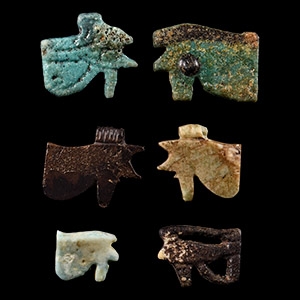
Egyptian Hardstone and Faience Wedjat Eye Collection
Late Period, 664-332 B.C.Sold for (Inc. bp): £312
Including examples with applied black detailing and openwork bands. 8.68 grams total, 12-21 mm
Acquired 1970s-1996. Property of a North American collector. London collection, 2016. -
.jpg)
Egyptian Basalt Torso of Naophorous
Late Period, 664-332 B.C.Estimate: £8,000 - 10,000 (+bp*)
Opening Bid: £4,000
Carved in the round depicting a male carrying a rectangular shrine intended to hold a figure of a goddess; arms and upper chest bare, strap to the chest to support an apron, dorsal pillar to the reverse; accompanied by a custom-made stand. 5.2 kg total, 25 cm high including stand
From the collection of Danish furniture designer Ole Wanscher (1903-1985). Ole Wanscher was a leading figure of the Scandinavian Design movement. Wanscher was inspired by ancient designs, and one of his most famous creations, the 'Egyptian Stool', was based on folding chairs from Egypt's New Kingdom. This piece is visible in the background of a photo of Wanscher in his office, circa 1960. Accompanied by an academic report by Egyptologist Paul Whelan. Accompanied by a copy of the photo of Wanscher in his office, circa 1960. This lot has been checked against the Interpol Database of stolen works of art and is accompanied by search certificate number no.11843-207728.
Naophorous statues first appear in the New Kingdom, though standing figures with shrines were most popular during the Late and Ptolemaic Periods. Such statues were set up in temples as revealed by the discoveries made between 1895 and 1917 in the Amun temple precincts at Karnak, where thousands of statues, including naopharoi, were recovered from caches.
