
Loading, please wait...

LOT 0400
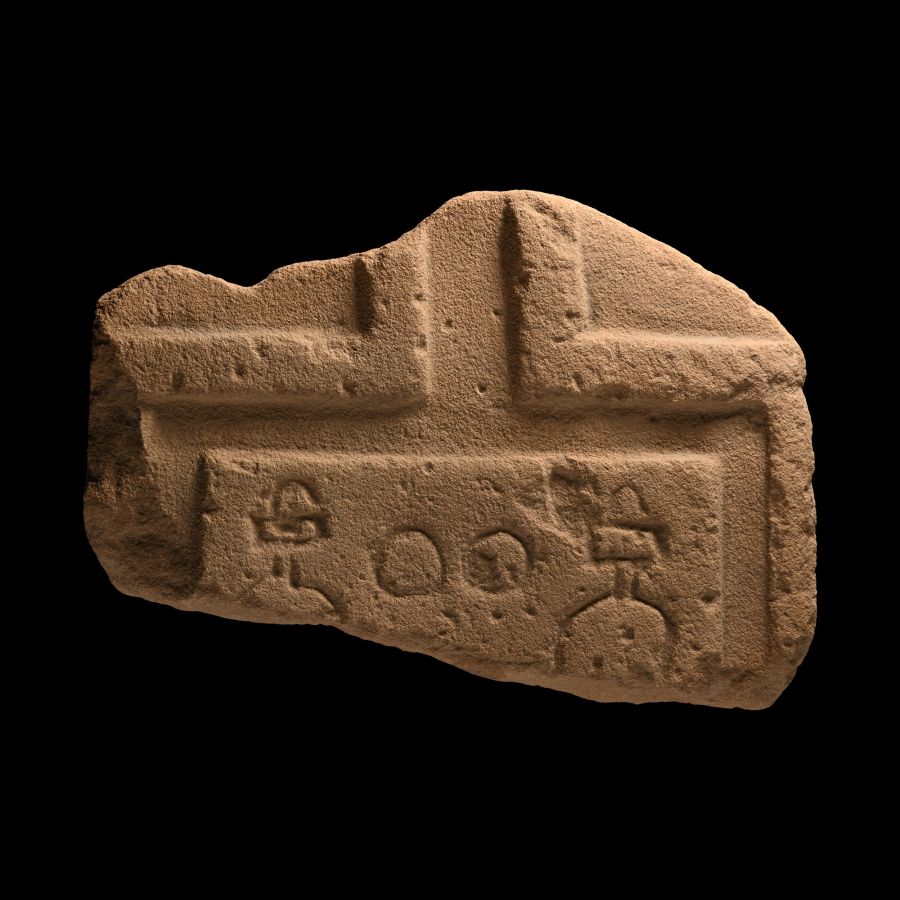
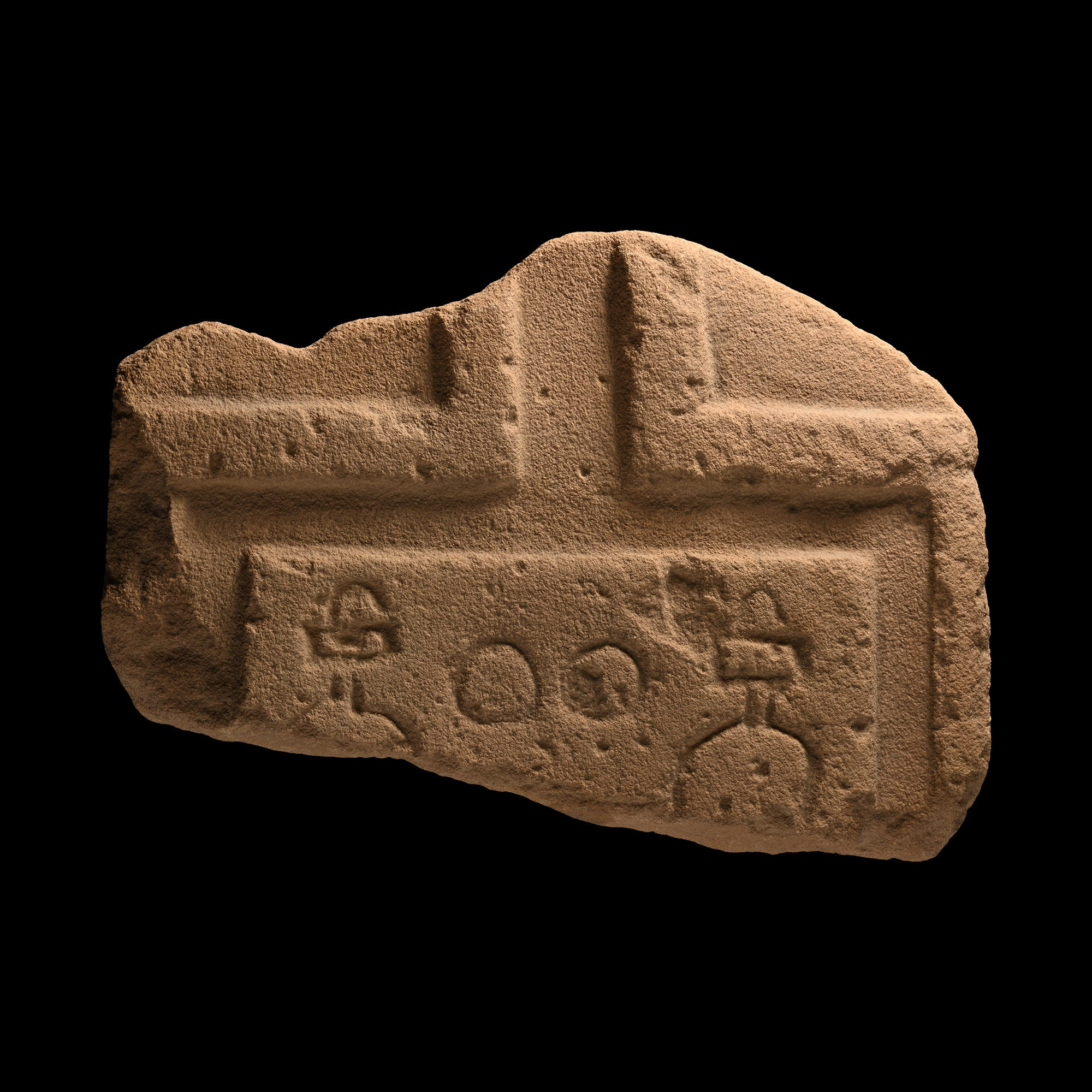
Egyptian Sandstone Offering Table Fragment
LATE PERIOD-PTOLEMAIC PERIOD, 664-30 B.C.
8 1/2 in. (1.62 kg, 21.5 cm).
Fragment of a rectangular offering table with incised drainage channels forming a segmented surface, creating a spout at the top end and feeding channels around a central raised panel, bearing incised depictions of two circular loaves flanked by beer jugs; the underside dressed. [No Reserve]
ProvenanceAcquired in April 1963.
From the private collection of Peter Clayton, FCILIP, Dip, Arch, FSA, FRNS, Hemel Hempstead, Hertfordshire, UK; formed since the late 1950s.
Accompanied by an old handwritten identification card written by Peter Clayton.
Offering tables shaped like the hieroglyphic sign for a mat with a loaf of bread, meaning “offering,” were common throughout much of dynastic history and were essential to the funerary cult. They were usually placed near the deceased's tomb, in an offering niche or chapel. If the cult ceased to function, the carved images of food and drink on the table served as magical substitutes, ensuring the continued sustenance and survival of the deceased's ka, or spirit.
CONDITIONTimeLine Auctions follows a vetting process to ensure the authenticity and legality of all items, reinforcing our commitment to integrity and responsible trading. Each antiquity, antique, and coin lot undergoes thorough examination by a vetting committee of at least ten external specialists, professional trade association members, scientists, and archaeologists: Our Vetting Process
AUCTIONS:
TimeLine is a leading auction house specialising in antiquities, ancient art, collectables, natural history, coins, medals, and books. Our auctions offer museums, collectors, historians, and enthusiasts the opportunity to acquire unique and historically significant pieces.
LOT 0400
Egyptian Sandstone Offering Table Fragment
Estimate £300 - 400€350 - 460 (for guidance only)$410 - 540 (for guidance only)
-
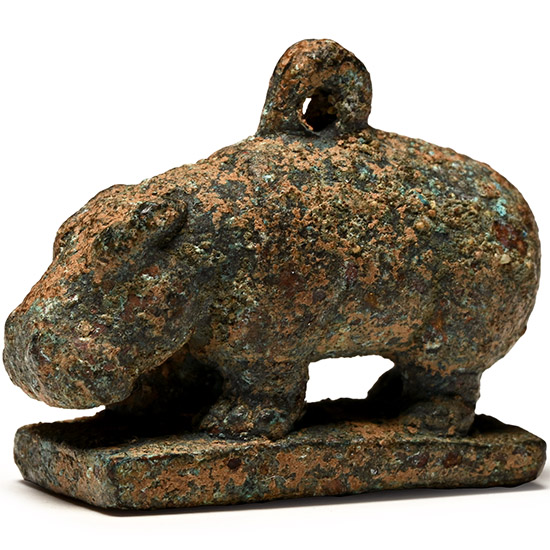
Egyptian Bronze Hippopotamus Amulet
Late Period, 664-332 B.C. or laterEstimate: £600 - 800 (+bp*)
Opening Bid: £300
Modelled in the round on a rectangular base with a dorsal loop. 20.5 grams, 26 mm
Ex mid 19th century London, UK, collection.
Metal hippopotamus amulets are comparatively rare compared with faience and stone examples. A gold hippopotamus amulet of similar size was discovered in Tomb W 643 at Meroe, Sudan, and is now in the Museum of Fine Arts, Boston (inv. no. 23.380). Egyptian art depicted the Nile hippopotamus in Old, Middle, and New Kingdom limestone reliefs, as well as in faience, stone, and metal statuettes. Egyptians both admired and feared them: powerful and unpredictable, hippos attack when threatened. Their fearsome reputation made them potent apotropaic amulets, giving the wearer power over evil and chaotic forces. -
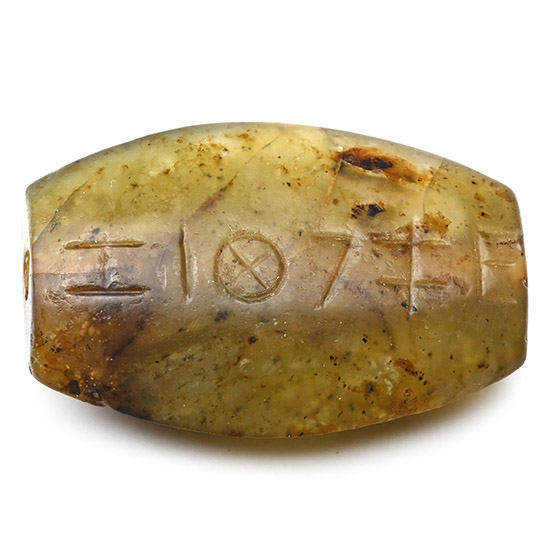
Phoenician Bifacial Green Stone Bead with Inscriptions
Circa 800-600 B.C.Estimate: £400 - 600 (+bp*)
Bids: 3 | Current Bid: £15
Lentoid in section and fusiform in plan with a median line of characters to each face. 8.6 grams, 31 mm
From the private collection of a European gentleman (1942-2024), formed since the 1970s. -
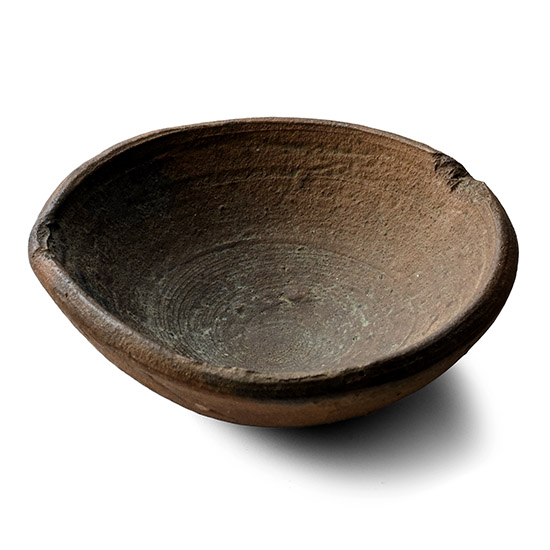
Egyptian Miniature Terracotta Offering Bowl
Ptolemaic Period, 3rd-1st century B.C.Estimate: £100 - 140 (‡+bp*)
Opening Bid: £45
With flat base and internal marks from potter's wheel. 28.2 grams, 59 mm wide
Ex Jean-Alain Mariaud de Serres, Paris. with François de Ricqlès Auction, Paris, 22 April 2001, no.872.
