
Loading, please wait...
LOT 0710
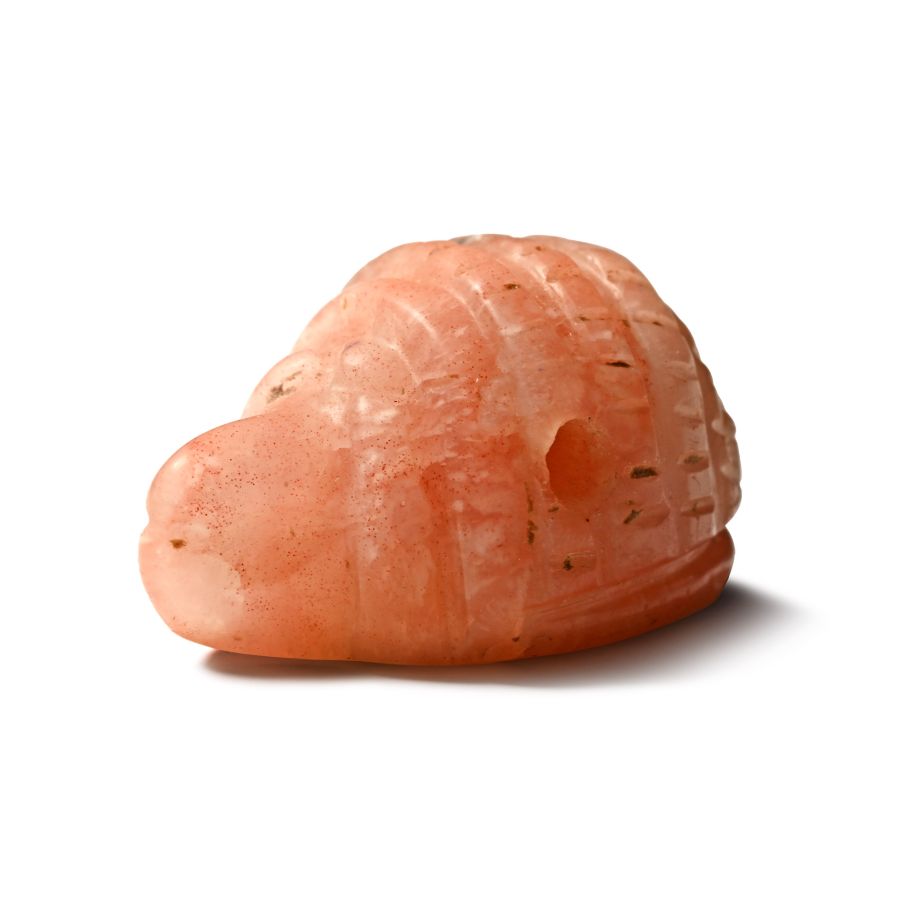
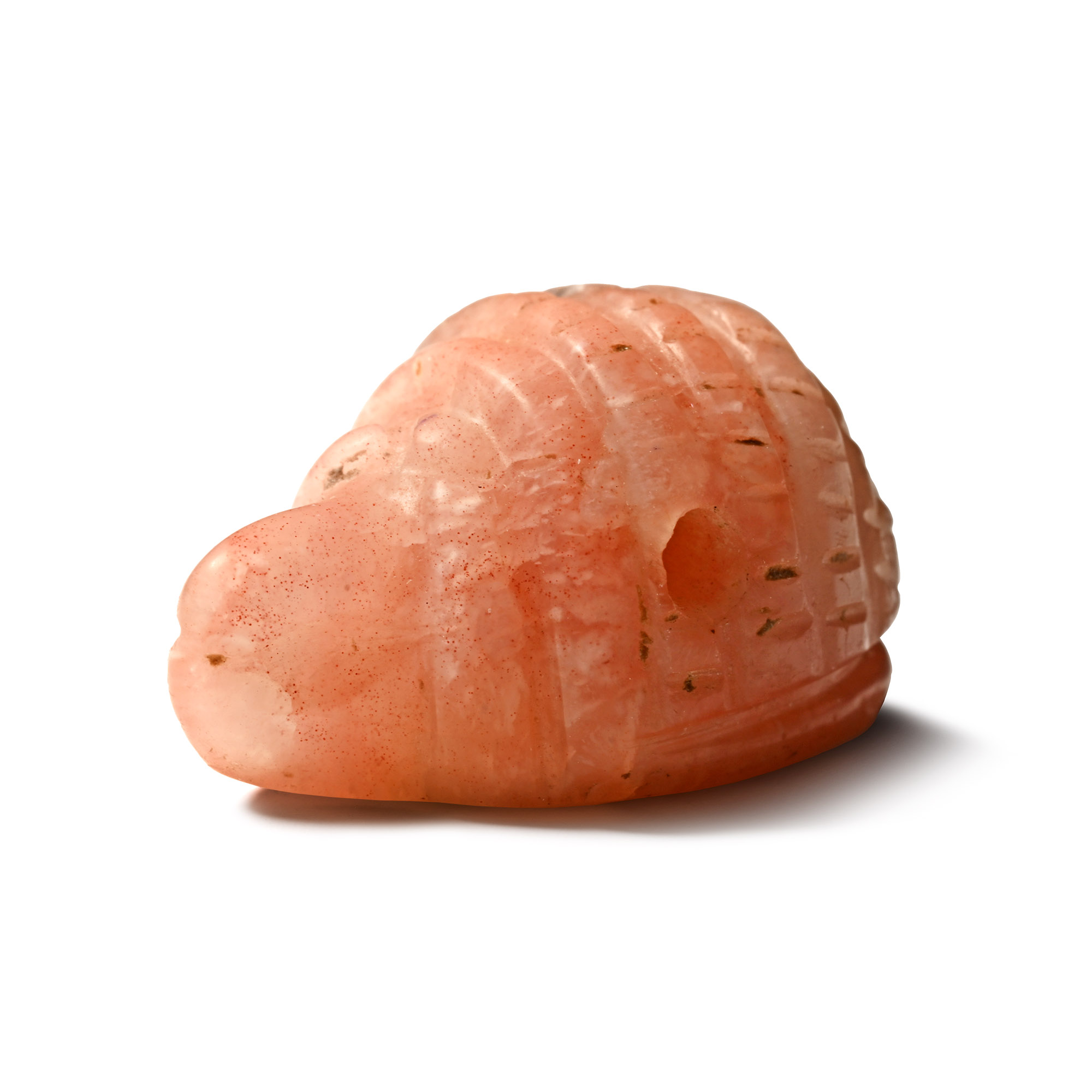
Egyptian Rose Quartz Amulet of a Hedgehog
ROMAN PERIOD, 30 B.C.-323 A.D.
3/4 in. (3.79 grams, 20 mm).
Modelled in the round as a hedgehog with a square hatched body, almond-shaped eyes and a short snout; drilled for suspension. [No Reserve]
ProvenanceLondon, UK, art market, 1980s.
Private collection, London, UK.
TimeLine Auctions follows a vetting process to ensure the authenticity and legality of all items, reinforcing our commitment to integrity and responsible trading. Each antiquity, antique, and coin lot undergoes thorough examination by a vetting committee of at least ten external specialists, professional trade association members, scientists, and archaeologists: Our Vetting Process
AUCTIONS:
TimeLine is a leading auction house specialising in antiquities, ancient art, collectables, natural history, coins, medals, and books. Our auctions offer museums, collectors, historians, and enthusiasts the opportunity to acquire unique and historically significant pieces.
LOT 0710
Egyptian Rose Quartz Amulet of a Hedgehog
Estimate £100 - 140€120 - 160 (for guidance only)$140 - 190 (for guidance only)
Opening Bid
£5 (EUR 6; USD 7) +BP*
-
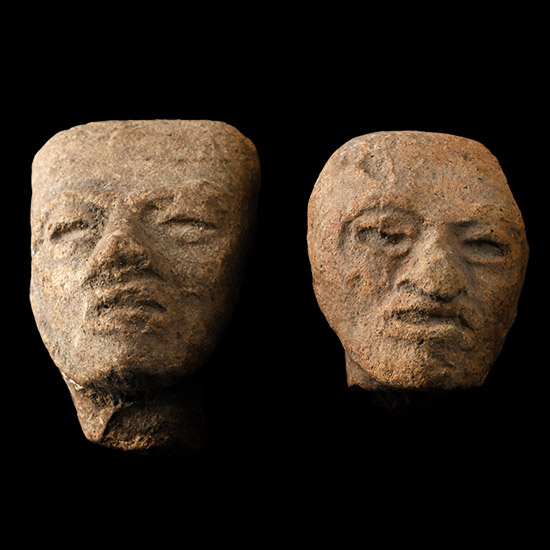
Phoenician Terracotta Head Group
Mid 1st millennium B.C.Estimate: £60 - 80 (+bp*)
Opening Bid: £5
Comprising: head with moulded facial features, rectangular flange above the brow, stub neck; similar with domed brow. 20.7 grams total, 30-33 mm
From the private collection of a European gentleman (1942-2024), formed since the 1970s. -
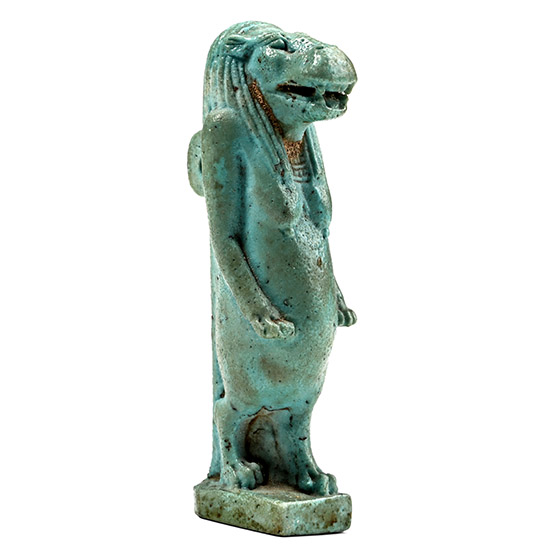
Egyptian Turquoise Blue Glazed Faience Amulet of Taweret
Late Period, circa 664-332 B.C.Estimate: £600 - 800 (+bp*)
Opening Bid: £5
Amuletic pendant with the deity's characteristic hybrid animal elements, dominated by its hippopotamus head, with a plain dorsal pillar with a loop. 16.58 grams, 61 mm
Received as a gift from archaeologist Cyril Aldred, April 1970, when expecting their son Rupert. From the private collection of Peter Clayton, FCILIP, Dip, Arch, FSA, FRNS, Hemel Hempstead, Hertfordshire, UK; formed since the late 1950s. Accompanied by an old handwritten information card by Peter Clayton, collection no.124.
Taweret is an ancient Egyptian goddess associated with fertility, childbirth, motherhood, and protecting women during pregnancy and labour. She is depicted as a composite being with animal features and stands out as one of the most distinctive and striking deities in the Egyptian pantheon. Taweret’s name derives from the Egyptian word for "great" or "large" (tꜣwꜣrt), emphasising her formidable and protective nature. Cyril Aldred (1914-1991) was a British Egyptologist and art historian who served at the Royal Scottish Museum, Edinburgh, from 1937 until his retirement in 1974. He published widely on Egyptian art, including Old Kingdom Art in Ancient Egypt (1949) and Akhenaten, Pharaoh of Egypt (1968), and became a leading authority on Amarna Period art, notably through his 1973 Brooklyn Museum exhibition catalogue, Akhenaten and Nefertiti. -
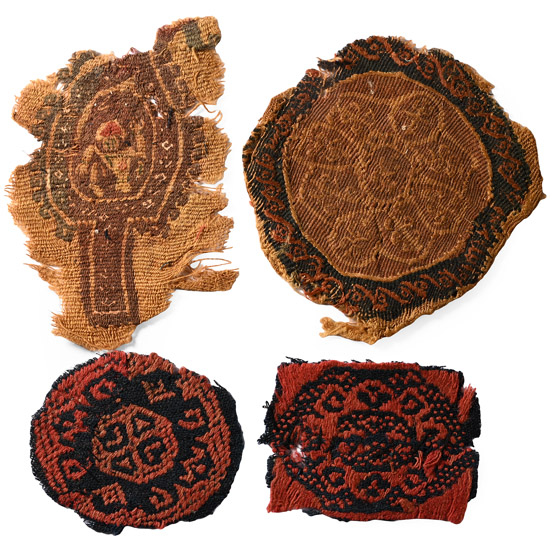
Egyptian Coptic Tunic Textile Fragments of Orbiculi with Vegetation, Figures and Geometric Ornament
Circa 6th-7th century A.D.Estimate: £80 - 100 (+bp*)
Opening Bid: £5
Comprising a tablion and an orbiculus featuring floral and geometric decoration in black and red wool (Z-twist); an orbiculus with floral and geometric decoration in yellow, brown, red, and black wool; and a heart-shaped bud in green, red, and yellow wool featuring a human figure at the centre. 11.1 grams total, 8.1-12.5 cm
Acquired 1970s-1996. Property of a North American collector. London collection, 2016.
The fragments are decorative parts of tunics. These are fabrics of great decorative finesse, with some elements displaying an unusual and extremely well-preserved colour palette.
