
Loading, please wait...
LOT 0027
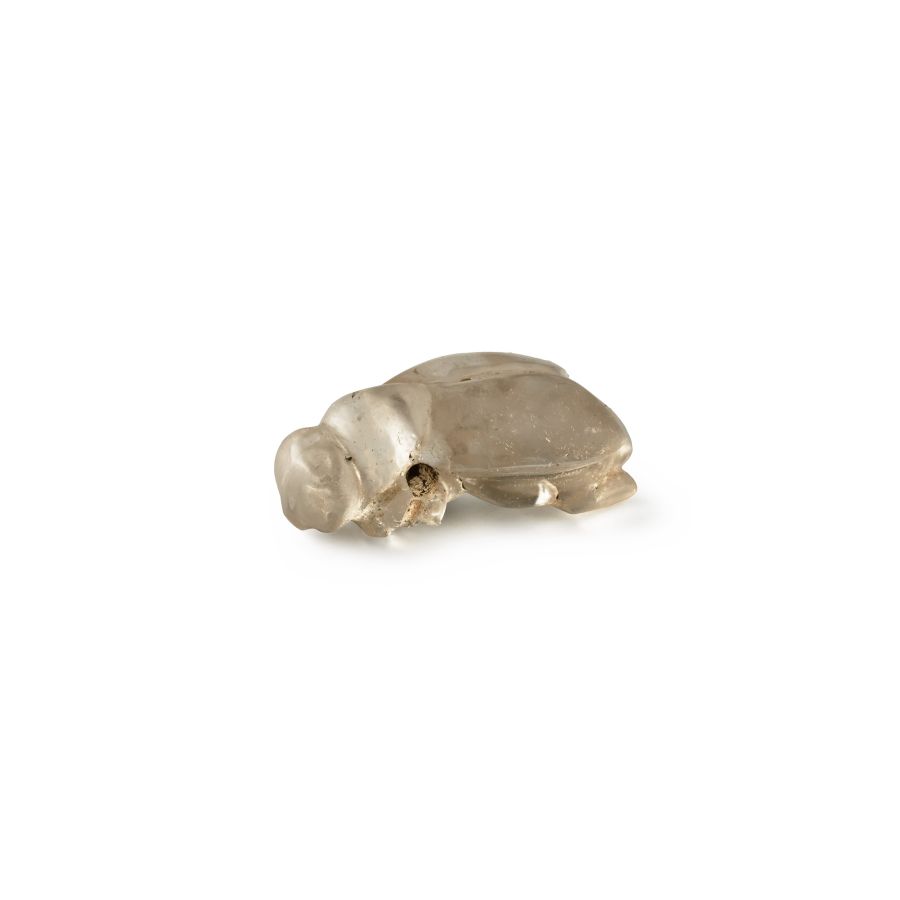
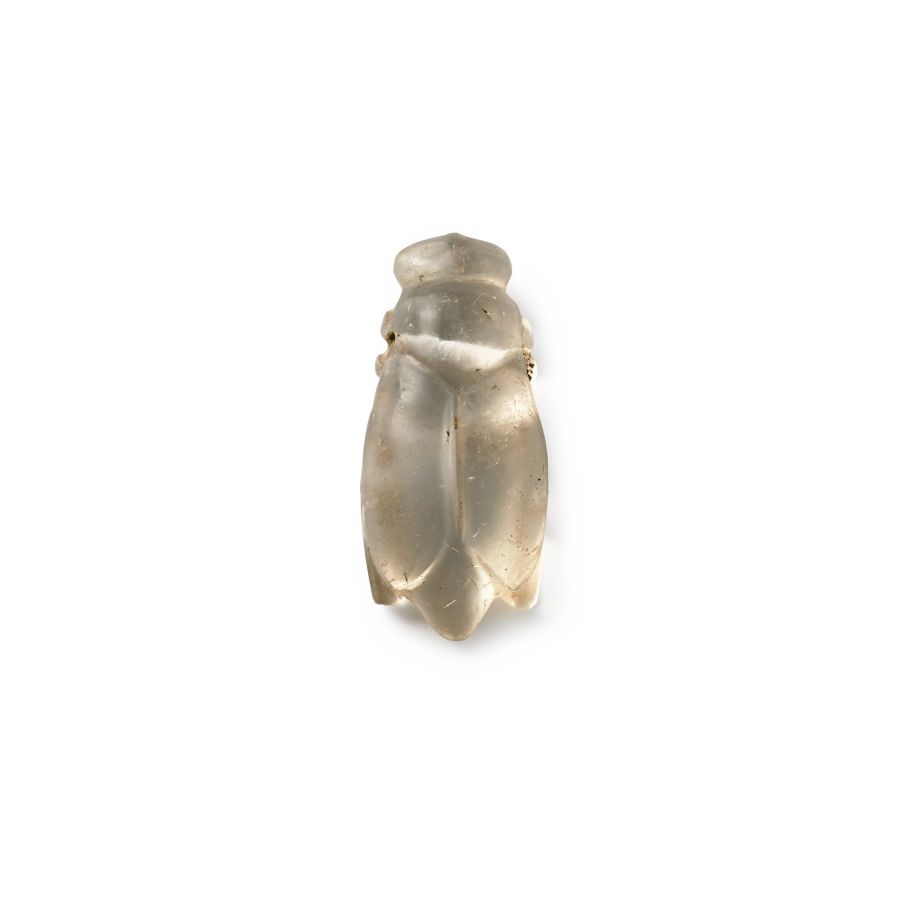
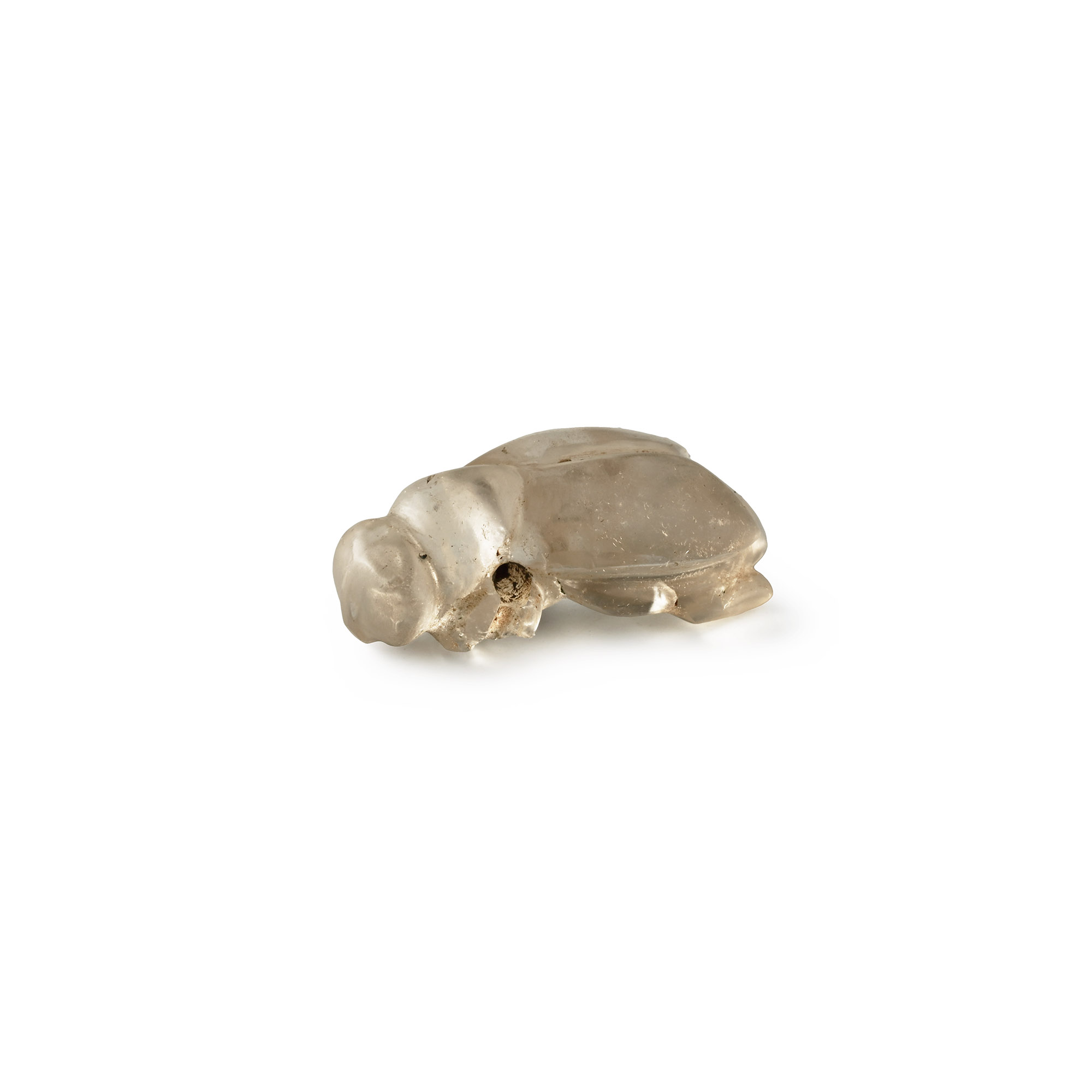
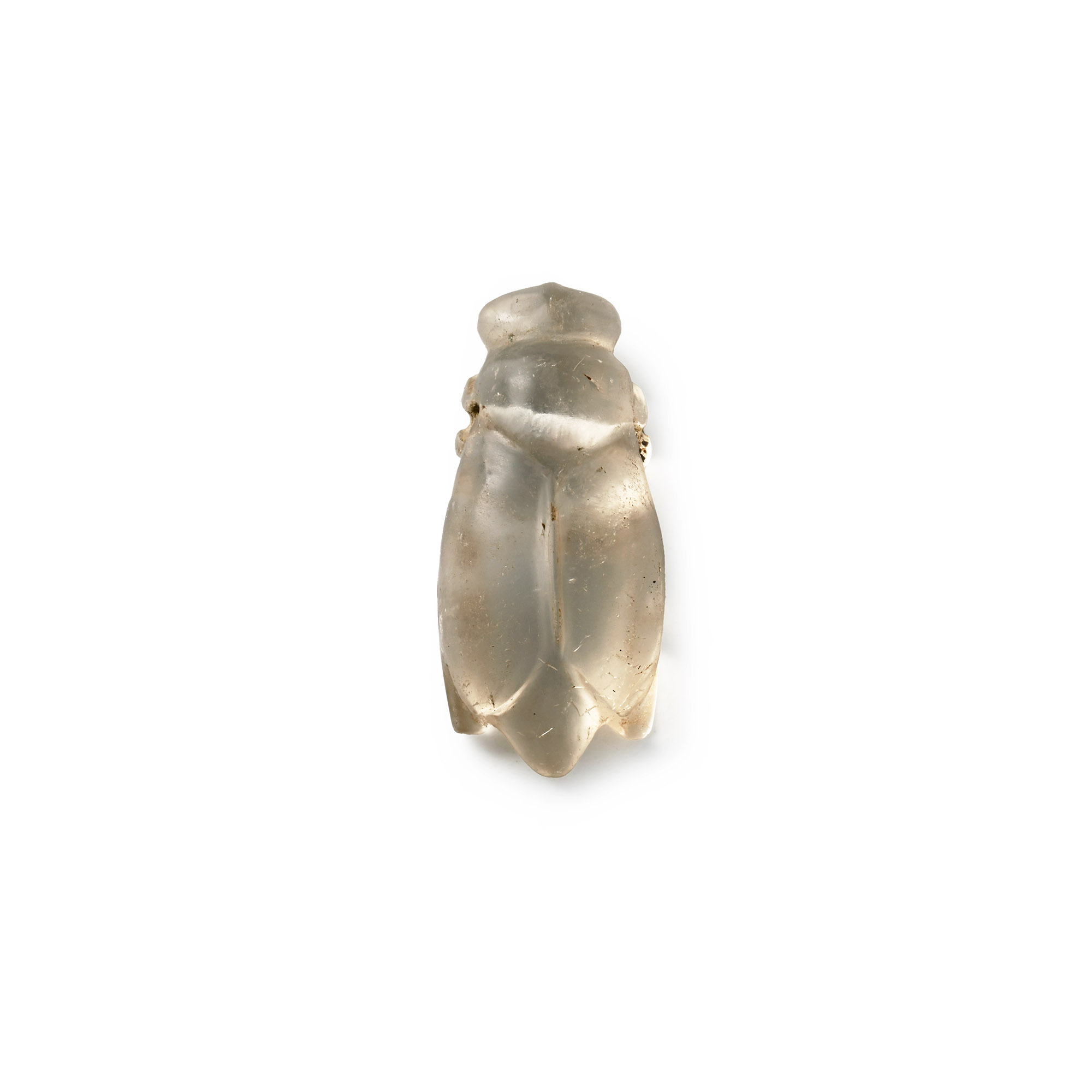
Egyptian Rock Crystal Locust Pendant
NEW KINGDOM, CIRCA 1400–1292 B.C.
1 in. (3.7 grams, 26 mm).
Carved in the round with closed wings and a slightly curving body, pierced through the body for suspension. [No Reserve]
ProvenanceFrom the private collection of a European gentleman (1942-2024), formed since the 1970s.
LiteratureCf. Reisner, G.A., Catalogue général des antiquités égyptiennes du Musée du Caire, Nos.12528-13595, Vol. II, Amulets, Cairo, 1958, pl. XI, no. 12888, for a faience example.
FootnotesThe depiction somewhat resembles a cicada, although this would be very rare in ancient Egyptian plastic arts. The grasshopper and the locust were known in Egyptian as sꜣnḥm or snḥm. Although the insect was often depicted in Old Kingdom tomb scenes, it appeared in various other forms of visual art, such as amulets, cosmetic vessels, and beads, only during the New Kingdom, when it served as a symbol of regeneration.
CONDITIONTimeLine Auctions follows a vetting process to ensure the authenticity and legality of all items, reinforcing our commitment to integrity and responsible trading. Each antiquity, antique, and coin lot undergoes thorough examination by a vetting committee of at least ten external specialists, professional trade association members, scientists, and archaeologists: Our Vetting Process
AUCTIONS:
TimeLine is a leading auction house specialising in antiquities, ancient art, collectables, natural history, coins, medals, and books. Our auctions offer museums, collectors, historians, and enthusiasts the opportunity to acquire unique and historically significant pieces.
-
.jpg)
Egyptian Black Steatite Eye of Horus Amulet
Late Period, 664-332 B.C.Sold for (Inc. bp): £819
Carved unifacial amulet with hatched eyebrow and ribbed suspension loop. 1.45 grams, 19 mm
From a 20th century UK collection.
The wedjat-eye amulet is a representation of the healed eye of the god Horus, featuring both human and falcon elements. The name Wedjat in ancient Egyptian means ‘the one that is sound.’ According to Egyptian mythology, Horus' eye was wounded or taken by the god Seth and restored by Thoth. The wedjat-eye amulet was thought to protect its wearer and bestow the power of recovery and regeneration onto them. It was very popular and used by both the living and the dead. -
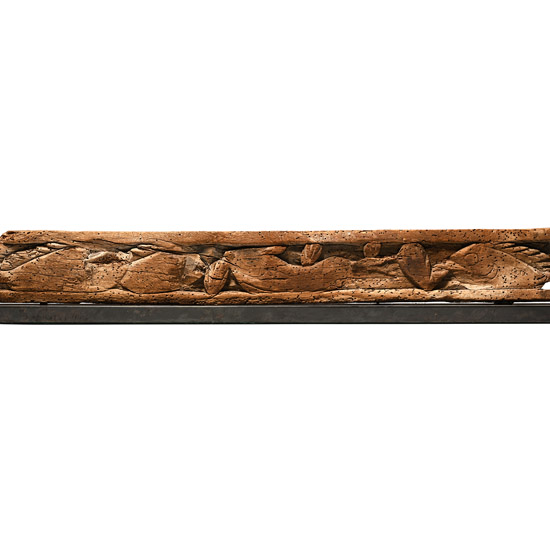
Egyptian Wooden Panel with Swimming Fish
Coptic, 6th-9th century A.D.Sold for (Inc. bp): £468
With high-relief plant motifs within thick rectilinear borders; mounted on a custom-made display stand. 730 grams total, 48.5 cm wide
Previously belonging to J Stewart, Mayfair, London, UK; acquired in the early 1980s. Property of a Middlesex gentleman. -
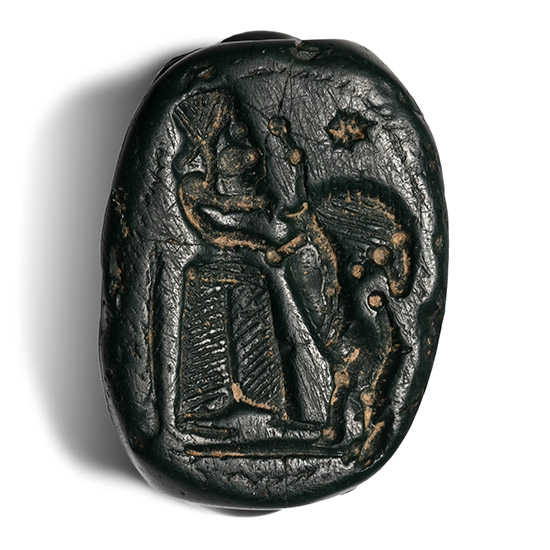
Phoenician Green Stone Scarab with Man Fighting Lion
5th-4th century B.C.Sold for (Inc. bp): £312
Modelled with incised detailing, pierced longitudinally, the underside with a bearded king in Assyrian attire, wearing a long, striated garment and tall headdress, grasping the forelegs of a rearing lion, its head turned back, a star above. 2.63 grams, 18 mm
Private collection, 1990s-early 2000s.
The motif of the Egyptian king overcoming an enemy, whether human or animal, is well attested in the New Kingdom and was later adopted by non-Egyptian artisans for scarabs and seals.
