
Loading, please wait...
LOT 0507
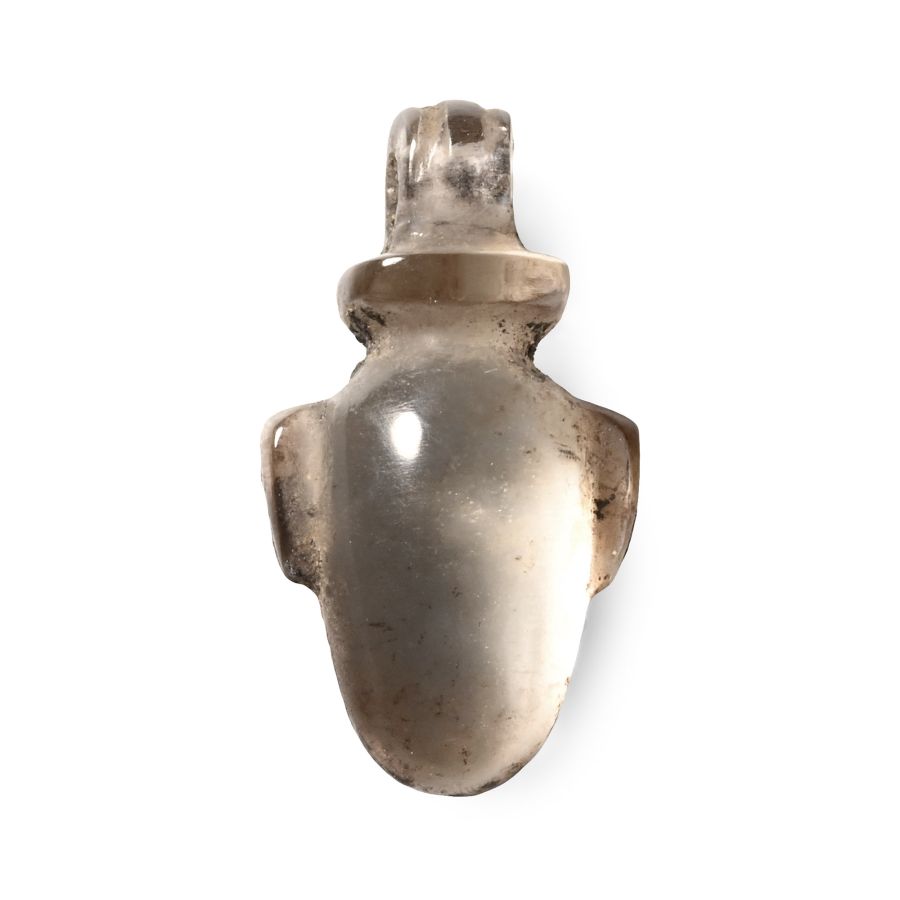
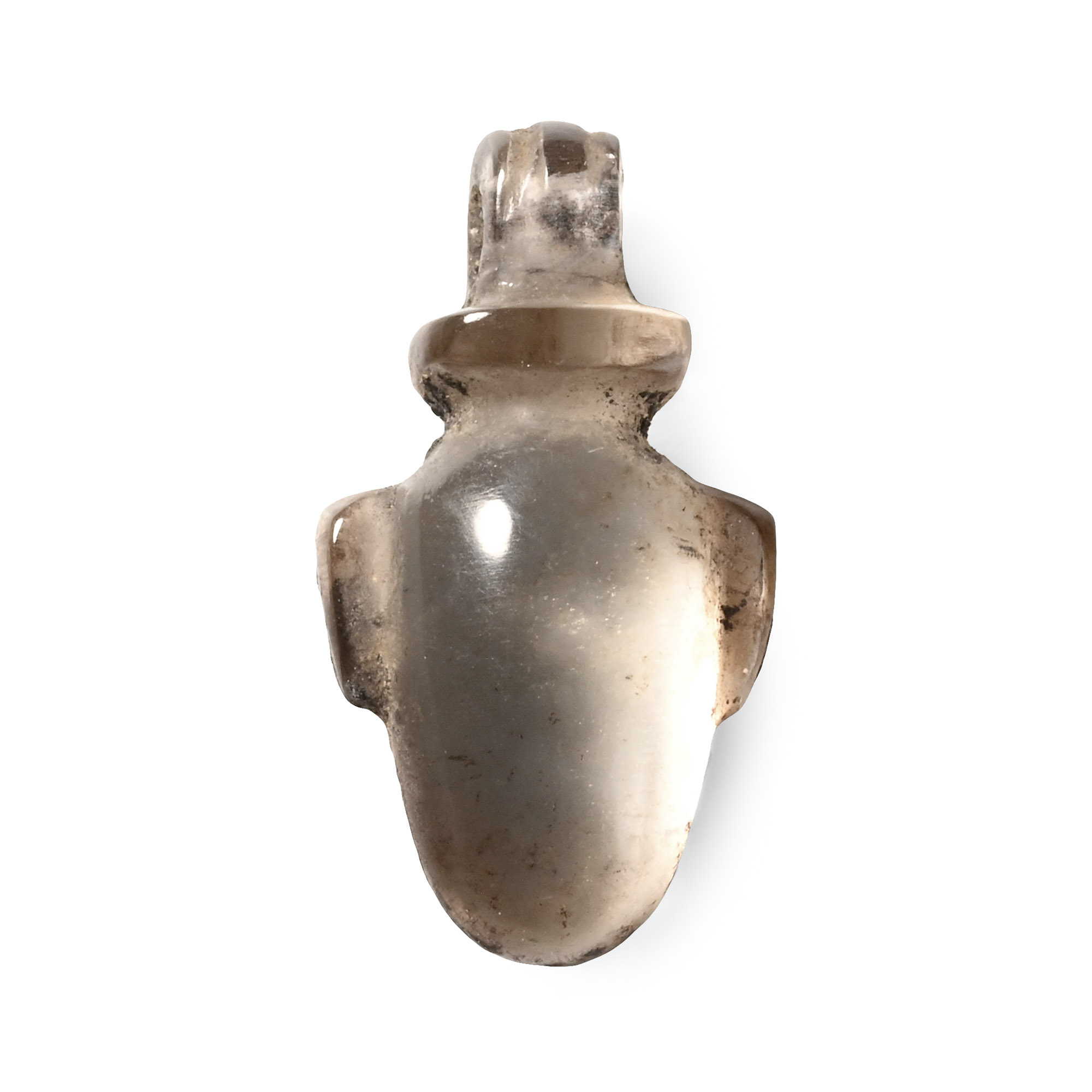
Egyptian Rock Crystal Heart Amulet
NEW KINGDOM, 1550-1295 B.C.
5/8 in. (0.9 grams, 17 mm).
Carved with lateral triangular lugs and ribbed bale.
ProvenanceEx early 20th century collection.
LiteratureCf. Petrie, W.M.F., Amulets. Illustrated by the Egyptian Collection in University College, London, 1914, pl. I, nos.7a-p, for type.
CONDITIONTimeLine Auctions follows a vetting process to ensure the authenticity and legality of all items, reinforcing our commitment to integrity and responsible trading. Each antiquity, antique, and coin lot undergoes thorough examination by a vetting committee of at least ten external specialists, professional trade association members, scientists, and archaeologists: Our Vetting Process
AUCTIONS:
TimeLine is a leading auction house specialising in antiquities, ancient art, collectables, natural history, coins, medals, and books. Our auctions offer museums, collectors, historians, and enthusiasts the opportunity to acquire unique and historically significant pieces.
-
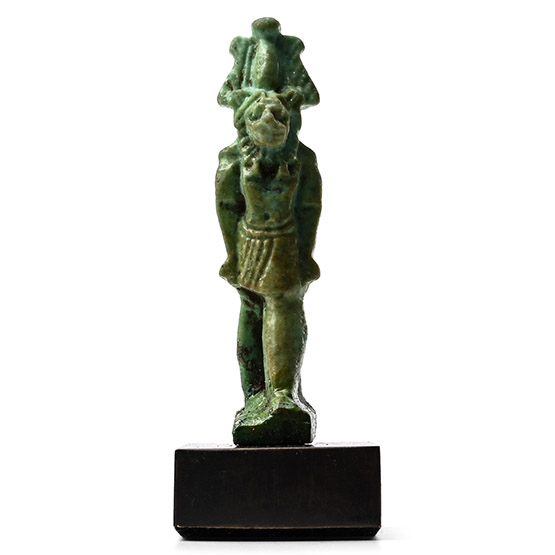
Egyptian Faience Mayhes Amulet
Late Period, 664-332 B.C.Sold for (Inc. bp): £520
Standing erect with dorsal pillar and rectangular base, arms straight and one leg advancing; lion-head wearing atef crown and a uraeus; mounted on a custom-made stand. 50.8 grams total, 84 mm including stand
Ex early 20th century London, UK, collection.
Mahes was an Egyptian lion-headed deity linked to divine protection, royal authority, and retributive justice. Considered a son of the goddess Bastet—or, in some traditions, Sekhmet—he embodied the fierce, solar power of the sun god Re and served as a fierce protector of cosmic order. Mahes was especially venerated in the Delta region, notably at Leontopolis, where his leonine form highlighted his role as a guardian and destroyer of enemies. Iconographically, he is commonly depicted as a lion or, as here, a man with a lion’s head, wearing an atef- crown. -
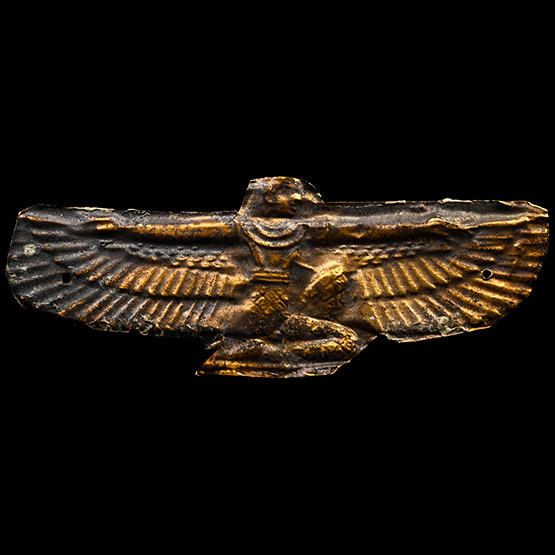
Egyptian Gold Plaque with Winged Goddess
1st millennium B.C.Sold for (Inc. bp): £1,820
Foil figure of a kneeling goddess with outstretched wings; wearing a tripartite wig with a headband, a multi-strand collar, and a tight robe with diamond detailing; mounted in a display frame. 1.57 grams, 62 mm
UK private collection before 2000. Acquired on the UK art market. Private collection, London, UK.
Several winged goddesses appear in Egyptian iconography. Without a headdress, the deity's identity here remains uncertain, but Isis, Nephthys, or Nut are likely candidates. All three are often shown in avian form as protectresses of the dead. -
.jpg)
Egyptian Carnelian Eye of Horus
New Kingdom, 1550-1295 B.C.Sold for (Inc. bp): £2,080
Plano-convex in section with incised bilinear borders. 3.08 grams, 22 mm
Ex early 20th century collection of a lady. This lot has been checked against the Interpol Database of stolen works of art and is accompanied by search certificate number no.13045-248616.
The wedjat-eye amulet is a representation of the healed eye of the god Horus, featuring both human and falcon elements. The name Wedjat in ancient Egyptian means ‘the one that is sound.’ According to Egyptian mythology, Horus' eye was wounded or taken by the god Seth and restored by Thoth. The wedjat-eye amulet was thought to protect its wearer and bestow the power of recovery and regeneration onto them. It was very popular and used by both the living and the dead.
