
Loading, please wait...
LOT 0543
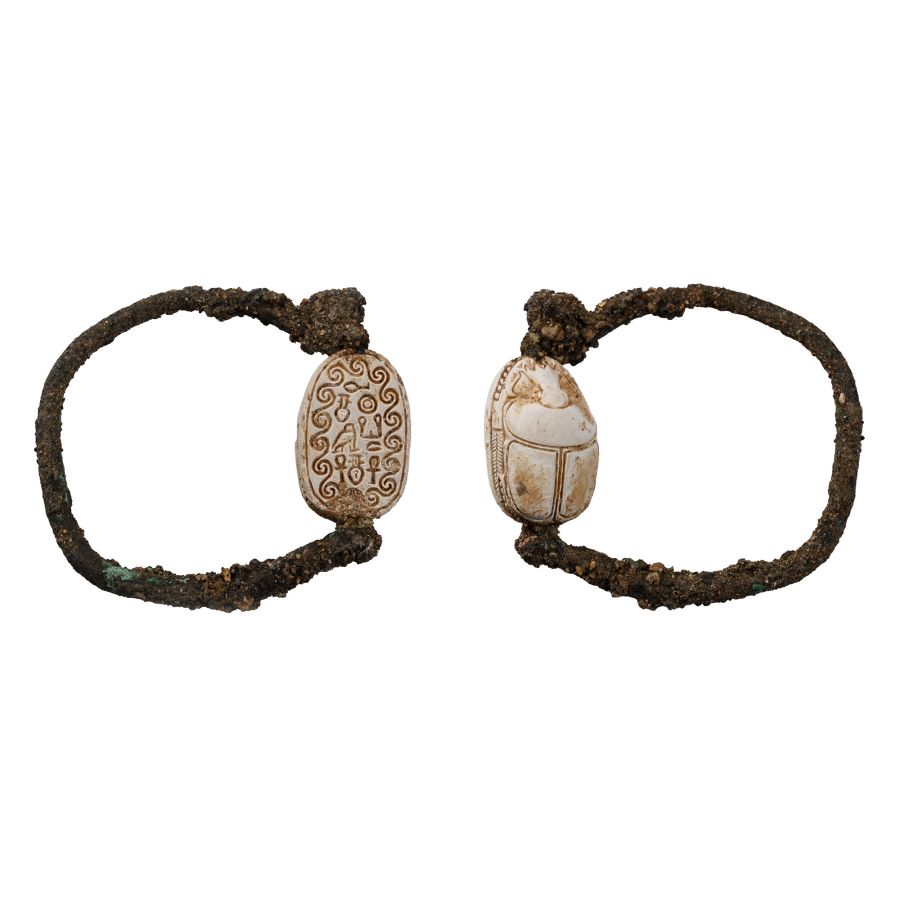
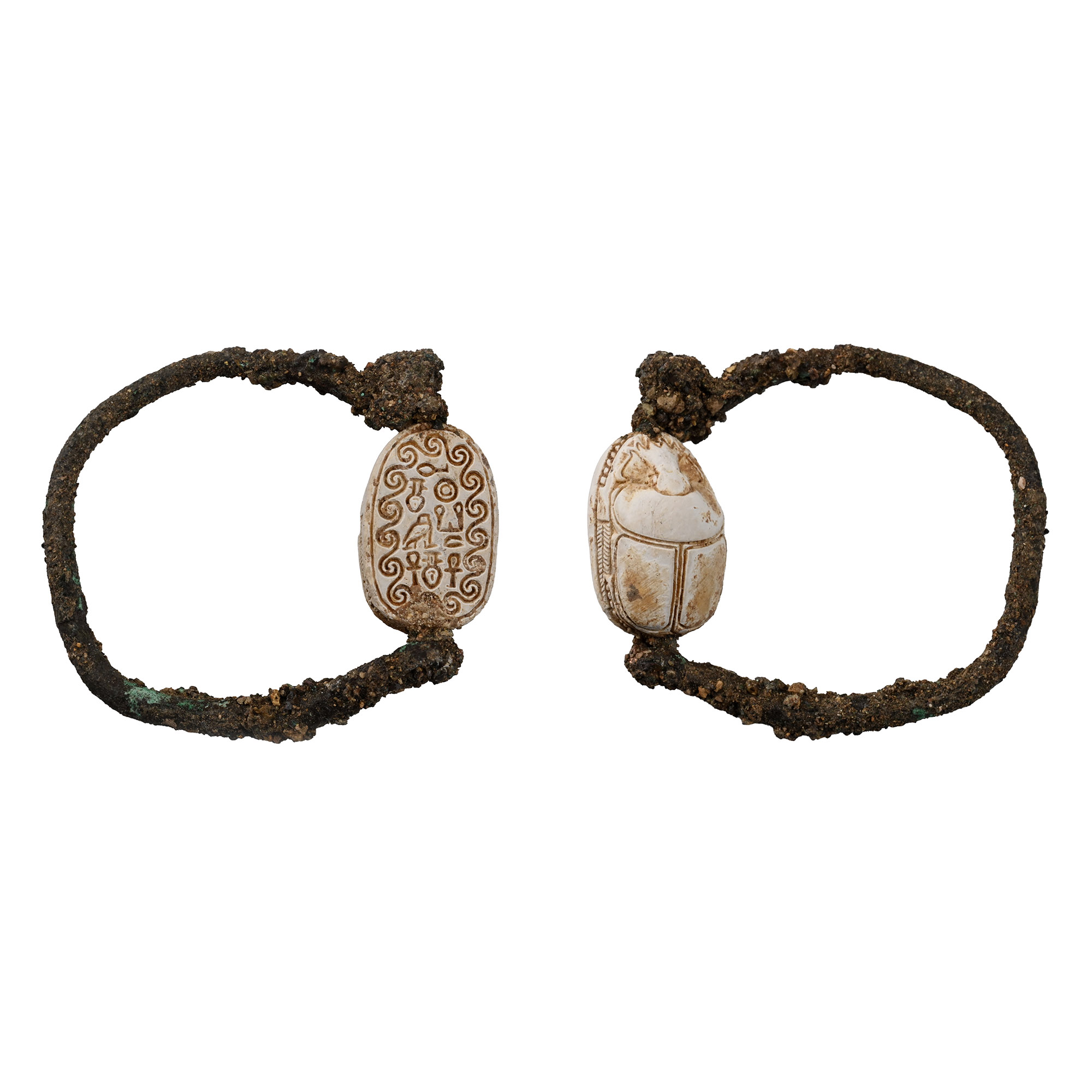
Egyptian Ring with Scarab
SECOND INTERMEDIATE PERIOD, CIRCA 1660-1500 B.C.
1 1/2 in. (5.15 grams, 38.41 mm overall, 26.58 mm internal diameter).
Comprising a bronze D-shaped finger ring, the bezel formed by a faience scarab with hieroglyphs and running scrolls to the underside.
ProvenanceEx London, UK, art market, 1990s.
From a private UK collection.
This lot is accompanied by an illustrated lot declaration signed by the Head of the Antiquities Department, Dr Raffaele D'Amato.
TimeLine Auctions follows a vetting process to ensure the authenticity and legality of all items, reinforcing our commitment to integrity and responsible trading. Each antiquity, antique, and coin lot undergoes thorough examination by a vetting committee of at least ten external specialists, professional trade association members, scientists, and archaeologists: Our Vetting Process
AUCTIONS:
TimeLine is a leading auction house specialising in antiquities, ancient art, collectables, natural history, coins, medals, and books. Our auctions offer museums, collectors, historians, and enthusiasts the opportunity to acquire unique and historically significant pieces.
-
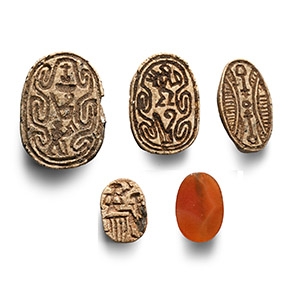
Egyptian Mixed Scarab Collection
2nd-1st millennium B.C. and laterSold for (Inc. bp): £468
Comprising three faience scarabs with detailed bodies and decorated undersides, featuring: a scroll border with central design consisting of a nefer, neb, Red Crown, and a striding human figure holding a flail; a scroll border with a central figure of a bowman with a Red Crown beneath; a seated figure before an offering table(?); an oval scaraboid featuring a central sun disc with opposed nefer signs flanked by hatched panels; and a plain carnelian scarab. 22.75 grams total, 15-28 mm
From the collection of a gentleman, acquired on the London art market in the 1990s. This lot is accompanied by an illustrated lot declaration signed by the Head of the Antiquities Department, Dr Raffaele D'Amato. -
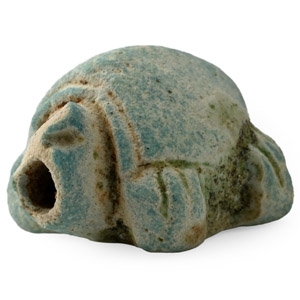
Egyptian Faience Turtle Amulet
Late Period, 664-332 B.C.Sold for (Inc. bp): £143
Blue glazed turtle amulet or bead with flat base and incised lines to each leg, pierced for suspension. 0.76 grams, 11 mm
From an early 20th century collection. This lot is accompanied by an illustrated lot declaration signed by the Head of the Antiquities Department, Dr Raffaele D'Amato.
Turtle amulets have a rich history in ancient Egypt. The turtle was considered to possess a dual character. On one hand, it lived in the dark depths, embodying cosmic danger and was ritually annihilated. On the other hand, its power could be harnessed to ward off evil and work to the advantage of people, making turtle amulets a potent symbol of protection. -
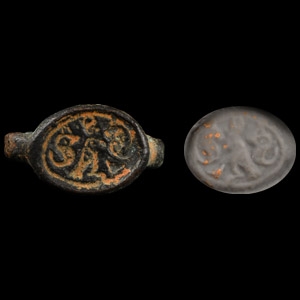
Phoenician Scarab in Bronze Pendant
6th-4th century B.C.Sold for (Inc. bp): £293
With loop and intaglio design to underside featuring depictions of a falcon deity (Ra or Ra-Horakhty) flanked by two uraei; with museum-quality impression. 5.73 grams, 19 mm
Ex London, UK, gentleman 1980-2000s. This lot is accompanied by an illustrated lot declaration signed by the Head of the Antiquities Department, Dr Raffaele D'Amato.
