
Loading, please wait...
LOT 0491
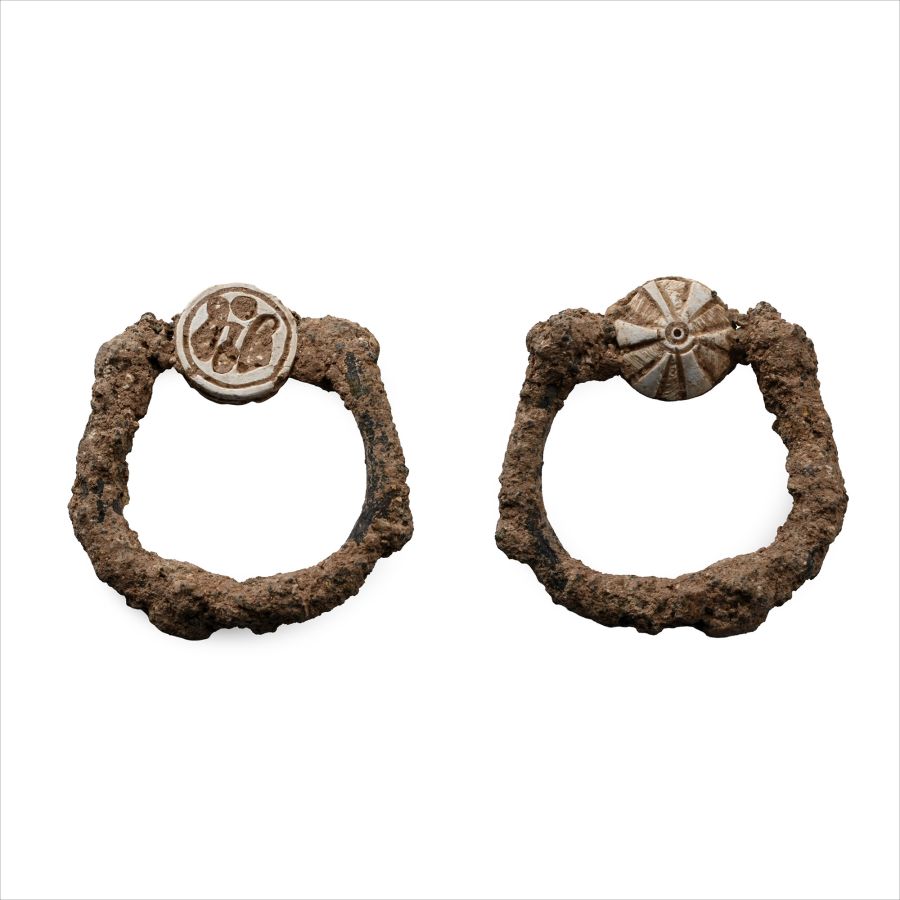
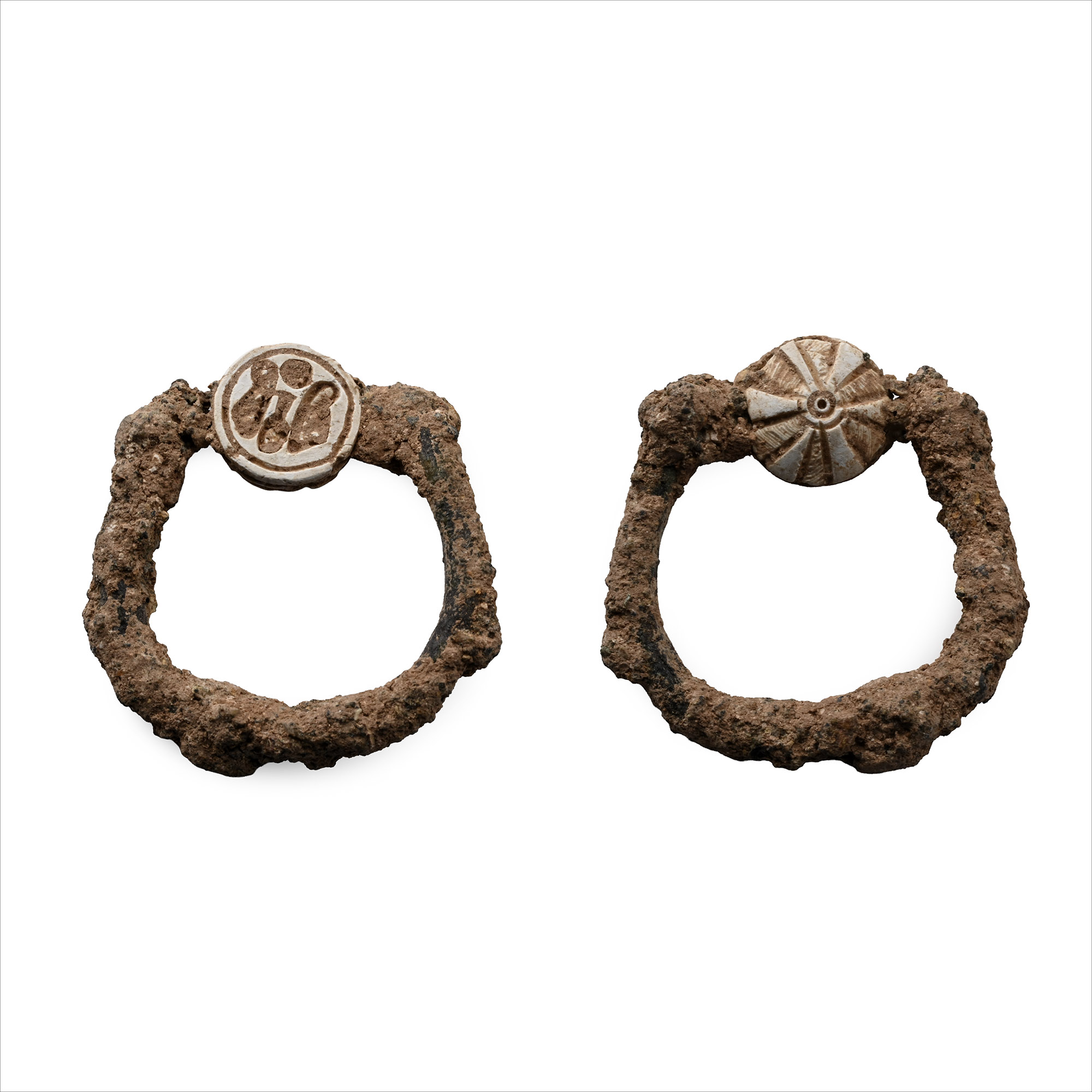
Egyptian Ring with Button Scarab
LATE PERIOD, 664-332 B.C.
1 in. (4.47 grams, 27.51 mm overall, 18.98 mm internal diameter (approximate size British M, USA 6, Europe 12.46, Japan 12)).
Comprising a bronze D-shaped finger ring, the bezel formed by a faience discoid with a radiating geometric stylised rosette pattern on one side and the other featuring a central nefer sign with sun disc above flanked by two maat feathers.
ProvenanceEx London, UK, art market, 1990s.
From a private UK collection.
This lot is accompanied by an illustrated lot declaration signed by the Head of the Antiquities Department, Dr Raffaele D'Amato.
Cf. Petrie, W.M.F., Button and Design Scarabs, London, 1925, pl. X, nos. 430 and 432, for discoids with rosette designs.
CONDITIONTimeLine Auctions follows a vetting process to ensure the authenticity and legality of all items, reinforcing our commitment to integrity and responsible trading. Each antiquity, antique, and coin lot undergoes thorough examination by a vetting committee of at least ten external specialists, professional trade association members, scientists, and archaeologists: Our Vetting Process
AUCTIONS:
TimeLine is a leading auction house specialising in antiquities, ancient art, collectables, natural history, coins, medals, and books. Our auctions offer museums, collectors, historians, and enthusiasts the opportunity to acquire unique and historically significant pieces.
-
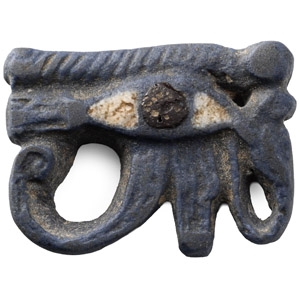
Egyptian Faience Eye of Horus Amulet
Late Period, 664-332 B.C.Sold for (Inc. bp): £520
Openwork wedjat eye amulet with black and white inlay to the eye, with a rearing cobra wearing a sun disc crown at the front. 2.28 grams, 23 mm
From an early 20th century collection. Ex London, UK, gallery. From a private UK collection This lot is accompanied by an illustrated lot declaration signed by the Head of the Antiquities Department, Dr Raffaele D'Amato.
The wedjat-eye amulet (also called the Eye of Horus) became one of the most recognisable symbols in ancient Egyptian culture. It represents the idea of protection, healing, and restoration. In myth, Horus lost his eye during his battle with Seth, and it was later magically restored, symbolising healing and the restoration of wholeness. The Eye of Horus came to represent divine power and protection and was often used in amulets for safeguarding and well-being. -
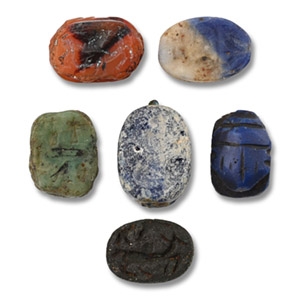
Egyptian Hardstone Scarab Group
Mainly Late Period, 664-332 B.C.Sold for (Inc. bp): £468
Most with an incuse design to the underside including cartouche of Thutmose III, lion attacking a deer, hieroglyphic text and others. 11.5 grams total, 14-18 mm
Acquired on the European art market in the early 2000s. with Galerie Rhéa, Zurich, Switzerland. This lot is accompanied by an illustrated lot declaration signed by the Head of the Antiquities Department, Dr Raffaele D'Amato. -
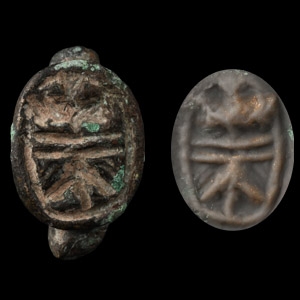
Phoenician Bronze Scaraboid Stamp Seal
6th-4th century B.C.Sold for (Inc. bp): £20
With wire carrier loop and intaglio geometric motif to underside. 4.67 grams, 16 mm
Ex London, UK, gentleman 1980-1990s. This lot is accompanied by an illustrated lot declaration signed by the Head of the Antiquities Department, Dr Raffaele D'Amato.
