
Loading, please wait...
LOT 1479
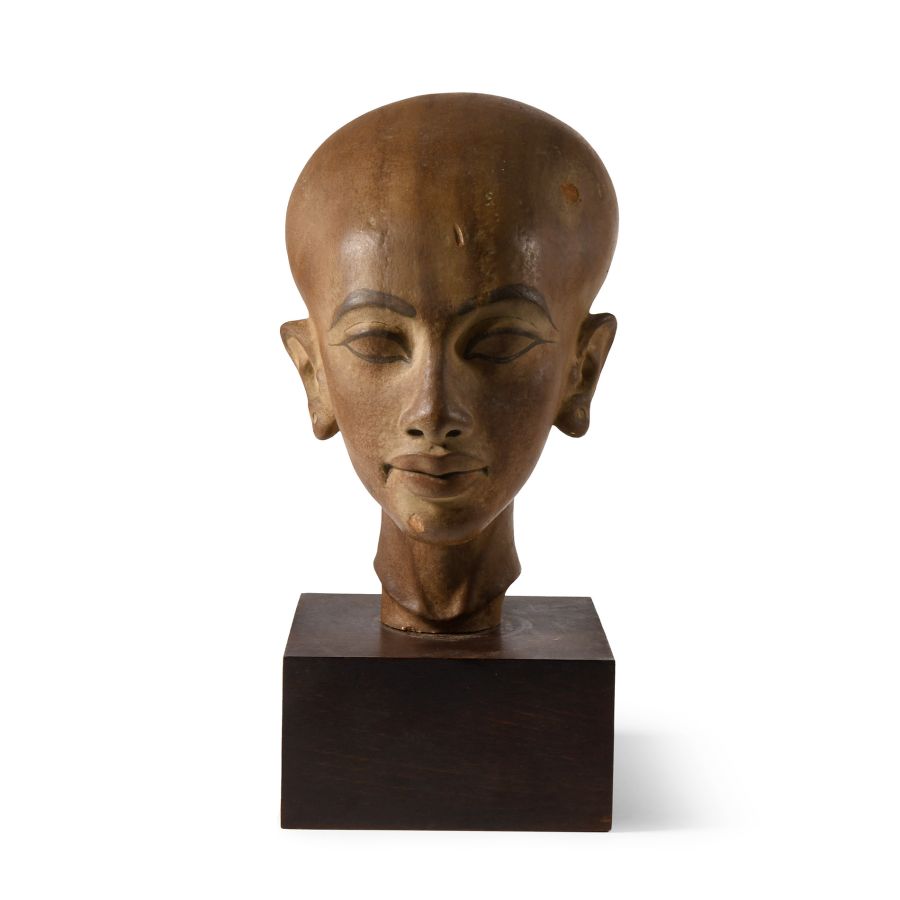
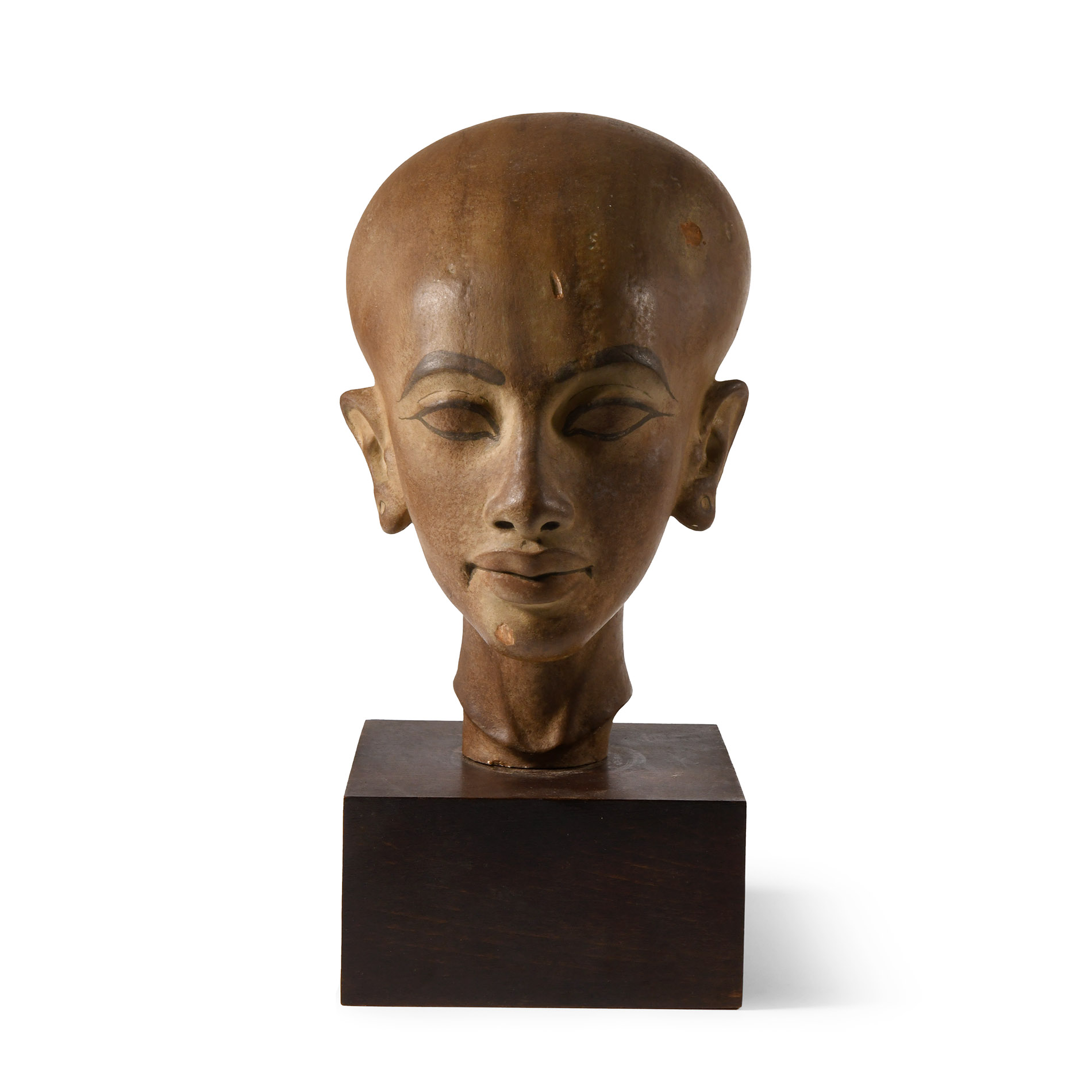
Egyptian Revival Terracotta Head
20TH CENTURY A.D.
9 7/8 in. (1.19 kg total, 25 cm high including stand).
A hollow-formed decorative bust of a princess, based on portrait head of one of the daughters of Akhenaten and Nefertiti from Tell el-Amarna and now in Neues Museum, Berlin; mounted on a wooden base with inset authentication seal verso and inscribed number '544'; after the antique. [No Reserve]
ProvenanceFrom a French collection, Paris.
Ex Parisian gallery, France; latterly with a London, UK, gallery.
TimeLine Auctions follows a vetting process to ensure the authenticity and legality of all items, reinforcing our commitment to integrity and responsible trading. Each antiquity, antique, and coin lot undergoes thorough examination by a vetting committee of at least ten external specialists, professional trade association members, scientists, and archaeologists: Our Vetting Process
AUCTIONS:
TimeLine is a leading auction house specialising in antiquities, ancient art, collectables, natural history, coins, medals, and books. Our auctions offer museums, collectors, historians, and enthusiasts the opportunity to acquire unique and historically significant pieces.
-
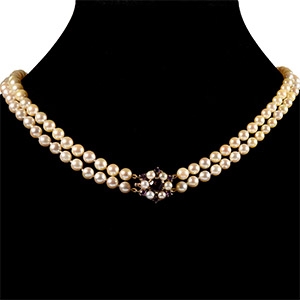
Vintage Cultured Pearl Necklace with Gold, Amethyst and Pearl Clasp
Circa 1950s A.D.Sold for (Inc. bp): £286
In two graduated swags with hexagonal floral clasp set with large central table-cut amethyst, six pearls and six small amethyst studs; both parts of the clasp marked '9CT'. 64.01 grams, 51 cm long
Property of an Essex, UK, gentleman. -
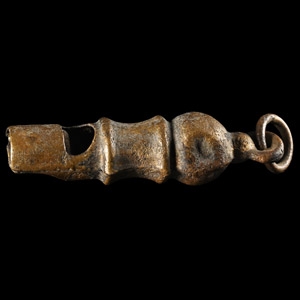
Tudor Period 'Thames' Bronze Working Hawking Whistle
Circa 16th-17th century A.D.Sold for (Inc. bp): £117
With ribbed body and suspension loop, narrow fipple. 2.24 grams, 38 mm
Found on the Thames foreshore, London, UK, circa mid 1980s. Property of an Essex collector. -
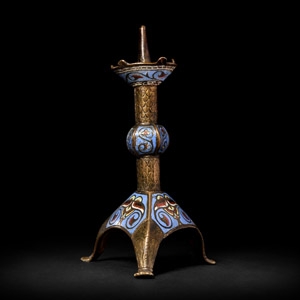
Enamelled Bronze Candlestick
19th century A.D. or earlierEstimate: £1,000 - 1,400 (+bp*)
Opening Bid: £500
With three feet, cylindrical stem with scale detailing and bulbous five-sided collar, lobed dish and conical spike with rounded tip, polychrome champlevé enamelling to the scrolled foliate panels in Limoges style. 205 grams, 15cm high
Fine condition.
French collection, 1990s-early 2000s. with Daguerre Auction, Paris, 18 December 2017, lot 101, with lot tag. From an important Paris gallery, France. Ex private Parisian collection.
