
Loading, please wait...
LOT 1457
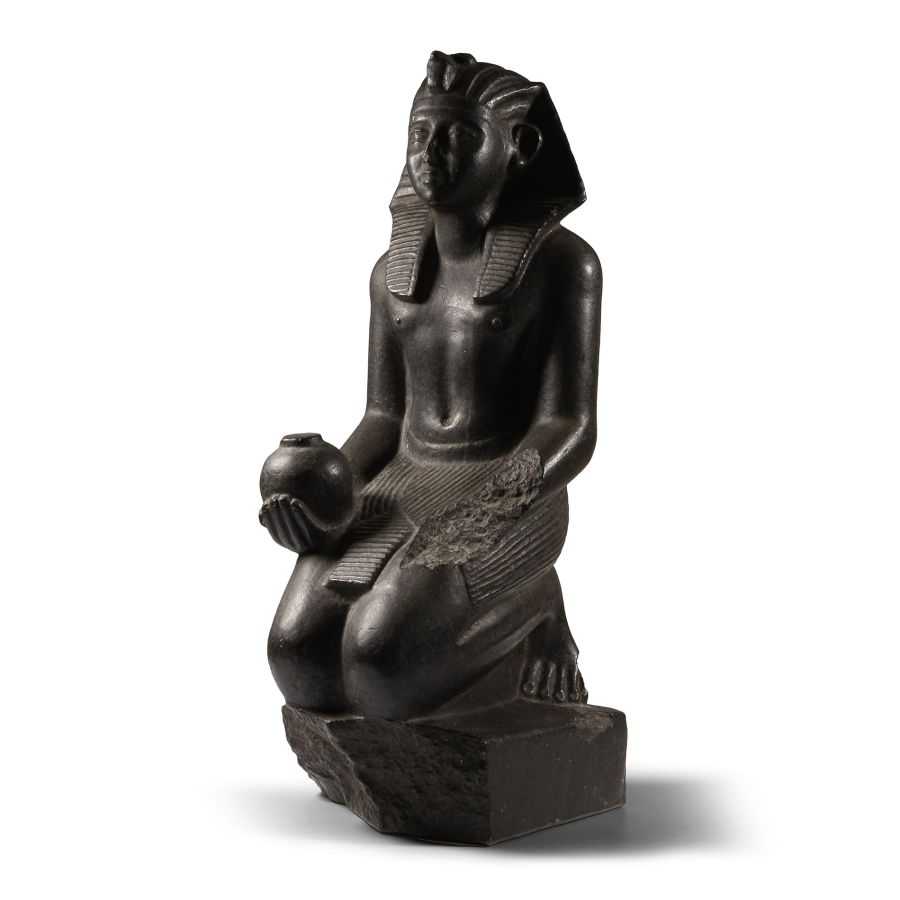
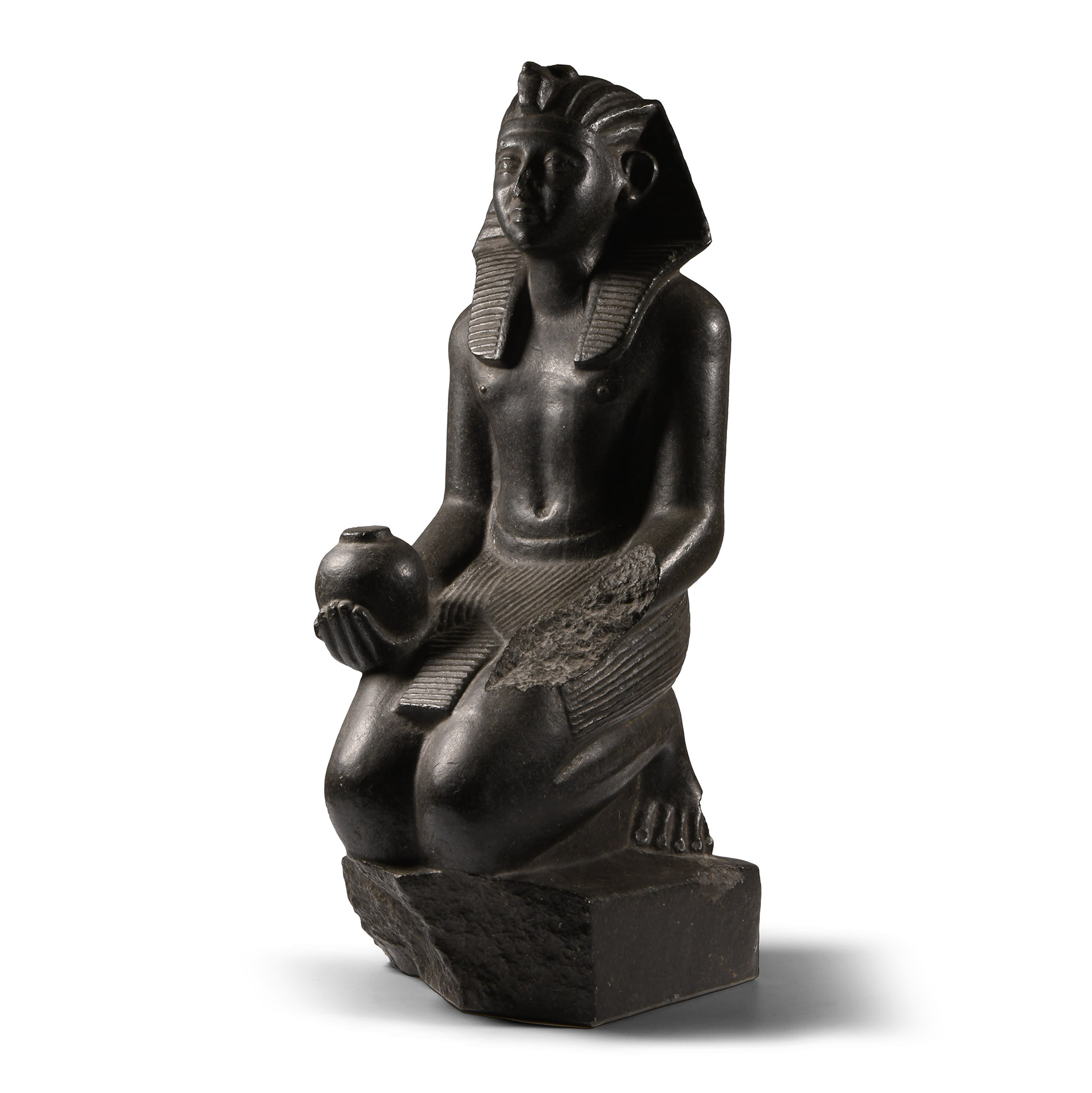
Egyptian Revival Ceramic Sculpture
20TH CENTURY A.D.
18 1/4 in. (3.8 kg, 46.3 cm high).
A hollow-formed decorative composition figurine based on the figure of Sobekhotep V in the Neues Museum, Berlin under accession no. ÄM 10645; with museum stamp inside the base; after the antique. [No Reserve]
ProvenanceFrom a French collection, Paris.
Ex Parisian gallery, France; latterly with a London, UK, gallery.
TimeLine Auctions follows a vetting process to ensure the authenticity and legality of all items, reinforcing our commitment to integrity and responsible trading. Each antiquity, antique, and coin lot undergoes thorough examination by a vetting committee of at least ten external specialists, professional trade association members, scientists, and archaeologists: Our Vetting Process
AUCTIONS:
TimeLine is a leading auction house specialising in antiquities, ancient art, collectables, natural history, coins, medals, and books. Our auctions offer museums, collectors, historians, and enthusiasts the opportunity to acquire unique and historically significant pieces.
-
.jpg)
Larger Than Life-Size Hellenistic Style Female Marble Head
Late 19th-early 20th century A.D. or earlierSold for (Inc. bp): £4,680
Modelled in the round with heavy brow extending to a slightly aquiline nose, deep-set lentoid eyes above high cheekbones, a small mouth with lips slightly parted; the hair combed radially and the outer band parted centrally and gathered at the nape of the neck in a chignon; mounted on a custom-made stand. 32.3 kg total, 49 cm high including stand
Acquired prior to 1952. Hauser family collection, Zurich, Switzerland. French collection Madam X, acquired from the above 1984. UK private collection, 1997. This lot has been checked against the Interpol Database of stolen works of art and is accompanied by search certificate no.11984-206396. -
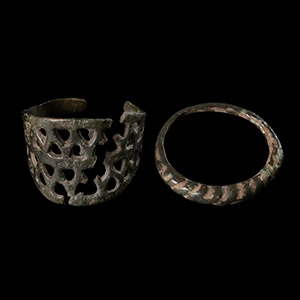
Viking Age Bronze Ring Group
20th century A.D. or earlierSold for (Inc. bp): £20
Comprising: one complete ring with faux-twisted bezel; one fragmentary ring bezel with openwork design. 5.6 grams total, 18-25 mm
From the collection of a North American gentleman, formed in the 1990s. -
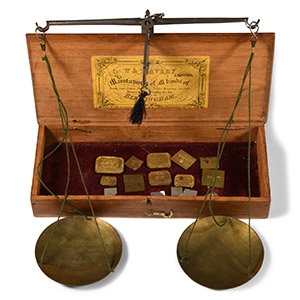
Victorian Pan Scales and Weights
1894-1897 A.D.Sold for (Inc. bp): £39
A wooden box with hinged lid and gummed label, enclosing a weighing scale and two pans; weights in various denominations from two drachms down to two grams. 227 grams total, 20 x 9 cm
Ex London, UK, collection, 1960s.
The box bears the gummed label of W. & T. Avery Limited of Digbeth Birmingham. According to the company's records, it was incorporated as a 'limited company' in 1894, and moved from its original premises at Digbeth to its long-term base at the 'Soho Foundry' in 1897.
