
Loading, please wait...
LOT 0480
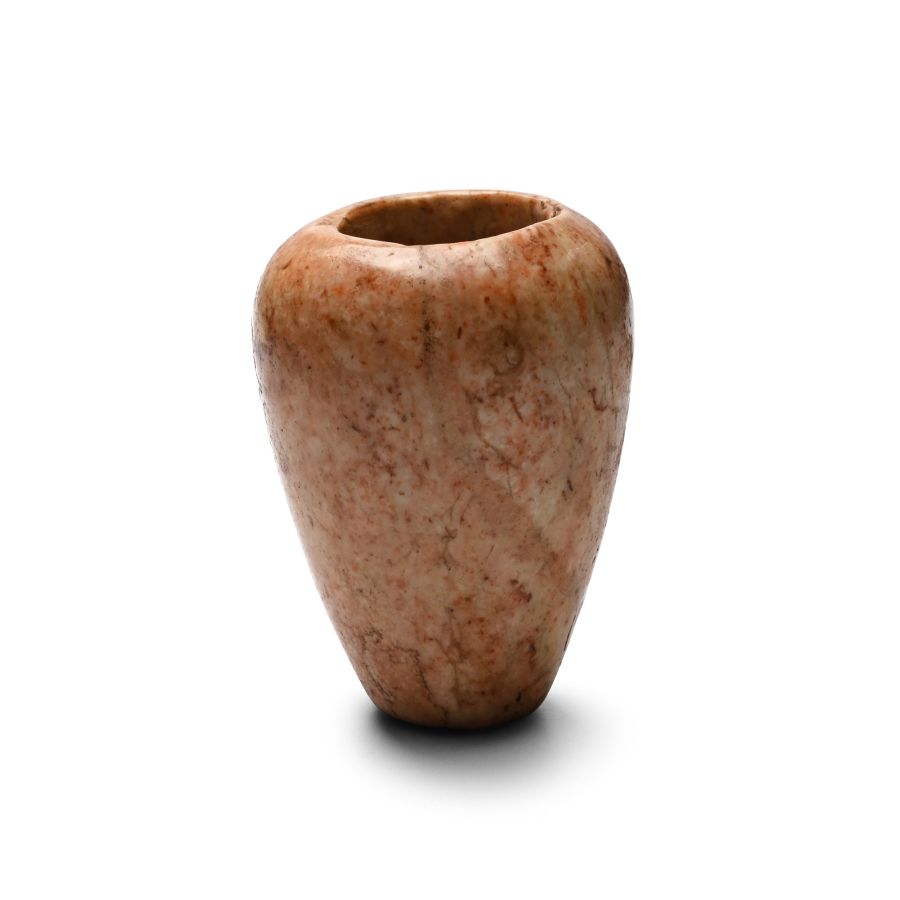
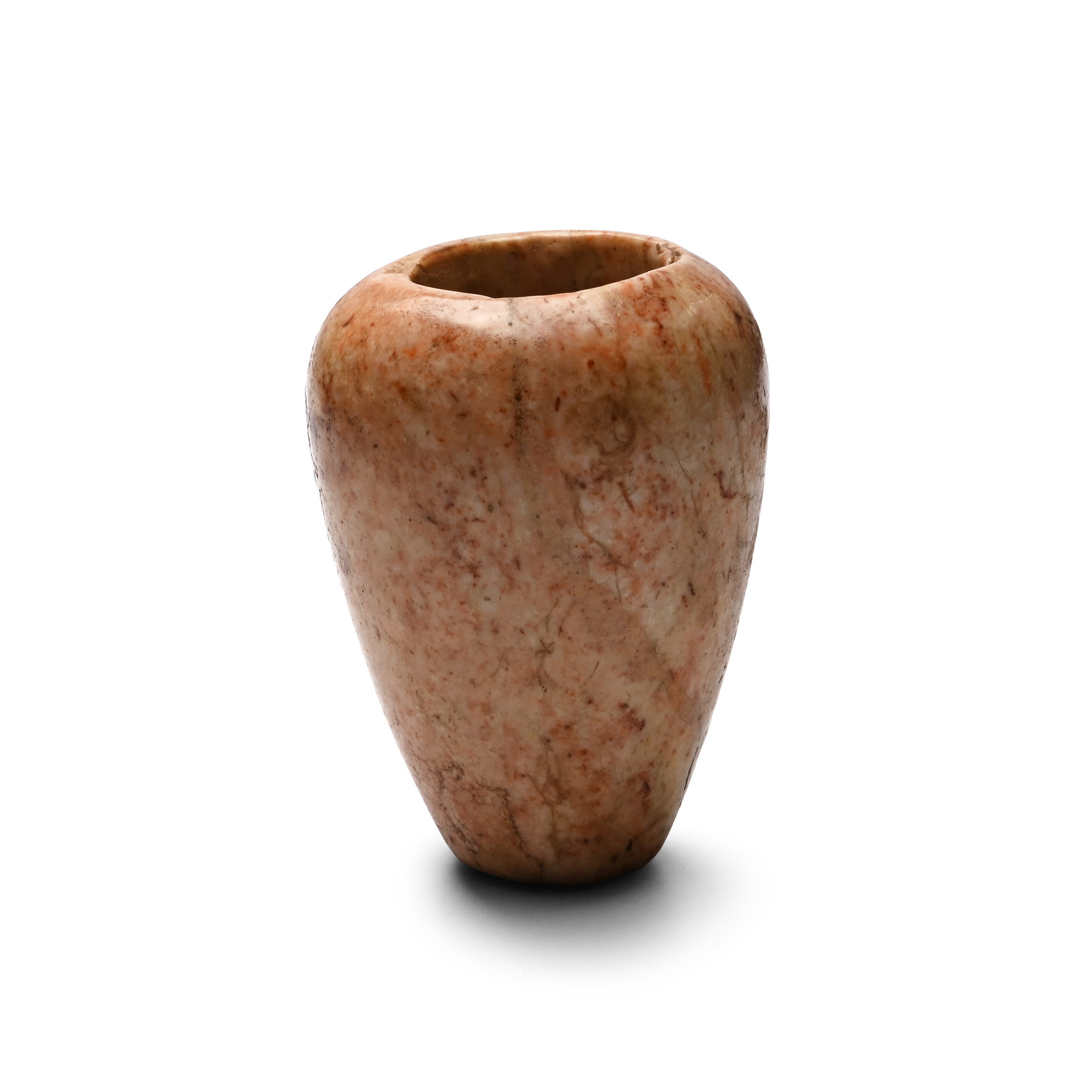
Egyptian Red Mottled Stone Piriform Jar
PREDYNASTIC PERIOD, NAQADA II, 3500-3200 B.C.
3 in. (248 grams, 76 mm).
With narrow base and broad rounded shoulder. [No Reserve]
ProvenanceFrom the private collection of a Canadian gentleman living in Essex, UK, formed since the 1920s-circa 1990.
Property of an Essex lady until the late 1990s; thence by descent.
From the private collection of an Essex gentleman since the late 1990s.
This lot is accompanied by an illustrated lot declaration signed by the Head of the Antiquities Department, Dr Raffaele D'Amato.
TimeLine Auctions follows a vetting process to ensure the authenticity and legality of all items, reinforcing our commitment to integrity and responsible trading. Each antiquity, antique, and coin lot undergoes thorough examination by a vetting committee of at least ten external specialists, professional trade association members, scientists, and archaeologists: Our Vetting Process
AUCTIONS:
TimeLine is a leading auction house specialising in antiquities, ancient art, collectables, natural history, coins, medals, and books. Our auctions offer museums, collectors, historians, and enthusiasts the opportunity to acquire unique and historically significant pieces.
-
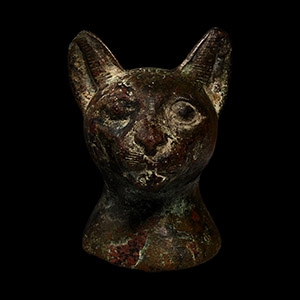
Egyptian Bronze Cat Head with Incised Scarab
Late Period, 664-332 B.C.Sold for (Inc. bp): £5,777
The head of goddess Bastet modelled in the round with alert ears and eyes, fine whisker detailing to the gently elongated muzzle, hair detailing to the inner edges of the ears and the lower outer edges pierced to accept separate earrings, incised scarab on the top of the head. 92.5 grams, 58 mm
Elizabeth Helene Demarest Osten Driesen (1892-1931). Given as a gift to her granddaughter, Lady Annabel Sutherland, by descent in the late 1960s. This lot has been checked against the Interpol Database of stolen works of art and is accompanied by search certificate number no.12762-237137. This lot has been cleared against the Art Loss Register database, and is accompanied by an illustrated lot declaration signed by the Head of the Antiquities Department, Dr Raffaele D'Amato.
In ancient Egypt, the cat was venerated as the sacred animal of the goddess Bastet, whose principal cult centre was Bubastis in the Nile Delta. Although cats were once part of folk practice, their veneration as part of formal cults spread across Egypt during the Late Period. Bastet was closely linked to lion-headed goddesses like Sekhmet, Tefnut, and Pakhet, and the cat itself became associated with solar imagery: the Book of the Dead portrays the sun god as a Great Cat vanquishing Apophis beneath the sacred Ished Tree. The cat could also embody the Eye of the Sun or, more often in Bastet’s case, the Eye of the Moon. Mummified cats were frequently dedicated as votive offerings, and some of their feline-shaped coffins were adorned with finely crafted bronze heads to enhance their divine likeness. -
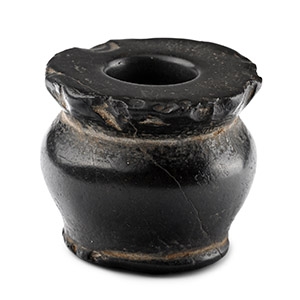
Egyptian Basalt Kohl Pot
16th-11th century B.C.Estimate: £400 - 600 (‡+bp*)
Opening Bid: £200
Carved into the shape of a poppy head with flange rim; old inked collector's number to base '1935.438'. 78 grams, 40 mm
From the estate of a deceased American, acquired between 1970-1989. with Bonhams, London, Knightsbridge, 28 October 2009, no.23 [part]. This lot is accompanied by an illustrated lot declaration signed by the Head of the Antiquities Department, Dr Raffaele D'Amato. -
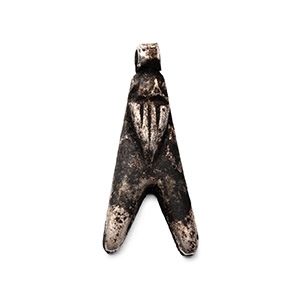
Egyptian Silver Fly Amulet
Late-Ptolemaic Period, 664-30 B.C.Sold for (Inc. bp): £78
With linear detailing to wings, raised eyes, pierced for suspension. 0.84 grams, 19 mm
Ex London, UK, art market, 1990s. This lot is accompanied by an illustrated lot declaration signed by the Head of the Antiquities Department, Dr Raffaele D'Amato.
Although flies might seem like mere nuisances—often shown being swatted by pharaohs or officials—ancient Egyptians admired them for their speed, agility, and persistence. Fly-shaped amulets, first appearing in Naqada II burials around 3200 B.C., became especially popular in the New Kingdom. Made from materials like gold, silver, faience, lapis lazuli, and bone, they served apotropaic purposes, protecting against bites and warding off pests. Some may have also symbolised fertility. Gold fly pendants were even awarded by pharaohs to honour soldiers’ bravery and tenacity.
