
Loading, please wait...
LOT 0537
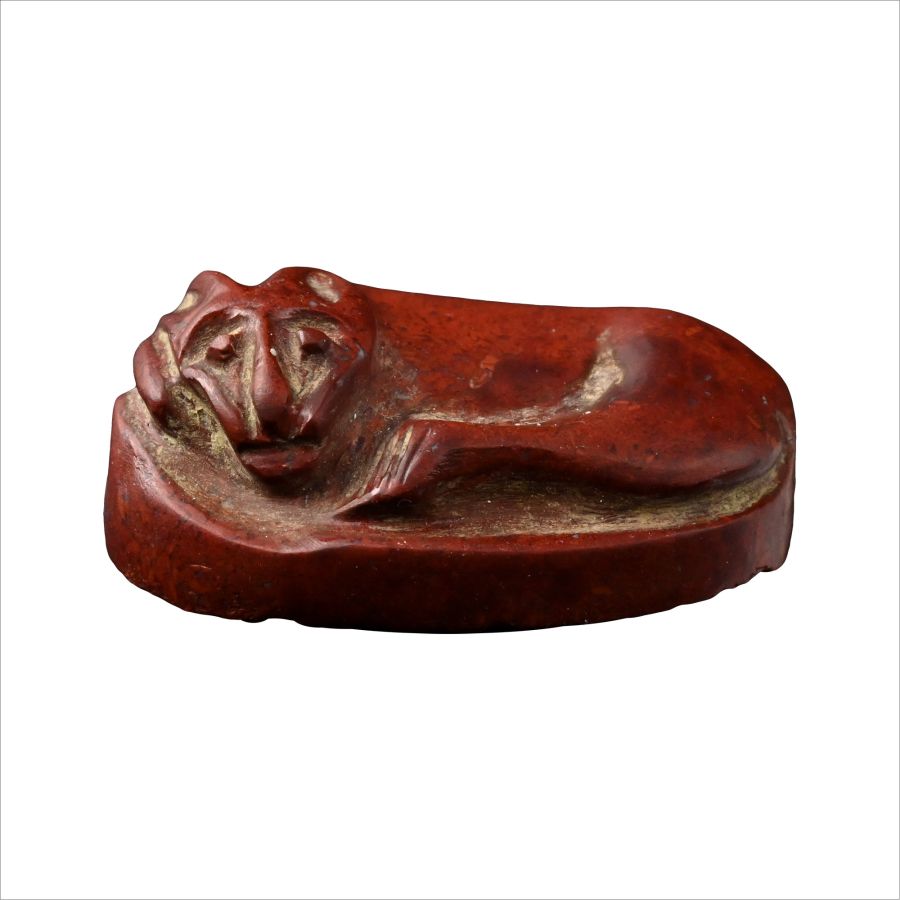
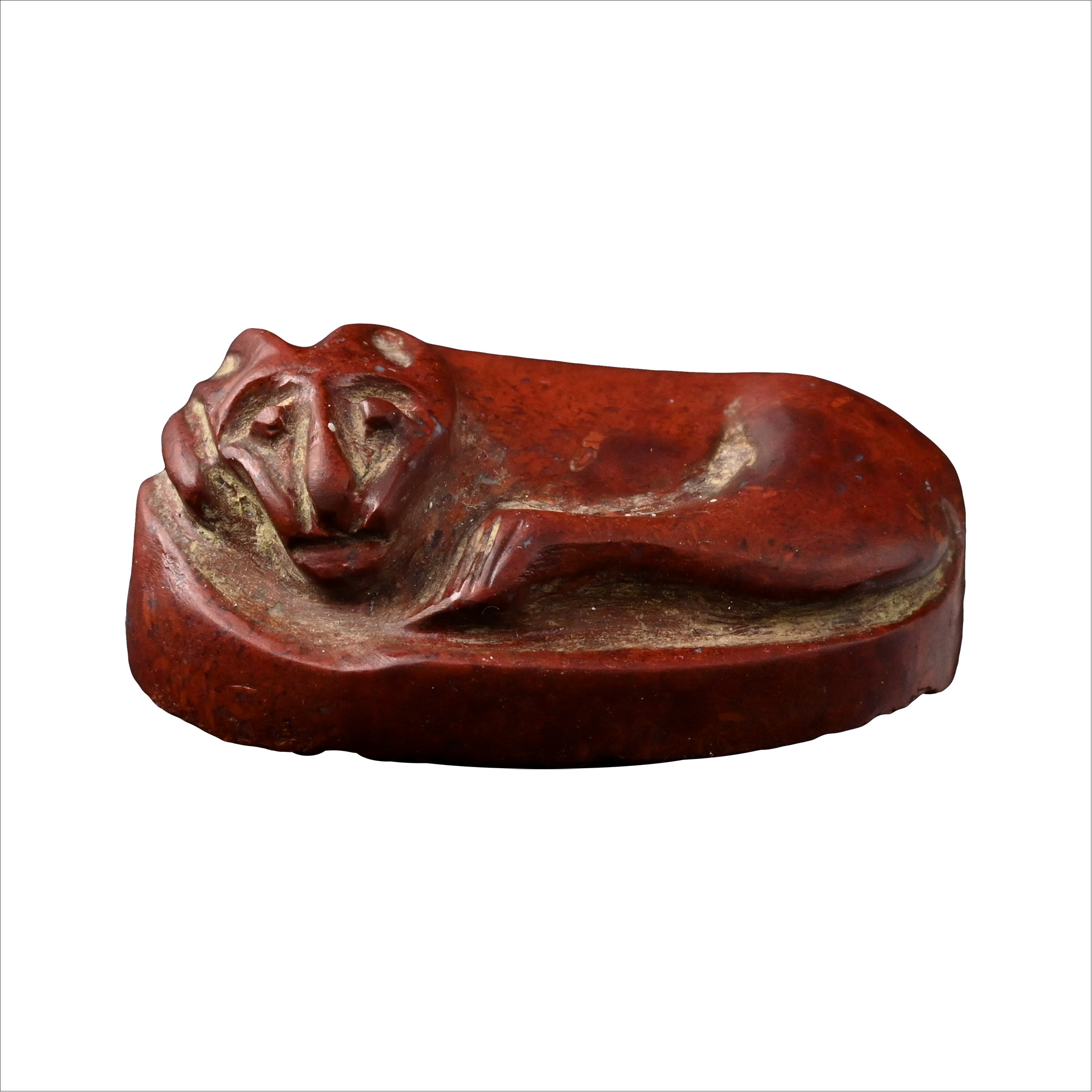
Egyptian Red Jasper Cat Amulet
PTOLEMAIC PERIOD, 332-30 B.C.
7/8 in. (4.58 grams, 22 mm).
Comprising a discoid flat base with high-relief carving of stylised zoomorphic figure with long pointed ears, possibly a hare, pierced for suspension.
ProvenanceFrom a Mayfair, London, UK, gallery, 1990s.
From a private UK collection.
This lot is accompanied by an illustrated lot declaration signed by the Head of the Antiquities Department, Dr Raffaele D'Amato.
TimeLine Auctions follows a vetting process to ensure the authenticity and legality of all items, reinforcing our commitment to integrity and responsible trading. Each antiquity, antique, and coin lot undergoes thorough examination by a vetting committee of at least ten external specialists, professional trade association members, scientists, and archaeologists: Our Vetting Process
AUCTIONS:
TimeLine is a leading auction house specialising in antiquities, ancient art, collectables, natural history, coins, medals, and books. Our auctions offer museums, collectors, historians, and enthusiasts the opportunity to acquire unique and historically significant pieces.
-
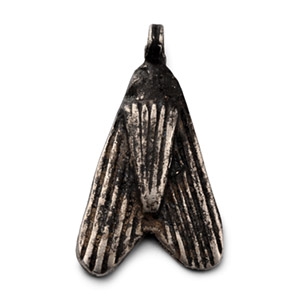
Egyptian Silver Fly Amulet
Late-Ptolemaic Period, 664-30 B.C.Sold for (Inc. bp): £91
With detailing to wings and eyes, loop for suspension above the head. 2 grams, 24 mm
Ex London, UK, gentleman 1980-1990s. This lot is accompanied by an illustrated lot declaration signed by the Head of the Antiquities Department, Dr Raffaele D'Amato.
Considering that Egyptian artists often depicted fly whisks in the hands of pharaohs and high officials, one might assume that flies were merely a nuisance. However, the Egyptians held flies in high regard for their speed, quick reactions, and persistence. Small fly amulets first appeared in burials during the Naqada II Period, around 3200 B.C. These amulets gained popularity, and the materials used to make them varied during the New Kingdom. They were crafted from various materials such as gold, silver, lapis lazuli, carnelian, amethyst, faience, and bone. These amulets were believed to protect against insect bites and to ward off troublesome flying creatures through apotropaic magic. Some believe they may have even symbolised the fly’s fecundity. Additionally, pharaohs would bestow gold fly-shaped pendants as military awards to honour the bravery and persistence of soldiers in battle. -
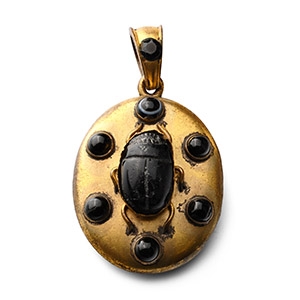
Egyptian Black Stone Scarab in Gilt Bronze Memorial Locket
Late Period, 664-332 B.C. and laterSold for (Inc. bp): £572
Haematite scarab with carapace and mouth, mounted in the centre of a 19th century memorial locket with glazed inner chamber, obverse with six agate cabochons in cells and applied filigree around the central cell mimicking legs. 24.95 grams, 53 mm
From a 19th century collection based on the locket. Acquired on the UK art market. From the collection of G.M.R.H., London, UK. This lot is accompanied by an illustrated lot declaration signed by the Head of the Antiquities Department, Dr Raffaele D'Amato. -
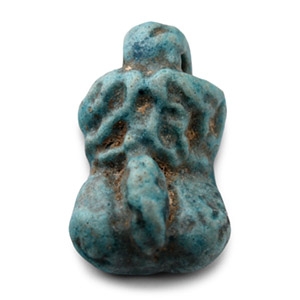
Egyptian Faience Phallic Amulet
Ptolemaic-Roman Period, 323 B.C.-323 A.D.Sold for (Inc. bp): £46
Pendant plaque of male genitals with loop above. 1.08 grams, 17 mm
From an early 20th century collection. This lot is accompanied by an illustrated lot declaration signed by the Head of the Antiquities Department, Dr Raffaele D'Amato.
