
Loading, please wait...
LOT 0438
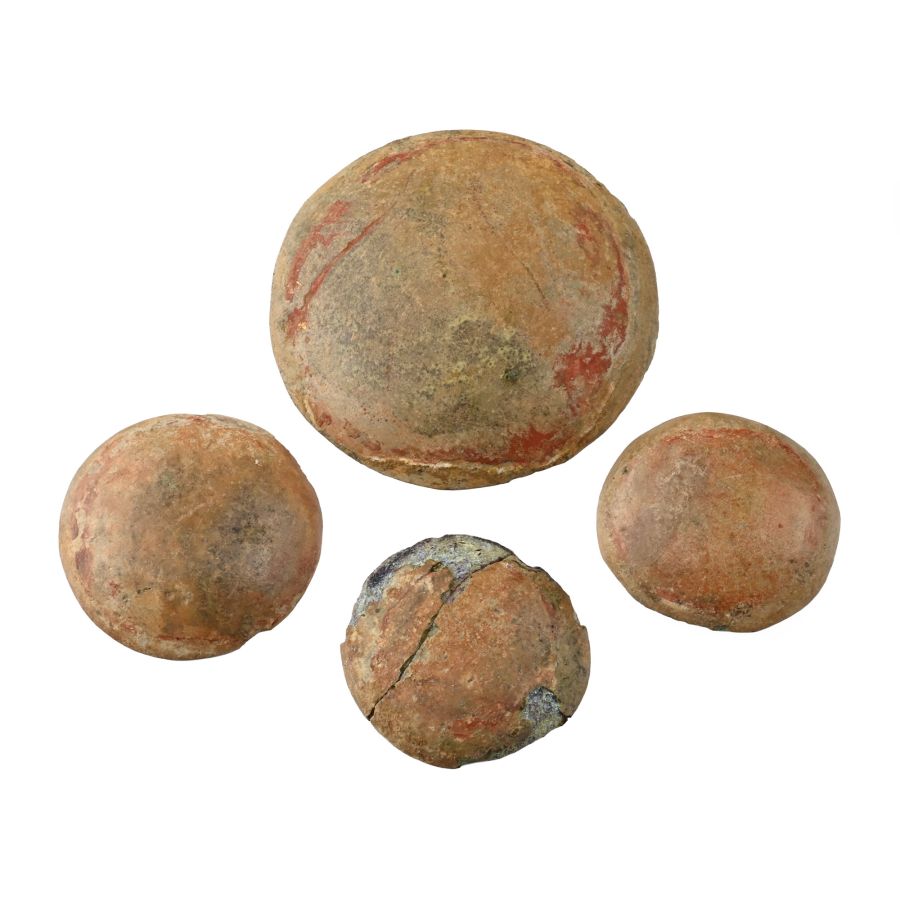
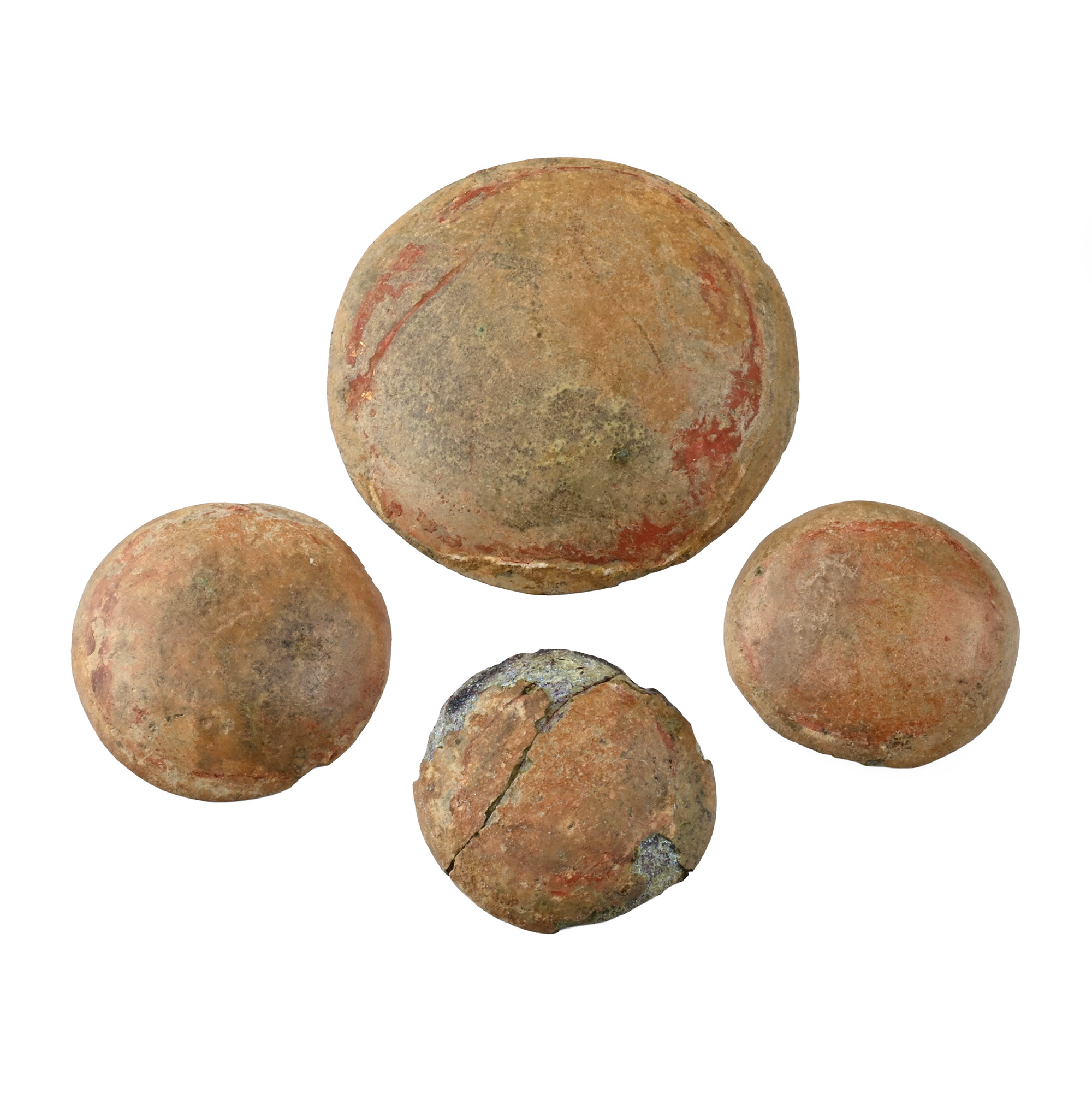
Egyptian Red-Glass Disc Collection
PTOLEMAIC PERIOD, 332-30 B.C.
1 - 1 5/8 in. (45.3 grams total, 25-41 mm).
All four gently domed on one side and flat backed; three are of similar diameter, with one larger. [4, No Reserve]
ProvenanceAcquired on the UK art market, 1977-1979.
Private collection, London.
This lot is accompanied by an illustrated lot declaration signed by the Head of the Antiquities Department, Dr Raffaele D'Amato.
TimeLine Auctions follows a vetting process to ensure the authenticity and legality of all items, reinforcing our commitment to integrity and responsible trading. Each antiquity, antique, and coin lot undergoes thorough examination by a vetting committee of at least ten external specialists, professional trade association members, scientists, and archaeologists: Our Vetting Process
AUCTIONS:
TimeLine is a leading auction house specialising in antiquities, ancient art, collectables, natural history, coins, medals, and books. Our auctions offer museums, collectors, historians, and enthusiasts the opportunity to acquire unique and historically significant pieces.
-
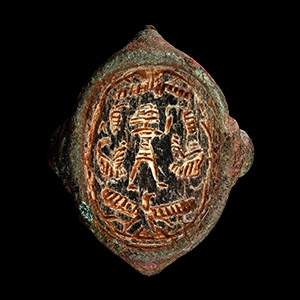
Phoenician Scarab in Bronze Pendant
6th-4th century B.C.Sold for (Inc. bp): £351
With integral loop and flanking uraei, underside features reserved depictions of a winged sun disc, with central human or divine figure below flanked by uraei and quadrupeds, and a vulture with outspread wings beneath; accompanied by a museum-quality impression. 9.06 grams, 22 mm
Ex London, UK, gentleman 1980-2000s. This lot is accompanied by an illustrated lot declaration signed by the Head of the Antiquities Department, Dr Raffaele D'Amato. -
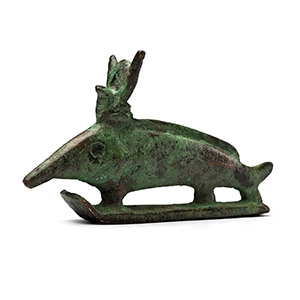
Egyptian Bronze Oxyrhynchus Fish
Late Period, 664-332 B.C. or laterEstimate: £700 - 900 (+bp*)
Opening Bid: £350
Modelled in the round on a sledge attached by ventral and pectoral fins; with forked tail, a dorsal ridge, and a tapering nose, featuring recessed circular eyes to accept an insert, a horned sun disc headdress fronted by a uraeus, and a suspension loop behind. 203 grams, 11.5 cm
From the collection of a gentleman, acquired on the London art market in the 1990s. This lot is accompanied by an illustrated lot declaration signed by the Head of the Antiquities Department, Dr Raffaele D'Amato. -
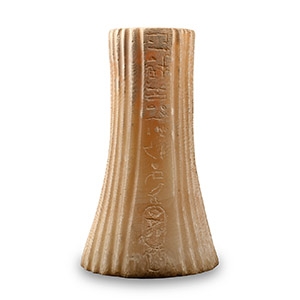
Egyptian Alabaster Headrest Pillar with Hieroglyphic Inscription
Old Kingdom, 5th-6th Dynasty, 2494-2181 B.C.Sold for (Inc. bp): £1,950
Formed as a carved cone with fluting to the vertical face; plain panel with incised hieroglyphic text and cartouche; one part of a head-rest assembly. 628 grams, 12 cm
Private collection of Mr A., Montreal, acquired in the early 1980s. Private collection, Switzerland, acquired from the above in 1993. Thence by descent, family collection, from the late 1990s. This lot has been checked against the Interpol Database of stolen works of art and is accompanied by a search certificate number no.12849-241633. This lot has been cleared against the Art Loss Register database, and is accompanied by an illustrated lot declaration signed by the Head of the Antiquities Department, Dr Raffaele D'Amato.
