
Loading, please wait...
_900x900.jpg "Egyptian Quartzite Fragment with Hieroglyphs")
_200x200.jpg "Egyptian Quartzite Fragment with Hieroglyphs")


.jpg "Egyptian Quartzite Fragment with Hieroglyphs")
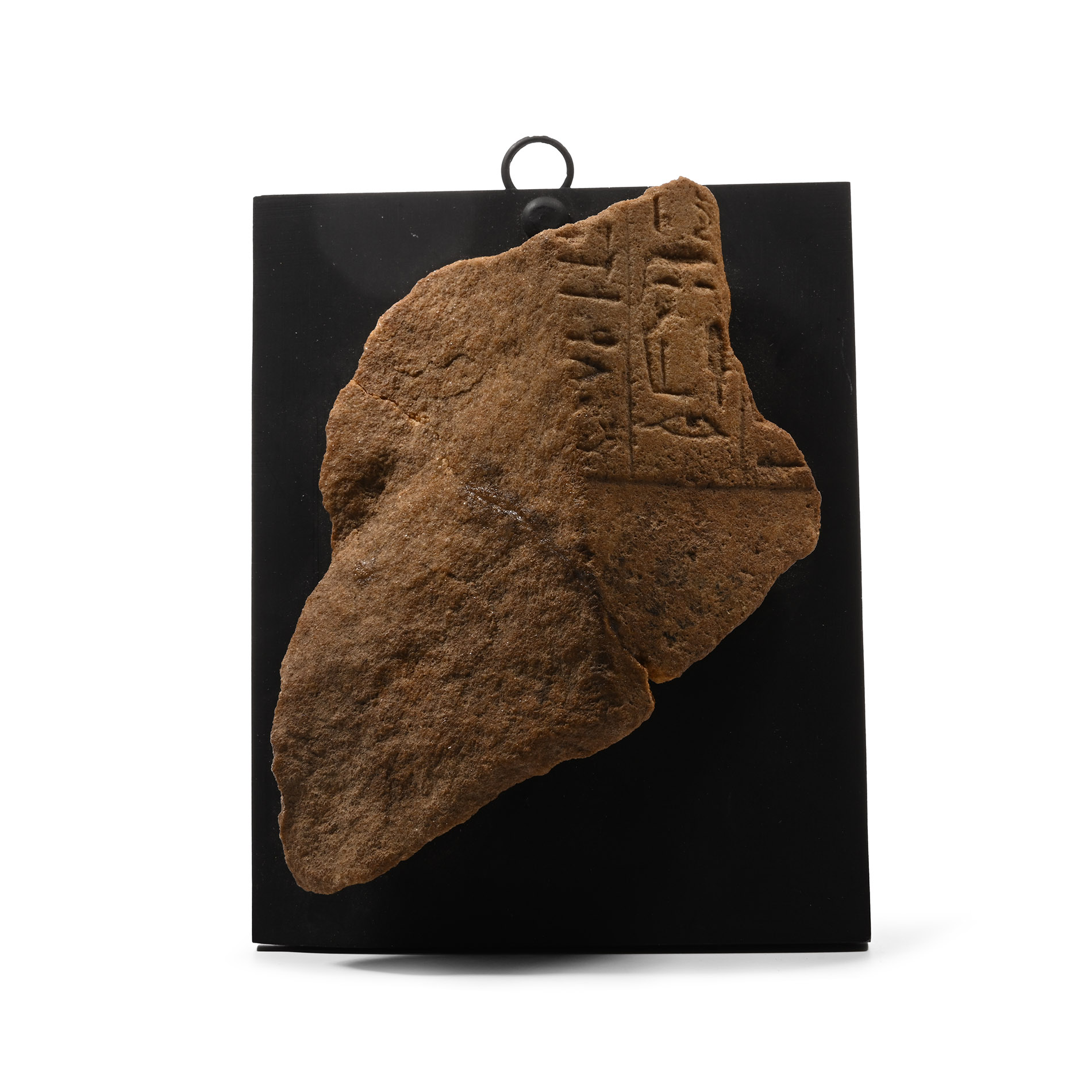
LOT 0008
Egyptian Quartzite Fragment with Hieroglyphs
NEW KINGDOM, 1550-1069 B.C.
5 1/8 in. (320 grams total, 13 cm wide including stand).
Dressed stela or shrine fragment inscribed with three vertical columns of enigmatic hieroglyphs; mounted on a plaque.
ProvenanceFrom an American deceased estate, acquired between 1970-1989.
with Bonhams, London, 28 October 2009, no.23.
Private collection, Europe.
The second-to-last complete sign in the central register is a semi-hieratic version of the balancing post hieroglyph, suggesting an 18th Dynasty or later New Kingdom date.
CONDITIONTimeLine Auctions follows a vetting process to ensure the authenticity and legality of all items, reinforcing our commitment to integrity and responsible trading. Each antiquity, antique, and coin lot undergoes thorough examination by a vetting committee of at least ten external specialists, professional trade association members, scientists, and archaeologists: Our Vetting Process
AUCTIONS:
TimeLine is a leading auction house specialising in antiquities, ancient art, collectables, natural history, coins, medals, and books. Our auctions offer museums, collectors, historians, and enthusiasts the opportunity to acquire unique and historically significant pieces.
-
.jpg)
Egyptian Steatite Scarab with Bes
Late Period, 664-332 B.C.Estimate: £150 - 200 (+bp*)
Opening Bid: £75
Plano-convex in section with detailed obverse, the underside with the figure of Bes flanked by adoring baboons and sun discs. 10.7 grams, 31 mm
Ex London, UK collection, 1990s.
Bes became one of ancient Egypt's most popular apotropaic deities from the New Kingdom onwards. Despite his somewhat fearful appearance, Bes was the patron and protector of pregnant women and children and believed to protect the wearer from snakes. The depiction of baboons flanking Bes with their arms raised before the sun disk was a common feature on temple wall reliefs. In ancient Egyptian religious literature, baboons heralded the dawn and, thus, the rebirth of the sun. -
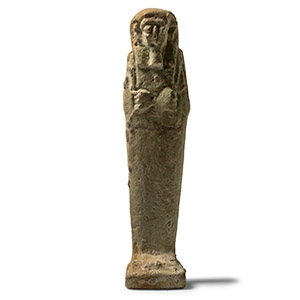
Egyptian Pale Green Faience Shabti
Ptolemaic Period, 332-30 B.C.Sold for (Inc. bp): £156
Mummiform figure with dorsal pillar, hands folded across the chest holding a pick and flail, with seed bag over left shoulder. 29.8 grams, 90 mm
Acquired 1950s-1960s. From the estate of a deceased Norfolk, UK, gentleman. Accompanied by a dealer's information display card. -
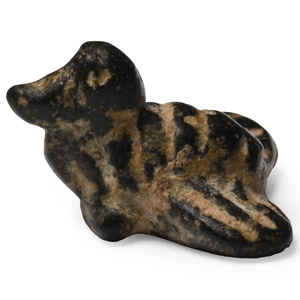
Phoenician Stone Bird-Shaped Weight
Late 1st millennium B.C.Sold for (Inc. bp): £351
Fashioned as a seated bird with partly outspread wings. 4.15 grams, 15 mm
From a London, UK, based collection, 1990s.
