
Loading, please wait...


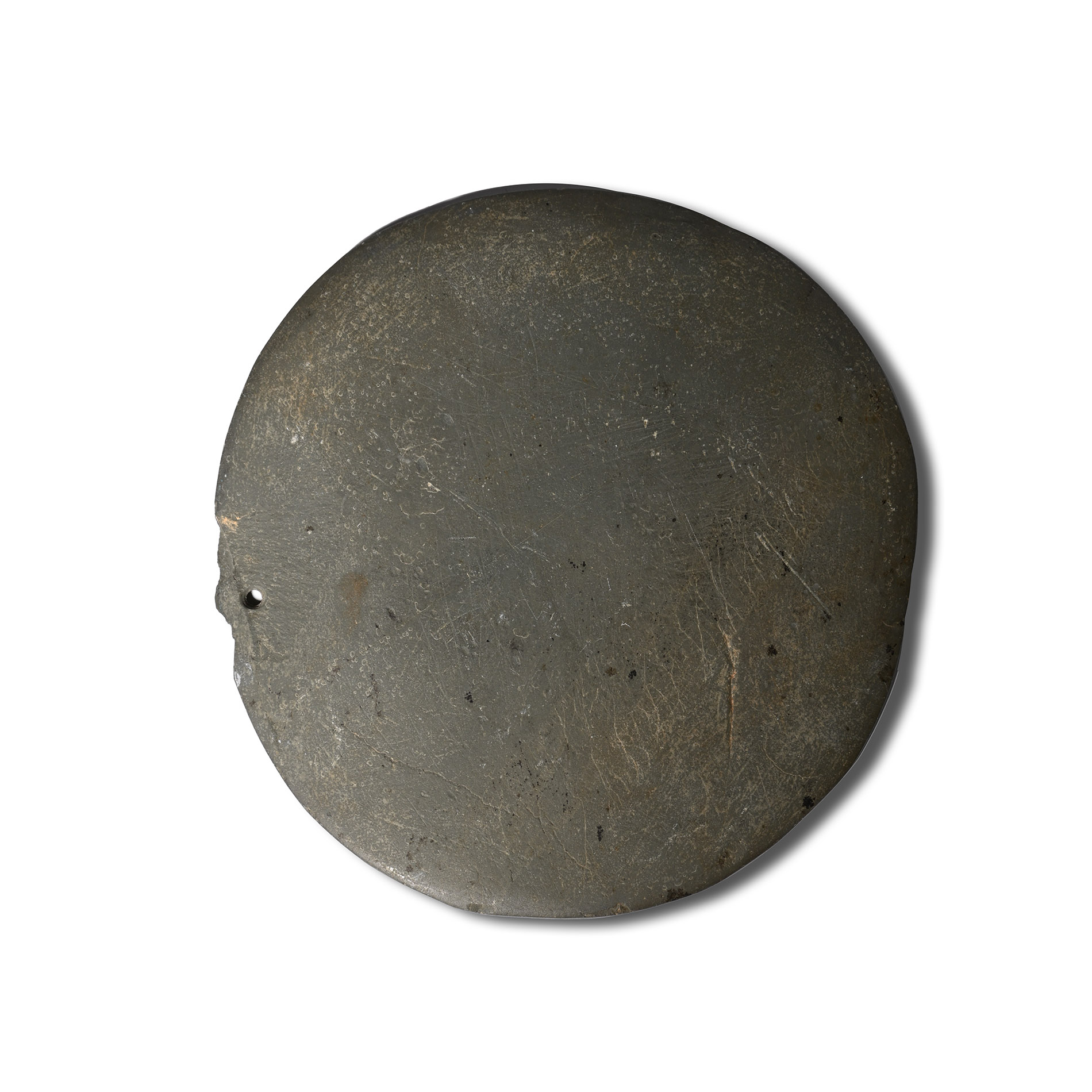
LOT 0004
Egyptian Pre-Dynastic Greywacke Palette
PREDYNASTIC PERIOD, NAQADA III, CIRCA 3300–2960 B.C.
5 1/4 in. (238 grams, 13.3 cm).
Circular in plan with smoothed faces, pierced through the edge.
ProvenanceAcquired in the mid 1980s-1990s.
Private collection, Switzerland, thence by descent.
Private collection, since the late 1990s.
Cf. Petrie, W.M.F., Corpus of Prehistoric Pottery and Palettes, London, 1917, pl.LIII, 77, for two similar examples from the Predynastic cemetery at Tarkhan.
FootnotesPalettes were utilitarian objects used in the Predynastic Period to grind and mix mineral-based eye pigments (including ochre, malachite, and haematite). Greywacke cosmetic palettes were easily carved in various shapes and sizes, including zoomorphic representations and geometric forms. The symbolism of this circular palette may be connected to the sun disc, which featured prominently in ancient Egyptian culture.
The palette was so significant in Predynastic society that purely ceremonial versions, often impractically large for their original purpose, were produced for use in temple rituals. The most famous is the highly decorated Narmer Palette discovered at Hierakonpolis.
TimeLine Auctions follows a vetting process to ensure the authenticity and legality of all items, reinforcing our commitment to integrity and responsible trading. Each antiquity, antique, and coin lot undergoes thorough examination by a vetting committee of at least ten external specialists, professional trade association members, scientists, and archaeologists: Our Vetting Process
AUCTIONS:
TimeLine is a leading auction house specialising in antiquities, ancient art, collectables, natural history, coins, medals, and books. Our auctions offer museums, collectors, historians, and enthusiasts the opportunity to acquire unique and historically significant pieces.
LOT 0004
Egyptian Pre-Dynastic Greywacke Palette
Estimate £500 - 700€580 - 810 (for guidance only)$680 - 950 (for guidance only)
-
.jpg)
Phoenician Painted Terracotta Wine Jug
Circa 900-800 B.C.Sold for (Inc. bp): £176
With globular body and carinated tubular neck, flared rim to the mouth; loop handle to the shoulder and low basal ring; painted radiating strokes to the shoulder, segmented band to the equator with hatching and other decoration. 720 grams, 20.6 cm
Property of a British collector, acquired in the 1980s. From a family collection of a North American gentleman living in the UK. -
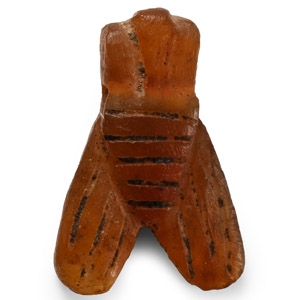
Egyptian Carnelian Fly Amulet
Late Period, 664-332 B.C.Sold for (Inc. bp): £72
Carved with ribbed body and eye detailing; drilled through the eyes for suspension. 0.37 grams, 12 mm
From the private collection of H. Norry, 1980s-1990s. -
.jpg)
Egyptian Limestone 'Floral' Inlay Group
Roman Period, 30 B.C.-323 A.D.Sold for (Inc. bp): £26
Group of discoid inlay plaques or gaming counters, crinoids with cinquefoil motif. 36 grams total, 11-18 mm
From a central London ADA dealership, 1980-1990.
