
Loading, please wait...
LOT 0513
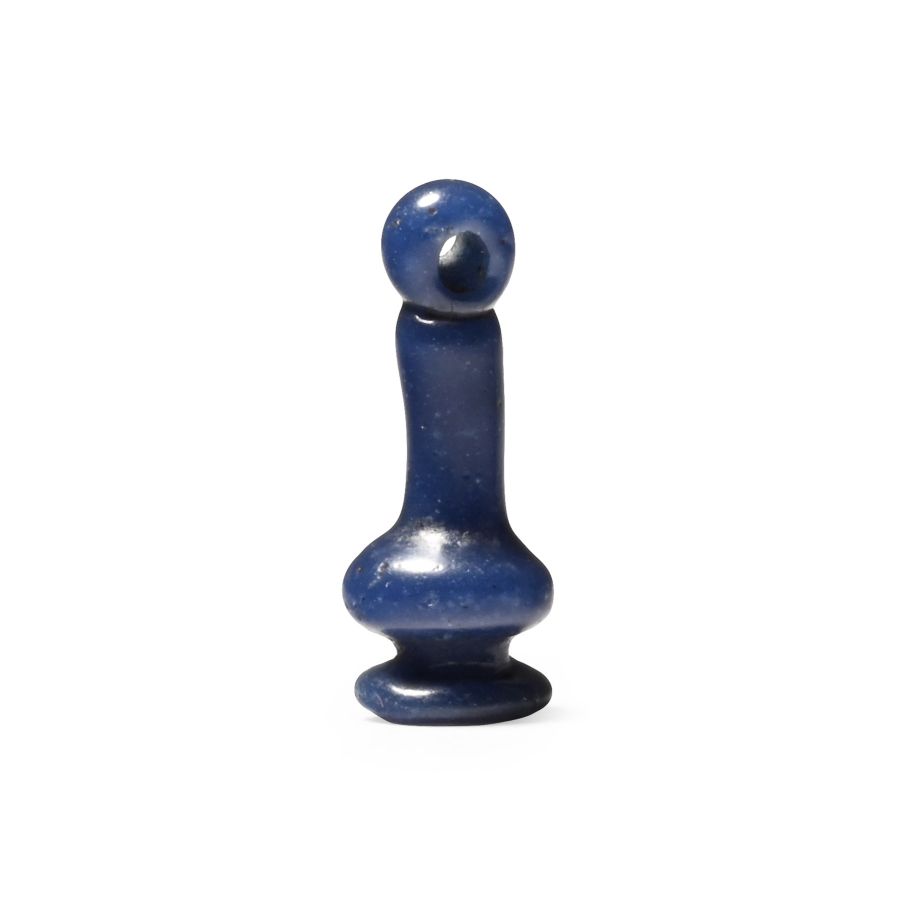
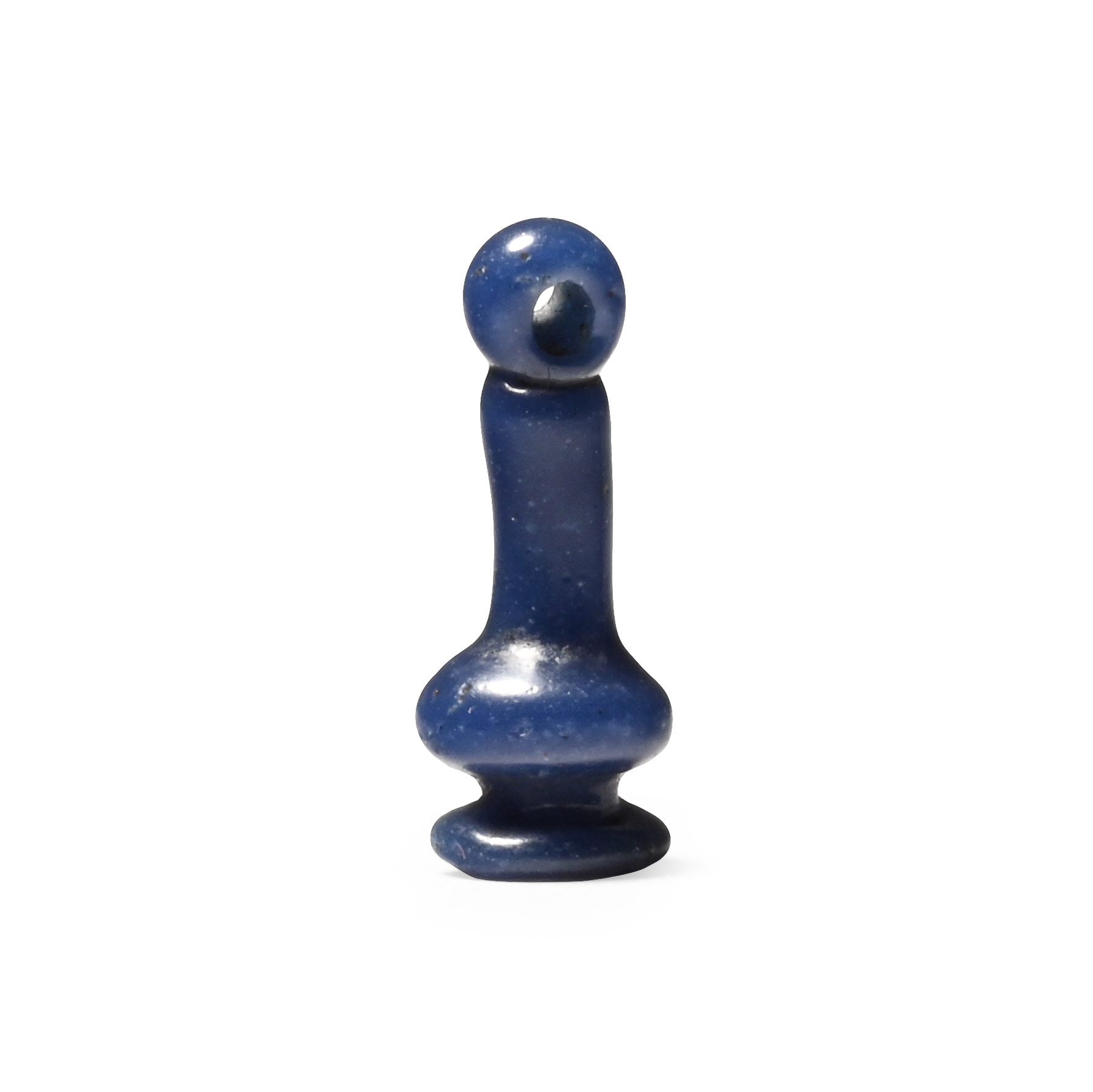
Egyptian Poppy Seed Amulet
NEW KINGDOM, 1550-1070 B.C.
1/2 in. (0.20 grams, 12 mm).
A dark blue glass amulet formed as a poppy seed, suspension loop to the top; chipped at the base. [No Reserve]
ProvenanceEx Constable collection, 1990s.
Ex Ancient & Oriental, UK.
Ex P. Morris collection.
Accompanied by an Ancient & Oriental certificate of authenticity.
TimeLine Auctions follows a vetting process to ensure the authenticity and legality of all items, reinforcing our commitment to integrity and responsible trading. Each antiquity, antique, and coin lot undergoes thorough examination by a vetting committee of at least ten external specialists, professional trade association members, scientists, and archaeologists: Our Vetting Process
AUCTIONS:
TimeLine is a leading auction house specialising in antiquities, ancient art, collectables, natural history, coins, medals, and books. Our auctions offer museums, collectors, historians, and enthusiasts the opportunity to acquire unique and historically significant pieces.
-
.jpg)
Egyptian Faience Amulet of Tawaret
664-332 B.C.Estimate: £350 - 450 (‡+bp*)
Opening Bid: £175
Modelled in the round, with a dorsal pillar and a loop at the shoulder, the goddess is in hippopotamus form, with a human torso and arms and a crocodile tail. 7.9 grams, 50 mm
Private collection, Carouge, Switzerland, assembled in the 1980s-1990s. Thence by descent to the collection of Mr S.P., since 2020. -
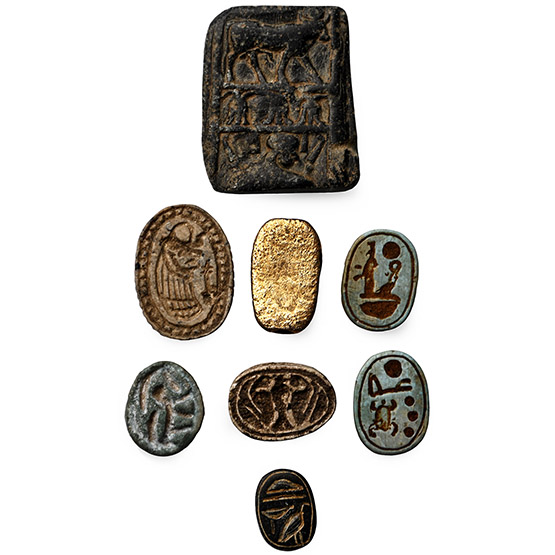
Egyptian Mixed Scarab Collection
2nd-1st millennium B.C. and laterSold for (Inc. bp): £780
Stone plaque with raised relief depictions of the Apis bull and a falcon deity beneath; a mixed group of scarabs and scaraboids, most bearing text or motifs on the underside, including: a rope border enclosing the head of a lion wearing a sun disc and uraeus; a plain gold scaraboid; a line border enclosing the throne name of Amenhotep III (neb-maat-Re); an indeterminate standing figure; a central hes- vase flanked by rearing cobras; a group of hieroglyphs, perhaps a slightly incorrect spelling of the throne name of Amenhotep II (akheperu-Re); and a group of four hieroglyphs. 36.9 grams total, 14-35 mm
From the collection of a gentleman, acquired on the London art market in the 1990s. -
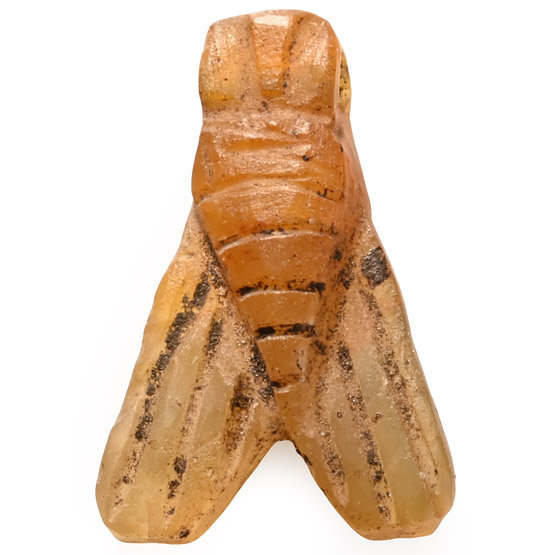
Egyptian Carnelian Fly Amulet
Late Period, 664-332 B.C.Sold for (Inc. bp): £130
With detailing to wings and body, loop for suspension above the head. 0.33 grams, 12 mm
Ex H Norri collection, Milton Keynes, Bedfordshire, UK, 1980s-1990s.
Although flies might seem like mere nuisances, the ancient Egyptians admired them for their speed, agility, and persistence. Fly-shaped amulets, first appearing in Naqada II burials around 3200 B.C., became particularly popular during the New Kingdom and afterwards. Made from materials such as gold, silver, faience, lapis lazuli, and bone, they served apotropaic functions, protecting against bites and warding off pests. Some may have also symbolised fertility. Gold fly pendants were even awarded by pharaohs to honour soldiers’ bravery and tenacity.
