
Loading, please wait...
LOT 0460
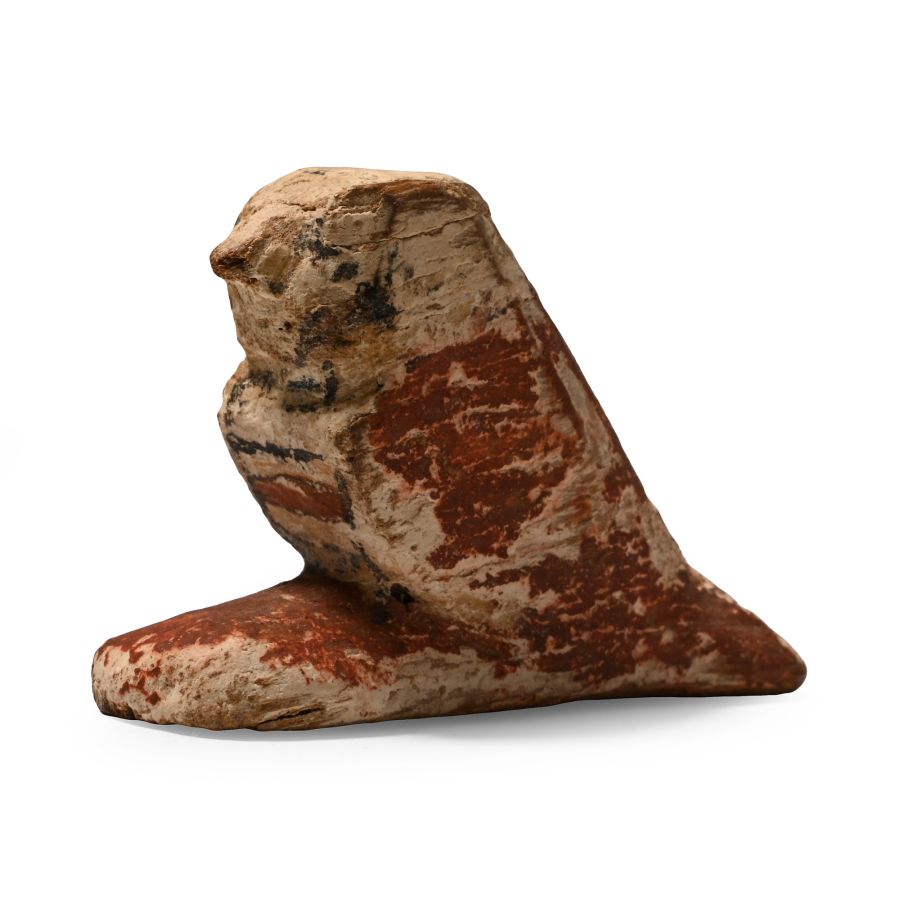
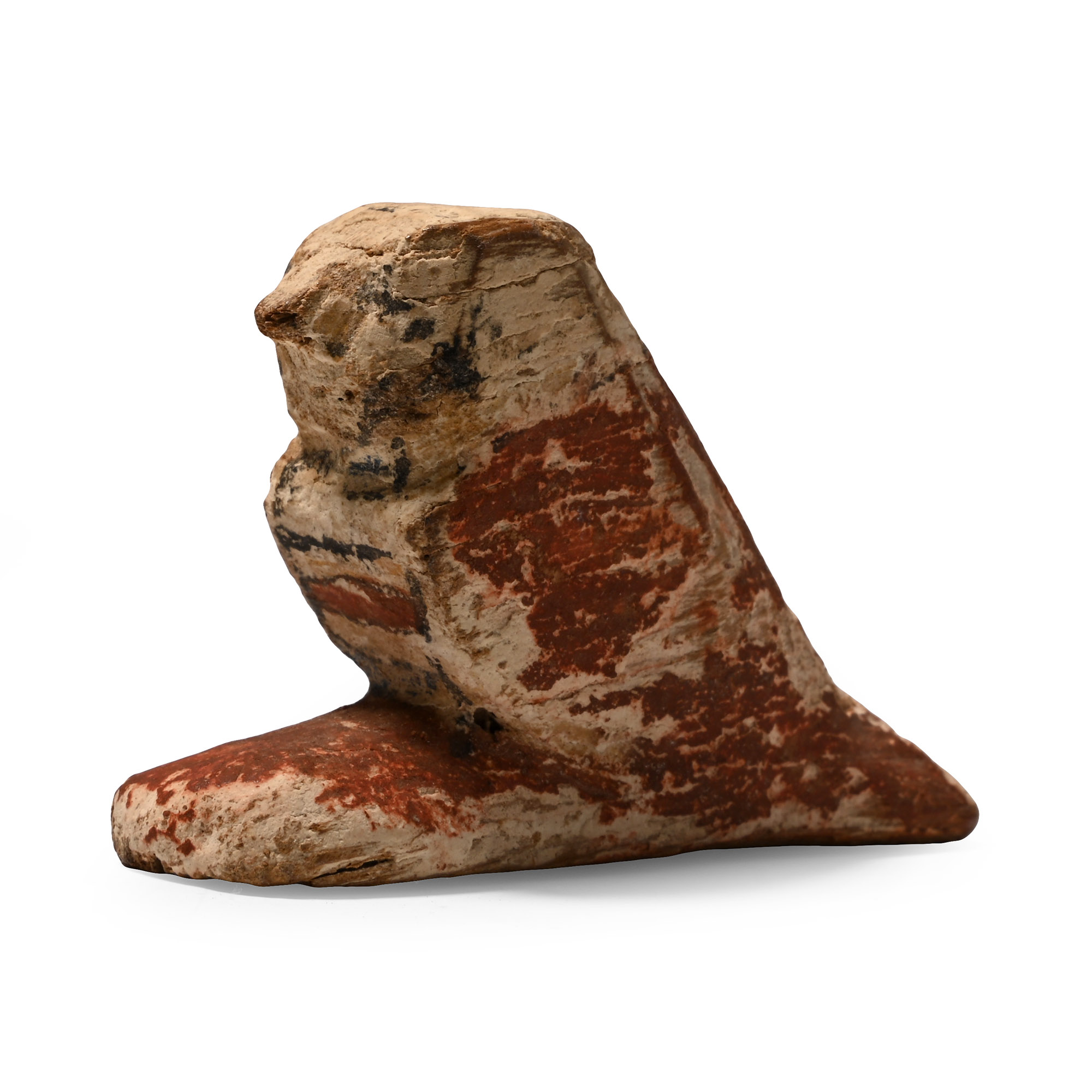
Egyptian Polychrome Wood Sokar Falcon
LATE PERIOD, 664-332 B.C.
2 3/4 in. (16 grams, 71 mm).
Statuette depicting the couchant falcon god Sokar with wings folded along the sides of the body; chest, wings, and legs with painted details; inked legend on the underside reading 'Ex George Wathen / 1893 / 12'. [No Reserve]
ProvenanceEx George Henry Wathen collection from 1843, who wrote and illustrated the important work 'The Arts, Antiquity and Chronology of Ancient Egypt'.
From the collection of David Donlan (1947–2025), a dedicated and lifelong collector with a passion for the ancient world and the natural sciences, forming his collection from 1960s onwards, using many reputable dealers across the United Kingdom, including the well-regarded Coincraft and The Parthenon Gallery.
Cf. Aston, D., “Canopic Chests from the Twenty–First to the Ptolemaic Period,” Ägypten und Levante 10, 2000, pp.159-178, for numerous examples of falcon-topped canopic boxes.
FootnotesWooden images of the raptor-form god Sokar typically decorated the tops of rectangular wooden coffins and canopic chests, which held jars containing the deceased’s mummified organs. Sokar was a protective god of the Memphite necropolis and was often merged with the funerary god Osiris and Ptah, the creator deity of Memphis.
George Henry Wathen, FGS (21 November 1816 – 10 November 1879) was a geologist, author, magazine publisher, and South African politician of the Victorian era known primarily for his books on the antiquities of Egypt and the gold fields of Victoria, Australia.
The Ba bird in ancient Egyptian belief represents a vital aspect of the soul, often depicted as a bird with a human head. It symbolises a person's unique essence and individuality, capable of travelling between the realms of the living and the dead, ensuring the soul's completeness and harmony for eternity.
TimeLine Auctions follows a vetting process to ensure the authenticity and legality of all items, reinforcing our commitment to integrity and responsible trading. Each antiquity, antique, and coin lot undergoes thorough examination by a vetting committee of at least ten external specialists, professional trade association members, scientists, and archaeologists: Our Vetting Process
AUCTIONS:
TimeLine is a leading auction house specialising in antiquities, ancient art, collectables, natural history, coins, medals, and books. Our auctions offer museums, collectors, historians, and enthusiasts the opportunity to acquire unique and historically significant pieces.
LOT 0460
Egyptian Polychrome Wood Sokar Falcon
Estimate £100 - 140€120 - 160 (for guidance only)$140 - 190 (for guidance only)
Opening Bid
£5 (EUR 6; USD 7) +BP*
-
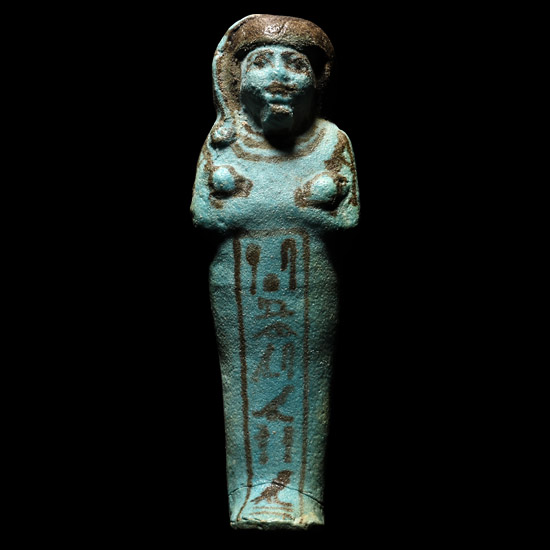
Egyptian Blue Glazed Shabti of Hor
New Kingdom, 19th Dynasty, 13th century B.C.Estimate: £1,500 - 2,000 (+bp*)
Opening Bid: £750
Modelled with a rounded wig and sidelock; painted black detailing to the eyes, lips, collar and agricultural tools held in the crossed hands; painted vertical panel to lower body with hieroglyphic legend “The illuminated one, the Osiris, the sem priest, the great director of craftsmen, Hor, justified” (sḥḏ wsı͗r sm wr ḫrp(w) ḥmw(w)t ḥr mꜣꜥ-ḫrw); repaired. 146 grams, 13.8 cm
Acquired on the UK art market, 1990s. Private collection, New York, USA.
Although the inscription names the owner as Hor, it seems likely that this shabti was made for a high official named Hori. Several sem priests named Hori are known. It seems plausible that this shabti belonged to the Hori who was the son of Prince Khaemwaset, son of Ramesses II, since a similar example was found alongside those of the prince in a chamber in the Serapeum (Mariette, A., Le Sérapéum du Memphis, Paris, 1857, pl. 10). -
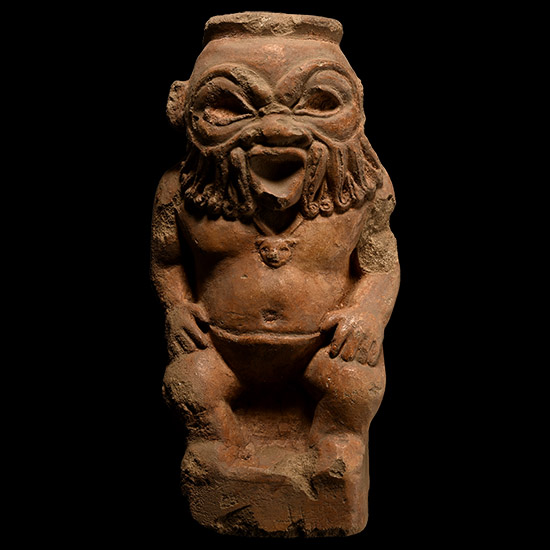
Egypto-Roman Seated Limestone Statuette of Bes
Ptolemaic-Roman Period, circa 332 B.C.-300 A.D.Estimate: £2,000 - 3,000 (+bp*)
Opening Bid: £1,000
Modelled in the round in a crouching pose on a rectangular base; the beard modelled in hanks with curled ends, the eyes recessed to accept inserts, mouth gaping; animal head amulet on the chest suspended on a cord; socket to reverse; chipped. 942 grams, 18.5 cm
Bonhams, London, 4 July 1995, no.36. Private collection, New York, USA. This lot has been checked against the Interpol Database of stolen works of art and is accompanied by search certificate number no.13294-255443.
From the New Kingdom onwards, Bes became one of ancient Egypt's most popular apotropaic deities. Despite his somewhat fearsome appearance, Bes served as the patron and protector of pregnant women and children and was also believed to shield them from snakes. -
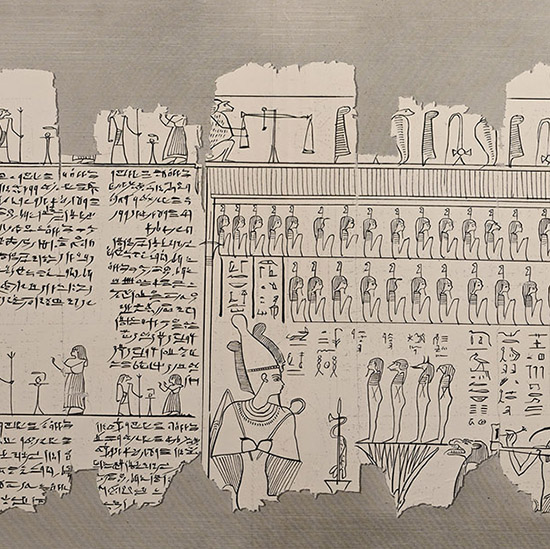
Very Large Egyptian Expedition Lithograph of the Hypogees Papyrus Manuscript from Thebes
Early 19th century A.D.Estimate: £80 - 100 (+bp*)
Opening Bid: £40
Proof etching on laid paper of plate 64 from Vol.II of Description de l'Égypte : ou, Recueil des observations et des recherches qui ont été faites en Égypte pendant l'expédition de l'armée française. entitled Thèbes. Hypogées. Manuscrit sur papyrus. 4eme partie. 235 grams, 105 x 69.5 cm
From the collection of a North American priest. Acquired between 1981-1996. Property of a North American collector.
Produced between February 1802 and 1830 on the orders of Napoleon Bonaparte; published between 1809 and 1828. Just 1,000 copies were distributed to various institutions, printed on laid paper with an 'Égypte ancienne et moderne' watermark. The book is subtitled Recueil des observations et des recherches qui ont été faites en Égypte pendant l’expédition de l’Armée française, publié par les ordres de Sa Majesté l’Empereur Napoléon le Grand (Gathering of observations and discoveries which were made in Egypt during the expedition of the French army, published on the orders of His Majesty the Emperor Napoleon the Great). It was the world's first encyclopedia devoted exclusively to the remains of ancient Egypt. The plates of this book are the first to present the archaeological sites of Thebes (Luxor). The papyrus manuscript was recovered from an underground tomb chamber (hypogeum). This includes a scene (bottom right) depicting the weighing of the deceased's heart before Osiris's divine tribunal. The heart is balanced against the feather of Maat, and the ibis-headed Thoth records the verdict. If the heart fails to balance, it is devoured by a fearsome creature called Ammut, and the deceased would cease to exist.
