
Loading, please wait...

LOT 0740
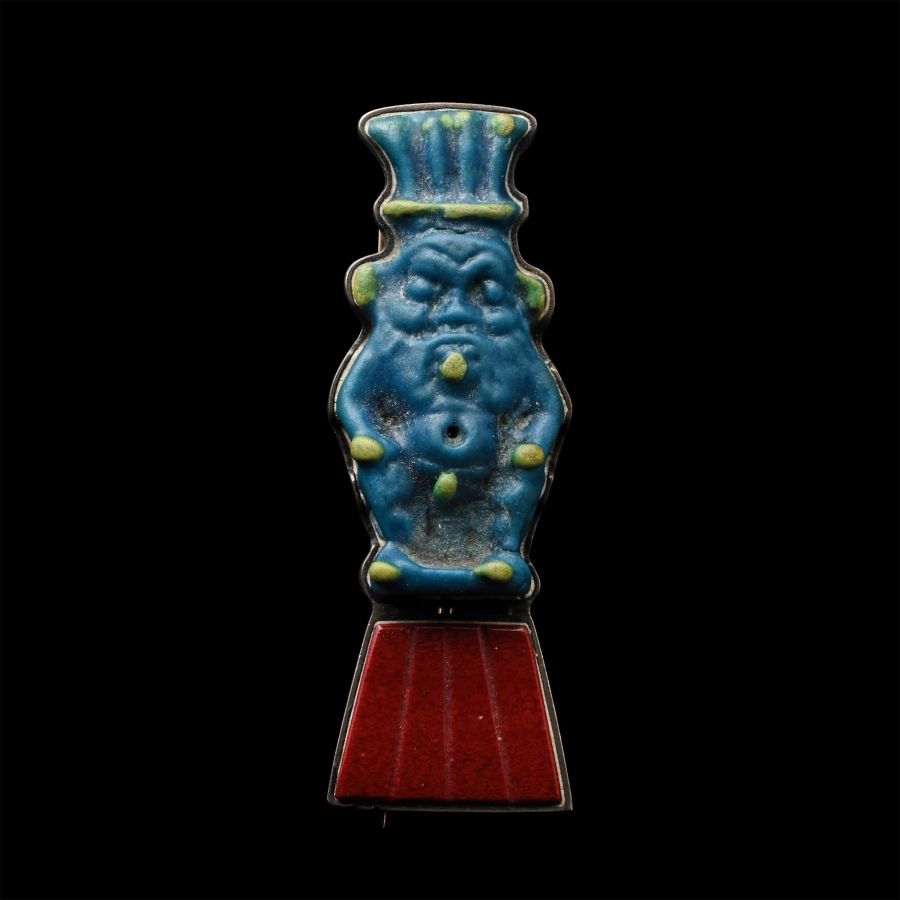
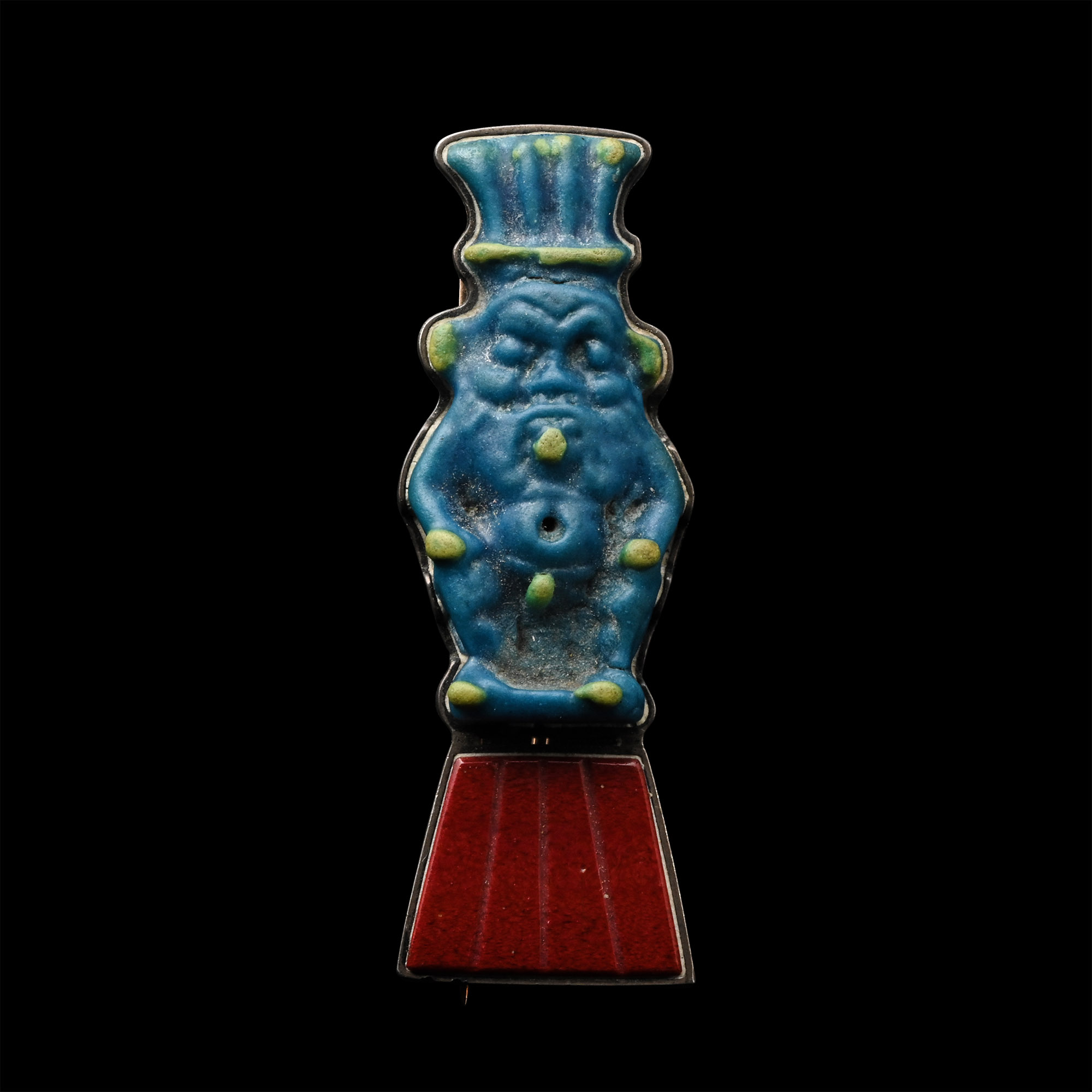
Egyptian Polychrome Faience Amulet of the God Bes Fashioned as a Dress Pin
LATE-PTOLEMAIC PERIOD, CIRCA 664-30 B.C.
2 in. (13.7 grams, 52 mm).
The dwarf god depicted in a characteristic bandy-legged stance, with his hands on his hips and a fearsome expression, wearing a plumed headdress; the deep blue glaze highlighted in yellow; set in a metal casing with hinged pins on the reverse and a red jasper insert depicting four plumes beneath his feet.
ProvenanceEarly 20th century UK collection.
Ex A.H. collection, London, UK.
Accompanied by a previous catalogue information page with provenance.
Tinius, I., Altägypten in Braunschweig. Die Sammlungen des Herzog Anton Ulrich-Museums und des Städtischen Museums, Wiesbaden, 2011, pp. 133-134, no. 226, for a similar Bes amulet from Abydos.
FootnotesFrom the New Kingdom onwards, Bes became one of ancient Egypt's most popular apotropaic deities. Despite his somewhat fearsome appearance, Bes served as the patron and protector of pregnant women and children and was believed to shield them from snakes. The role of Bes as a guardian of women persisted at least until the third or fourth century A.D.
CONDITIONTimeLine Auctions follows a vetting process to ensure the authenticity and legality of all items, reinforcing our commitment to integrity and responsible trading. Each antiquity, antique, and coin lot undergoes thorough examination by a vetting committee of at least ten external specialists, professional trade association members, scientists, and archaeologists: Our Vetting Process
AUCTIONS:
TimeLine is a leading auction house specialising in antiquities, ancient art, collectables, natural history, coins, medals, and books. Our auctions offer museums, collectors, historians, and enthusiasts the opportunity to acquire unique and historically significant pieces.
LOT 0740
Egyptian Polychrome Faience Amulet of the God Bes Fashioned as a Dress Pin
Estimate £300 - 400€350 - 460 (for guidance only)$410 - 540 (for guidance only)
Opening Bid
£167 (EUR 193; USD 225) +BP*
-
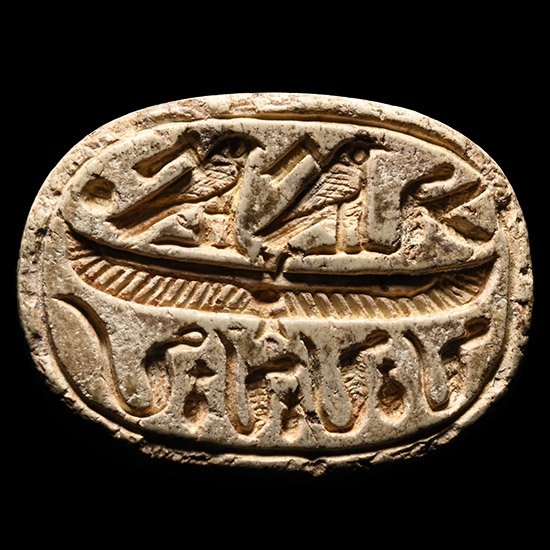
Egyptian Steatite Scarab with Religious Motifs
Late Period, 664-332 B.C.Estimate: £200 - 300 (‡+bp*)
Opening Bid: £100
Plano-convex in section, with a segmented upper face; the underside features an incuse design of a winged scarab, two perching Horus falcons, and a winged uraeus above, with a frieze of four cobras interspersed with three nefer signs below; supplied with an impression. 3.53 grams, 19 mm
Acquired from Derek Content, 24 June 1975. Private collection of Kal Noselson, New York, acquired between 1976 and the late 1990s; thence by descent. Accompanied by an original handwritten invoice from Derek Content, dated 24 June 1975. -
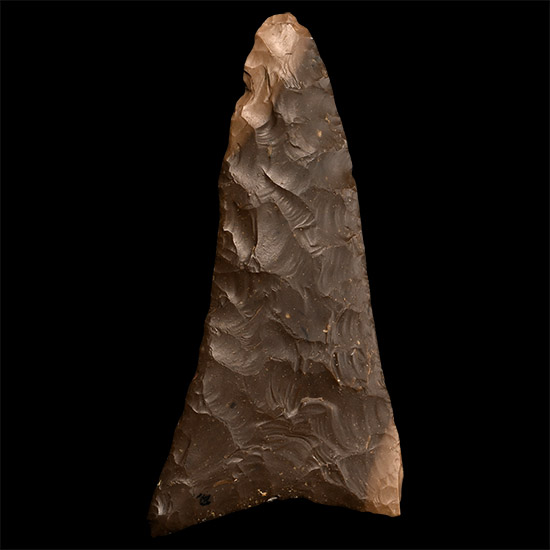
Egyptian Knapped Stone Fish-Tailed Knife
Predynastic Period, circa 3,500-3,000 B.C.Estimate: £500 - 700 (+bp*)
Bids: 6 | Current Bid: £260
With long edges knapped, a rounded point, a forked end, and a rippled surface. 38.6 grams, 11.5 cm
Acquired from Elgin Antiques, Portobello Road, 26th November 1960, for £2.00. From the private collection of Peter Clayton, FCILIP, Dip, Arch, FSA, FRNS, Hemel Hempstead, Hertfordshire, UK; formed since the late 1950s. Accompanied by an old handwritten information card by Peter Clayton, collection no.77.
These objects were crafted from fine flint and featured a narrow, pointed handle end, once hafted into wood, ivory, bone, or gold, and a broad, serrated, forked blade. Originally used during life, possibly to cut an infant's umbilical cord, they were later placed in male graves as elite ceremonial or funerary objects. Egyptologists often associate them with the pesesh-kef tool used in the funerary 'Opening of the Mouth' ceremony, which symbolically restored breath and the senses to a mummy or statue. -
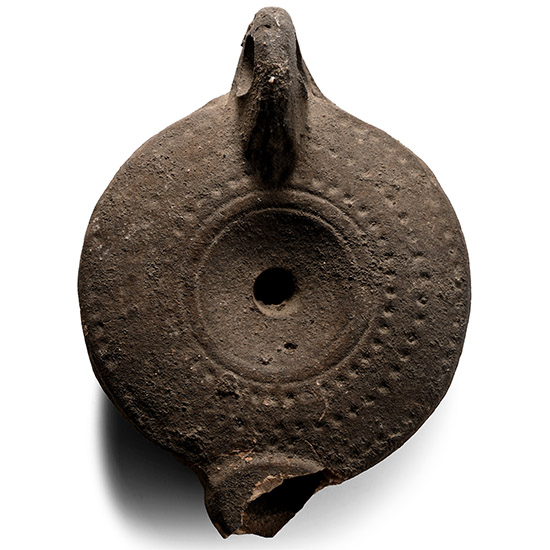
Romano-Egyptian Terracotta Toad Oil Lamp
Roman Period, 3rd century A.D.Estimate: £40 - 60 (+bp*)
Bids: 1 | Current Bid: £5
Squat in profile and discoid in plan, with a central perforation on the upper face and a pierced lug handle at the rear; concentric bands of pointillé ornament on the upper face and incised rings on the base; nozzle broken; supplied with an old handwritten collector's record slip made from an envelope. 97 grams, 11.3 cm
Found Alexandria, Egypt. From the estate of a deceased Sussex private collector since the early 20th century. Accompanied by an old original handwritten information slip.
