
Loading, please wait...

LOT 0524
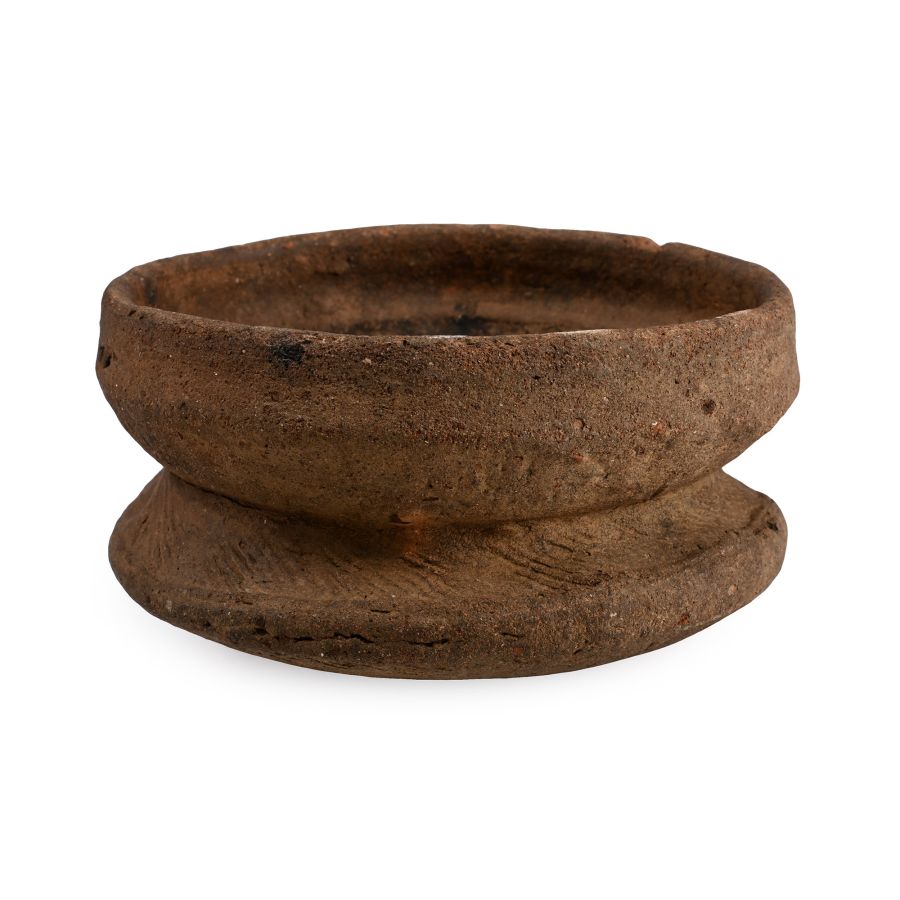
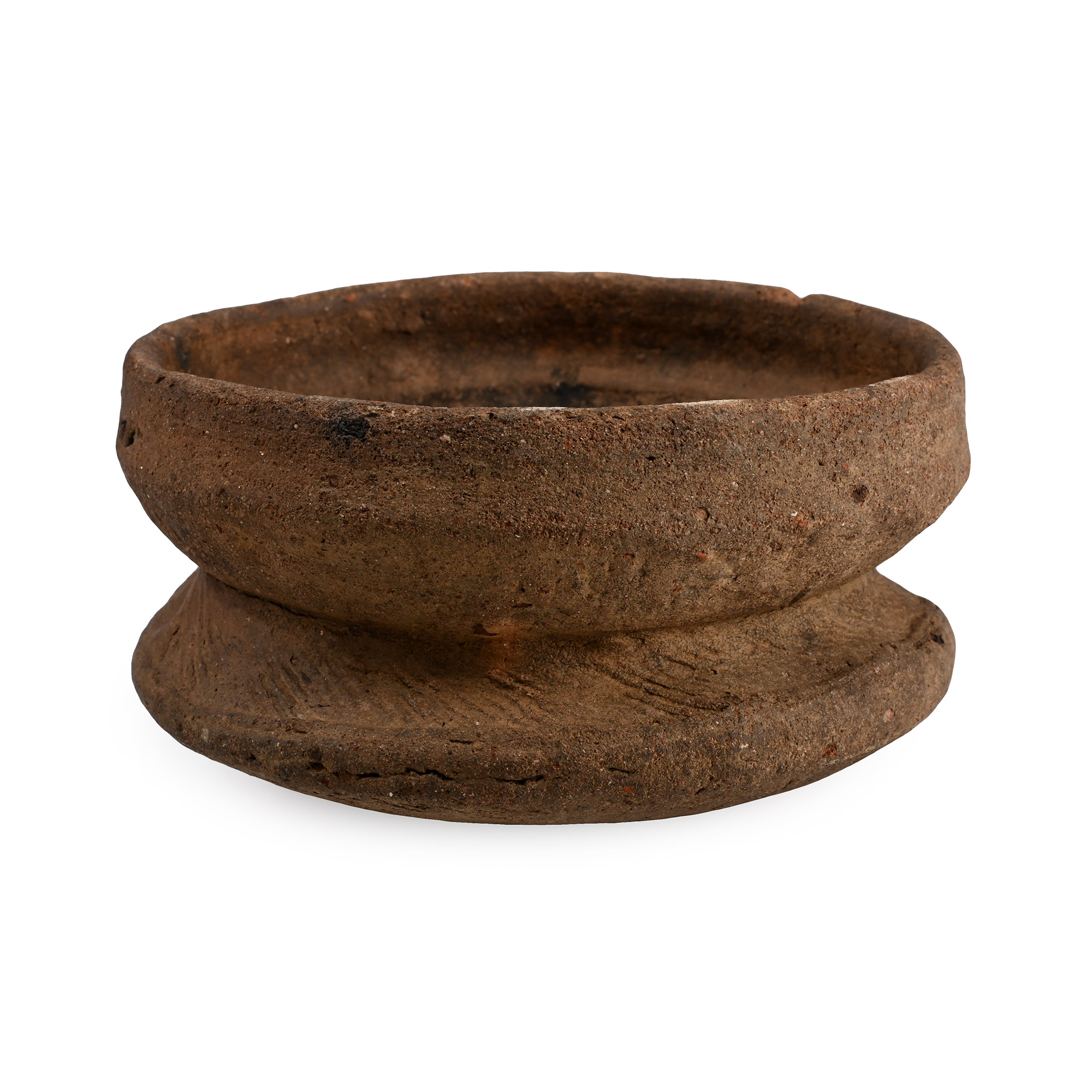
Egyptian Pinched Earthenware Bowl
COPTIC, CIRCA 4TH-7TH CENTURY A.D.
5 3/8 in. (410 grams, 13.7 cm).
With rounded underside, sharply waisted profile, vertical rim with inner rib. [No Reserve]
ProvenanceAcquired on the UK art market since the 1990s.
From the property of a late Lincolnshire, UK, gentleman; thence by descent.
TimeLine Auctions follows a vetting process to ensure the authenticity and legality of all items, reinforcing our commitment to integrity and responsible trading. Each antiquity, antique, and coin lot undergoes thorough examination by a vetting committee of at least ten external specialists, professional trade association members, scientists, and archaeologists: Our Vetting Process
AUCTIONS:
TimeLine is a leading auction house specialising in antiquities, ancient art, collectables, natural history, coins, medals, and books. Our auctions offer museums, collectors, historians, and enthusiasts the opportunity to acquire unique and historically significant pieces.
LOT 0524
Egyptian Pinched Earthenware Bowl
Estimate £80 - 100€93 - 116 (for guidance only)$108 - 135 (for guidance only)
-
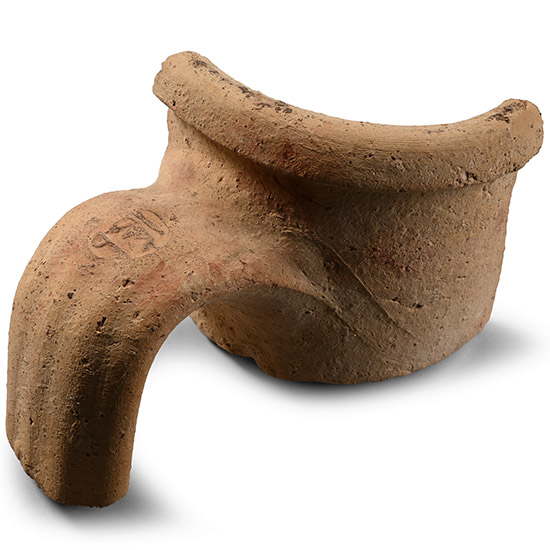
Romano-Egyptian Terracotta Amphora Handle with Stamp of Hermeros
Roman Period, 1st century A.D.Estimate: £50 - 70 (+bp*)
Bids: 1 | Current Bid: £5
Cream-coloured ceramic vessel fragment with rolled rim and ribbed strap handle; stamped at the apex with 'I EP' monogram, reading 'I EP[ΜΕΡΟΣ] = Hermeros. 272 grams, 14.2 cm
From the private collection of Peter Clayton, FCILIP, Dip, Arch, FSA, FRNS, Hemel Hempstead, Hertfordshire, UK; formed since the late 1950s.
The commercial stamp could report the name of an important Romano-Egyptian businessman, Hermeros, son of Athenion, attested at Koptos in A.D. 57. He describes himself as a merchant (εμπορος), originating from Adana (Arabia) and selling wine. -
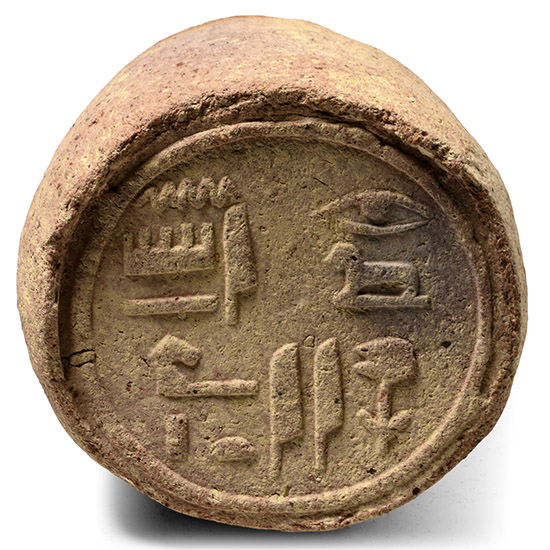
Egyptian Terracotta Funerary Cone for Hat
New Kingdom, 18th Dynasty, circa 15th-14th century B.C.Estimate: £400 - 600 (+bp*)
Bids: 4 | Current Bid: £135
Almost complete funerary cone of typical tapering form, with the circular flat end impressed with two unbordered horizontal lines of hieroglyphic text, reading: "The Osiris, corn measurer of Amun, Hat". 246 grams, 70 mm
Acquired from Abdoul Rassoul on the West Bank at Luxor, 1974-1980 when a guest lecturer. From the private collection of Peter Clayton, FCILIP, Dip, Arch, FSA, FRNS, Hemel Hempstead, Hertfordshire, UK; formed since the late 1950s.
This individual's tomb remains unknown. Interestingly, this cone is a variant of Hat's known type, which is not unusual, as variant cones for other tomb owners are also known. -
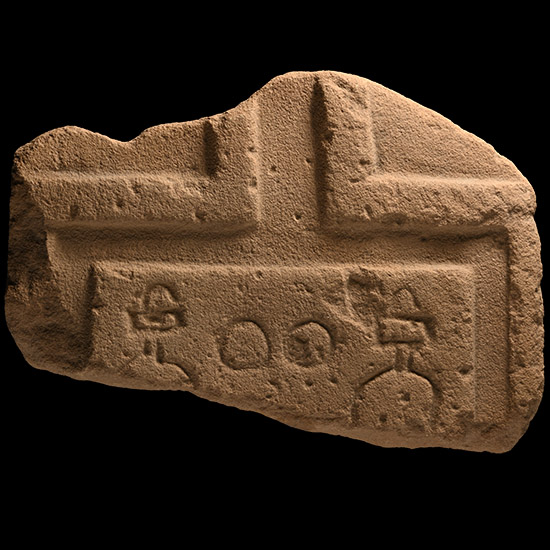
Egyptian Sandstone Offering Table Fragment
Late Period-Ptolemaic Period, 664-30 B.C.Estimate: £300 - 400 (+bp*)
Bids: 1 | Current Bid: £5
Fragment of a rectangular offering table with incised drainage channels forming a segmented surface, creating a spout at the top end and feeding channels around a central raised panel, bearing incised depictions of two circular loaves flanked by beer jugs; the underside dressed. 1.62 kg, 21.5 cm
Acquired in April 1963. From the private collection of Peter Clayton, FCILIP, Dip, Arch, FSA, FRNS, Hemel Hempstead, Hertfordshire, UK; formed since the late 1950s. Accompanied by an old handwritten identification card written by Peter Clayton.
Offering tables shaped like the hieroglyphic sign for a mat with a loaf of bread, meaning “offering,” were common throughout much of dynastic history and were essential to the funerary cult. They were usually placed near the deceased's tomb, in an offering niche or chapel. If the cult ceased to function, the carved images of food and drink on the table served as magical substitutes, ensuring the continued sustenance and survival of the deceased's ka, or spirit.
