
Loading, please wait...

LOT 0540
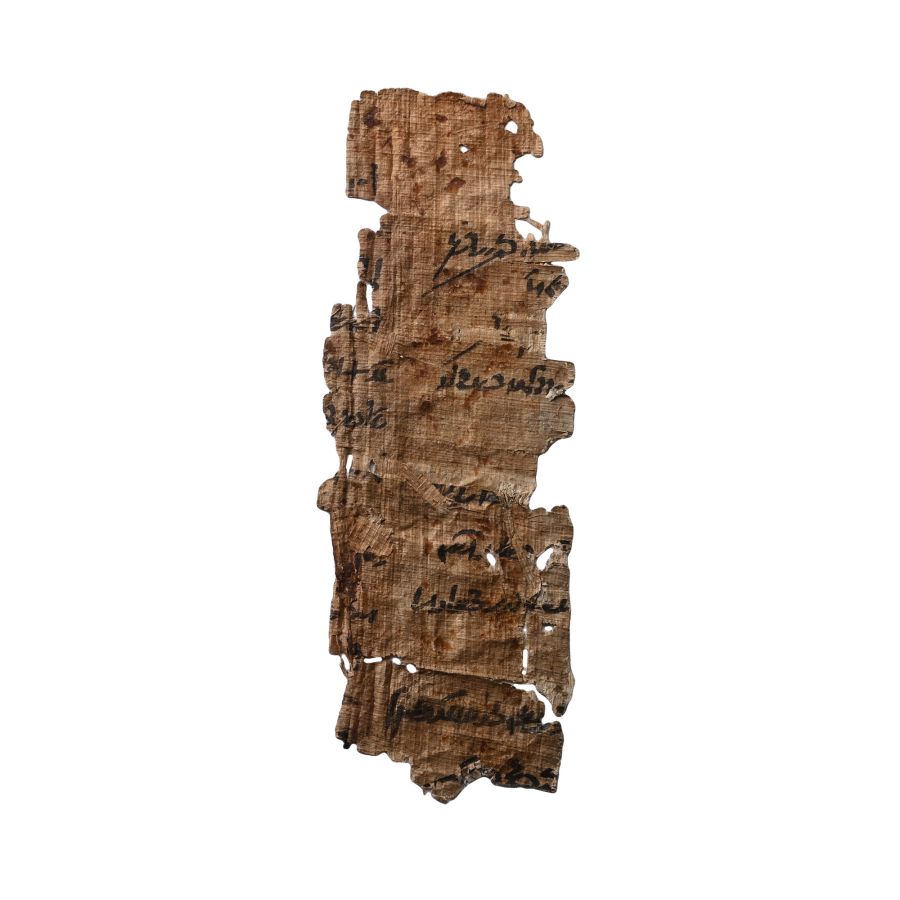
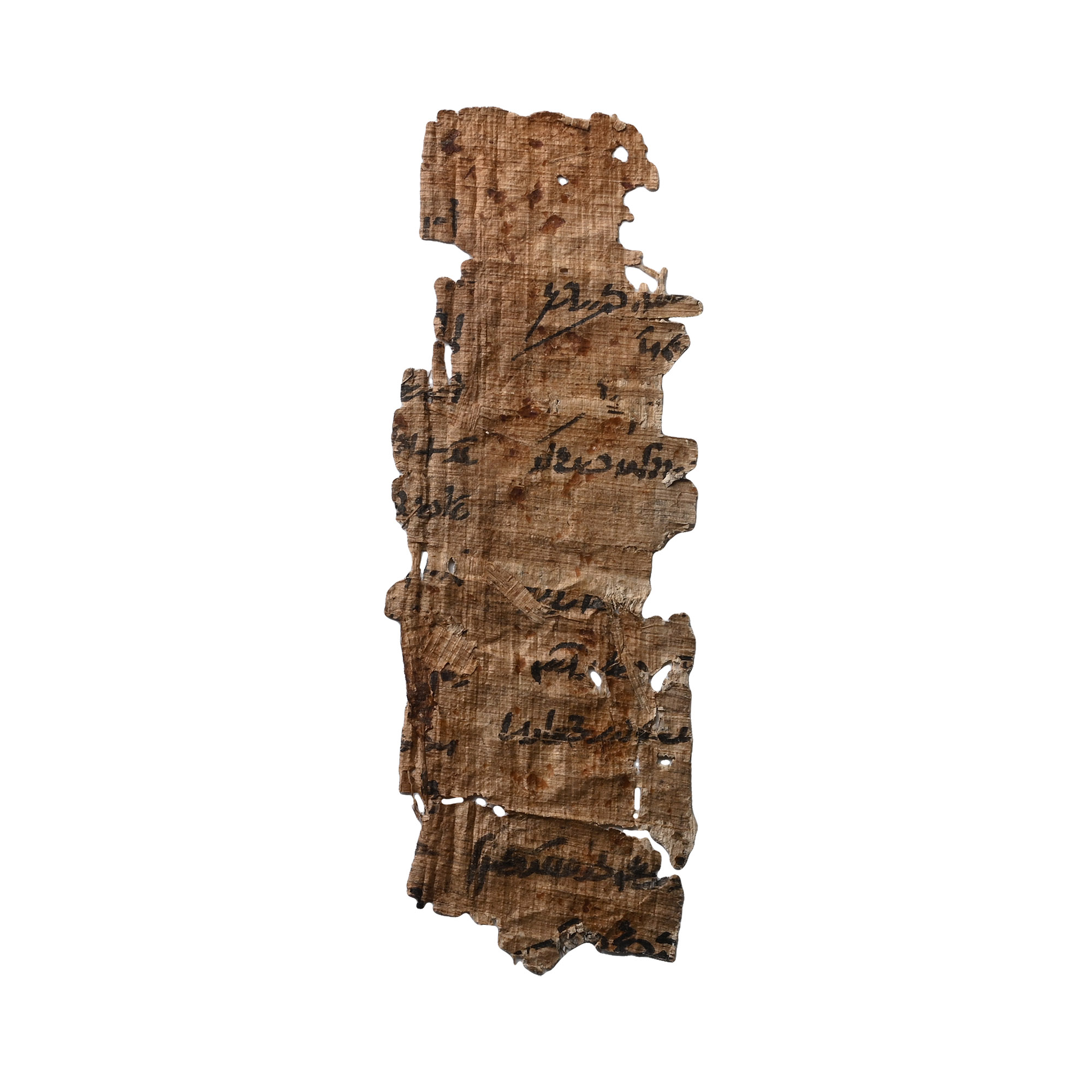
Egyptian Papyrus Fragment with Text
GRAECO-ROMAN PERIOD, CIRCA 3RD CENTURY B.C.-2ND CENTURY A.D.
6 1/8 in. (9 7/8 x 7 7/8 in.) (195 grams total, 15.5 cm (25 x 20 cm including frame)).
Rectangular fragment of papyrus with inked Demotic script text in two columns; mounted on a board. [No Reserve]
ProvenanceEx retired East Anglian school teacher, Isle of Wight, Hampshire, UK, 1960s-1980s.
CONDITIONTimeLine Auctions follows a vetting process to ensure the authenticity and legality of all items, reinforcing our commitment to integrity and responsible trading. Each antiquity, antique, and coin lot undergoes thorough examination by a vetting committee of at least ten external specialists, professional trade association members, scientists, and archaeologists: Our Vetting Process
AUCTIONS:
TimeLine is a leading auction house specialising in antiquities, ancient art, collectables, natural history, coins, medals, and books. Our auctions offer museums, collectors, historians, and enthusiasts the opportunity to acquire unique and historically significant pieces.
LOT 0540
Egyptian Papyrus Fragment with Text
Estimate £80 - 100€93 - 116 (for guidance only)$108 - 135 (for guidance only)
-
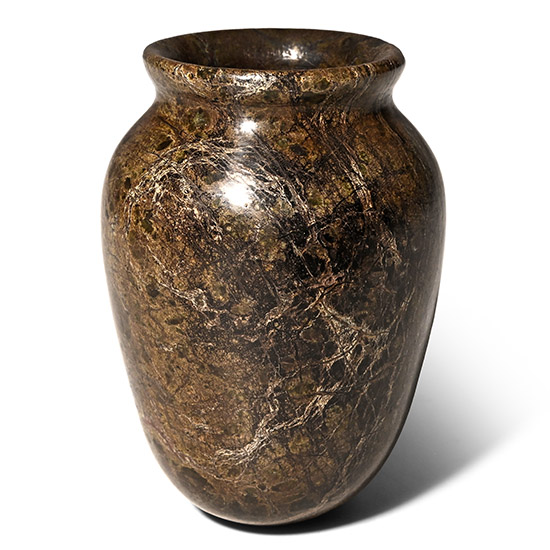
Egyptian Stone Round-Bottomed Kohl Jar
Naqada II-III Period, circa 3500-3000 B.C. or laterEstimate: £400 - 600 (+bp*)
Bids: 1 | Current Bid: £200
Ovoid in profile with flared rim to the mouth. 179 grams, 78 mm
Ex Belinda Elliston collection, a member of the Egyptian Exploration Society, 1940s onwards. -
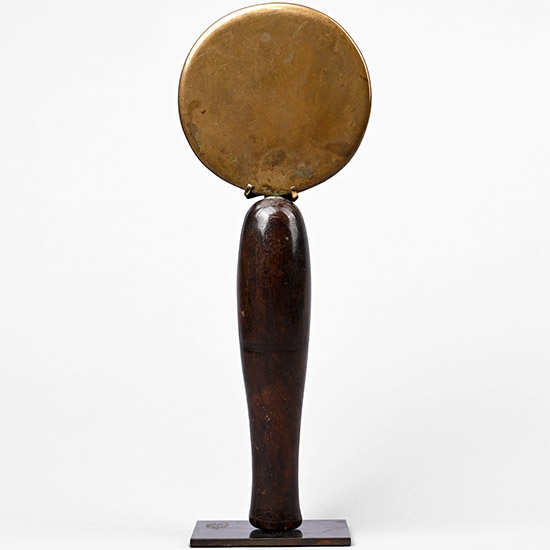
Egyptian Bronze Mirror with Wooden Handle
New Kingdom, 18th-20th Dynasty, 1550-1070 B.C.Estimate: £4,000 - 6,000 (+bp*)
Opening Bid: £2,000
The rounded cylindrical handle narrowing towards the base and decorated with three horizontal bands; the circular, heavy bronze mirror highly polished and relatively small; accompanied by a custom-made display stand. 766 grams total, 29 cm high including stand
with Rupert Wace, Ancient Art, 2003. Private collection, UK. This lot has been checked against the Interpol Database of stolen works of art and is accompanied by search certificate no.13517-263432.
The club-type handle resembles the hieroglyph hem, which can mean 'servant'. Therefore, the handle is thought to represent the mirror disc's servant. This type appears in pictorial scenes; for example, a similar smaller disc mirror with a hem handle is depicted in the Theban tomb (TT 60) of Senet (Davies, N.de G., The Tomb of Antefoker, Vizier of Sesostris I, and of His Wife, Senet, London 1930, pl. 30), and another with a larger disc and a shorter hem handle is depicted on the inside of the coffin of Sebeka (Steindorff, G., Grabfunde des mittleren Reichs in den königlichen Museen zu Berlin. Part 2: Der Sarg des Sebk.-o.- ein Grabfund aus Gebelen, Berlin, 1896, 2, pl. 2). -
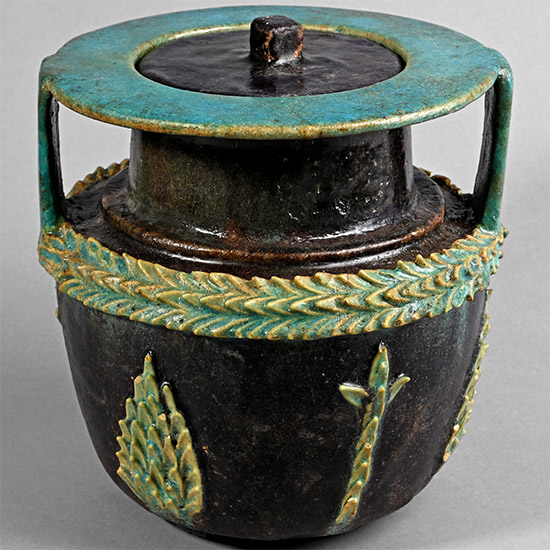
Egyptian Turquoise and Cobalt Blue Faience Amphora
Roman Period, circa 2nd century A.D.Estimate: £8,000 - 10,000 (+bp*)
Opening Bid: £4,000
Barrel-shaped in profile, with a stepped shoulder, wide neck, and broad, flared flange rim at the mouth, supported by two lateral strap handles; applied wreath decoration to the outer edge of the shoulder and vertical fronds to the lower body; restored. 1.48 kg, 17.8 cm high
Stift Neuberg (Neuberg Abbey) collection, Heidelberg, Germany, by 1893 and into the 20th century. Anonymous sale; Münzen und Medaillen, Auktion 41, 1972, no.151. Fiorella Cottier-Angeli collection, Geneva, 1981-2007. Herbert A. Cahn, acquired from the above. With Galerie Günter Puhze, Freiburg, 2007. Private collection, Midwest USA, acquired in 2007. This lot has been checked against the Interpol Database of stolen works of art and is accompanied by search certificate no.13477-262436.
Stift Neuberg was privately owned from 1798 until 1926. By 1893, a collection of antiquities had been assembled there, and its Greek and Roman holdings were published. It is believed that the amphora was acquired as part of this collection by Friedrich Alexander von Bernus (1838–1908), who inherited Stift Neuberg from his relative Johann Friedrich Schlosser (1780-1851), a nephew of Goethe. In 1926, the abbey was sold to the Benedictines and has remained a religious establishment ever since.
