
Loading, please wait...


LOT 0487
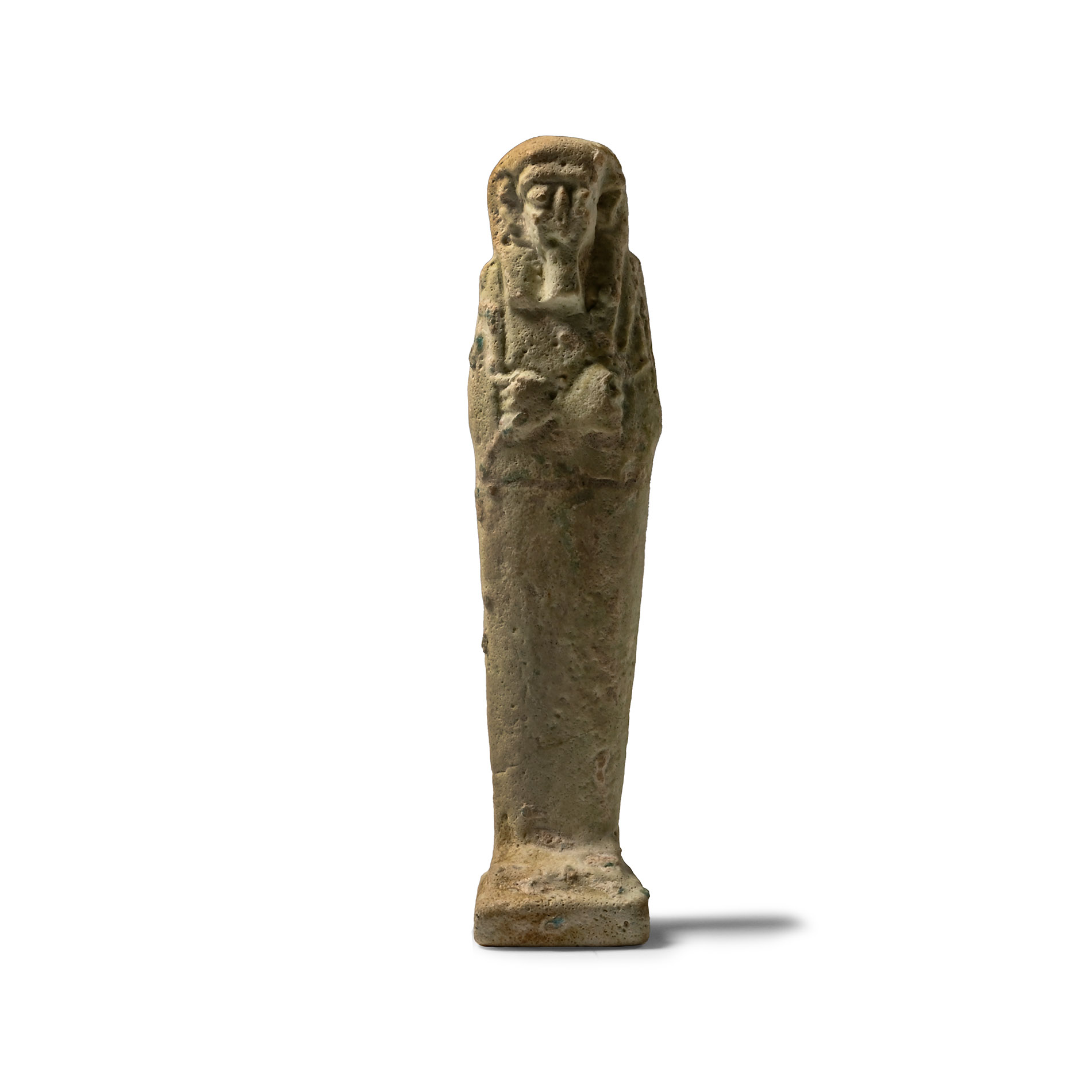
Egyptian Pale Green Faience Shabti
PTOLEMAIC PERIOD, 332-30 B.C.
3 1/2 in. (29.8 grams, 90 mm).
Mummiform figure with dorsal pillar, hands folded across the chest holding a pick and flail, with seed bag over left shoulder. [No Reserve]
ProvenanceAcquired 1950s-1960s.
From the estate of a deceased Norfolk, UK, gentleman.
Accompanied by a dealer's information display card.
Cf. von Droste zu Hülsdorf, V. and Schlick-Nolte, B., Ägyptische Bildwerke II: Statuetten, Gefässe und Geräte, Melsungen, 1990, pp.167-169, no. 81, for the type.
CONDITIONTimeLine Auctions follows a vetting process to ensure the authenticity and legality of all items, reinforcing our commitment to integrity and responsible trading. Each antiquity, antique, and coin lot undergoes thorough examination by a vetting committee of at least ten external specialists, professional trade association members, scientists, and archaeologists: Our Vetting Process
AUCTIONS:
TimeLine is a leading auction house specialising in antiquities, ancient art, collectables, natural history, coins, medals, and books. Our auctions offer museums, collectors, historians, and enthusiasts the opportunity to acquire unique and historically significant pieces.
-
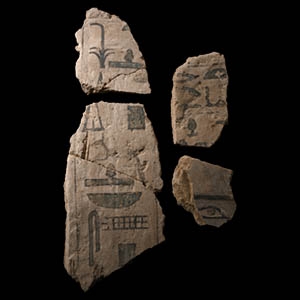
Egyptian Limestone Fragment Group
Middle Kingdom, 2035-1550 B.C.Sold for (Inc. bp): £1,404
Comprising four fragments of dressed and plastered wall, each with painted hieroglyphs in blue, green and black shades, some with low-relief modelling. 1.03 kg total, 10.1-27.7 cm
Acquired in the mid 1980s-1990s. Private collection, Switzerland, thence by descent. Private collection, since the late 1990s.
These fragments seem to be sections of tomb wall reliefs. They include portions of an offering formula, mention of a 'district', a festival, and the symbol of Anubis. The decoration in different parts of some Middle Kingdom tombs had scenes and texts applied in paint or executed with raised relief carving. -
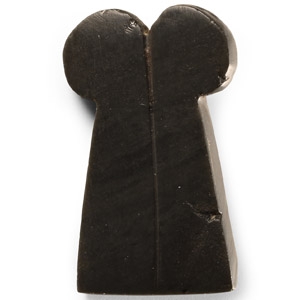
Egyptian Hardstone Double Plume Amulet
Late Period, 664-332 B.C.Estimate: £200 - 300 (+bp*)
Opening Bid: £100
Carved with integral ribbed loop to the reverse; unfinished. 4.4 grams, 31 mm
with Hotel des Ventes, Drouot, Paris, France. From the collection of Mr H. Naudy, Paris, France. Acquired at between 2004-2010. Property of a French collector.
This ancient amulet represents two ostrich feathers or shuty. Interestingly, these feathers were also present on the Atef crown of Osiris, the god of the afterlife and the dead. This suggests the amulet was believed to imbue the wearer with Osiris's divine power and protection. -
.jpg)
Egyptian Bronze Head of a Pharaoh with Inlaid Eyes
Third Intermediate Period, 21st-22nd Dynasty, circa 1069-900 B.C.Sold for (Inc. bp): £49,400
Hollow-formed mask with integral tripartite wig and mount for a uraeus; impassive facial detailing and applied gold cosmetic lines to eyes, eyebrows, and lateral chin straps of the braided 'false beard'; segment of the wesekh-collar visible between the lappets of the wig; some restoration; mounted on a custom-made stand within a padded wooden display case. 1.2 kg, 22.5 cm high including stand (3.27 kg total, 27 cm including case)
Old French family collection of Monsieur and Madame D., 1960s. Ex Rennes Enchères, Hôtel des Ventes, France, 11 March 2003, no.117 (front-cover) for 150,000.00 euros. Acquired from Mansour Gallery, London W1, UK, in 2013. From the collection of a Kensington gentleman. Private collection, UK. Accompanied by the original Rennes Enchères catalogue. Accompanied by a copy of French passport no.058205 dated 15 April 2003. Accompanied by a copy of Mansour Gallery’s invoice, 2013. Accompanied by previous typed and illustrated collection cataloguing pages. Accompanied by an academic report by Egyptologist Paul Whelan. This lot has been checked against the Interpol Database of stolen works of art and is accompanied by a search certificate number no.12372-225585.
