
Loading, please wait...
LOT 0018
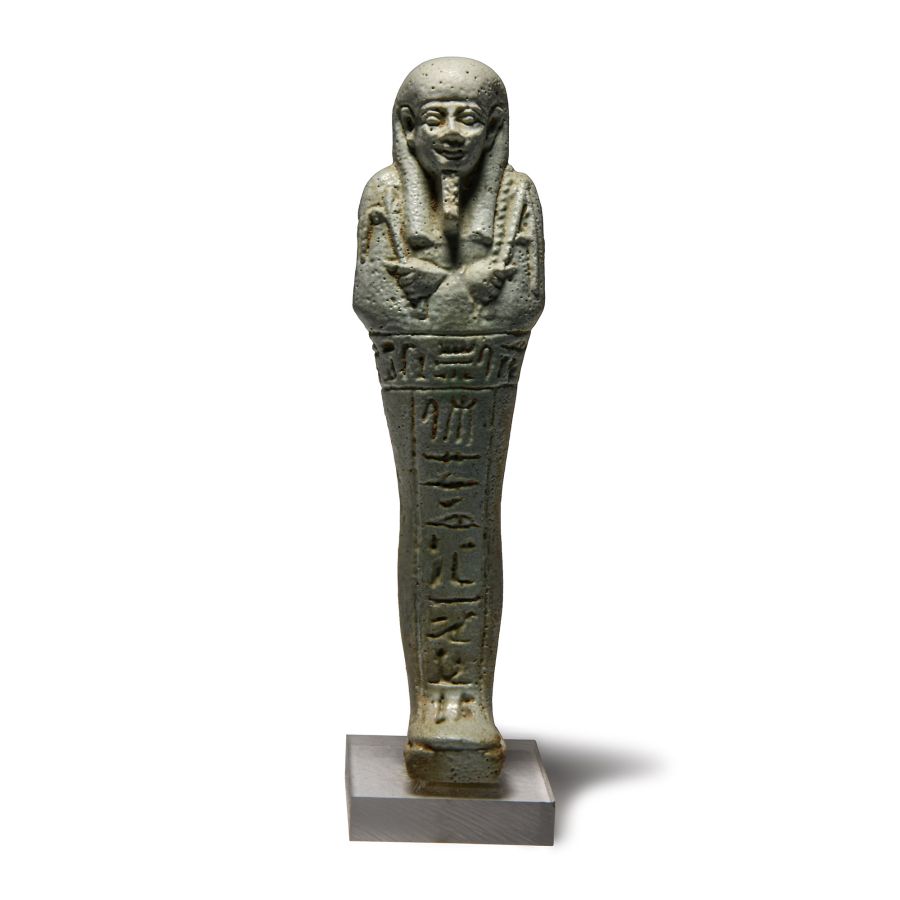
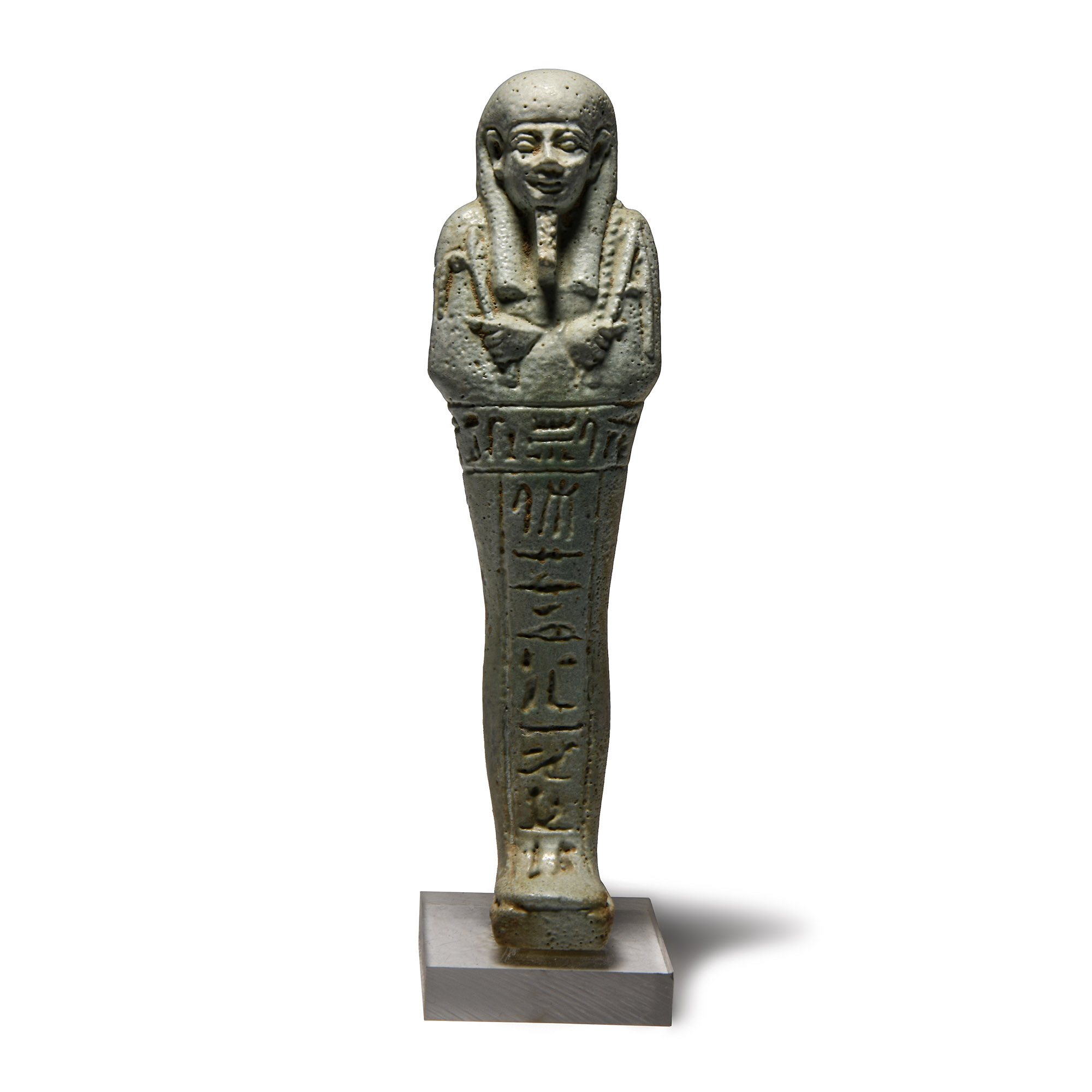
Egyptian Pale Blue Faience Shabti for Padiosiris
LATE PERIOD, 664-525 B.C.
5 3/4 in. (98.6 grams, 14.5 cm including stand).
Finely modelled face with false beard and tripartite wig; hands holding the pick and the hoe; a seed bag over the left shoulder; plain back pillar; a T-shape arrangement of hieroglyphic text to the front: sḥḏ wsir sm n mnw pꜢ-di wsir(?) ms s(sic) r.t-ir.t-Ꜣst-n-wr.t mꜢʾ ḫrw ‘The illuminated, the Osiris, Sem-(priest ) of Min, God’s Servant, Pa-di-Osiris, born (to) Ret-iret-Isis-en-weret true of voice’; mounted on a custom-made stand.
ProvenanceFrench collection, 1990s.
Acquired from St James's Ancient Art, London SW1, circa 2019.
Private collection of Professor Kenneth Graham, London, UK.
Accompanied by a St James's Ancient Art certificate of authenticity.
TimeLine Auctions follows a vetting process to ensure the authenticity and legality of all items, reinforcing our commitment to integrity and responsible trading. Each antiquity, antique, and coin lot undergoes thorough examination by a vetting committee of at least ten external specialists, professional trade association members, scientists, and archaeologists: Our Vetting Process
AUCTIONS:
TimeLine is a leading auction house specialising in antiquities, ancient art, collectables, natural history, coins, medals, and books. Our auctions offer museums, collectors, historians, and enthusiasts the opportunity to acquire unique and historically significant pieces.
-
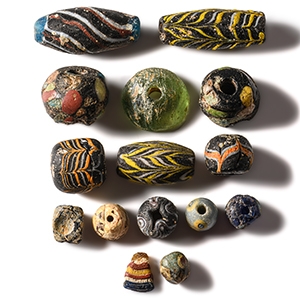
Phoenician Glass Bead Collection
Circa 6th-4th century B.C. and laterSold for (Inc. bp): £260
Comprising mainly black glass beads with dragged trails in contrasting colours; a pale blue bead with eye motifs; a hemispherical green glass bead or weight; and a triangular pendant with red, yellow, blue and white banding. 58 grams total, 9-32 mm
UK private collection formed 1970s-1990s. Property of an East Sussex, UK, gentleman. -
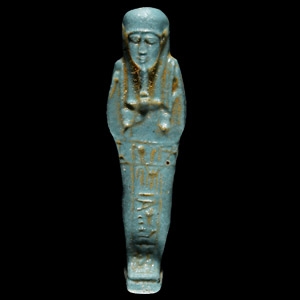
Egyptian Blue Faience Shabti with Hieroglyphic Inscription
Late Period, 664-332 B.C.Sold for (Inc. bp): £286
Pale blue glazed composition with T-shaped hieroglyphic inscription to the lower body incorporating mother's name. 23 grams, 81 mm
Acquired from a private UK collection in the late 1990s. Private collection of Mr T.H., Norfolk, UK. -
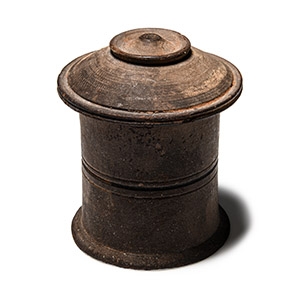
Egyptian Decorated Wooden Pyxis
Late Period-Ptolemaic Period, 664-30 B.C.Estimate: £500 - 700 (+bp*)
Opening Bid: £250
Lathe-turned body and separate lid, incised bands to the equator, flared base, and fillet to the domed lid. 60 grams, 73 mm high
Ex UK collection, 1930-1940s.
