
Loading, please wait...

LOT 0515
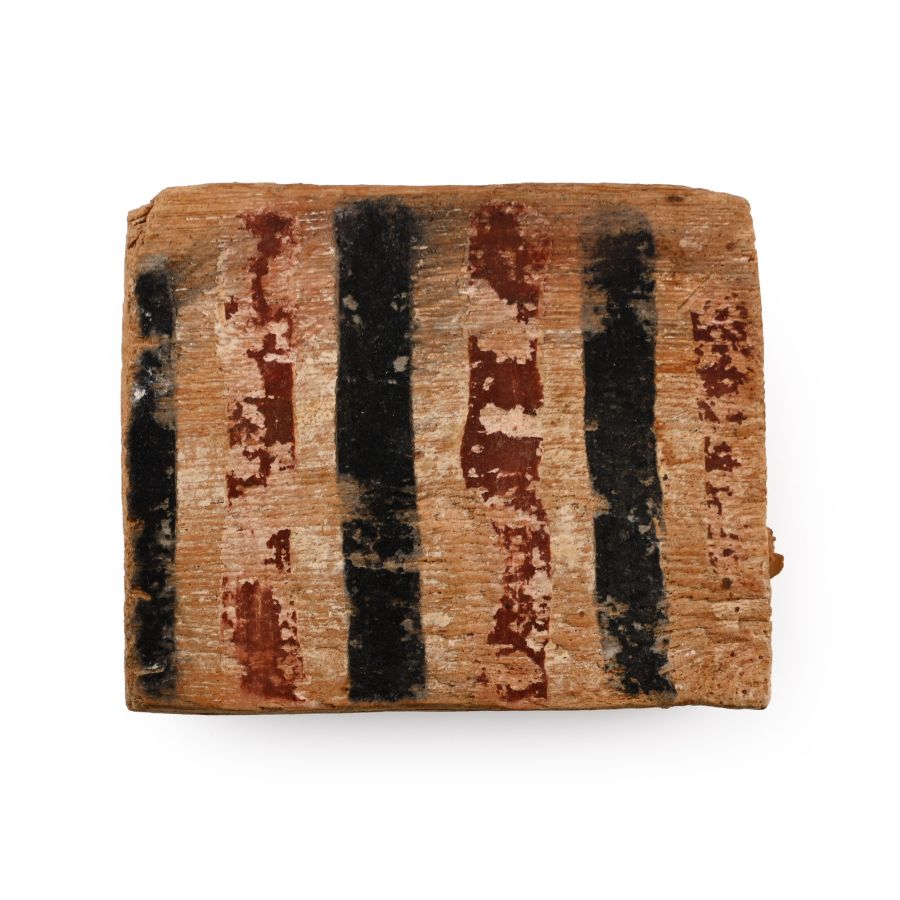
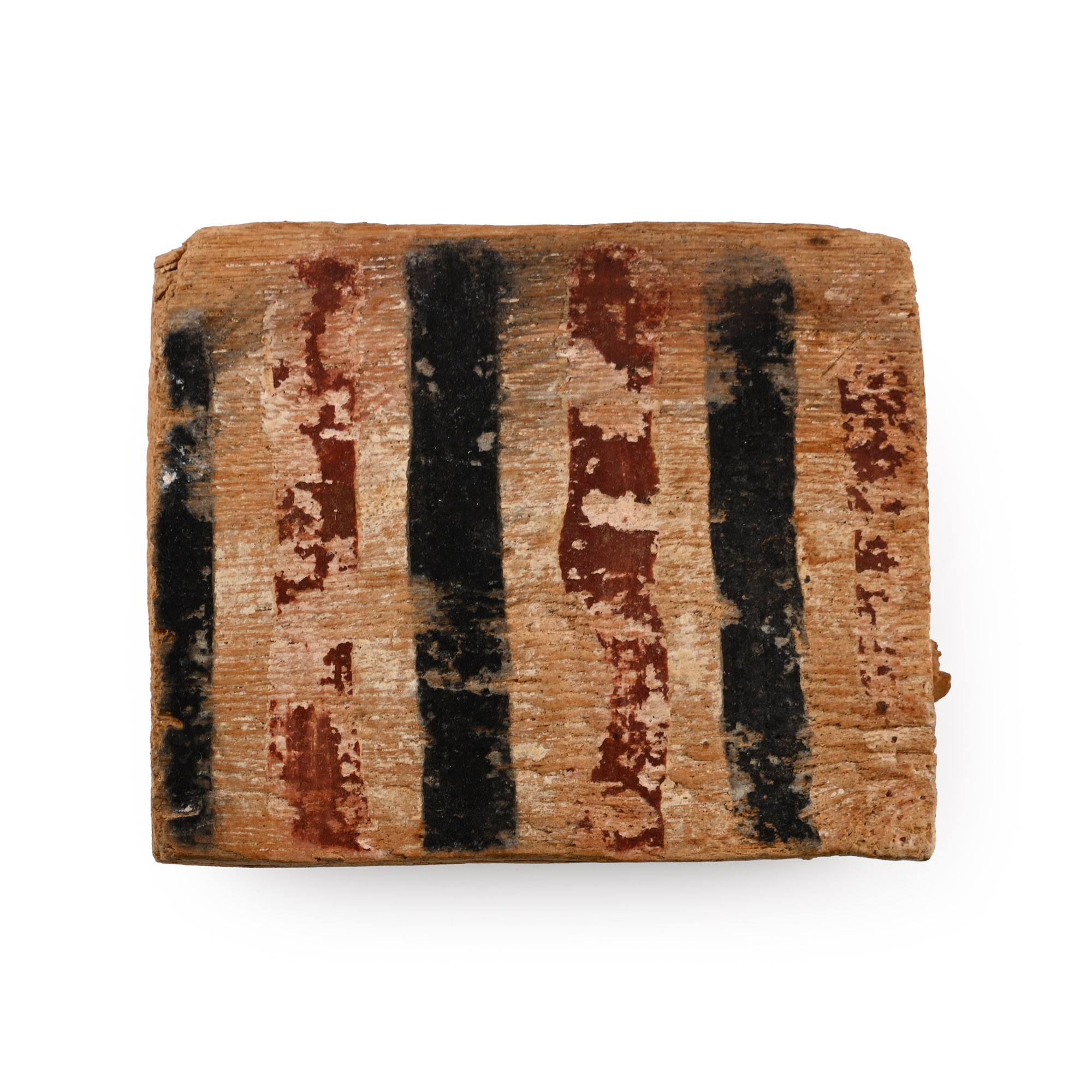
Egyptian Painted Wooden Sarcophagus Section
LATE-PTOLEMAIC PERIOD, CIRCA 664-30 B.C.
2 1/2 in. (20.3 grams, 64 mm).
Rectangular fragment preserving a decorative design of alternating black, red, and white stripes. [No Reserve]
Provenancewith a privately curated collection, 1980s-early 2000s.
From the private collection and estate of Christine Simons (1943-2025), West Midlands, UK.
TimeLine Auctions follows a vetting process to ensure the authenticity and legality of all items, reinforcing our commitment to integrity and responsible trading. Each antiquity, antique, and coin lot undergoes thorough examination by a vetting committee of at least ten external specialists, professional trade association members, scientists, and archaeologists: Our Vetting Process
AUCTIONS:
TimeLine is a leading auction house specialising in antiquities, ancient art, collectables, natural history, coins, medals, and books. Our auctions offer museums, collectors, historians, and enthusiasts the opportunity to acquire unique and historically significant pieces.
LOT 0515
Egyptian Painted Wooden Sarcophagus Section
Estimate £30 - 40€35 - 46 (for guidance only)$41 - 54 (for guidance only)
Opening Bid
£5 (EUR 6; USD 7) +BP*
-
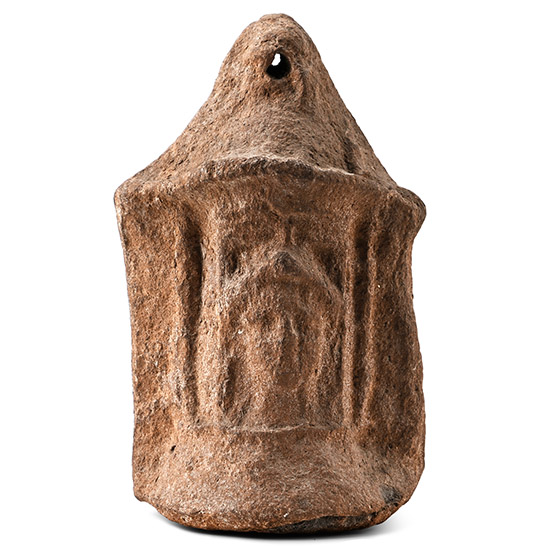
Graeco-Egyptian Terracotta Hanging Shrine with Face of Athena
Roman Period, circa 2nd-3rd century A.D.Estimate: £200 - 300 (+bp*)
Bids: 1 | Current Bid: £5
Tubular type with the facing head of Athena on the obverse, void on the reverse. 158 grams, 11.2 cm
Ex E.B.W. Chapplelow collection, January 1958. Certificate of antiquity no.668 of Blanchard's Egyptian Museum, Cairo. From the private collection of Peter Clayton, FCILIP, Dip, Arch, FSA, FRNS, Hemel Hempstead, Hertfordshire, UK; formed since the late 1950s. Accompanied by an old handwritten information card by Peter Clayton, collection no.14.
Hanging shrine-like terracottas often served as lanterns for nighttime lamp festivals of the syncretic Romano-Egyptian goddess Athena-Neith, as shown in this example by the large, possibly soot-stained, opening at the back. This object type is characteristic of the so-called 'Fayum terracottas', as large numbers of terracotta figurines were recovered from the Fayum Oasis. -
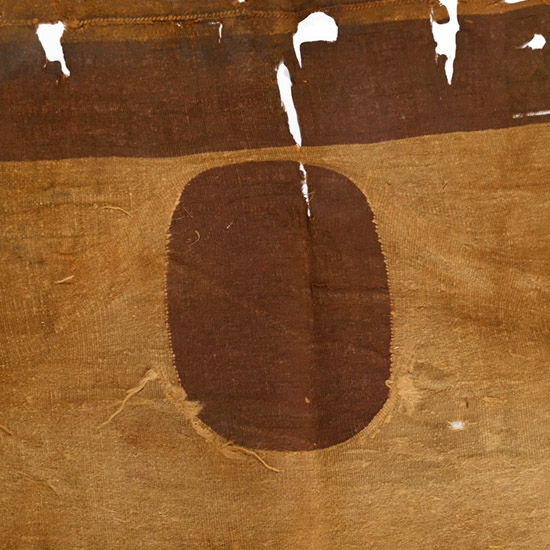
Large Egyptian Coptic Textile Shoulder Fragment of a Man's Military Tunic with Clavus and Orbiculus
Circa 5th-6th century A.D.Estimate: £200 - 300 (+bp*)
Bids: 1 | Current Bid: £5
Large section of a shoulder from a man's tunic in wool on linen, decorated with a long purple clavus featuring geometric squares and a purple orbiculus on the shoulder; tapestry, weave braids with right-angled borders. 233 grams total including paper folder, 82 cm
Acquired 1970s-1996. Property of a North American collector. London collection, 2016.
The tunic was decorated in purple with opus phrygium embroidery. This corresponds to the iconography of military tunics for 5th-7th century Roman soldiers. The archaeological evidence from the desert cemeteries of Egypt offers striking confirmation of pictorial sources on late Roman clothing around the empire. -
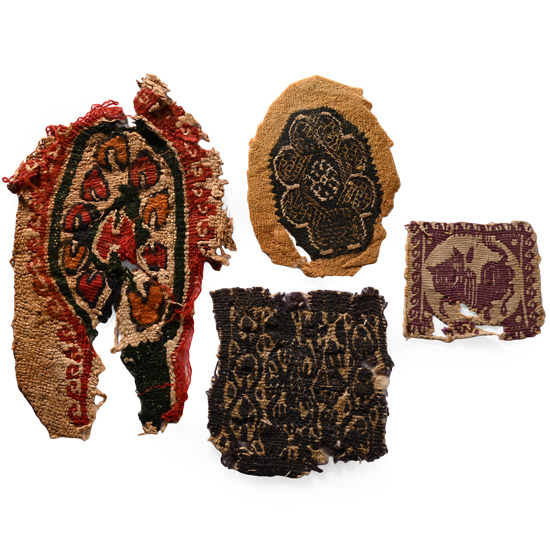
Egyptian Coptic Tunic Textile Fragments of Orbiculi, Tablia and Segmenta with Vegetation, Animals and Geometric Ornament
Circa 6th-7th century A.D.Estimate: £80 - 100 (+bp*)
Bids: 1 | Current Bid: £5
Comprising a tablion in purple and blue wool over white linen, with floral ornaments featuring ivy leaves; another smaller tablion in purple wool over white linen, the borders meander decorated, featuring a bull inside a medallion; an orbiculus with lozenge decoration, featuring a vegetal ornament inscribed in a polilobated flower; and a very large foliate ornament in red, green, yellow, orange and red wool on white linen, with vegetal decoration, the borders meander decorated, tapestry work (S-twist). 10.56 grams total, 5.8-15.5 cm
Acquired 1970s-1996. Property of a North American collector. London collection, 2016.
The fragments are decorative parts of tunics. These are fabrics of great decorative finesse, with some elements displaying an unusual and extremely well-preserved colour palette.
