
Loading, please wait...
LOT 0014
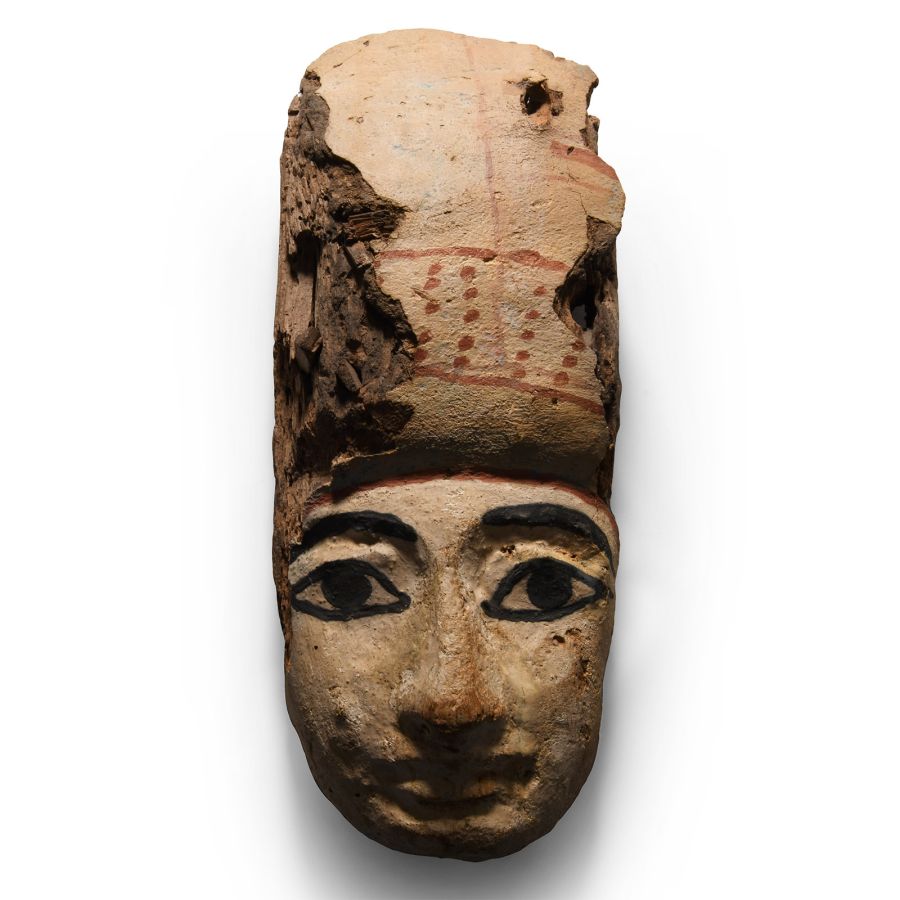
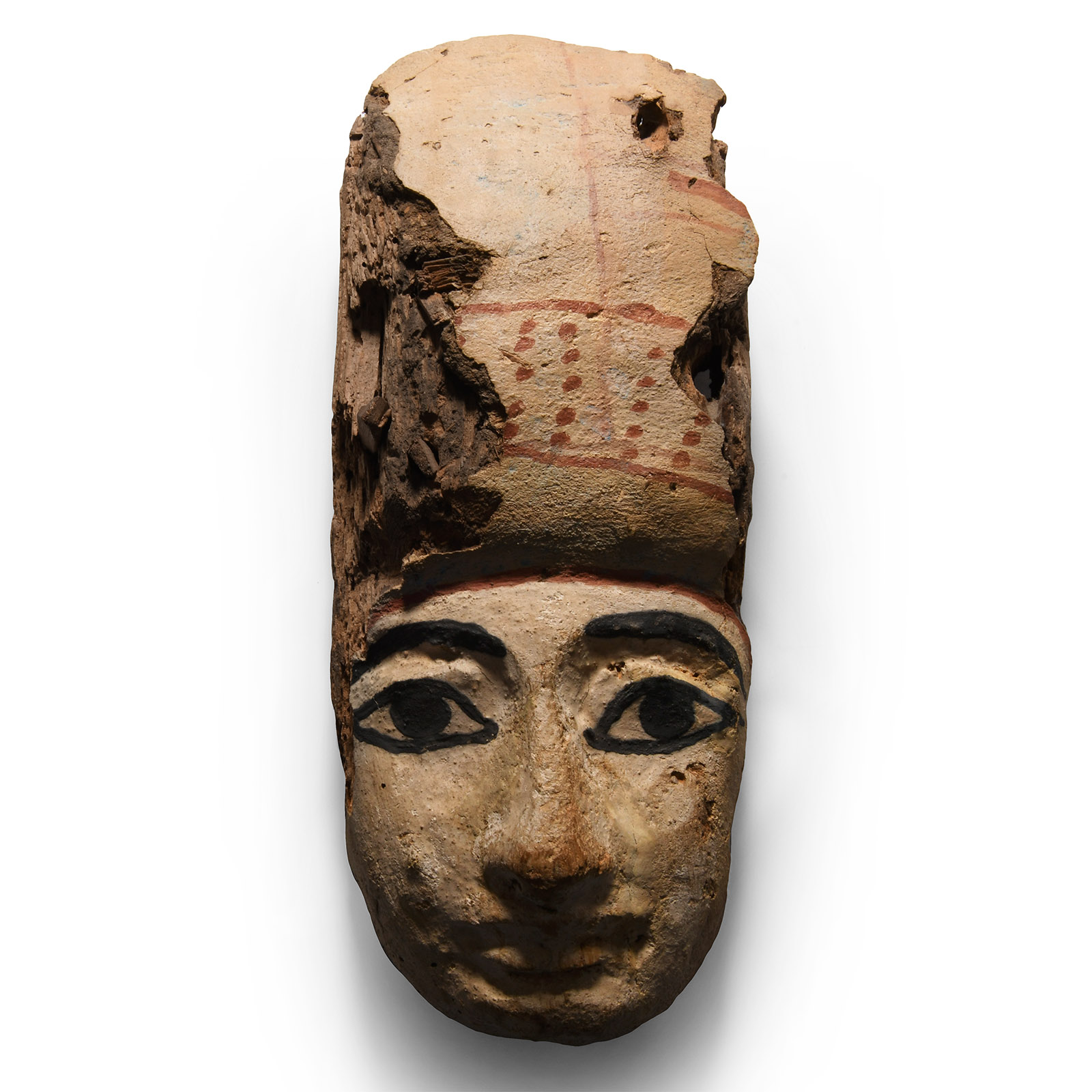
Egyptian Painted Wooden Mask
LATE PERIOD, 664-332 B.C.
9 1/4 in. (283 grams, 23.5 cm high).
With remains of polychrome painted detailing, depicting a large part of a face with eye detailing and remains of segmented headwear; old collection number 'E.352' and a later suspension loop to the reverse.
ProvenanceEx Roger Liechti collection, Geneva, Switzerland.
This lot has been checked against the Interpol Database of stolen works of art and is accompanied by search certificate no.11606-198998.
TimeLine Auctions follows a vetting process to ensure the authenticity and legality of all items, reinforcing our commitment to integrity and responsible trading. Each antiquity, antique, and coin lot undergoes thorough examination by a vetting committee of at least ten external specialists, professional trade association members, scientists, and archaeologists: Our Vetting Process
AUCTIONS:
TimeLine is a leading auction house specialising in antiquities, ancient art, collectables, natural history, coins, medals, and books. Our auctions offer museums, collectors, historians, and enthusiasts the opportunity to acquire unique and historically significant pieces.
LOT 0014
Egyptian Painted Wooden Mask
Estimate £1,500 - 2,000€1,740 - 2,320 (for guidance only)$2,030 - 2,700 (for guidance only)
-
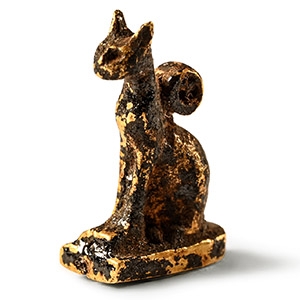
Egyptian Gold God Bastet Cat Amulet
Late New Kingdom, 1070-900 B.C.Sold for (Inc. bp): £650
Modelled seated on a tongue-shaped base, with simple facial detailing and suspension loop to the back. 0.52 grams, 8 mm
From an early 20th century French collection.
The goddess Bastet was believed to be the daughter of the sun god and was shown with the features of a lion up until about 1000 B.C. when she was portrayed as a cat or human with a cat head. As the daughter of Ra she was associated with the rage inherent in the sun god's eye which was considered to be his instrument of vengeance. Her development into a cat goddess occurred during the New Kingdom but did not fully develop until the Late Period. She was still associated with the destructive power of the sun and was shown on the prow of the solar boat, decapitating the evil serpent Apophis in the Book of the Dead. The maternal, protective and hunting characteristics of the cat are obvious in Bastet and she was seen as a protector of pregnant women and young children. In the Pyramid Texts she is invoked by the deceased king to act as his protector and to help him reach the sky to join the sun god; the king proclaims that Bastet is his mother and nurse. Like her counterpart, Sekhmet, Bastet has an aggressive side and, in a text from Karnak, Amenhotep II described his enemies being slaughtered like the victims of Bastet. The goddess had a shrine at Karnak, where she is known as the 'Lady of Asheru' which aligns her closely with the goddess Mut, the consort of Amun-Ra. Her most famous shrine was in the north-east Delta region, at Bubastis, and was known as Per-Bastet or 'the House of Bastet.' Herodotus describes the festival of Bastet as one of the most elaborate in all of Egypt and identifies her with the Greek Artemis. Cemeteries of cats have been excavated at Bubastis and at Saqqara and Memphis. -
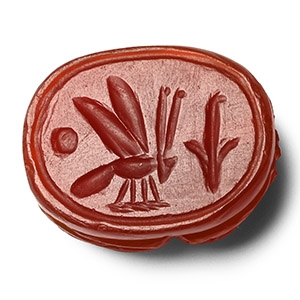
Egyptian Carnelian Scarab with Symbols Representing the Royal Title 'King of Upper and Lower Egypt'
New Kingdom, 1550-1070 B.C.Sold for (Inc. bp): £1,560
With rounded profile and detailing, the underside inscribed with the sedge, bee and sun disk symbols. 3 grams, 16 mm
Ex North London, UK, gentleman, 1990s. -
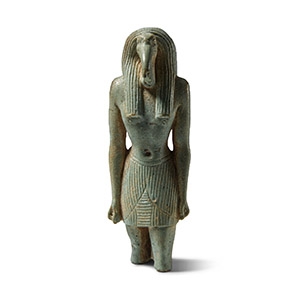
Egyptian Faience Figure of Thoth
26th Dynasty, 664-525 B.C.Estimate: £3,000 - 4,000 (‡+bp*)
Opening Bid: £1,500
In ibis-headed form, plain dorsal pillar, pleated kilt, tripartite wig; old collector's inked accession number 'E.1000' to the reverse; repaired. 44.7 grams, 88 mm high
Ex Roger Liechti collection, Geneva, Switzerland. This lot has been checked against the Interpol Database of stolen works of art and is accompanied by search certificate no.11595-199013.
One of the most prominent of the ancient Egyptian gods, Thoth was associated with writing, magic and wisdom, and was credited with founding a number of branches of knowledge including law, religion and science. He is believed to have been self-created or grown from the seed of Horus from the forehead of Set. As the son of the gods of order and chaos, he was also the god of equilibrium. As such, he was considered a just and infallible judge. Worshipped from the Pre-Dynastic to the Ptolemaic periods, Thoth was one of the longest, continuously worshipped gods from any civilisation. Thoth's Egyptian name was Djehuty (also dhwty) meaning ‘He Who is Like the Ibis’, a sacred bird in ancient Egypt as well as a popular pet associated with wisdom.
