
Loading, please wait...
LOT 0037
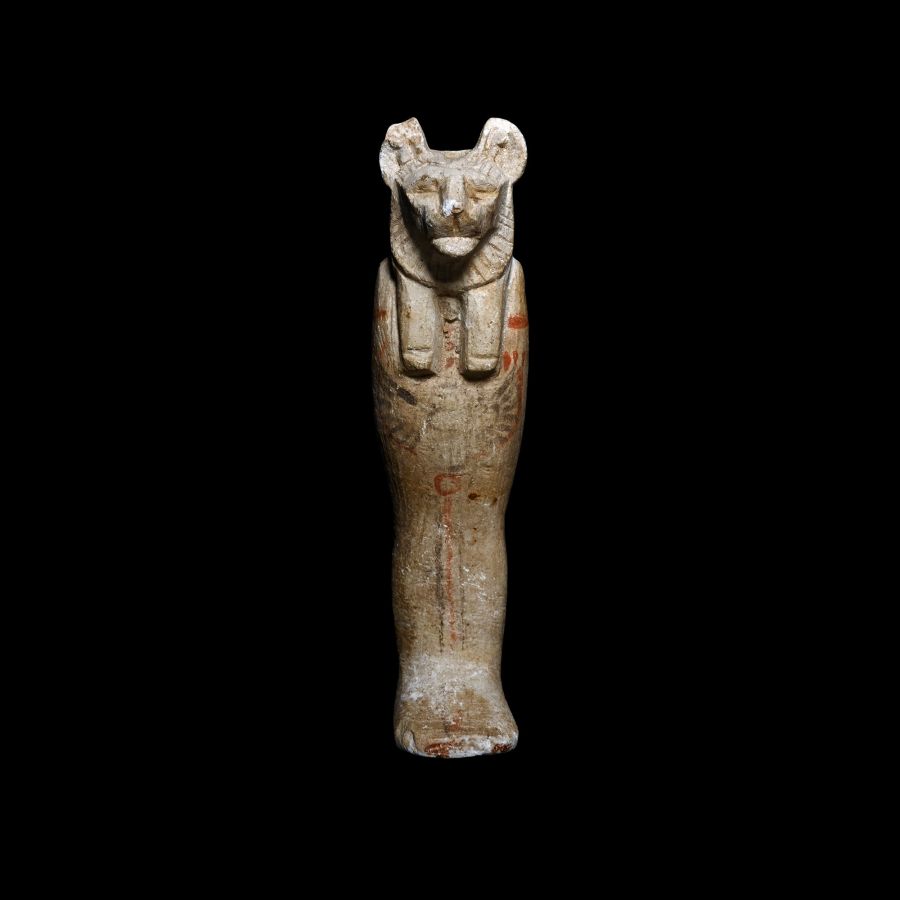
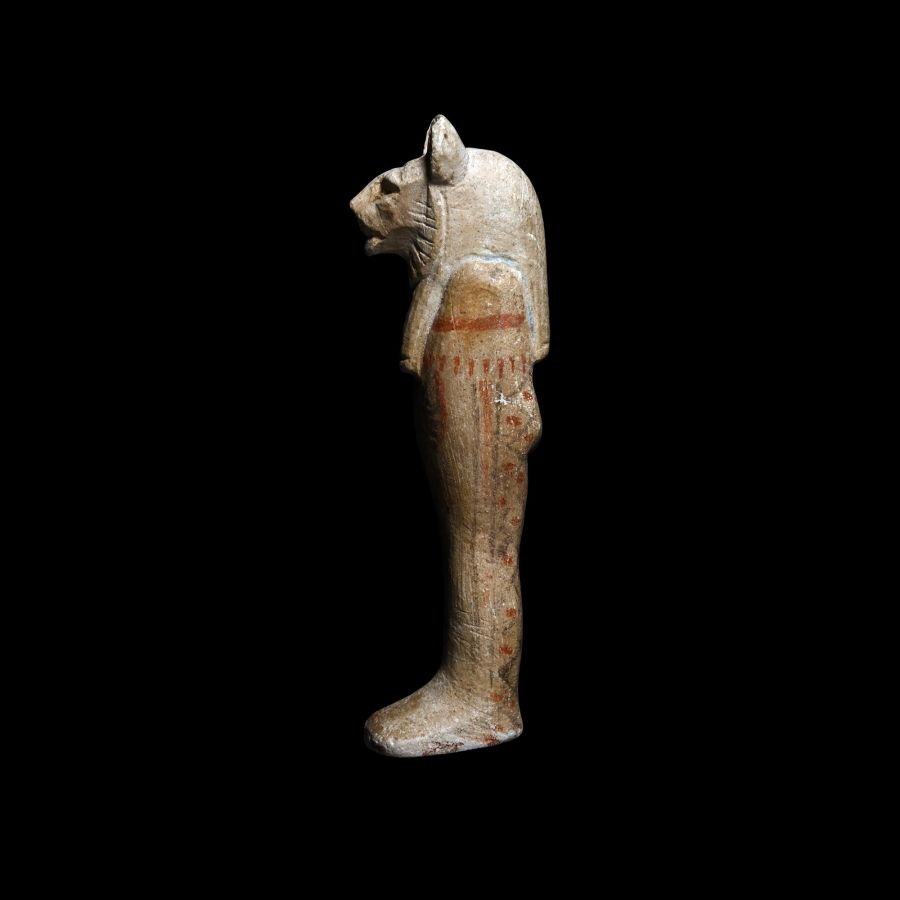
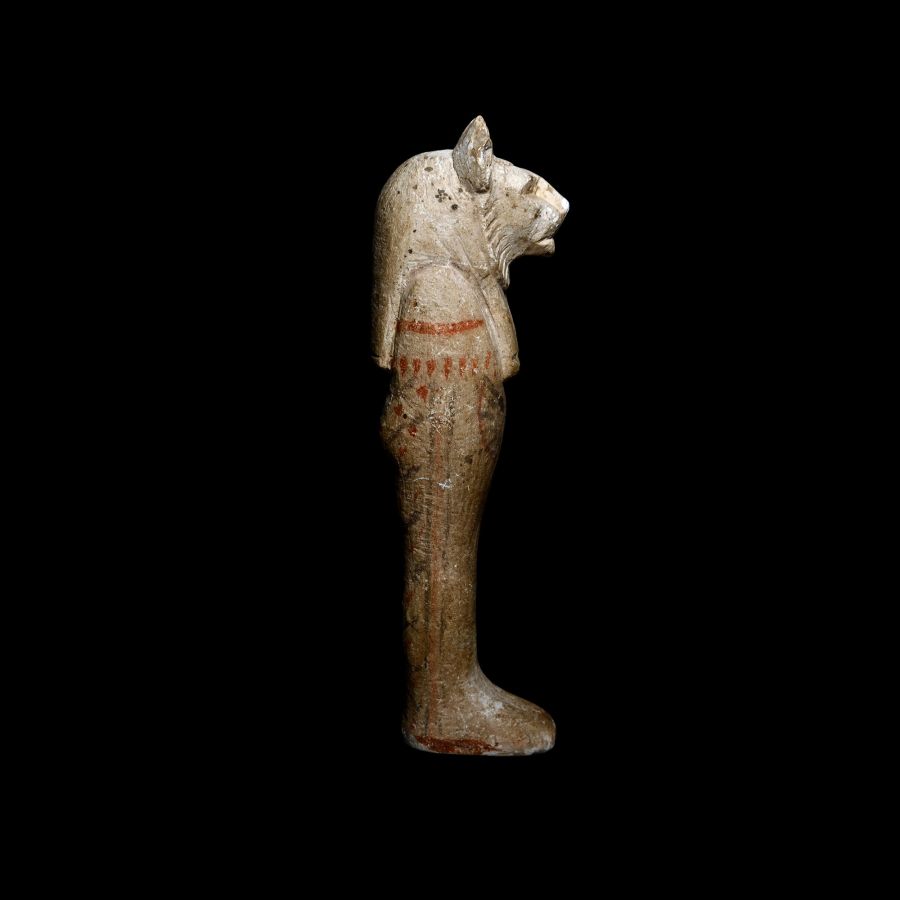
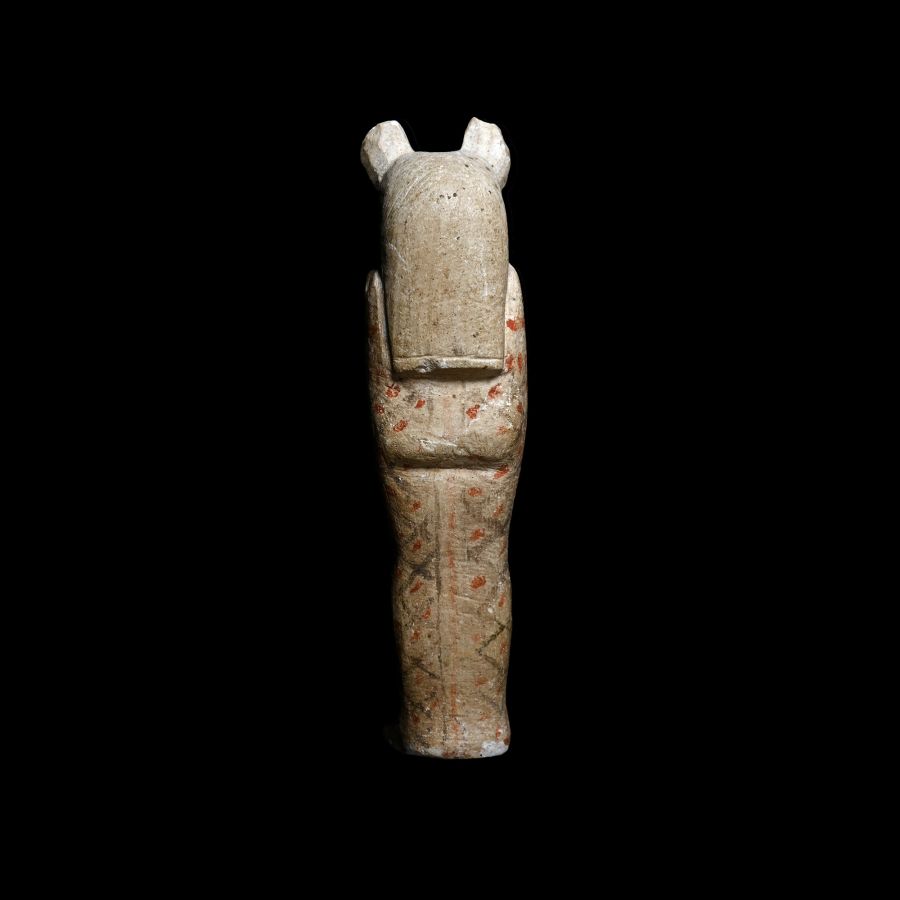
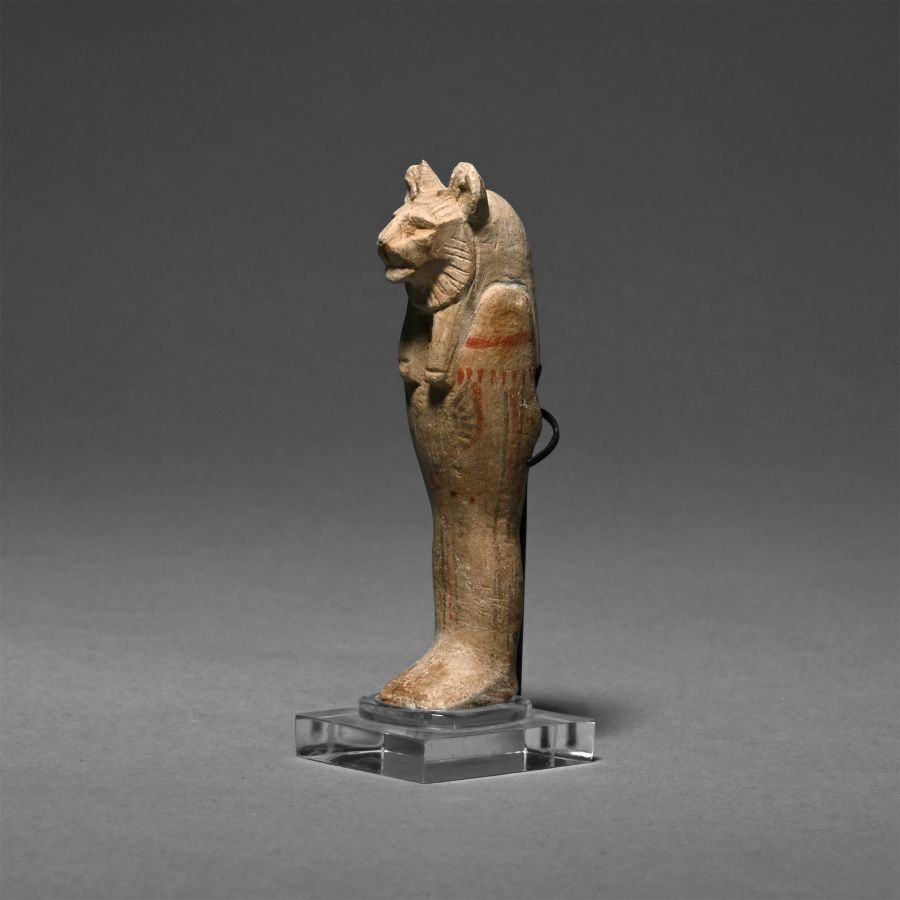
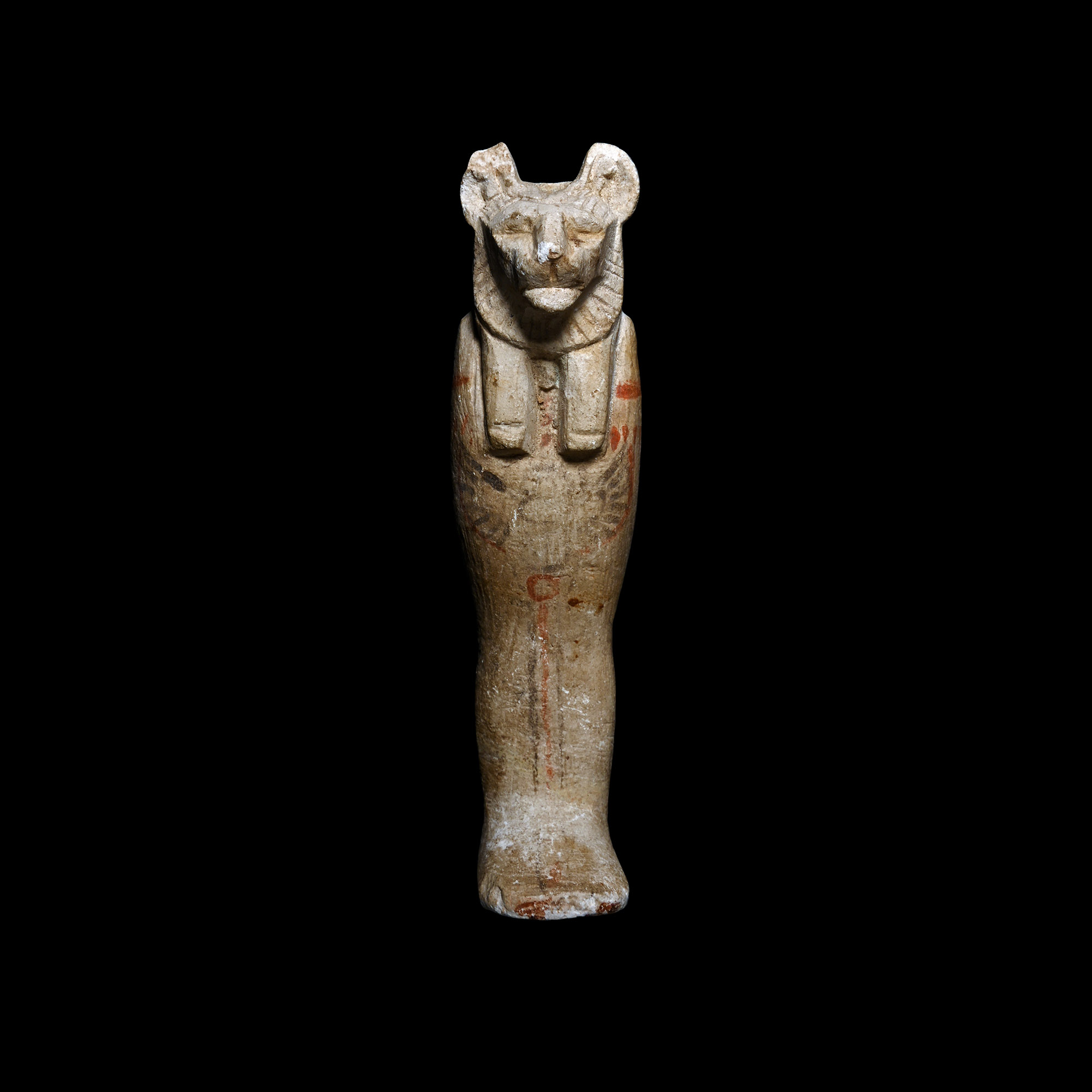
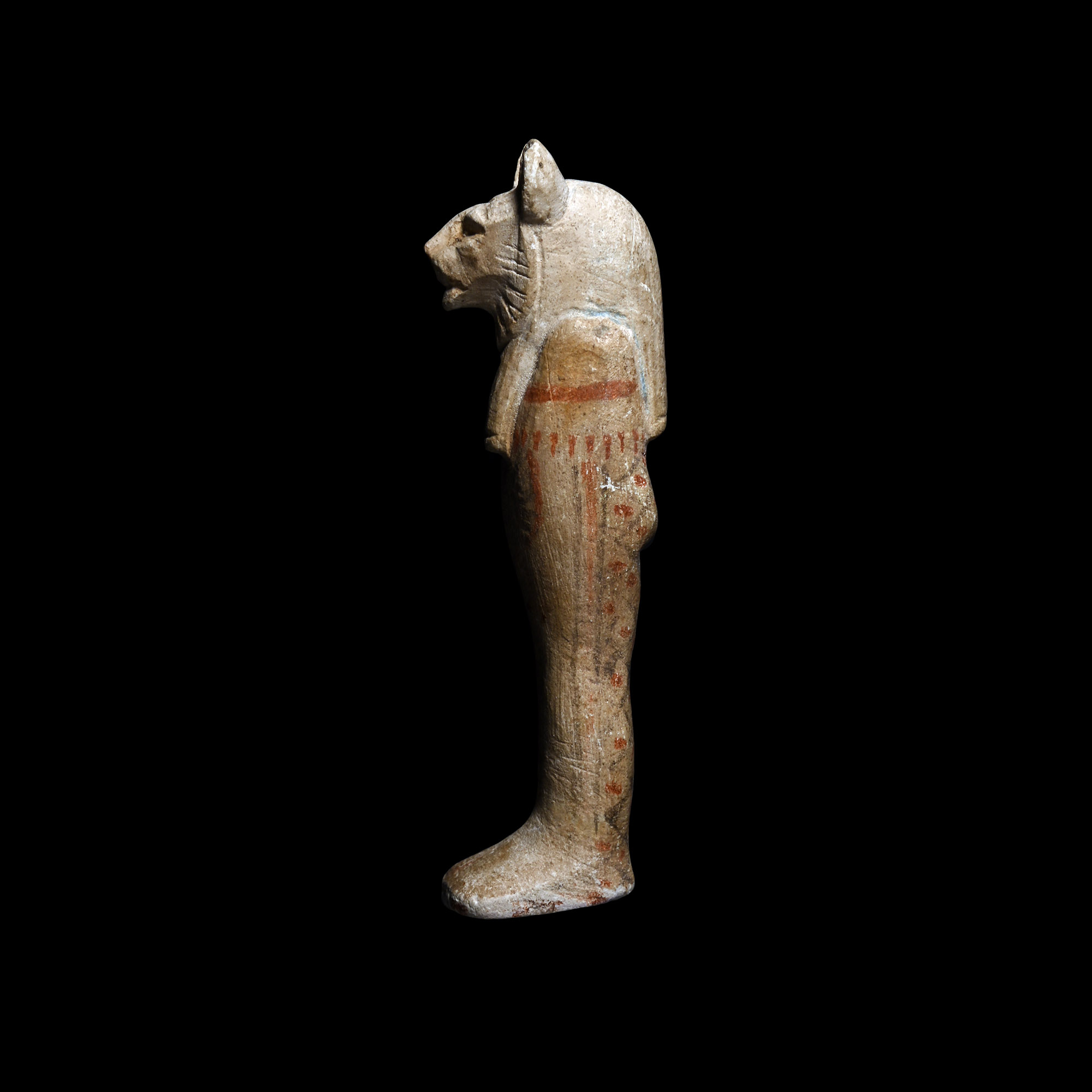
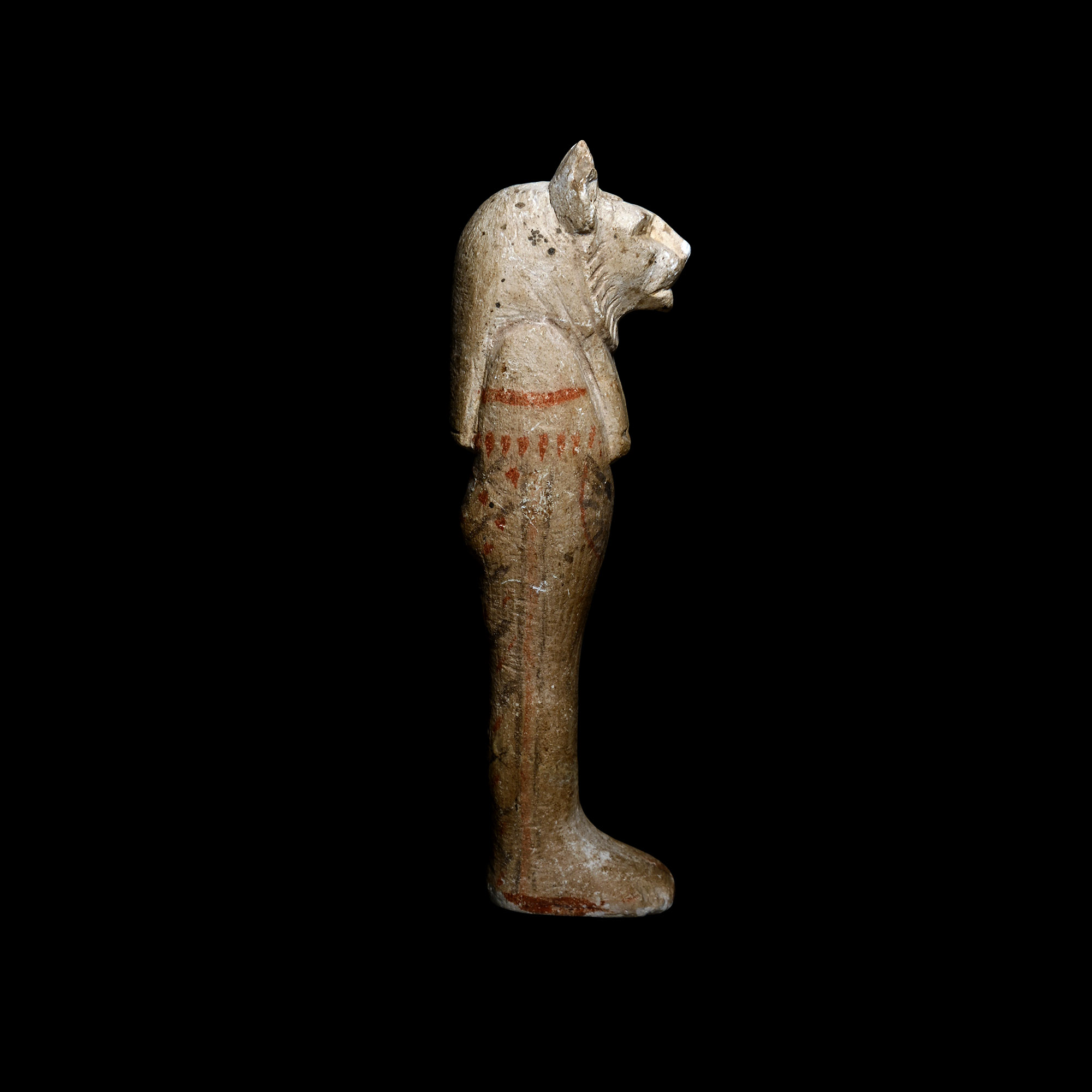
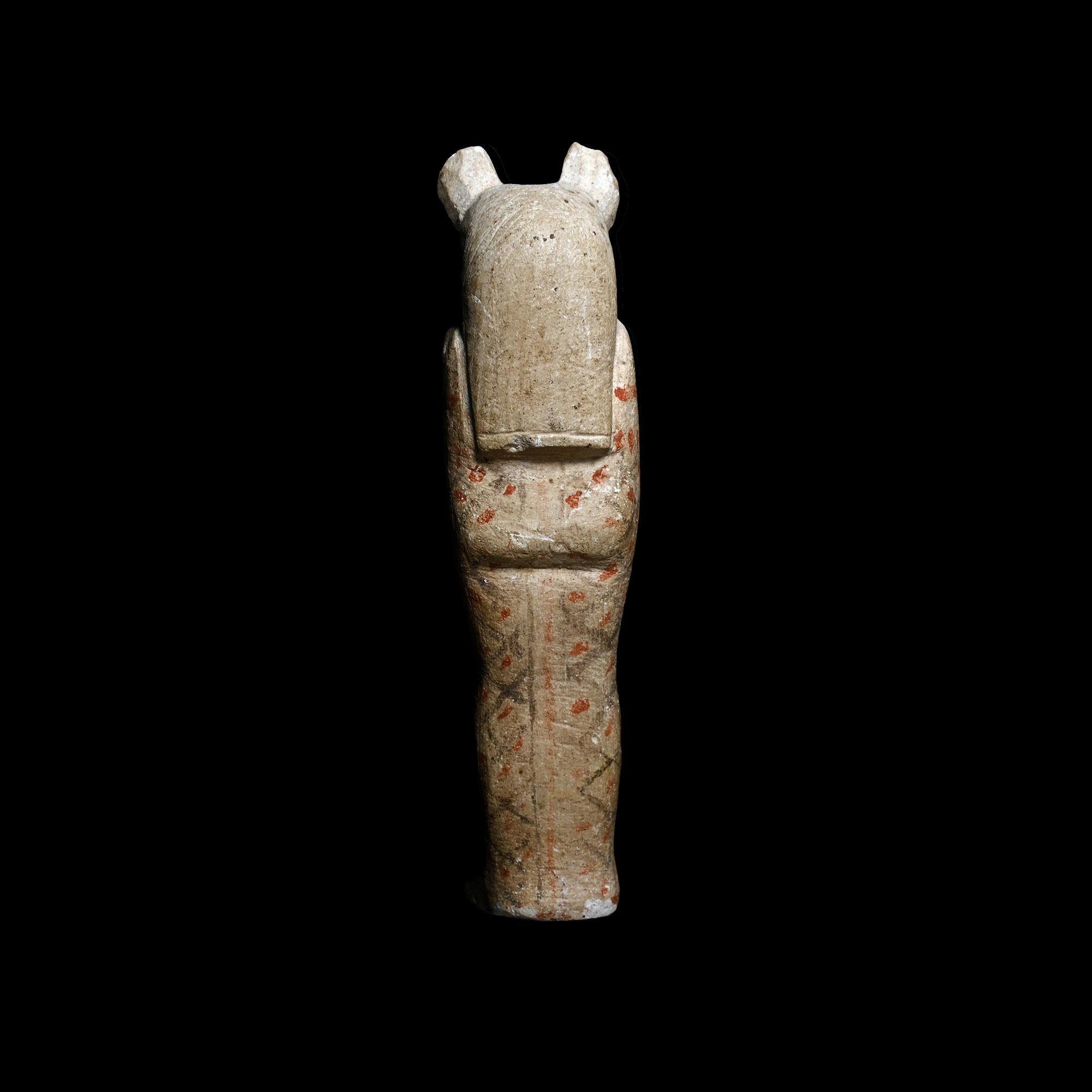
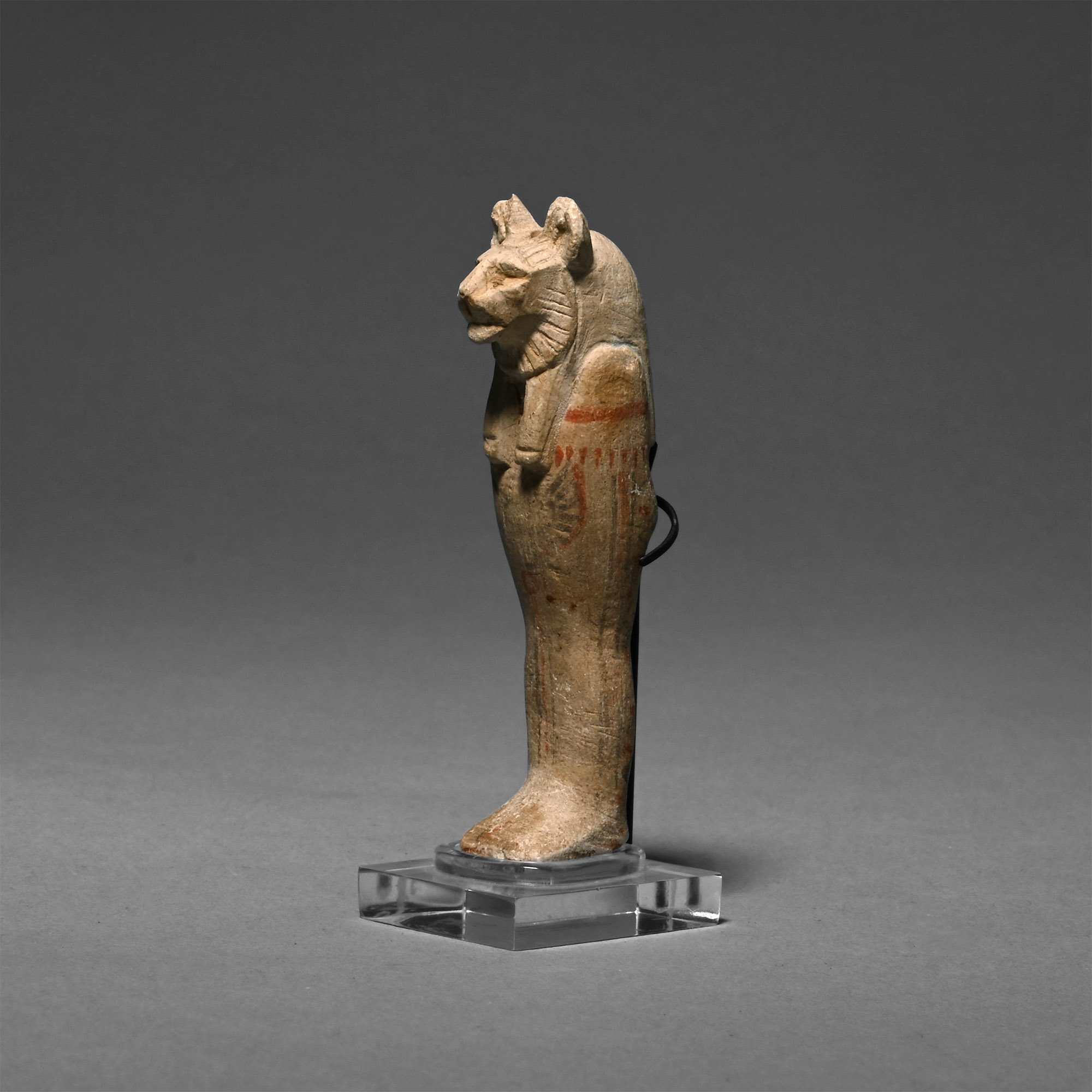
Egyptian Painted Limestone Mummiform Sekhmet Statuette
CIRCA 7TH-6TH CENTURY B.C.
3 in. (29 grams total, 77 mm including stand).
Carved in the round depiction of Bastet or Sekhmet in a lion-headed form with a tripartite headdress, with front lappets overlain by the leonine mane; between the ears, a hole possibly for the insertion of a separate sun disc element; red pigment lines and fringe to the shoulders; a black diamond pattern with central red dots decorating the back, and a winged scarab in black on the abdomen; marked on the underside with the collector's reference 'BAOP SAKKARA'; mounted on a custom-made display stand.
ProvenancePrivate collection of George Anastase Michaelides (1900-1973) and legally exported from Egypt in the 1940s.
Black ink inscription on base "BAOP SAKKARA".
Christie's, London, 29 October 2003, no.167.
Accompanied by a copy of the relevant Christie's catalogue pages.
This lot has been checked against the Interpol Database of stolen works of art and is accompanied by search certificate number no.13101-248076.
Cf. Daressy, G., Catalogue général des antiquités égyptiennes du Musée du Caire N° 38001-39384 Statues de divinités, Cairo, 1906, p. 153 (inv. no. 38586), pl. XXXII, for a similar statuette in faience.
FootnotesConsidering the specified Saqqara provenance, it is probable that the statuette originated from the Bubastaeion, dedicated to Bastet. The goddess was more commonly depicted as a cat or a human with a cat's head, although she also sometimes displayed a leonine aspect. It is also possible that the statuette represents her son, Mahes, who was depicted as a man with a lion's head.
CONDITIONTimeLine Auctions follows a vetting process to ensure the authenticity and legality of all items, reinforcing our commitment to integrity and responsible trading. Each antiquity, antique, and coin lot undergoes thorough examination by a vetting committee of at least ten external specialists, professional trade association members, scientists, and archaeologists: Our Vetting Process
AUCTIONS:
TimeLine is a leading auction house specialising in antiquities, ancient art, collectables, natural history, coins, medals, and books. Our auctions offer museums, collectors, historians, and enthusiasts the opportunity to acquire unique and historically significant pieces.
LOT 0037
Egyptian Painted Limestone Mummiform Sekhmet Statuette
Sold for (Inc. bp): £3,000
-
.jpg)
Egyptian Carnelian Scarab Amulet
Late Period, 664-332 B.C.Sold for (Inc. bp): £98
Carved in the round scarab with longitudinal piercing. 0.40 grams, 8.5 mm
Ex Belinda Elliston collection, 20th century. -
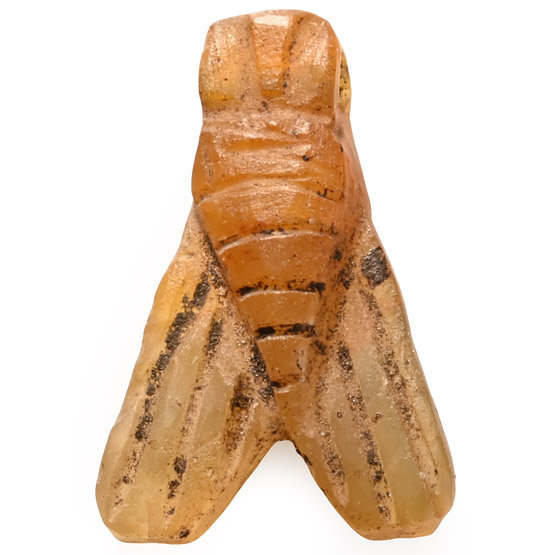
Egyptian Carnelian Fly Amulet
Late Period, 664-332 B.C.Sold for (Inc. bp): £130
With detailing to wings and body, loop for suspension above the head. 0.33 grams, 12 mm
Ex H Norri collection, Milton Keynes, Bedfordshire, UK, 1980s-1990s.
Although flies might seem like mere nuisances, the ancient Egyptians admired them for their speed, agility, and persistence. Fly-shaped amulets, first appearing in Naqada II burials around 3200 B.C., became particularly popular during the New Kingdom and afterwards. Made from materials such as gold, silver, faience, lapis lazuli, and bone, they served apotropaic functions, protecting against bites and warding off pests. Some may have also symbolised fertility. Gold fly pendants were even awarded by pharaohs to honour soldiers’ bravery and tenacity. -
.jpg)
Egyptian Steatite Heart Scarab
Late Period, 664-332 B.C.Sold for (Inc. bp): £143
With ribbed carapace and suspension loop to underside. 2.89 grams, 22 mm
Acquired on the European art market in the early 2000s. with Galerie Rhéa, Zurich, Switzerland.
