
Loading, please wait...


LOT 0463
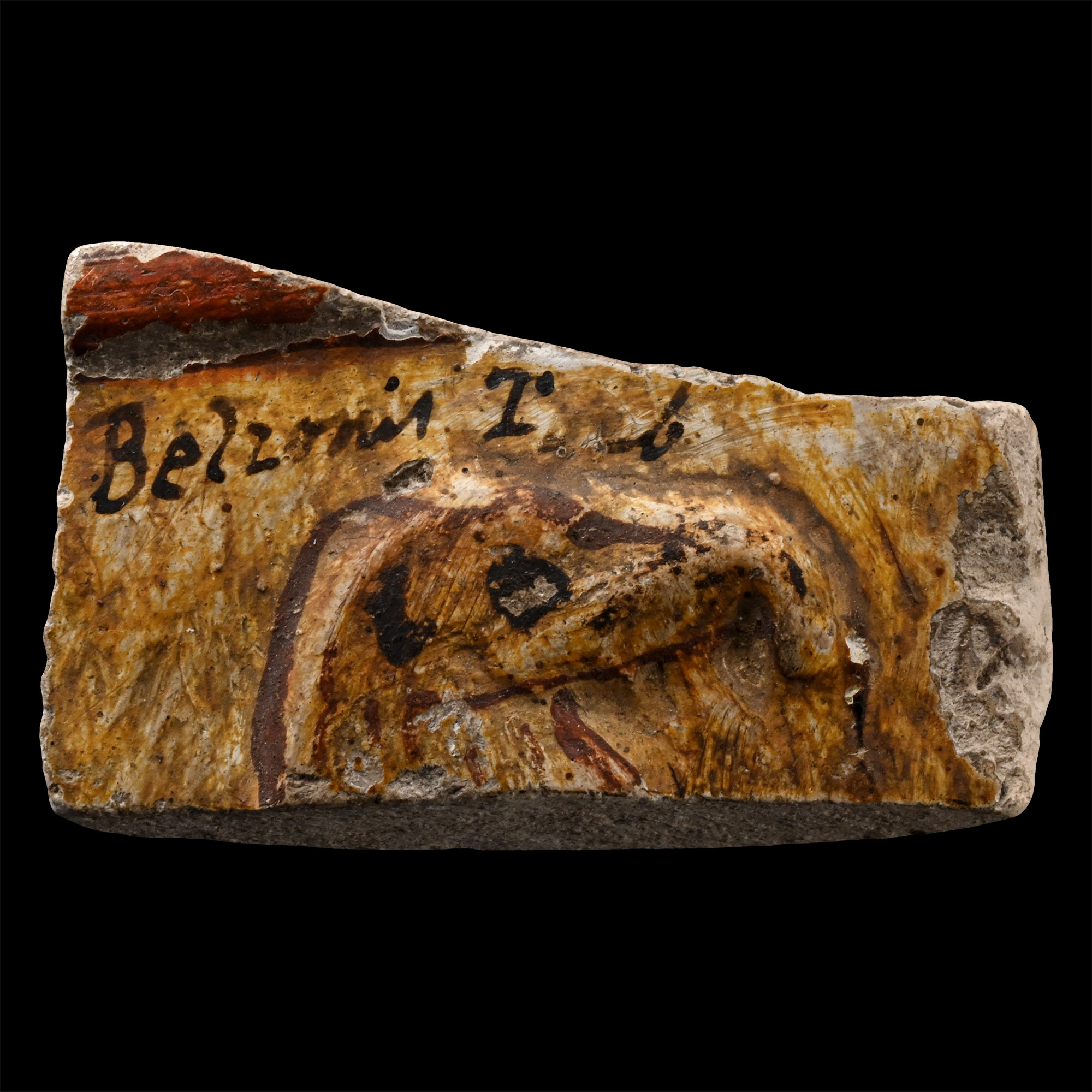
Egyptian Painted Limestone Fragment from the Tomb of Pharaoh Seti I
NEW KINGDOM, 19TH DYNASTY, 1290-1279 B.C.
1 3/4 in. (15.3 grams, 44 mm).
Colourful, almost rectangular section of a wall fragment, with a slightly dished face, low-relief moulding with pigment, and 'Belzonis T[om]b' written at the top; accompanied by an old collector's label suggesting the likely findspot and other details. [No Reserve]
ProvenanceWith a late 19th-early 20th century handwritten ticket attached.
From the private collection of Peter Clayton, FCILIP, Dip, Arch, FSA, FRNS, Hemel Hempstead, Hertfordshire, UK; formed since the late 1950s.
The Italian explorer and antiquarian Giovanni Battista Belzoni uncovered the tomb of Seti I (KV 17) on October 16, 1817. This monumental tomb, with beautifully decorated walls, extended almost 140 metres underground through a series of descending corridors and chambers. In 1821, Belzoni opened a groundbreaking exhibition at the Egyptian Hall in Piccadilly, London, presenting a full-scale replica of the tomb. The paid public exhibition sparked massive 19th-century "Egyptomania" and introduced European audiences to ancient Egyptian art. Such was the renown of his discovery that it was often referred to as 'Belzoni's Tomb'.
CONDITIONTimeLine Auctions follows a vetting process to ensure the authenticity and legality of all items, reinforcing our commitment to integrity and responsible trading. Each antiquity, antique, and coin lot undergoes thorough examination by a vetting committee of at least ten external specialists, professional trade association members, scientists, and archaeologists: Our Vetting Process
AUCTIONS:
TimeLine is a leading auction house specialising in antiquities, ancient art, collectables, natural history, coins, medals, and books. Our auctions offer museums, collectors, historians, and enthusiasts the opportunity to acquire unique and historically significant pieces.
LOT 0463
Egyptian Painted Limestone Fragment from the Tomb of Pharaoh Seti I
Estimate £100 - 140€120 - 160 (for guidance only)$140 - 190 (for guidance only)
-
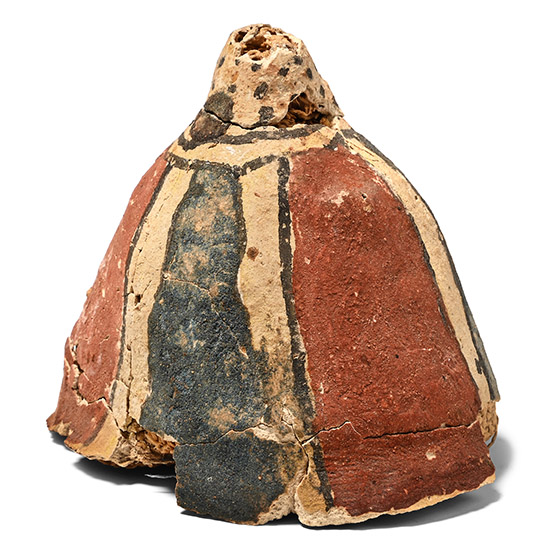
Egyptian Bell-Shaped Cartonnage Element from a Mummy Case
Graeco-Roman Period, circa 3rd century B.C.-2nd century A.D.Estimate: £100 - 140 (+bp*)
Opening Bid: £5
Bell-shaped in form with a conical top feature, the outer face is primed to accept painted petal detailing; inner layers are in loosely woven fabric. 20 grams, 69 mm
with a privately curated collection, 1980s-early 2000s. From the private collection and estate of Christine Simons (1943-2025), West Midlands, UK.
This is an intriguing object, possibly a breast from a cartonnage mummy case. For example, some Roman-period cartonnage cases from Akhmim were modelled with female physiognomies, including wide hips and modelled breasts. -
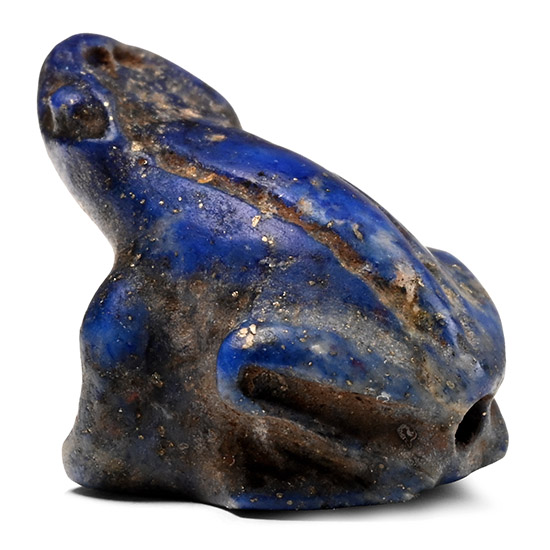
Egyptian Lapis Lazuli Frog Amulet
Late Period, 664-332 B.C.Estimate: £200 - 300 (+bp*)
Opening Bid: £60
Carved in the round in a crouched pose, with hind legs folded behind the body, pierced through the stomach for suspension. 1.02 grams, 14 mm
From a mid 20th century collection.
Frog amulets in ancient Egypt symbolised fertility, rebirth, and renewal. Associated with the goddess Heqet, linked to childbirth and life-giving forces, they were especially popular for fertility and protection during pregnancy and labour. Their association with the annual Nile flood, which brought new life to the land, further emphasised their symbolism of revival and abundance. -
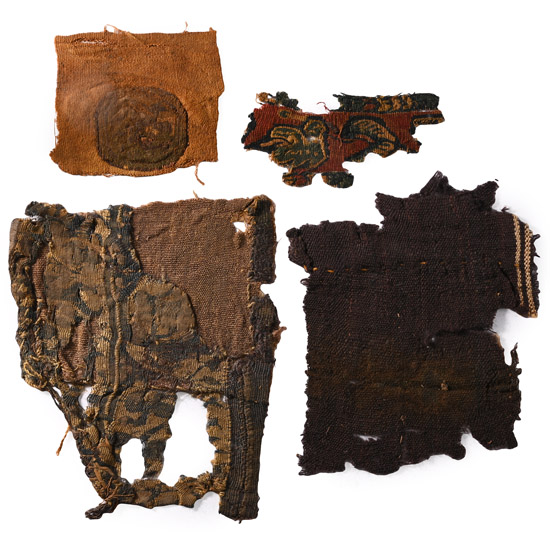
Egyptian Coptic Tunic Textile Fragments of Segmenta and Orbiculus with Geometric Decoration
Circa 4h-8th century A.D.Estimate: £60 - 80 (+bp*)
Opening Bid: £5
Comprising: a fragment of a tapestry or a fabric in brown linen; a small orbiculus, with vegetal decoration; fragment of a clavus, in red, yellow, green wool, s-torsion, with plant ornaments; a large fragment of cloak or tapestry, with slingers inside orbiculi, sewn edges and wide border with vegetal ornaments. 27 grams total, 9.8-19 cm
Acquired 1970s-1996. Property of a North American collector. London collection, 2016.
The fragments are decorative parts of tunics. These are fabrics of great decorative finesse, with some elements displaying an unusual and extremely well-preserved colour palette. Some designs recall Iranian motifs.
