
Loading, please wait...
LOT 0470
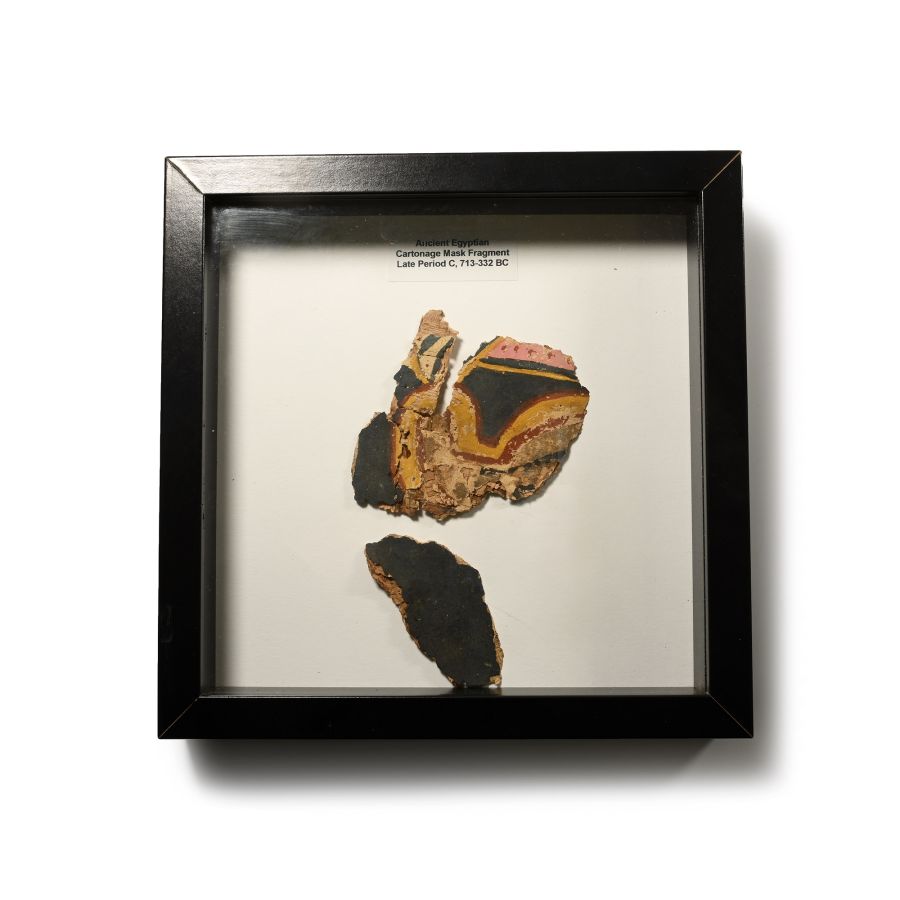
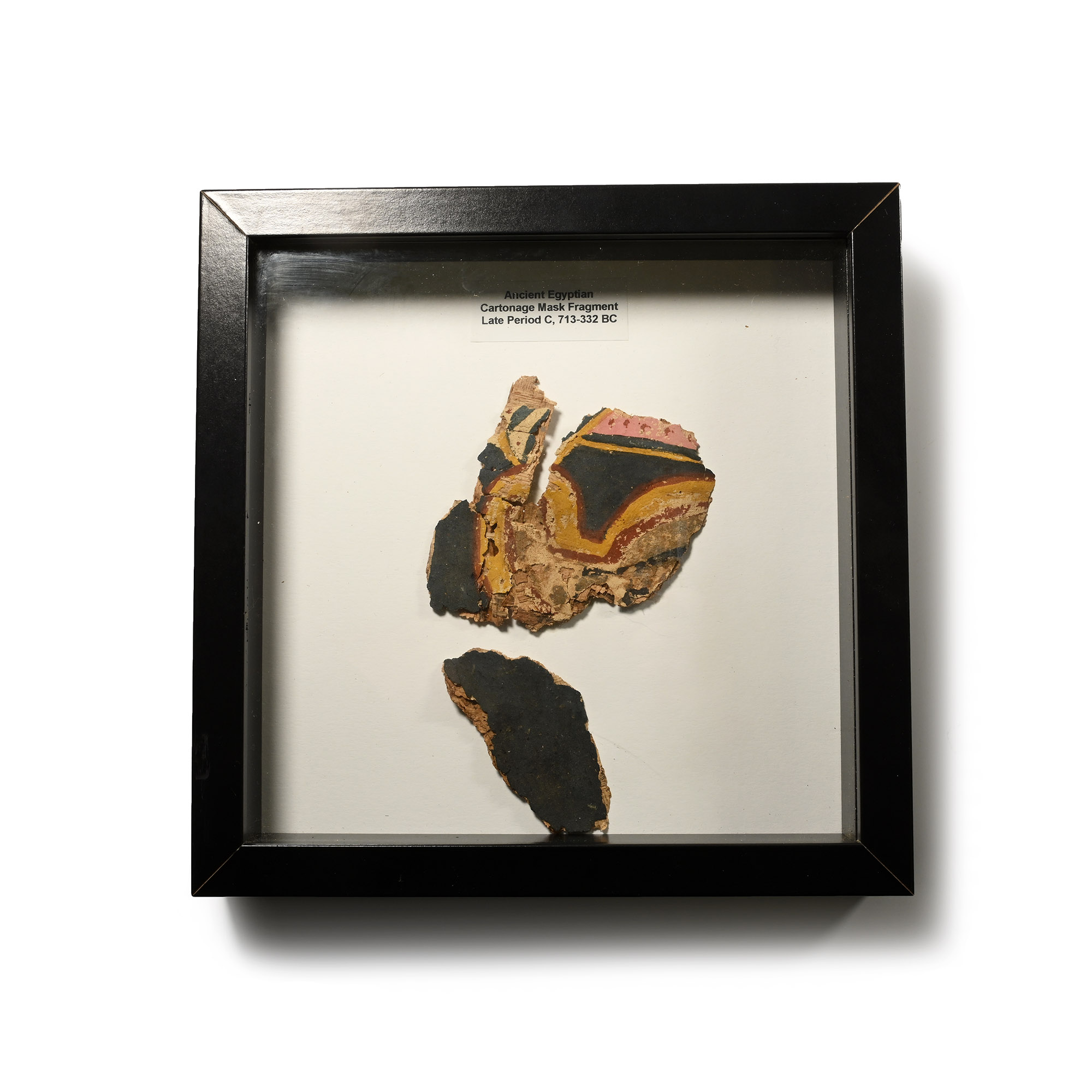
Egyptian Painted Cartonnage Cartouche Fragment
LATE-PTOLEMAIC PERIOD, 664-31 B.C.
10 x 10 in. (824 grams including frame, 25.2 x 25.2 cm).
Two large moulded fragments of cartonnage with polychrome painted decoration; mounted in a glazed frame. [No Reserve]
ProvenanceEx M.S. Ciappara collection, Norfolk, UK, 1939-1950.
This lot is accompanied by an illustrated lot declaration signed by the Head of the Antiquities Department, Dr Raffaele D’Amato.
TimeLine Auctions follows a vetting process to ensure the authenticity and legality of all items, reinforcing our commitment to integrity and responsible trading. Each antiquity, antique, and coin lot undergoes thorough examination by a vetting committee of at least ten external specialists, professional trade association members, scientists, and archaeologists: Our Vetting Process
AUCTIONS:
TimeLine is a leading auction house specialising in antiquities, ancient art, collectables, natural history, coins, medals, and books. Our auctions offer museums, collectors, historians, and enthusiasts the opportunity to acquire unique and historically significant pieces.
-
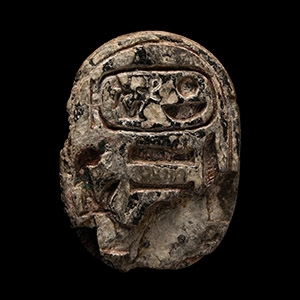
Large Egyptian Stone Hieroglyphic Scarab with Cartouche of Amenhotep III
New Kingdom, 1386-1349 B.C.Estimate: £700 - 900 (‡+bp*)
Opening Bid: £350
Naturalistically modelled with detailing to the upper body and legs; damaged base with the throne name 'neb-maat-re' of Amenhotep III in cartouche and the god's name Amun-Re below; pierced for suspension. 41 grams, 44 mm
Ex R. Liechti (1934-2010) Geneva, Switzerland, collection between 1950-1990s. This lot is accompanied by an illustrated lot declaration signed by the Head of the Antiquities Department, Dr Raffaele D’Amato. -
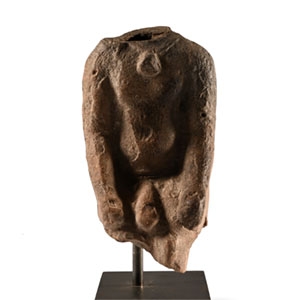
Egyptian Terracotta Seated Torso
Ptolemaic Period, 4th-3rd century B.CSold for (Inc. bp): £65
The headless deity, possibly Harpocrates, seated on a throne, forearms resting on thighs and flanking a protruding phallus, wearing a medallion around the neck; mounted on a custom-made display stand. 280 grams total, 97 mm including stand
The Erotica Collection Christian von Faber-Castell, Küsnacgt ZH, Switzerland, since the late 1970s. This lot is accompanied by an illustrated lot declaration signed by the Head of the Antiquities Department, Dr Raffaele D’Amato.
Figural plaques of ithyphallic Harpocrates seated on a block seat with forearms on thighs and hands each side of a projecting phallus were rare types from Naukratis, Temai el-Amohel. They can be dated to the early Hellenistic Period, circa 330 B.C. Christian von Faber-Castell (born 1950) is a renowned German entrepreneur and art collector, best known as a member of the prominent Faber-Castell family, famed for their iconic writing instruments. A passionate advocate for art and culture, Christian von Faber-Castell curated an extensive and diverse private collection of erotica, spanning centuries and cultures. His collection reflects a deep appreciation for the interplay of beauty, sensuality, and artistic expression, bringing together rare and unique works that explore themes of intimacy and human connection. Pieces from this collection have been featured in notable exhibitions and are celebrated for their artistic and historical significance. This offering represents a rare opportunity to acquire works from one of the most fascinating and eclectic private collections of its kind. -
.jpg)
Egyptian Bronze Amun-Min-Kamutef Statuette
Late Period, 664-332 B.C.Sold for (Inc. bp): £2,080
Modelled in the round as a votive ithyphallic figure wearing a double-plumed crown with a sun disc, holding a flail in his outstretched right hand and his erect phallus in the left; mounted on a custom-made display base. 538 grams total, 21 cm high including stand
Acquired on the London art market. Ex 'K' collection, 1990-2020s. This lot has been cleared against the Art Loss Register database, and is accompanied by an illustrated lot declaration signed by the Head of the Antiquities Department, Dr Raffaele D’Amato.
Amun-Min-Kamutef was a syncretic deity combining the attributes of Amun, the supreme god of the Egyptian pantheon, and Min who represents sexual procreation. The iconography of Amun's ithyphallic form Kamutef is essentially that of Min, and serves to emphasise the sexual prowess of the god. Kamutef means 'bull of his mother' and appears to refer both to Amun's sky-goddess mother in her cow form and to the bull's sexual prowess and strength.
