
Loading, please wait...
LOT 0039
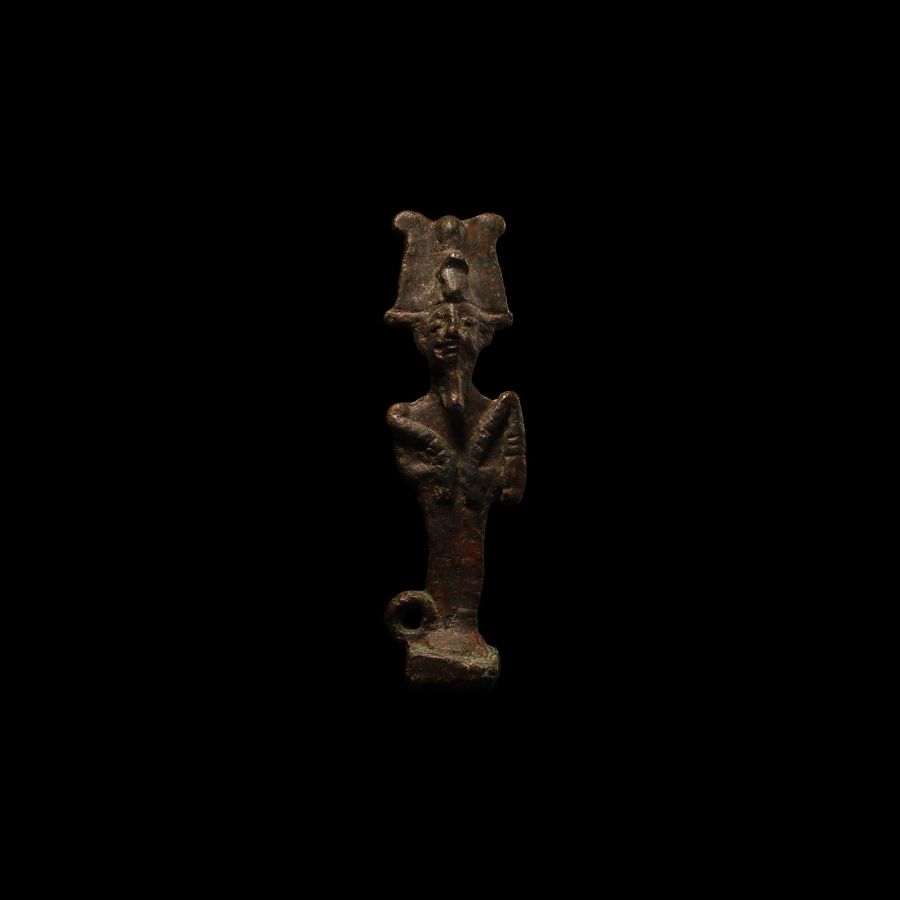
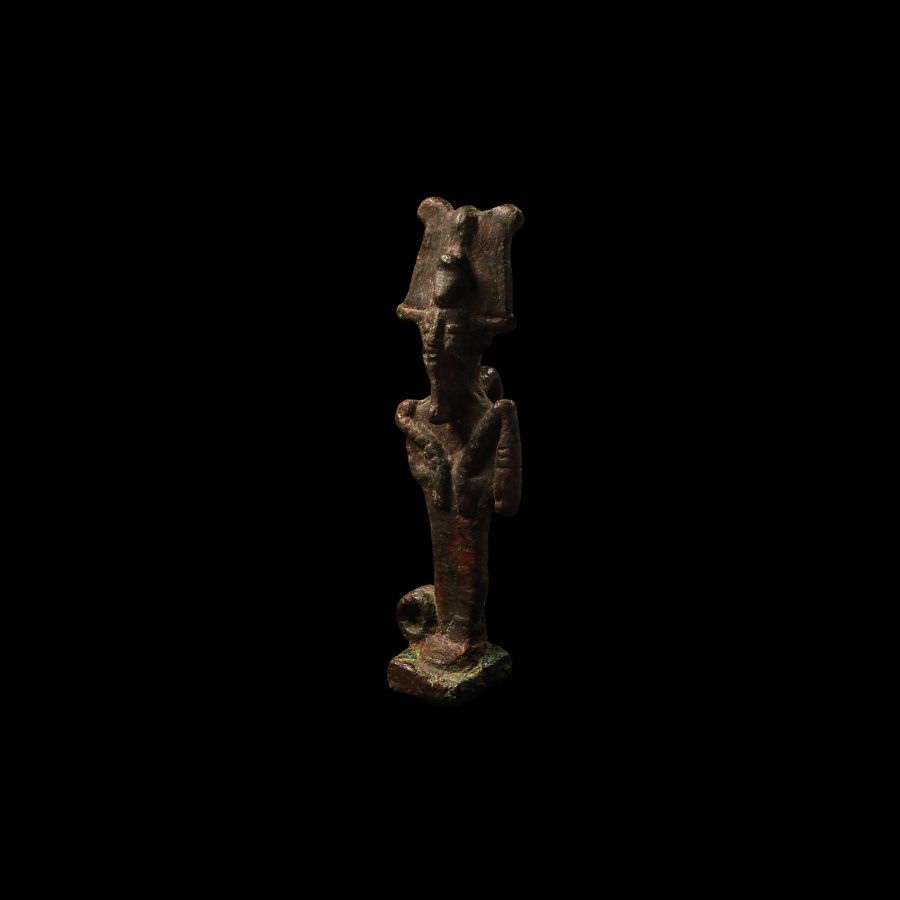
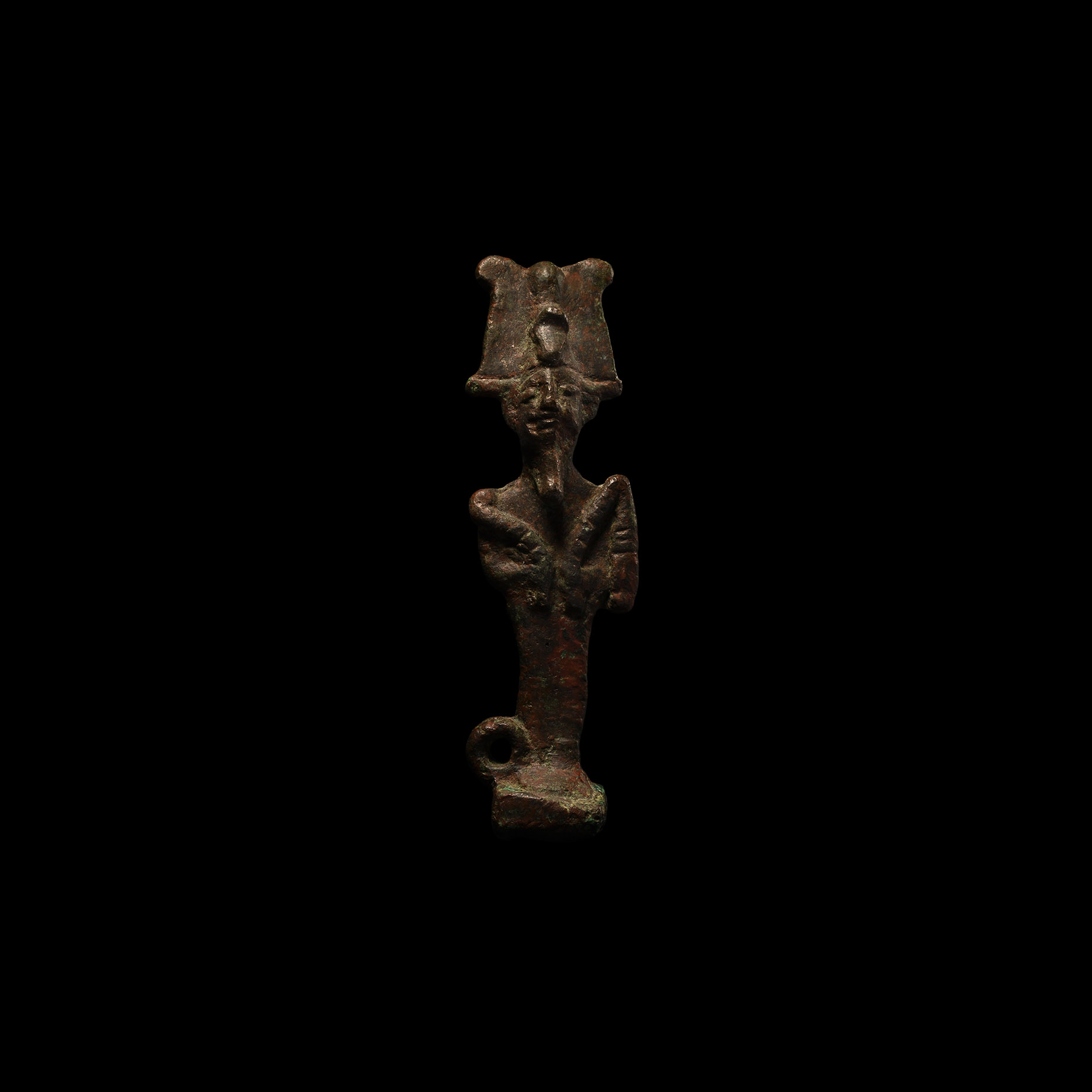
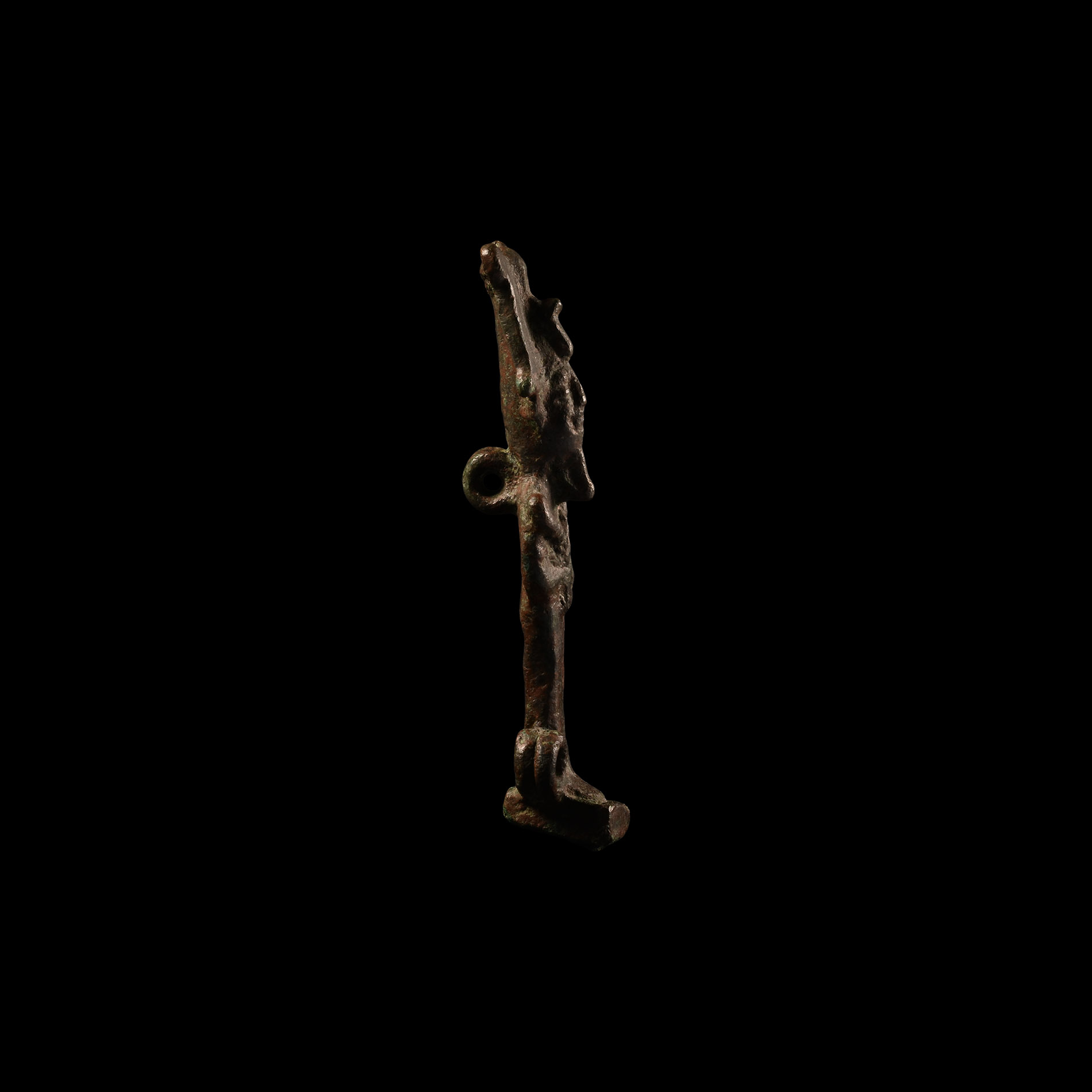
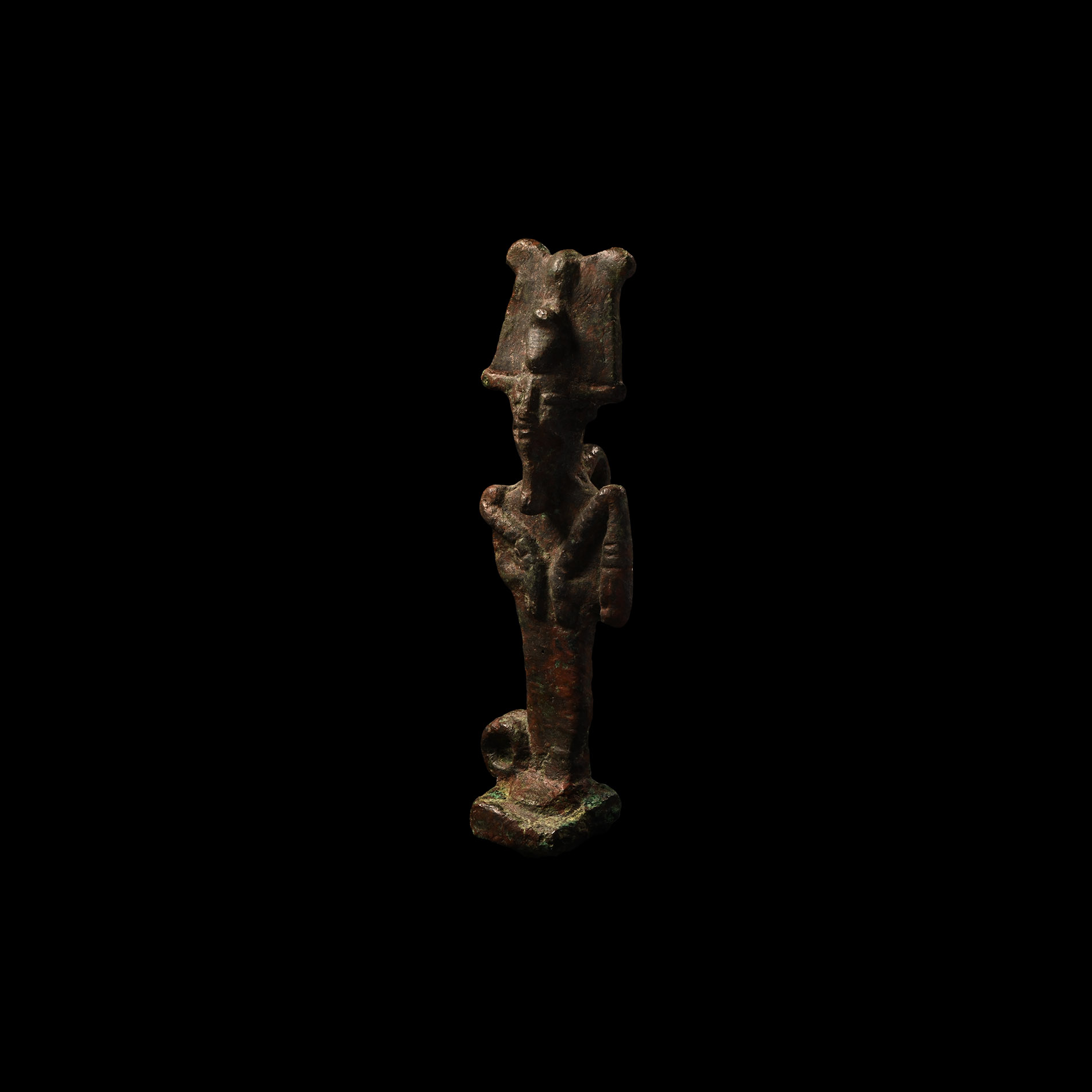
Egyptian Osiris Statuette
LATE PERIOD, 664-525 B.C.
3 in. (36.5 grams, 76 mm high).
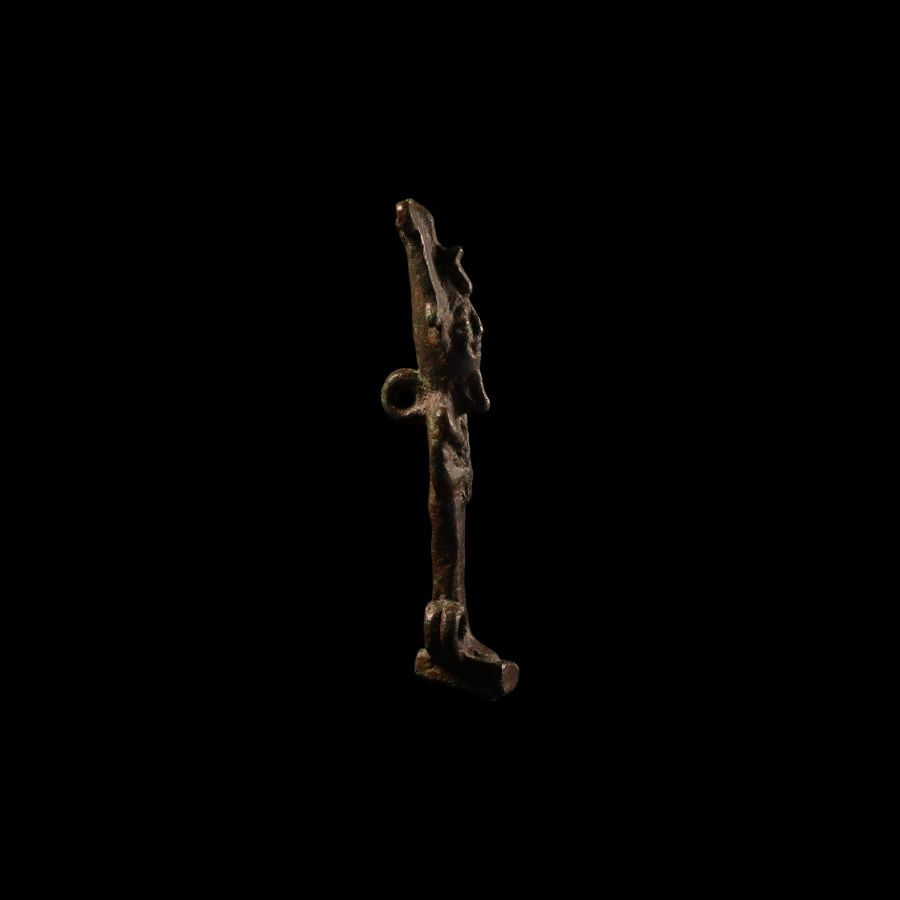
A bronze statuette depicting the god Osiris, modelled standing on a sub-square base, wearing a tight-fitting mummiform garment and Atef crown, stylised facial detailing, false beard, hands positioned in front of chest holding the royal crook and flail; loop at base and to reverse. [No Reserve]
ProvenanceFrom an old UK collection.
From the private collection of Alf Baxendale (1941-2016) part 2, keen Egyptologist, member of the Egyptology Society, trustee of the Amarna Trust; thence by descent.
Accompanied by a copy of his obituary published in Horizon, The Amarna Project and Amarna Trust newsletter, Issue 18, 2017, p.21, by Barry John Kemp, CBE, FBA, Professor Emeritus of Egyptology at the University of Cambridge and directing excavations at Amarna in Egypt.
See Tiribilli, E., The bronze figurines of the Petrie Museum from 2000 BC to AD 400, London, 2018, p.76, no. 94, for a comparable example, though less well preserved, with back and side suspension loops.
CONDITIONTimeLine Auctions follows a vetting process to ensure the authenticity and legality of all items, reinforcing our commitment to integrity and responsible trading. Each antiquity, antique, and coin lot undergoes thorough examination by a vetting committee of at least ten external specialists, professional trade association members, scientists, and archaeologists: Our Vetting Process
AUCTIONS:
TimeLine is a leading auction house specialising in antiquities, ancient art, collectables, natural history, coins, medals, and books. Our auctions offer museums, collectors, historians, and enthusiasts the opportunity to acquire unique and historically significant pieces.
-
.jpg)
Egyptian Faience Amulet Bust
Late Period, 664-332 B.C.Sold for (Inc. bp): £260
A composition amulet fragment in the form of the head and upper torso of a goddess wearing a long lappet wig and remains of a crown, with stylised detailing to the face; mounted on a custom-made display stand. 3.7 grams total, 22 mm high (32 mm high including stand)
Fine condition.
From an earlier 20th century collection. with Charles Ede, London, UK, stock number 2700. Acquired circa 1999-2002. Property of a South Oxfordshire private collector. -
.jpg)
Egyptian Limestone Fragment with Face
Old Kingdom, 2686-2181 B.C.Sold for (Inc. bp): £4,420
A carved limestone relief fragment with profile male head facing left, with close-cropped hair and detailed treatment of the eye, ear and mouth; inked inscription to the reverse 'E. H. Heckett.'; set in an old velvet-covered mount. 129 grams, 71 mm wide
From the estate of a deceased American, acquired between 1970-1989. with Bonham's, London, Knightsbridge, 28 October 2009, lot 23 [Part]. Accompanied by a copy of the relevant Bonhams catalogue pages. This lot has been checked against the Interpol Database of stolen works of art and is accompanied by search certificate no.11596-198972. -
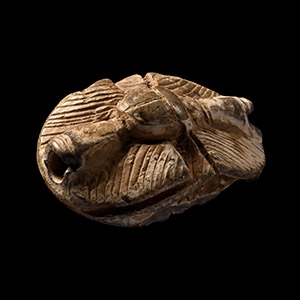
Egyptian Ramesses III Period Scaraboid
New Kingdom, 1293-1240 B.C.Sold for (Inc. bp): £143
A steatite scarab depicted in flight, with simple detailing to the body and legs; geometric motif engraved to base; pierced for suspension. 6.76 grams, 26 mm
From an old UK collection. From the private collection of Alf Baxendale (1941-2016) part 2, keen Egyptologist, member of the Egyptology Society, trustee of the Amarna Trust; thence by descent. Accompanied by an identification display card. Accompanied by a copy of his obituary published in Horizon, The Amarna Project and Amarna Trust newsletter, Issue 18, 2017, p.21, by Barry John Kemp, CBE, FBA, Professor Emeritus of Egyptology at the University of Cambridge and directing excavations at Amarna in Egypt.
