
Loading, please wait...
LOT 0531
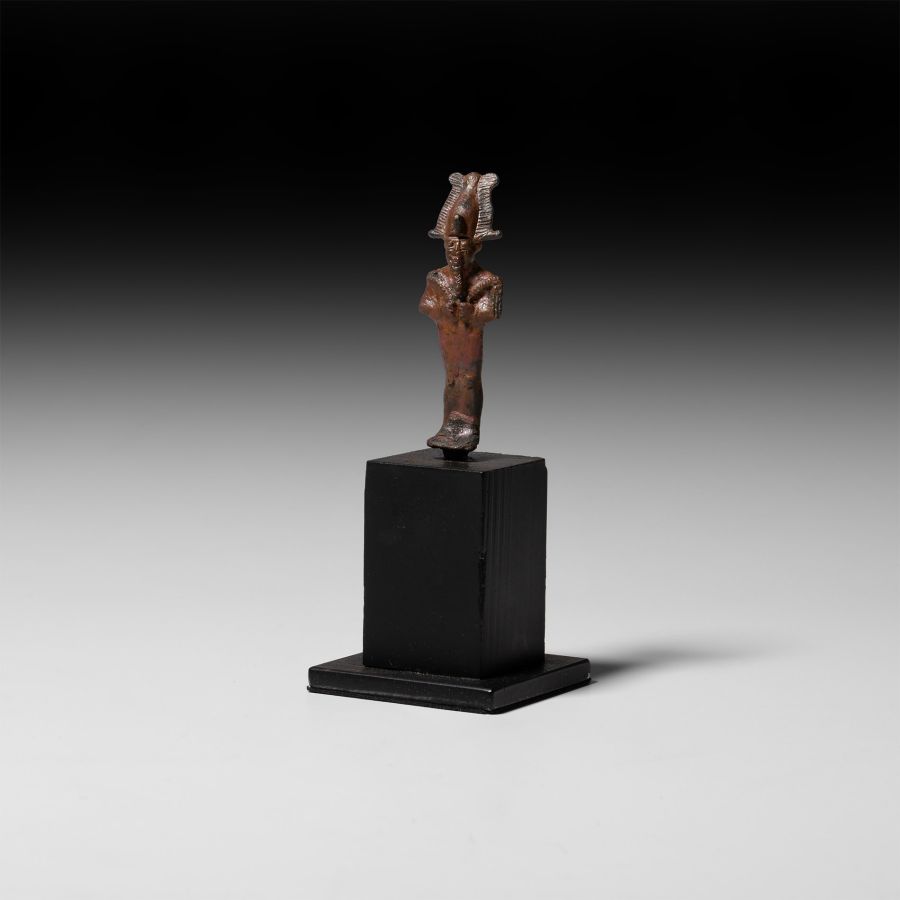
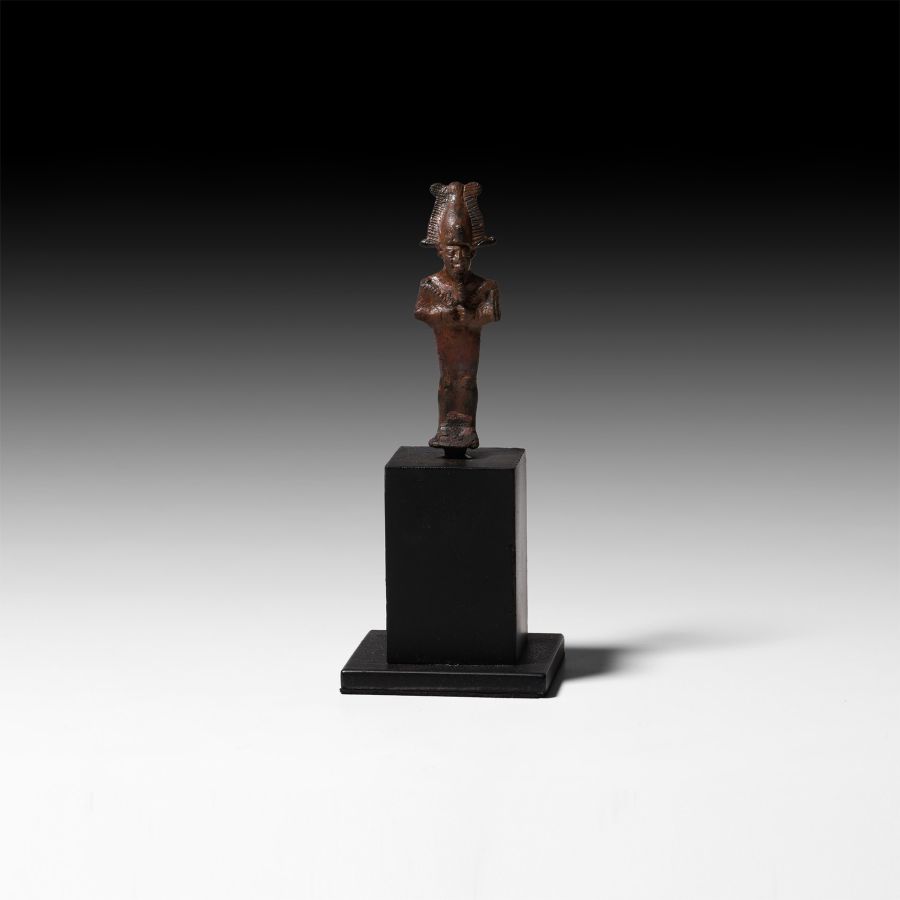
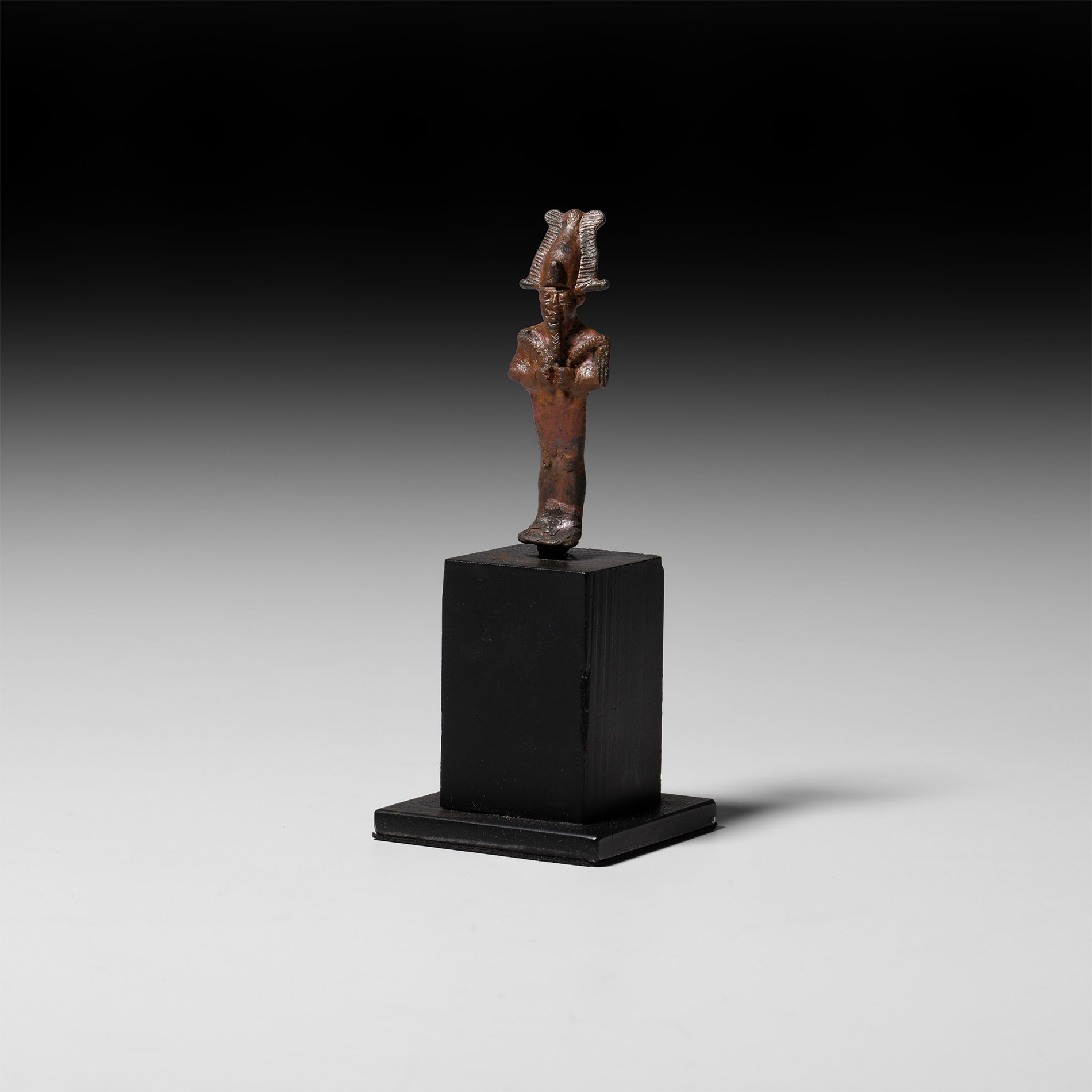
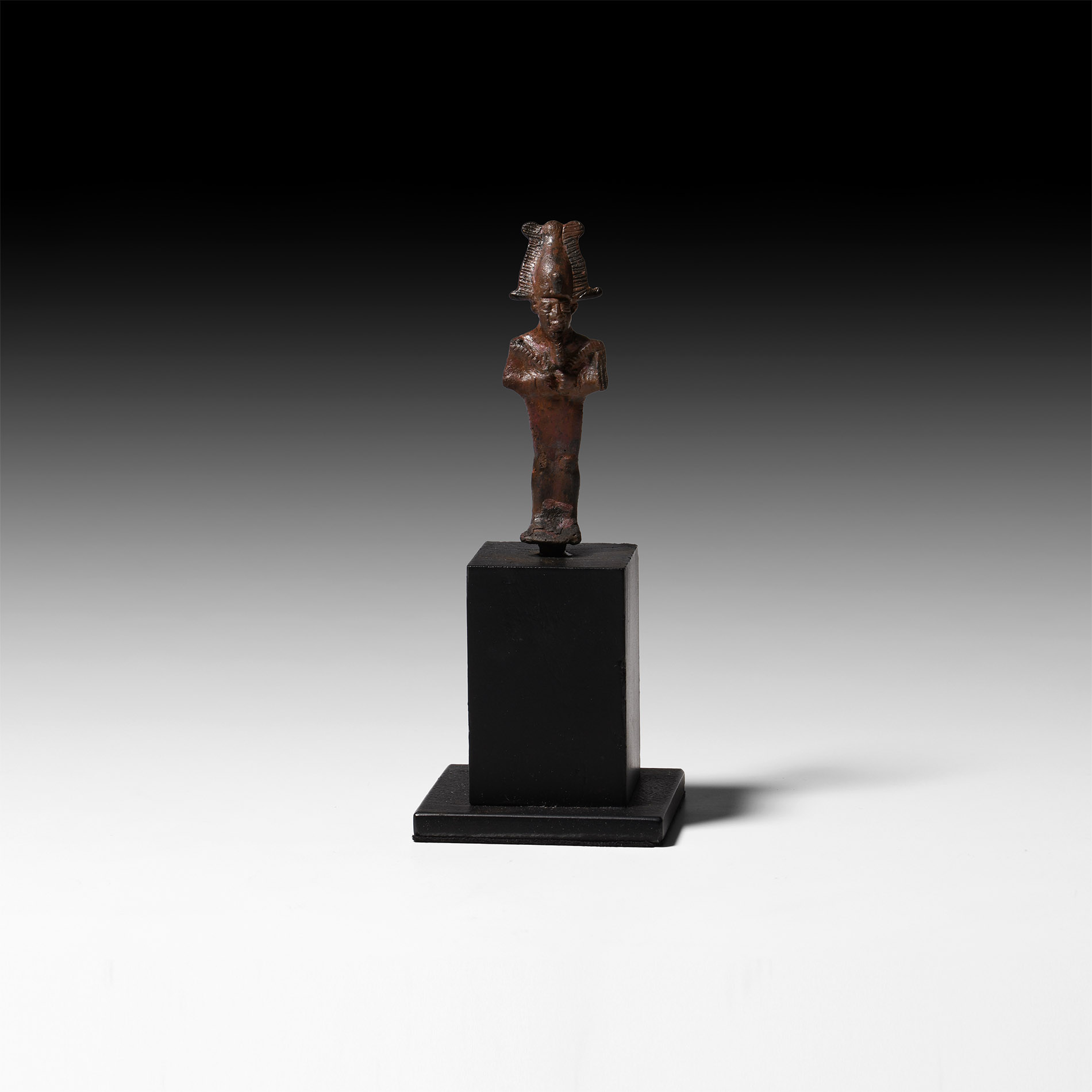
Egyptian Osiris Statuette
LATE PERIOD, 664-332 B.C.
4 3/4 in. (150 grams total, 12 cm including stand).
A bronze figurine of Osiris standing with flail and crook held in crossed arms, plaited beard, Atef crown to his head with uraeus above the brow, mounted on a custom-made stand.
ProvenanceProperty of a London gentleman; acquired in London in 1976.
LiteratureSee O'Connor, D., Abydos: Egypt's First Pharaohs and the Cult of Osiris, London, 2009, for a discussion on the role of Osiris in Egyptian religion and society.
CONDITIONTimeLine Auctions follows a vetting process to ensure the authenticity and legality of all items, reinforcing our commitment to integrity and responsible trading. Each antiquity, antique, and coin lot undergoes thorough examination by a vetting committee of at least ten external specialists, professional trade association members, scientists, and archaeologists: Our Vetting Process
AUCTIONS:
TimeLine is a leading auction house specialising in antiquities, ancient art, collectables, natural history, coins, medals, and books. Our auctions offer museums, collectors, historians, and enthusiasts the opportunity to acquire unique and historically significant pieces.
LOT 0531
Egyptian Osiris Statuette
Estimate £400 - 600€460 - 700 (for guidance only)$540 - 810 (for guidance only)
-
Egyptian Deep Blue Glazed Shabti of Pa-di-Khonsu-iy
Third Intermediate Period, 21st Dynasty, 1081-931 B.C.Sold for (Inc. bp): £780
A bright blue glazed worker shabti modelled on a rectangular base, arms crossed over the chest, detailing in black to the wig and eyes, holding a pair of hoes, a seed bag to the back, the hair tied with a seshed headband; a vertical column of hieroglyphs to the front of the body naming the wab-priest Pa-di-Khonsu-iy; repaired. 76 grams, 98 mm high
From a Worcester deceased estate. Property of a Cambridgeshire gentleman. Accompanied by an academic report by Egyptologist Paul Whelan.
As a wab-priest, Pa-di-Khonsu-iy would have assisted a higher-ranking hem-priest with the general maintenance and ritual activities in a temple, likely located either in Thebes in Upper Egypt or Tanis in the Delta. -
Egyptian Osiris Statuette
Late Period, 664-332 B.C.Estimate: £400 - 600 (+bp*)
Opening Bid: £200
A bronze figurine of Osiris standing with flail and crook held in crossed arms, plaited beard, Atef crown to his head with uraeus above the brow, mounted on a custom-made stand. 150 grams total, 12 cm including stand
Fine condition.
Property of a London gentleman; acquired in London in 1976. -
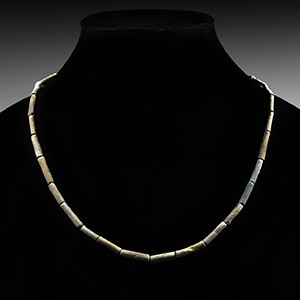
Egyptian Faience Bead Necklace
Late Period, 664-525 B.C.Sold for (Inc. bp): £46
A restrung group of tubular faience beads with a modern clasp. 8.3 grams, 48 cm long
From an early 20th century UK collection.
