
Loading, please wait...
LOT 0465
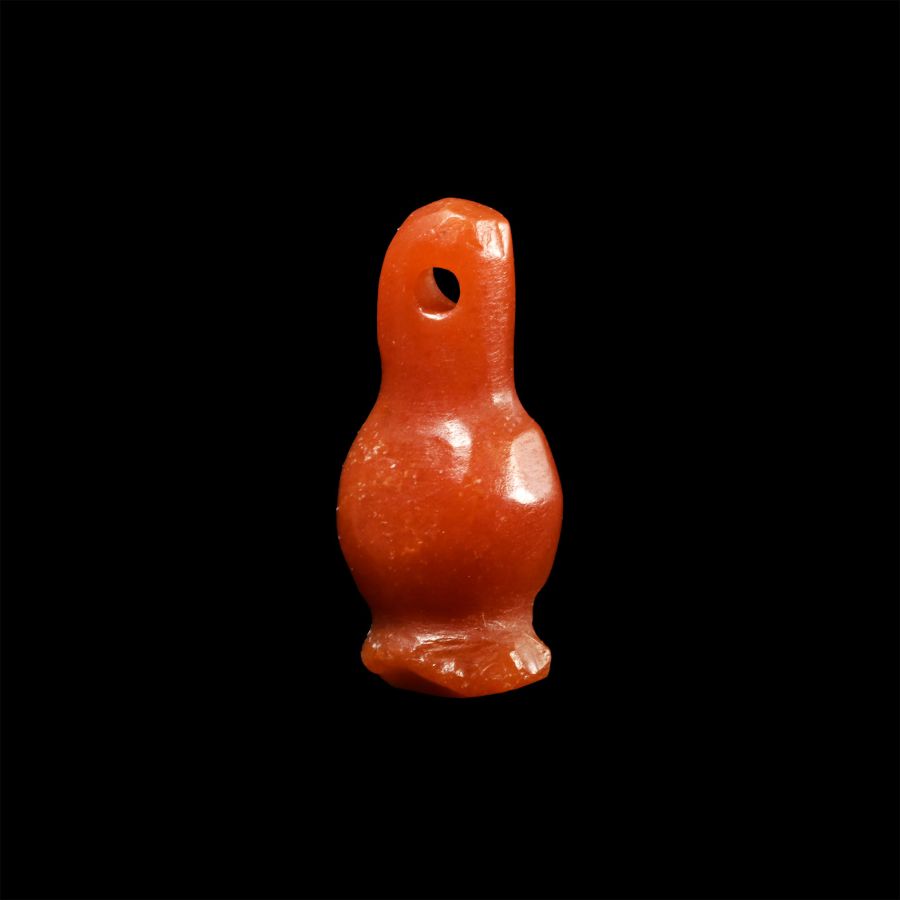
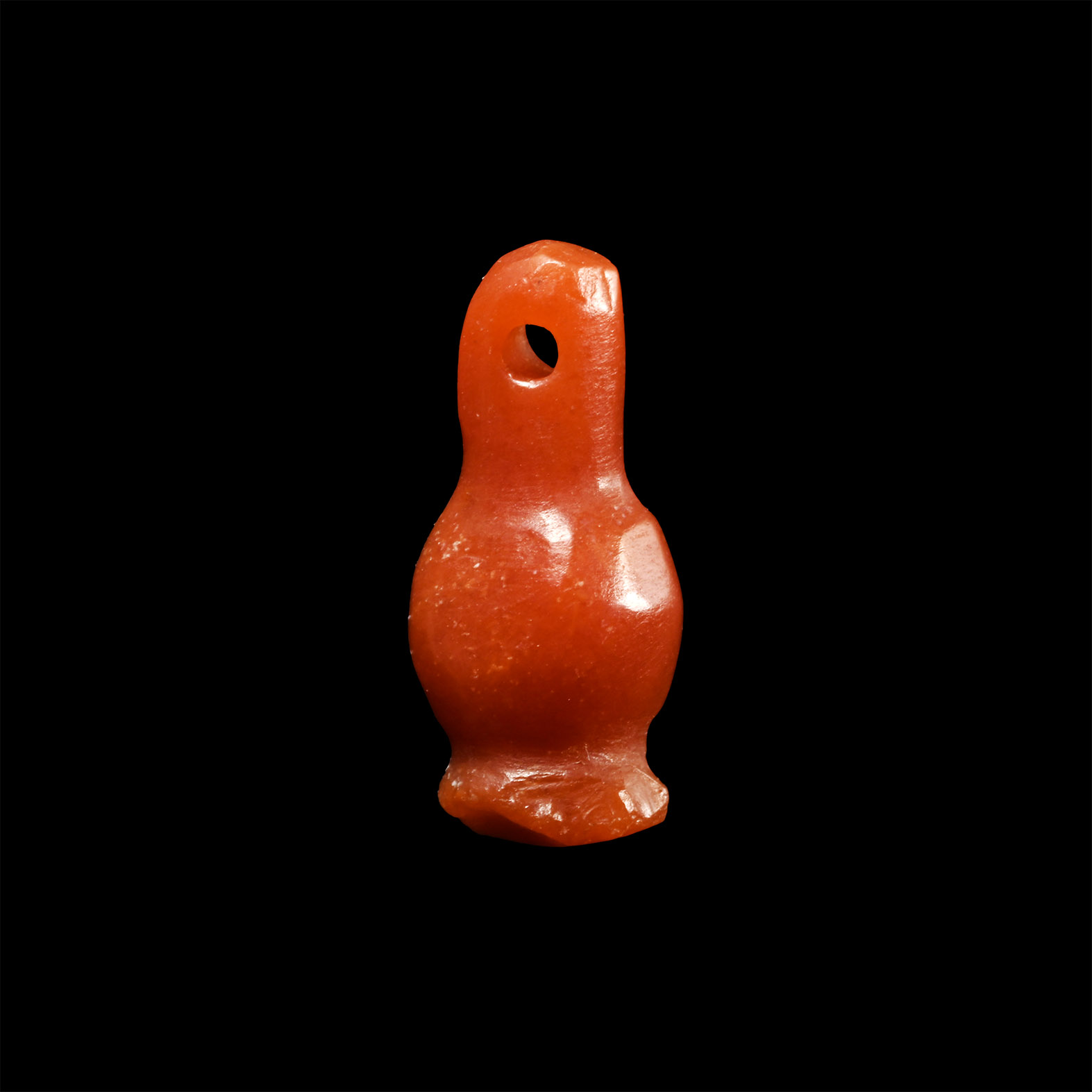
Egyptian Orange Carnelian Poppy Head Amulet
NEW KINGDOM, 18TH DYNASTY, 1550-1292 B.C.
3/8 in. (0.3 grams, 11 mm).
Polished and with integral suspension loop. [No Reserve]
ProvenanceUK gallery, early 2000s.
LiteratureCf. The Metropolitan Museum, New York, accession number 40.9.26, for similar; cf. Andrews, C., Amulets of Ancient Egypt, London, 1994, pl.65 (n).
CONDITIONTimeLine Auctions follows a vetting process to ensure the authenticity and legality of all items, reinforcing our commitment to integrity and responsible trading. Each antiquity, antique, and coin lot undergoes thorough examination by a vetting committee of at least ten external specialists, professional trade association members, scientists, and archaeologists: Our Vetting Process
AUCTIONS:
TimeLine is a leading auction house specialising in antiquities, ancient art, collectables, natural history, coins, medals, and books. Our auctions offer museums, collectors, historians, and enthusiasts the opportunity to acquire unique and historically significant pieces.
-
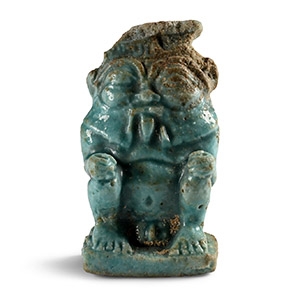
Egyptian Faience God Bes Amulet
Late Period, 664-332 B.C.Sold for (Inc. bp): £650
Glazed composition with Bes squatting on a rectangular base; headdress and suspension loop absent. 10.8 grams, 34 mm
Ex West London, UK, collection pre 1990. From a London, UK, collection.
Bes became one of ancient Egypt's most popular apotropaic deities from the New Kingdom onwards. Despite his rather fearsome appearance, Bes was the patron and protector of pregnant women and children. He was also believed to provide protection from snakes. -
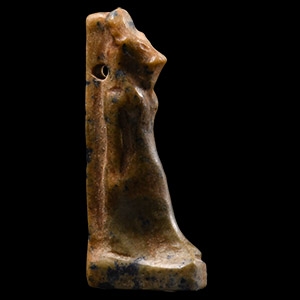
Egyptian Hardstone Sekhmet Amulet
Late Period, 664-332 B.C.Sold for (Inc. bp): £91
With dorsal pillar pierced for suspension; on a rectangular base. 1.99 grams, 25 mm
British collection formed before the 1960s. Property of L.G. Private collection of Mr T.H., Norfolk, UK. Accompanied by a previous dealer's certificate of authenticity. -
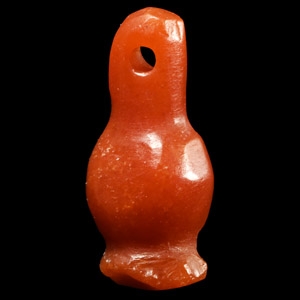
Egyptian Orange Carnelian Poppy Head Amulet
New Kingdom, 18th Dynasty, 1550-1292 B.C.Sold for (Inc. bp): £98
Polished and with integral suspension loop. 0.3 grams, 11 mm
UK gallery, early 2000s.
