
Loading, please wait...
LOT 0451
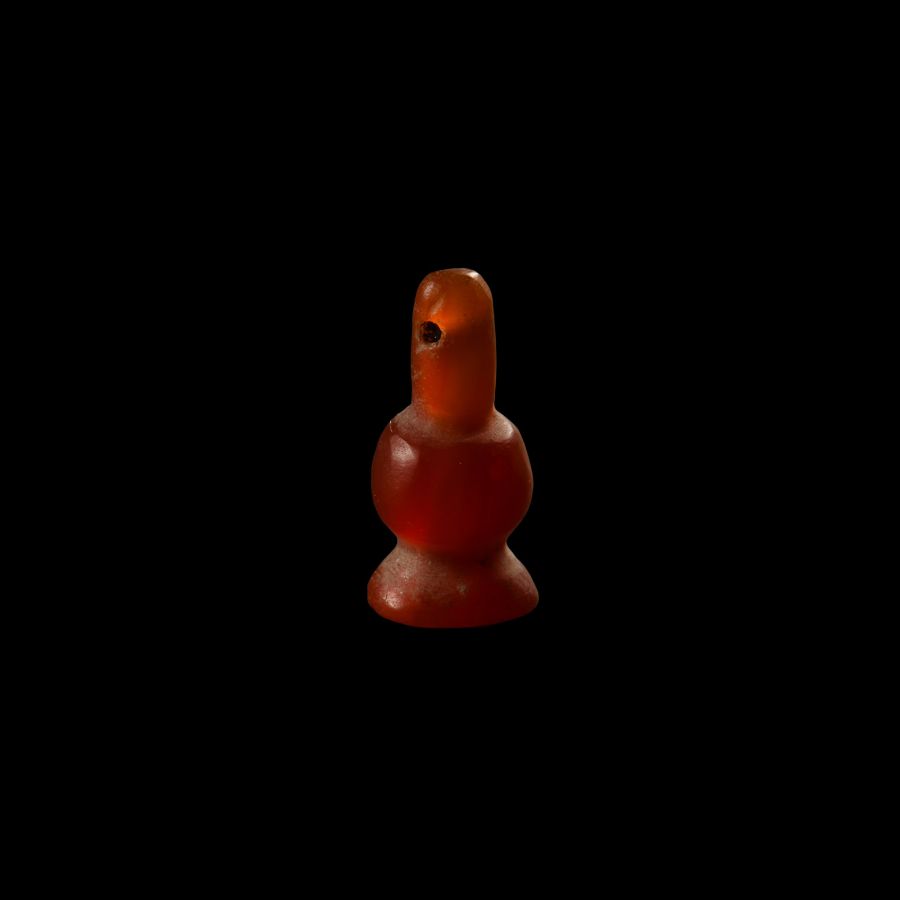
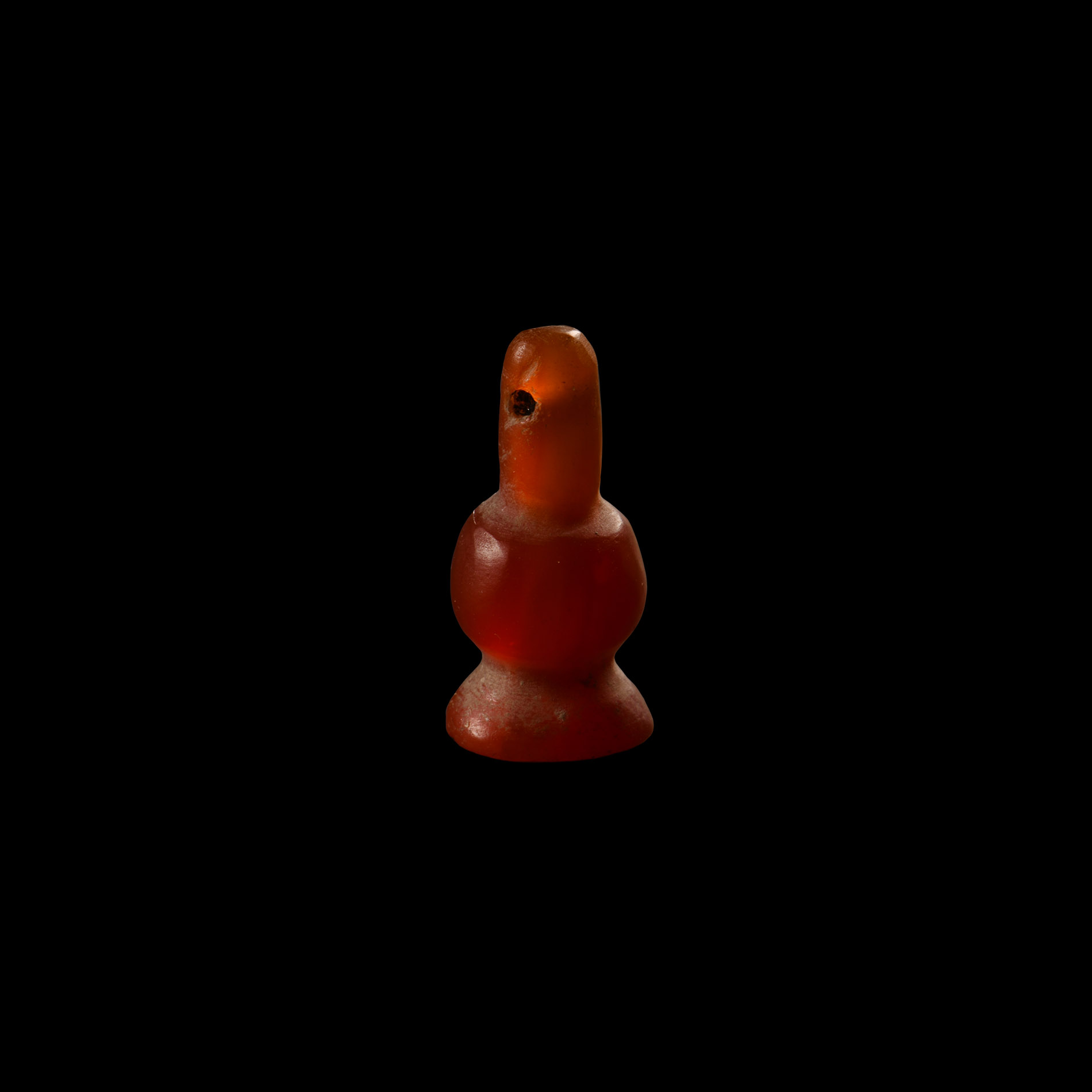
Egyptian Orange Carnelian Poppy Head Amulet
NEW KINGDOM, 18TH DYNASTY, 1550-1292 B.C.
1/2 in. (0.59 grams, 13 mm).
Polished and with an integral pierced suspension loop. [No Reserve]
ProvenanceUK gallery, early 2000s.
LiteratureCf. The Metropolitan Museum, New York, accession number 40.9.26, for similar.
CONDITIONTimeLine Auctions follows a vetting process to ensure the authenticity and legality of all items, reinforcing our commitment to integrity and responsible trading. Each antiquity, antique, and coin lot undergoes thorough examination by a vetting committee of at least ten external specialists, professional trade association members, scientists, and archaeologists: Our Vetting Process
AUCTIONS:
TimeLine is a leading auction house specialising in antiquities, ancient art, collectables, natural history, coins, medals, and books. Our auctions offer museums, collectors, historians, and enthusiasts the opportunity to acquire unique and historically significant pieces.
-
.jpg)
Egyptian Alabaster Trussed Duck
Old Kingdom, 6th Dynasty, circa 2345-2181 B.C.Estimate: £10,000 - 14,000 (+bp*)
Opening Bid: £5,000
Carved dressed and ready for consumption, with a plump, stylised form, head and neck resting along the animal's breast, simple linear incising delineating two folded wings to either side, circular recesses for eyes; mounted on a custom-made display stand; cleaned. 354 grams, 12.2 cm (893 grams total including stand)
Acquired before 1970. Private French collection. with Bonhams, New Bond Street, London, 29 April 2009, lot 58. Ex Middle Eastern royal family, living in the UK, 2013-2017. Accompanied by a copy of a French cultural passport no.099505. This lot has been checked against the Interpol Database of stolen works of art and is accompanied by search certificate number no.11841-206397. -
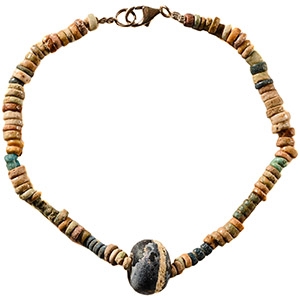
Egyptian Faience Mummy Bead Bracelet
Late Period, 664-525 B.C.Sold for (Inc. bp): £78
Restrung designer bracelet with a modern clasp; composed of polychrome beads of mainly disc and annular types and a larger banded feature glass bead. 4.48 grams, 19 cm long
Acquired on the UK art market. Property of a Ruislip, UK, gentleman, by inheritance. -
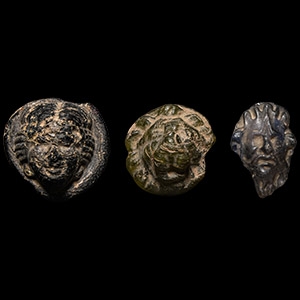
Romano-Egyptian Glass Head Collection
Roman Period, 30 B.C.-323 A.D.Sold for (Inc. bp): £169
Three glass faces including a lion head and two male portrait heads. 61 grams total, 32-36 mm
Acquired 1970s-1996. Property of a North American collector. London collection, 2016.
These appear to have been blown or pressed when semi-molten into a hollowed reverse-shaped mould form.
