
Loading, please wait...
LOT 0529
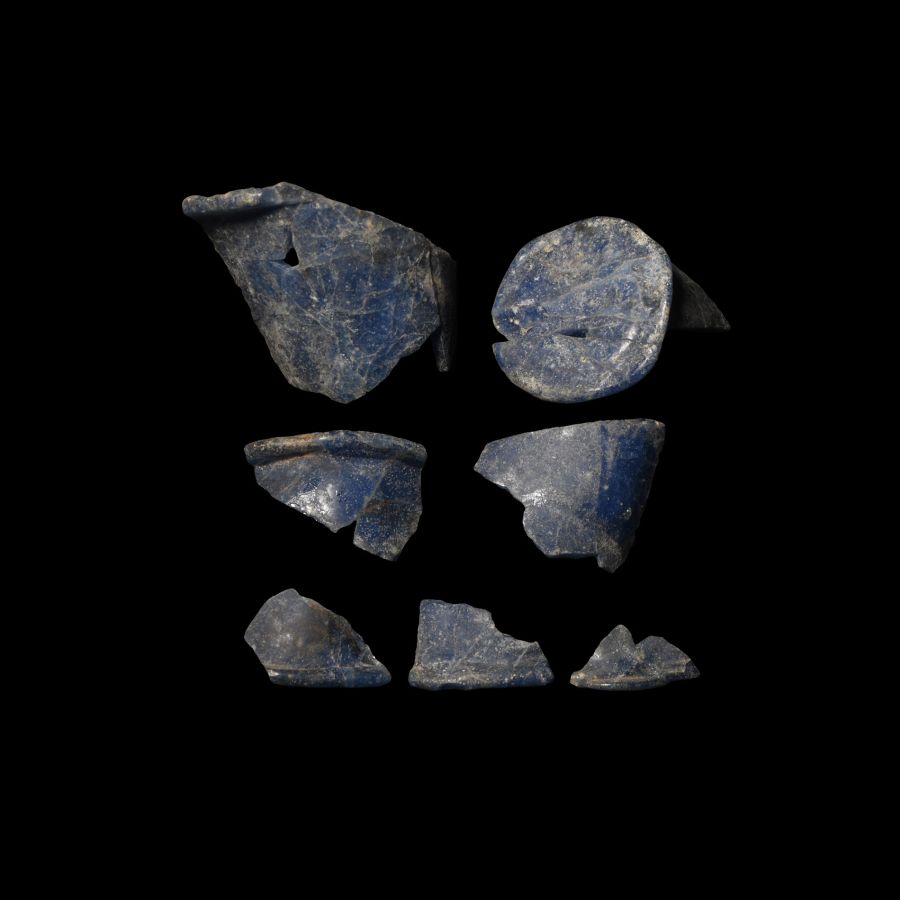
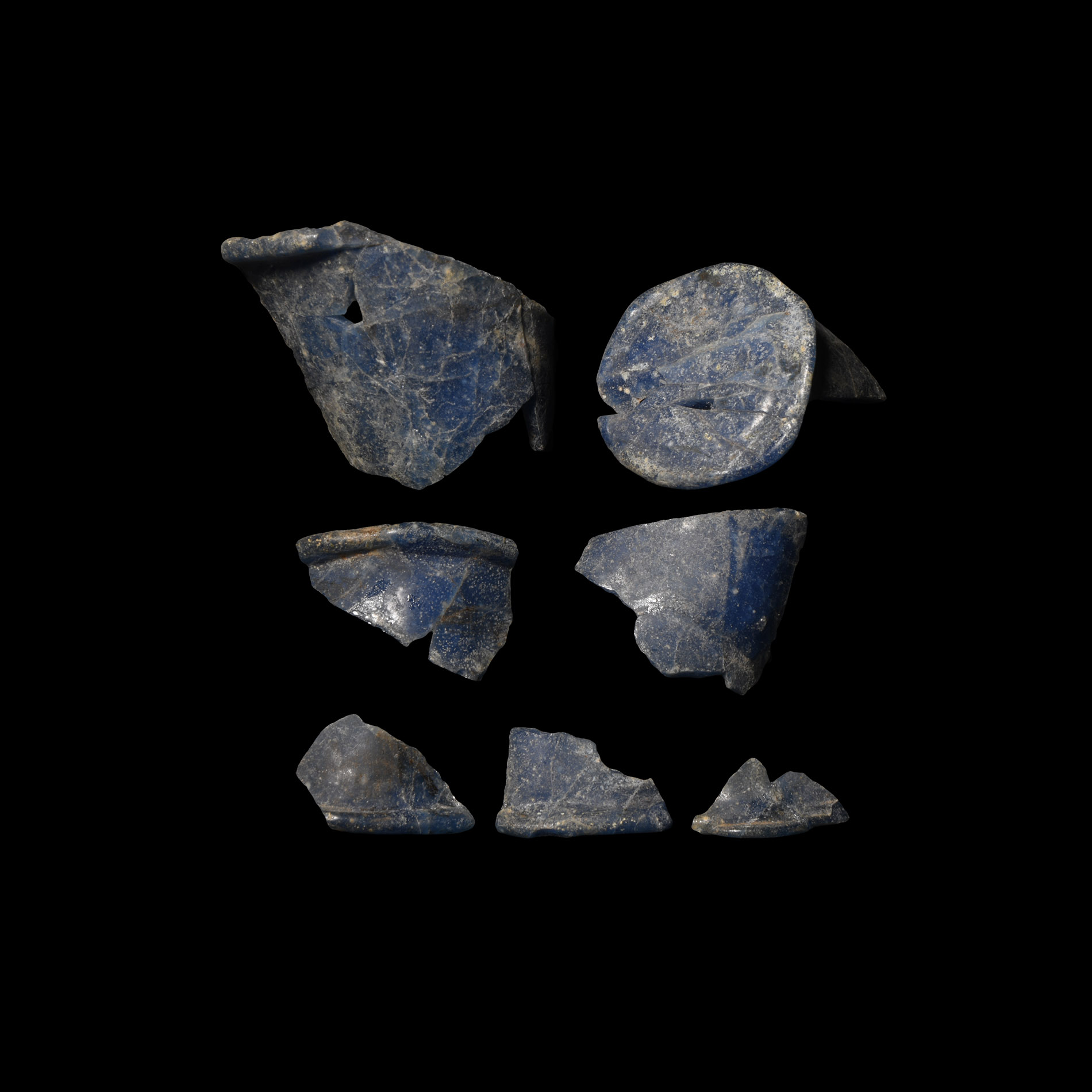
Egyptian Offering Cup Fragment Group
NEW KINGDOM, 1550-1070 B.C.
3/4 - 1 5/8 in. (27 grams total, 21-41 mm).
A group of seven deep blue glass fragments from an offering cup. [7, No Reserve]
ProvenanceFrom a UK private collection, 1975-1978.
CONDITIONTimeLine Auctions follows a vetting process to ensure the authenticity and legality of all items, reinforcing our commitment to integrity and responsible trading. Each antiquity, antique, and coin lot undergoes thorough examination by a vetting committee of at least ten external specialists, professional trade association members, scientists, and archaeologists: Our Vetting Process
AUCTIONS:
TimeLine is a leading auction house specialising in antiquities, ancient art, collectables, natural history, coins, medals, and books. Our auctions offer museums, collectors, historians, and enthusiasts the opportunity to acquire unique and historically significant pieces.
-

Egyptian Statue Fragment Group
Circa 1st millennium B.C.Sold for (Inc. bp): £169
A group of five ceramic and composition statuette fragments including glazed examples: a terracotta royal head with Nemes headdress and uraeus; the green glazed foot of a shabti with hieroglyphs; the head of a figure in raised relief, painted geometric column to the rear; copper-alloy strap junction displaying a human face, four-way attachment reverse; glass ram head with applied eyes and horns. 105 grams total, 21-54 mm
Acquired early 1990s. Ex private American collection; thence by descent. Private collection since 1998. -
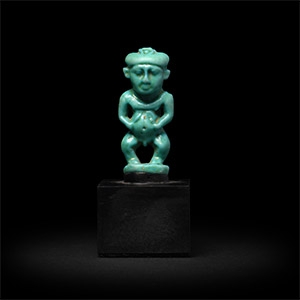
Egyptian Faience Ptah Amulet
Ptolemaic Period, 4th-3rd century B.C.Estimate: £1,200 - 1,700 (‡+bp*)
Opening Bid: £600
A blue-glazed faience amulet of the creator god Ptah in the form of the dwarf god Pataikos, modelled nude with stylised anatomical detailing, holding two knives to his stomach, squatting on an oval base; a scarab on the top of his cap; ribbed suspension loop to reverse; mounted on a custom-made display base. 29.6 grams total, 66 mm high including stand
Ex private French collection. with Thierry Maigret, Hotel Drouot, Paris, 12 July 2005, 76.
The Egyptian deity Pataikos is a special manifestation of the creator god Ptah, and the dwarf-like appearance symbolises his magical power. As a protective deity, amulets of Pataikos were worn for their apotropaic qualities; Pataikos was often depicted subjugating poisonous animals such as snakes and scorpions, and Pataikos amulets were probably worn to protect the wearer from such animals. Ptah was the god of Egypt's capital city Memphis and master craftsman of the gods, known for his benevolent and approachable character. Ptah is attested from the beginning of ancient Egypt’s dynastic history and was a creator god, a god of craftsmen, and the patron deity of the Memphite region. The principal temple of the god was located in the city of Memphis. The fragmentary back pillar on this statuette indicates that it was most probably a temple offering, originally inscribed with an invocation to Ptah together with the donor’s name. Such votive figurines with back pillars naming the god and the dedicator occur in various materials, including faience and stone. -
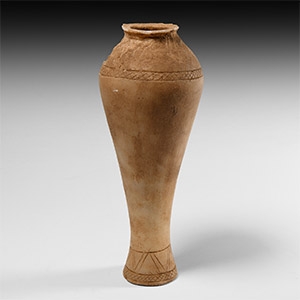
Egyptian Alabaster Hes-vase
Third Intermediate Period, 1069-702 B.C.Estimate: £300 - 400 (+bp*)
Opening Bid: £150
A carved alabaster hes-vase, with hatched bands to the shoulder and base. 350 grams, 20 cm
Fine condition, rim chipped.
Acquired before 1990. With a central London gallery. Private collection of a North West London lady.
