
Loading, please wait...
LOT 0499
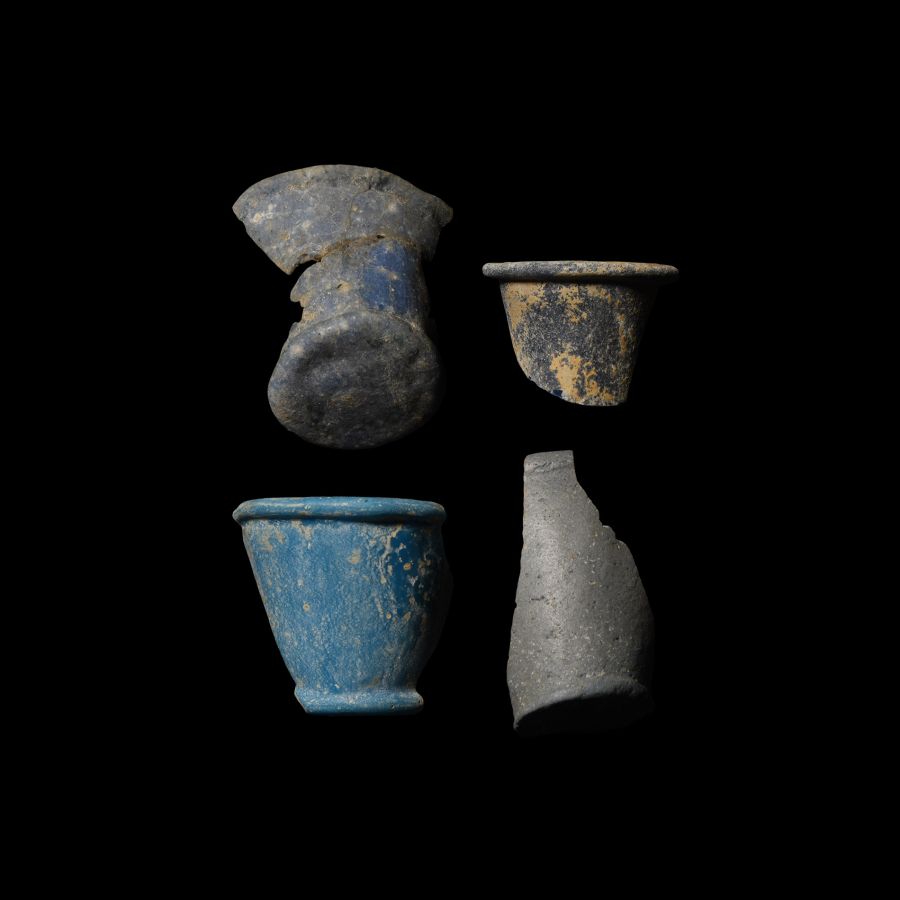
Egyptian Offering Cup Fragment Group
NEW KINGDOM, 1550-1070 B.C.
1 3/8 - 1 7/8 in. (35 grams total, 36-48 mm).
A group of four blue glass fragments from offering cups. [4, No Reserve]
ProvenanceFrom a UK private collection, 1975-1978.
CONDITIONTimeLine Auctions follows a vetting process to ensure the authenticity and legality of all items, reinforcing our commitment to integrity and responsible trading. Each antiquity, antique, and coin lot undergoes thorough examination by a vetting committee of at least ten external specialists, professional trade association members, scientists, and archaeologists: Our Vetting Process
AUCTIONS:
TimeLine is a leading auction house specialising in antiquities, ancient art, collectables, natural history, coins, medals, and books. Our auctions offer museums, collectors, historians, and enthusiasts the opportunity to acquire unique and historically significant pieces.
-
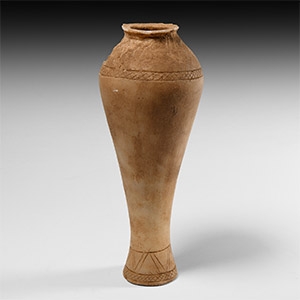
Egyptian Alabaster Hes-vase
Third Intermediate Period, 1069-702 B.C.Estimate: £300 - 400 (+bp*)
Opening Bid: £150
A carved alabaster hes-vase, with hatched bands to the shoulder and base. 350 grams, 20 cm
Fine condition, rim chipped.
Acquired before 1990. With a central London gallery. Private collection of a North West London lady. -
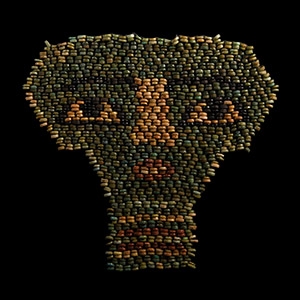
Egyptian Beaded Mummy Face Mask
Late Period, 664-332 B.C.Sold for (Inc. bp): £187
A restrung panel of small glazed composition beads in various colours representing a mummy face mask with false beard. 44 grams, 13 cm wide
Acquired 1990s. Ex Mariaud des Serres, Paris, France.
The practice of providing a bead mask as additional protection for the face of the mummy developed in the Late Period. The green beads used as the principal colour in the creation of the stylised face symbolise regeneration and re-birth. An example discovered at Esna in Upper Egypt and still attached to the face of a mummy is on display in the World Museum Liverpool (accession number 7.6.20.60). -
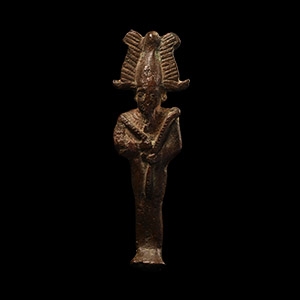
Egyptian Osiris Statuette
Late Period, 664-525 B.C.Sold for (Inc. bp): £780
A bronze votive figurine of Osiris, portraying the god standing, wearing a close-fitting mummiform garment and Atef crown, false beard, hands held at the centre of the chest holding the royal crook and flail; possibly from Saqqara. 37.1 grams, 80 mm high
From an old UK collection. From the private collection of Alf Baxendale (1941-2016) part 2, keen Egyptologist, member of the Egyptology Society, trustee of the Amarna Trust; thence by descent. Accompanied by an identification display card. Accompanied by a copy of his obituary published in Horizon, The Amarna Project and Amarna Trust newsletter, Issue 18, 2017, p.21, by Barry John Kemp, CBE, FBA, Professor Emeritus of Egyptology at the University of Cambridge and directing excavations at Amarna in Egypt.
Osiris was the foremost of the Egyptian funerary gods and ruler of the underworld.
