
Loading, please wait...
LOT 0594
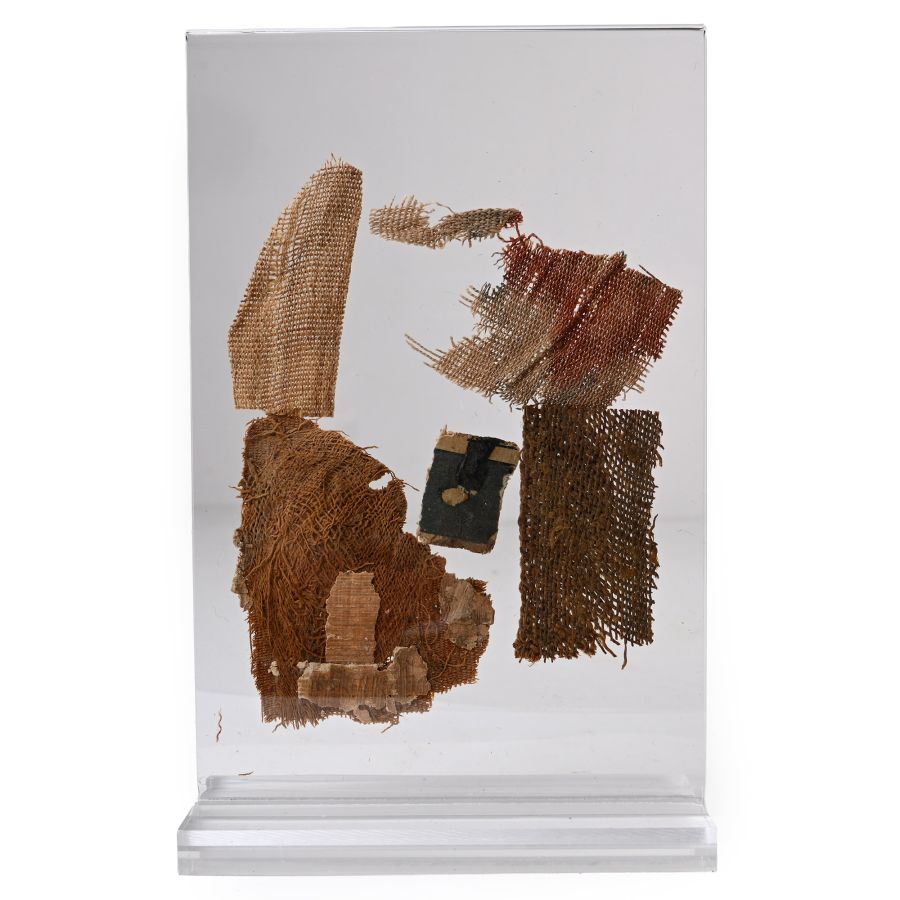
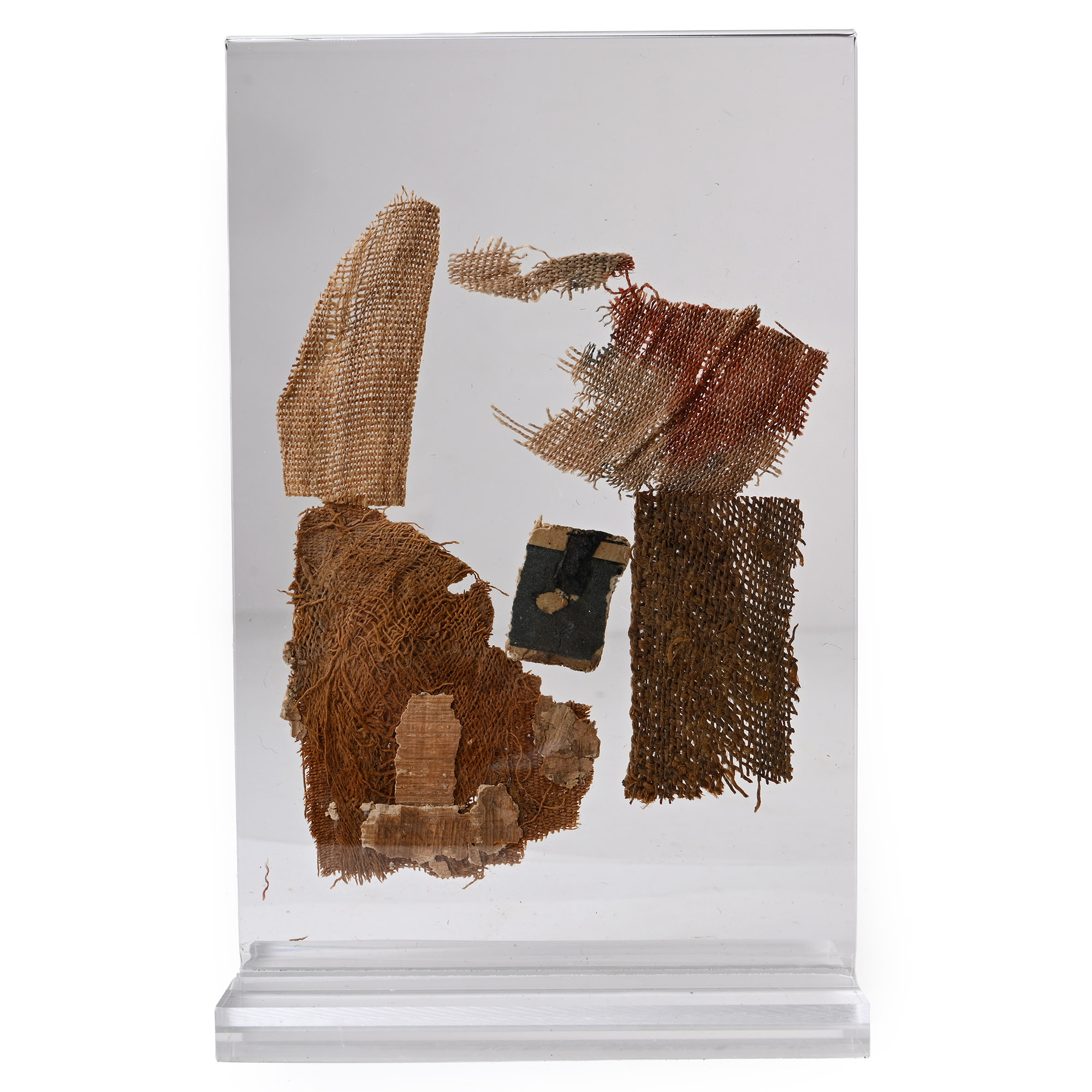
Egyptian Mummy Textile and Cartonnage Fragments in Display Stand
CIRCA 1500 B.C.-300 A.D.
6 1/4 in. (82 grams total, 16 cm including stand).
Comprising fragments of open-structured, loose-weave brown fabric, a painted cartonnage piece, and another fabric piece with attached fragments of plaster; mounted in a protective acrylic display. [No Reserve]
Provenancewith a privately curated collection, 1980s-early 2000s.
From the private collection and estate of Christine Simons (1943-2025), West Midlands, UK.
TimeLine Auctions follows a vetting process to ensure the authenticity and legality of all items, reinforcing our commitment to integrity and responsible trading. Each antiquity, antique, and coin lot undergoes thorough examination by a vetting committee of at least ten external specialists, professional trade association members, scientists, and archaeologists: Our Vetting Process
AUCTIONS:
TimeLine is a leading auction house specialising in antiquities, ancient art, collectables, natural history, coins, medals, and books. Our auctions offer museums, collectors, historians, and enthusiasts the opportunity to acquire unique and historically significant pieces.
LOT 0594
Egyptian Mummy Textile and Cartonnage Fragments in Display Stand
Estimate £50 - 70€58 - 81 (for guidance only)$68 - 95 (for guidance only)
Opening Bid
£5 (EUR 6; USD 7) +BP*
-
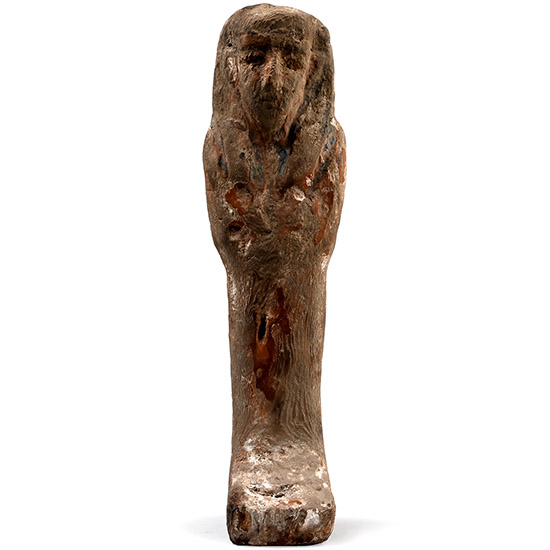
Large Egyptian Painted Wooden Ptah-Sokar-Osiris Figure
New Kingdom, circa 12th century B.C. or laterEstimate: £800 - 1,000 (+bp*)
Opening Bid: £400
Mummiform figure wearing a long lappet wig, with traces of blue and white pigment; a hole in the top of the head, likely to accept a separately fashioned headdress. 460 grams, 34.5 cm
with a privately curated collection, 1980s-early 2000s. From the private collection and estate of Christine Simons (1943-2025), West Midlands, UK.
Initially representing Osiris, this statuette type gradually merged with the Memphite deity Ptah-Sokar. It became a common grave good in the Late Period and the Graeco-Roman era. It was typically depicted standing on a long, rectangular base, wearing a tall, distinctive crown of two large, opposing feathers, with a sun disc on the lower front and ram's horns beneath. The recess in the crown of the present example was likely intended to accommodate this crown. -
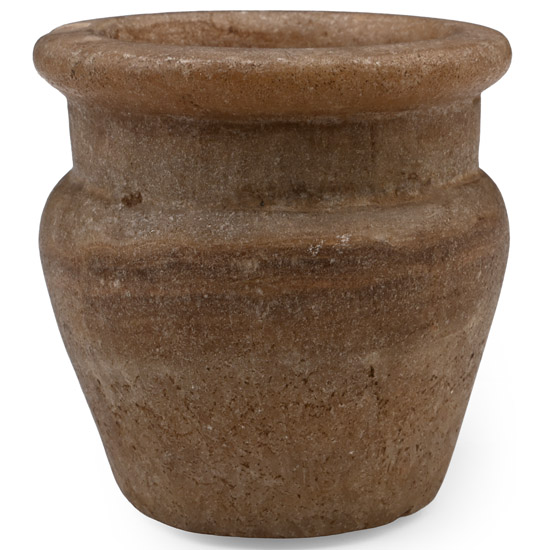
Egyptian Alabaster Pot
New Kingdom, circa 1400-1292 B.C.Estimate: £200 - 300 (+bp*)
Opening Bid: £100
A squat, shouldered jar with a short, wide neck and a rolled rim. 292 grams, 67 mm high
From the private collection of Peter Clayton, FCILIP, Dip, Arch, FSA, FRNS, Hemel Hempstead, Hertfordshire, UK; formed since the late 1950s. -
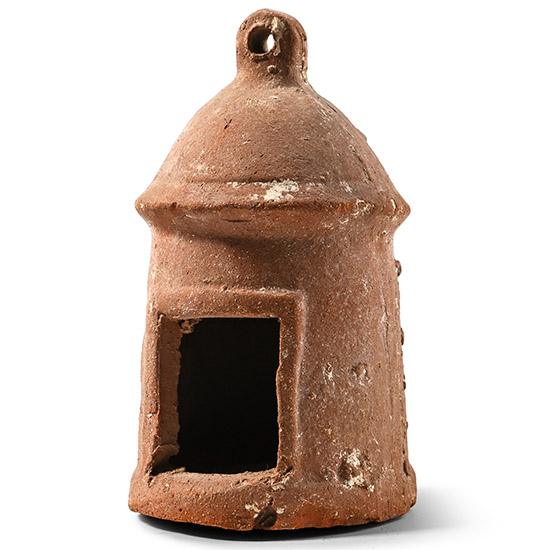
Romano-Egyptian Pottery Shrine
Roman Period, 30 B.C.-323 A.D.Estimate: £50 - 70 (+bp*)
Bids: 3 | Current Bid: £30
Tubular type with domed 'beehive' roof and pierced lug at the apex, carinated collar and rectangular opening. 127 grams, 10.4 cm
From the private collection of Peter Clayton, FCILIP, Dip, Arch, FSA, FRNS, Hemel Hempstead, Hertfordshire, UK; formed since the late 1950s.
