
Loading, please wait...
LOT 0456
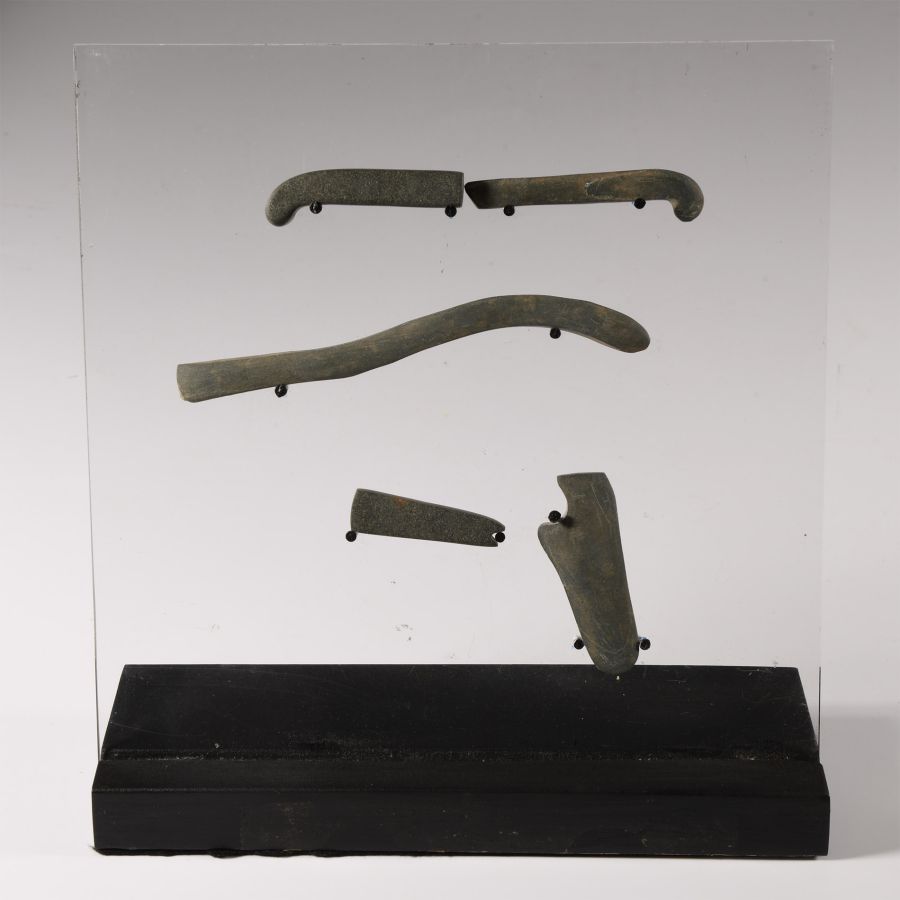
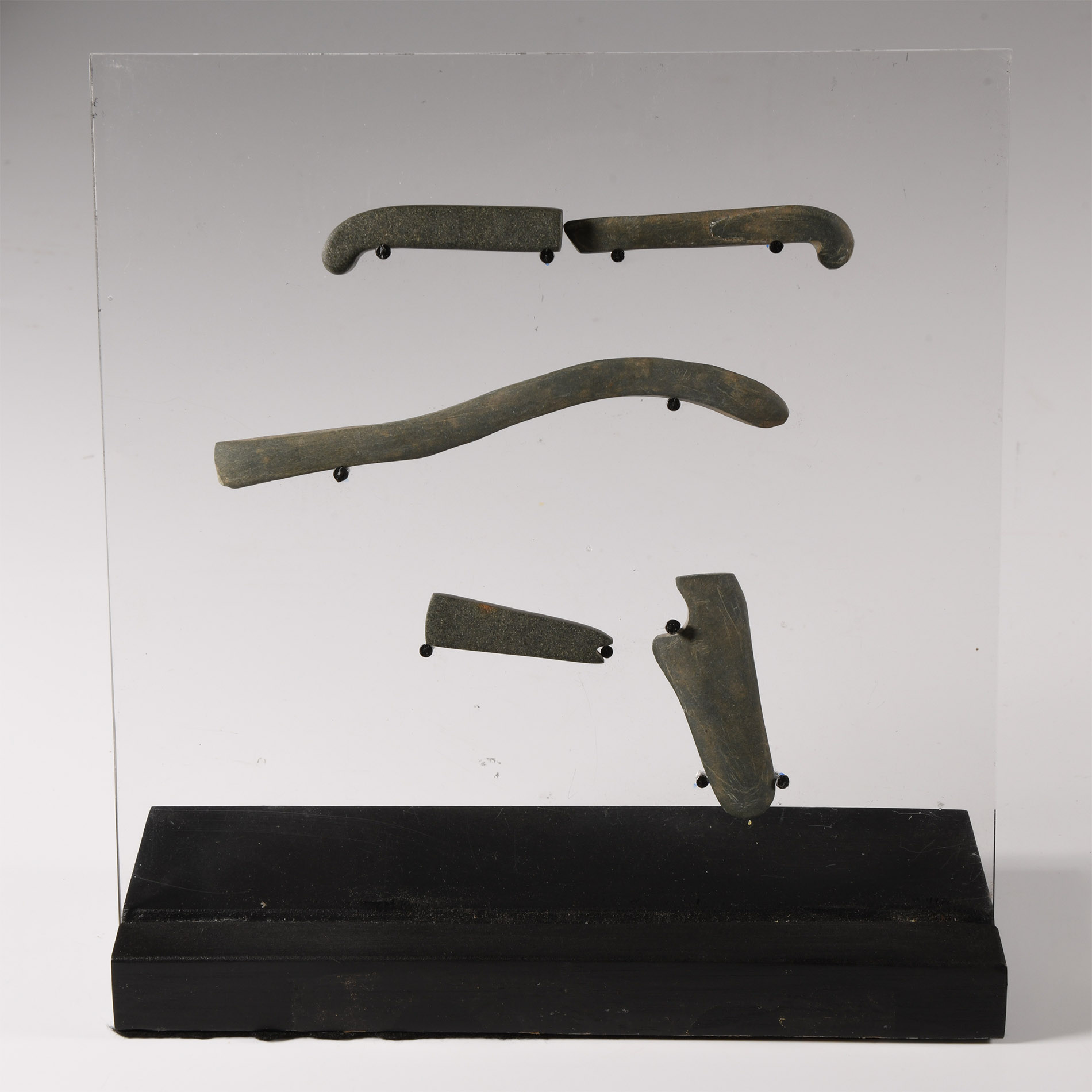
Egyptian Mummy Schist Eye Inlay Collection
MIDDLE KINGDOM-LATE PERIOD, 2050-332 B.C.
8 1/4 in. (396 grams total, 21 cm high including stand).
Appliqués for the facial features of a mummy; with a wood and perspex stand. [5]
ProvenanceFrom an early 20th century UK collection, 1930-1940.
LiteratureCf. inserts in the wooden coffin of Djedkhonsefankh in Taylor, J.H., Death and the Afterlife in Ancient Egypt, London, 2001, item 172.
CONDITIONTimeLine Auctions follows a vetting process to ensure the authenticity and legality of all items, reinforcing our commitment to integrity and responsible trading. Each antiquity, antique, and coin lot undergoes thorough examination by a vetting committee of at least ten external specialists, professional trade association members, scientists, and archaeologists: Our Vetting Process
AUCTIONS:
TimeLine is a leading auction house specialising in antiquities, ancient art, collectables, natural history, coins, medals, and books. Our auctions offer museums, collectors, historians, and enthusiasts the opportunity to acquire unique and historically significant pieces.
LOT 0456
Egyptian Mummy Schist Eye Inlay Collection
Estimate £1,200 - 1,700€1,390 - 1,970 (for guidance only)$1,620 - 2,300 (for guidance only)
-
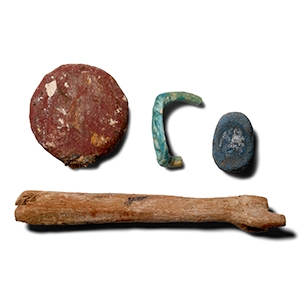
Egyptian Artefact Collection
Late Period, 664-332 B.C.Sold for (Inc. bp): £117
Comprising: a wooden arm from a diorama; a wooden sun disc with red pigment; a dark blue composition scaraboid; and a blue-glazed ring fragment with Wedjat eye to the bezel. 6.5 grams total, 18-83 mm
UK private collection. Acquired from Ancient & Oriental, Nottingham, UK, 1980. Property of a Nottinghamshire gentleman. -
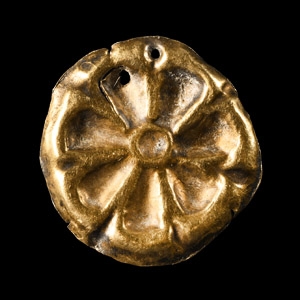
Egyptian Gold Rosette Mount
Late Period, 664-323 B.C.Sold for (Inc. bp): £195
Made of a round gold sheet composing distinctive seven-petalled flower. 0.48 grams, 15 mm
Acquired 1980-2015. Ex Abelita family collection.
Rosettes, such as this lovely example, have a long history in Egyptian decorative art and were popular at most sites. This small decoration could be the central nail of a daisy pattern provided for architectural purposes, or could be an applique of furniture or dress. -
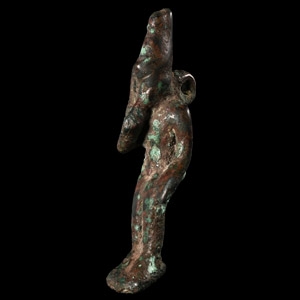
Egyptian Bronze Seated Harpocrates Figure
Late Period, 664-332 B.C.Sold for (Inc. bp): £130
Modelled in the round with suspension loop to the reverse, with double crown and sidelock of youth. 40.2 grams, 71 mm
Acquired from a private UK collection in the late 1990s. Private collection of Mr T.H., Norfolk, UK.
Harpocrates is the Greek rendering of the Egyptian Hor-pa-khered, which translates as 'Horus the Child' and refers to Horus as the divine infant of Isis and Osiris. Wearing the amulet of Harpocrates could provide the wearer with the same protection that Isis gave to her beloved son.
