
Loading, please wait...
LOT 0476
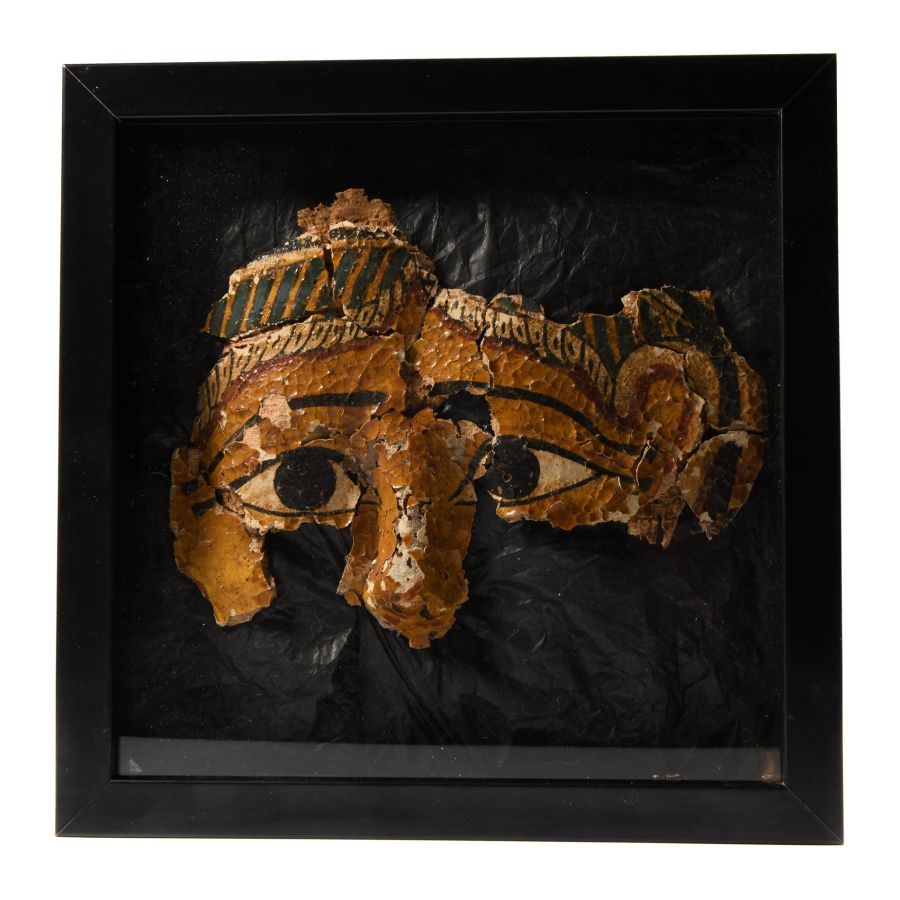
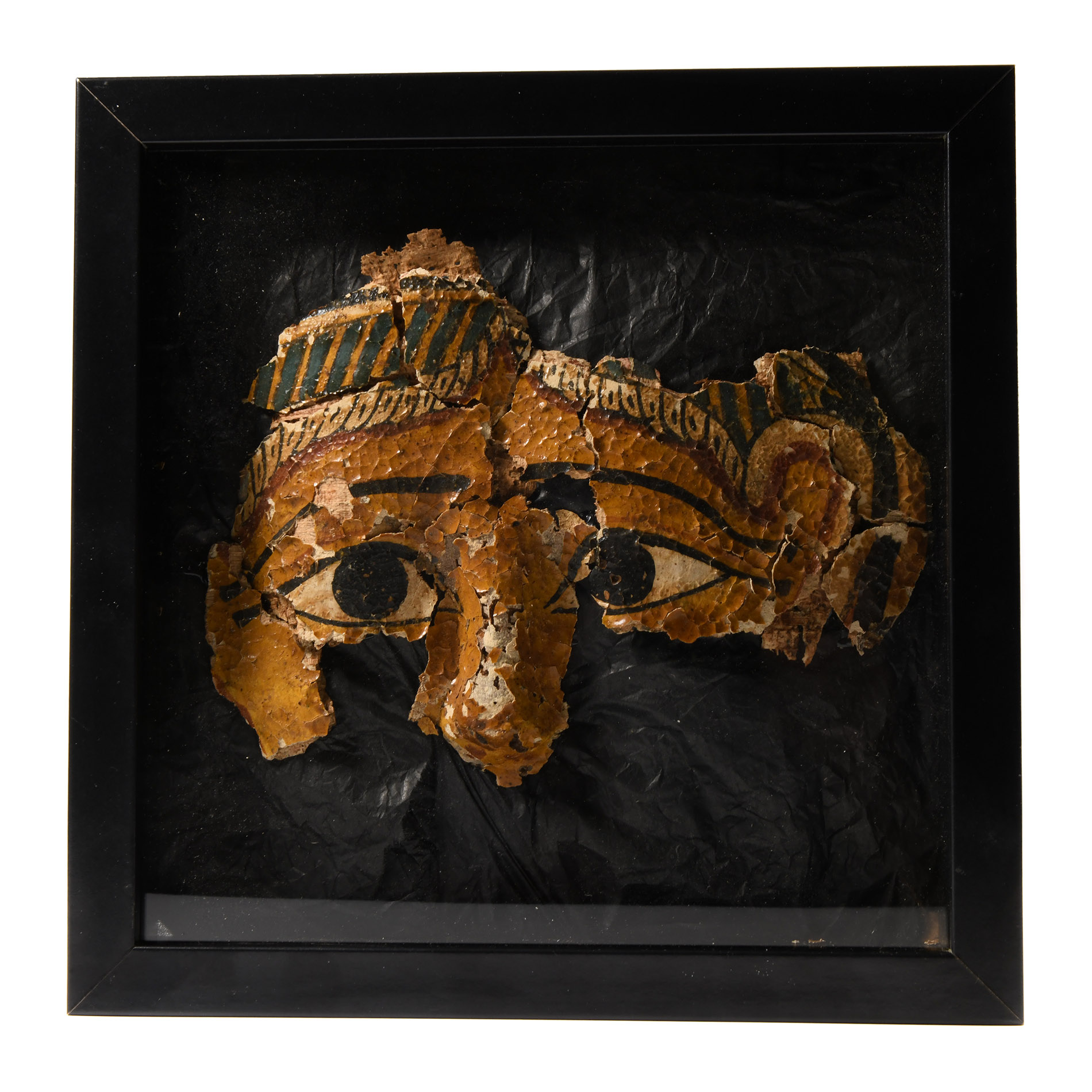
Egyptian Mummy Mask Cartonnage
PTOLEMAIC-ROMAN PERIOD, 332 B.C.-100 A.D.
10 x 10 in. (847 grams, 25.5 x 25.5 cm).
Mask fragment from a mummy with moulded and painted facial detailing; heavy black outline to the eyes and brows, banded headdress in shades of ochre, crimson, sea-green; mounted in a glazed display case. [No Reserve]
ProvenanceAcquired in the 1950s-1960s.
From the collection of Mr Ciappara, Norfolk, UK.
See Parlasca, K., Sailor, H., Moments, Mummy Portraits and Egyptian Funerary Art from Roman Times, Frankfurt, 1999, for discussion.
CONDITIONTimeLine Auctions follows a vetting process to ensure the authenticity and legality of all items, reinforcing our commitment to integrity and responsible trading. Each antiquity, antique, and coin lot undergoes thorough examination by a vetting committee of at least ten external specialists, professional trade association members, scientists, and archaeologists: Our Vetting Process
AUCTIONS:
TimeLine is a leading auction house specialising in antiquities, ancient art, collectables, natural history, coins, medals, and books. Our auctions offer museums, collectors, historians, and enthusiasts the opportunity to acquire unique and historically significant pieces.
-
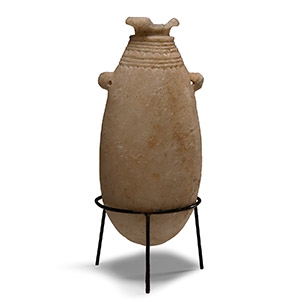
Egyptian Decorated Alabaster Alabastron
Circa 500 B.C.Sold for (Inc. bp): £390
Lentoid in section with pierced lateral lugs at the shoulder, circumferential banding at the neck with dentilled detailing; supplied with a custom-made stand. 281 grams total, 15 cm high including stand
Private collection, Germany, 1990s-2000s. -
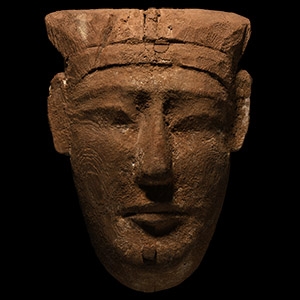
Egyptian Wooden Face Mask
Late Period, 664-332 B.C.Sold for (Inc. bp): £715
Carved in the half-round with elegant nose and prominent chin, full lips and rounded cheeks; a headband resting on the forehead; an attachment dowel on the chin and forehead. 475 grams, 23 cm high
Acquired 1970s-1996. Property of a North American collector. London collection, 2016. -
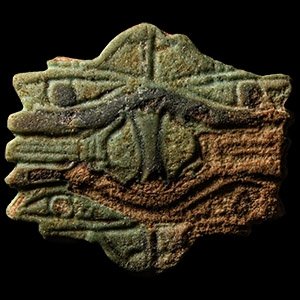
Very Large Egyptian Faience Quadruple Eye of Horus Amulet
Late Period, 664-332 B.C.Sold for (Inc. bp): £182
Olive-green glazed composition plaque with transverse piercing comprising four addorsed wedjat motifs with black detailing. 32.3 grams, 64 mm
From the private collection of Julian Bird, London, UK. Ex Den of Antiquity, Cambridgeshire, UK. Private collection of Mr T.H., Norfolk, UK. Accompanied by a previous dealer's certificate of authenticity.
