
Loading, please wait...
LOT 0719
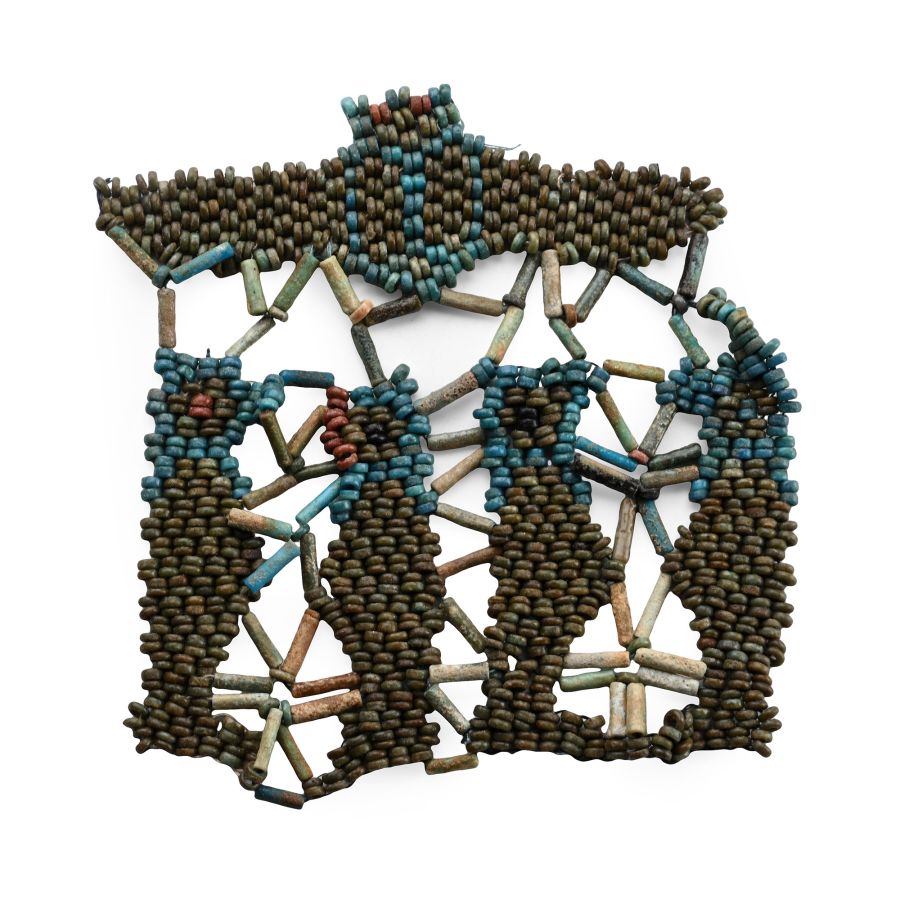
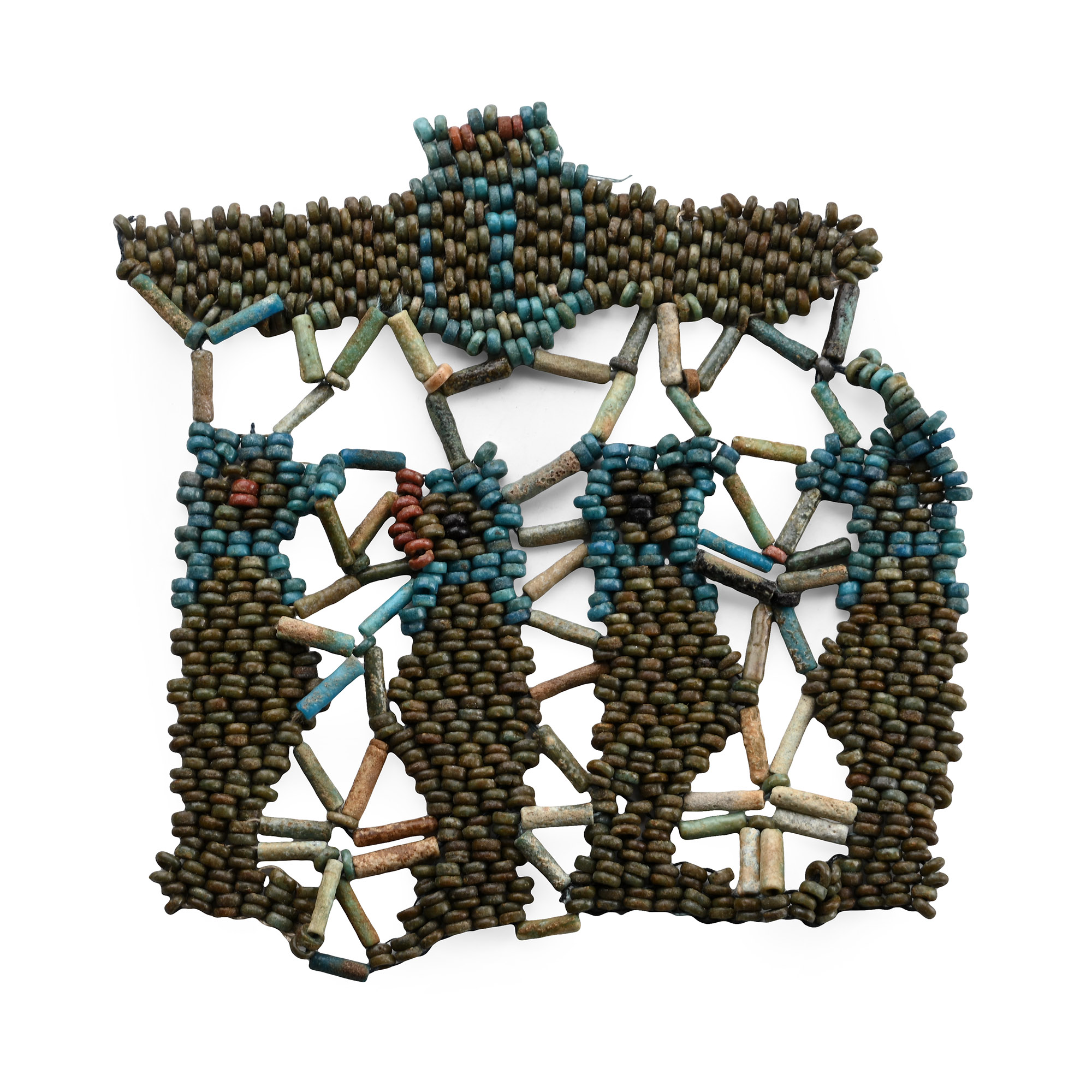
Egyptian Mummy Bead Winged Scarab and Four Sons of Horus
LATE PERIOD-PTOLEMAIC PERIOD, CIRCA 664-30 B.C.
4 1/8 in. (24.2 grams, 10.5 cm).
Comprising a beaded winged scarab with the Four Sons of Horus beneath.
ProvenanceEx Art Shop Windsor, 1990s.
From a private UK collection.
Winged scarabs were often used as funerary amulets and were believed to symbolise the deceased's rebirth and regeneration. The Four Sons of Horus were deities who safeguarded the deceased's internal organs. The human-headed Imsety protected the liver, the baboon-headed Hapy the lungs, the jackal-headed Duamutef the stomach, and the falcon-headed Qebehsenuef the intestines.
CONDITIONTimeLine Auctions follows a vetting process to ensure the authenticity and legality of all items, reinforcing our commitment to integrity and responsible trading. Each antiquity, antique, and coin lot undergoes thorough examination by a vetting committee of at least ten external specialists, professional trade association members, scientists, and archaeologists: Our Vetting Process
AUCTIONS:
TimeLine is a leading auction house specialising in antiquities, ancient art, collectables, natural history, coins, medals, and books. Our auctions offer museums, collectors, historians, and enthusiasts the opportunity to acquire unique and historically significant pieces.
LOT 0719
Egyptian Mummy Bead Winged Scarab and Four Sons of Horus
Estimate £100 - 140€120 - 160 (for guidance only)$140 - 190 (for guidance only)
Opening Bid
£50 (EUR 58; USD 68) +BP*
-
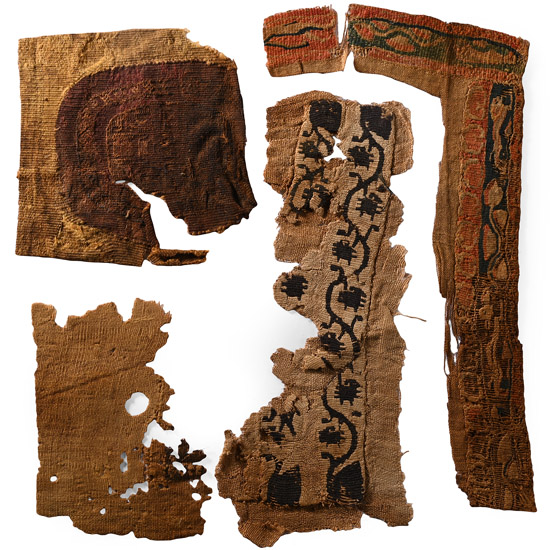
Egyptian Coptic Tunics Textile Fragments of Orbiculus and Segmenta with Animals and Geometric Decoration
Circa 4th-7th century A.D.Estimate: £70 - 90 (+bp*)
Bids: 1 | Current Bid: £5
Comprising a purple-red wool orbiculus on linen, decorated with geometric patterns; a clavus fragment featuring a double row of vegetal interlaces in natural and dark blue wool (S-twist); a fragment of green, red, and blue wool textile on linen, decorated with vegetal motifs; and an indistinct linen fragment with traces of geometric borders. 30 grams total, 13-27 cm
Acquired 1970s-1996. Property of a North American collector. London collection, 2016.
The fragments are decorative parts of tunics. These are fabrics of great decorative finesse, with some elements displaying an unusual and extremely well-preserved colour palette. The plant designs are related to the so-called Nilotic decorative pattern. -
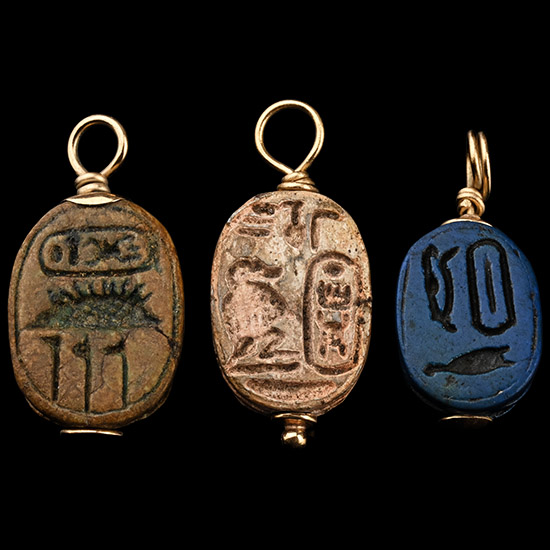
Egyptian Faience Scarabs with Gold Mounts
Late Period, 664-332 B.C. and laterEstimate: £400 - 600 (‡+bp*)
Opening Bid: £200
Comprising: a chestnut-coloured steatite scarab with a Thutmosis III cartouche and hieroglyphs on the underside; a tan-coloured faience scaraboid with a Thutmosis III cartouche on the convex obverse and the same cartouche with hieroglyphs, faced by a seated baboon, on the underside; offered with a modern blue scarab in a gold mount. 6.05 grams total, 22-25 mm
Private collection of Kal Noselson, New York, acquired between 1976 and the late 1990s; thence by descent. Accompanied by the collector's original inked images. -
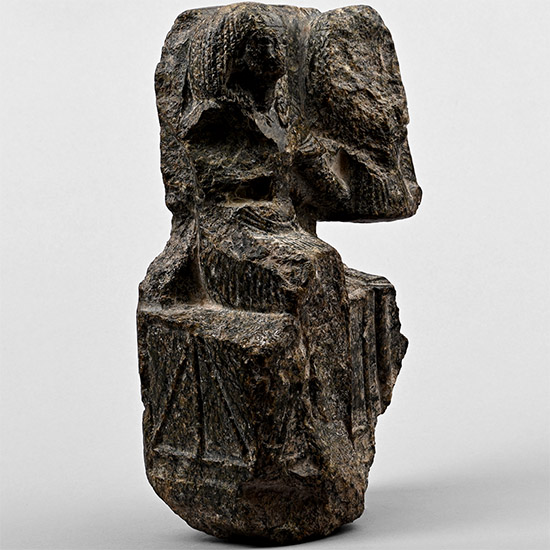
Egyptian Serpentine Statuette of a Seated Couple
New Kingdom, 19th Dynasty, 1290-1279 B.C.Estimate: £15,000 - 20,000 (‡+bp*)
Opening Bid: £8,200
Depicting a husband and wife seated side-by-side on chairs, each with an arm around the spouse's waist as a sign of intimacy; both wearing richly pleated robes, the man sporting a duplex wig and earrings, the woman with a longer wig with tassel ends, both composed of long rows of tight curls; the back slab with low-relief depictions of a standing man and woman facing each other, with traces of a hieroglyphic inscription; the surface slightly worn and abraded in places; reassembled from two parts. 3.89 kg, 24.5 cm
From the estate of the artist Margo Veillon (1907-2003), Lausanne, Switzerland.
The statuette is delicately sculpted and of high quality. The fine facial features of the official, the individual strands of the wigs and the pleats of the robes exhibit exquisite craftsmanship. Remarkably, the reverse of the sculpture is decorated with a fragmentarily preserved scene, most likely of the couple, with traces of inscription.
