
Loading, please wait...
LOT 0437
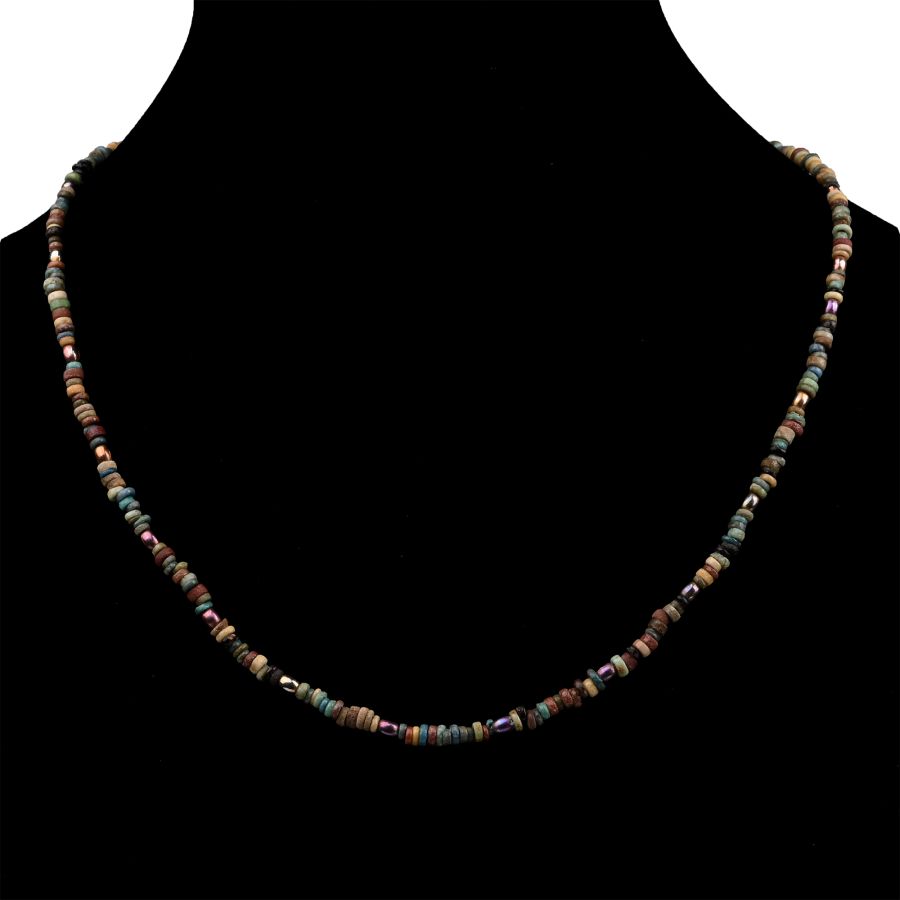
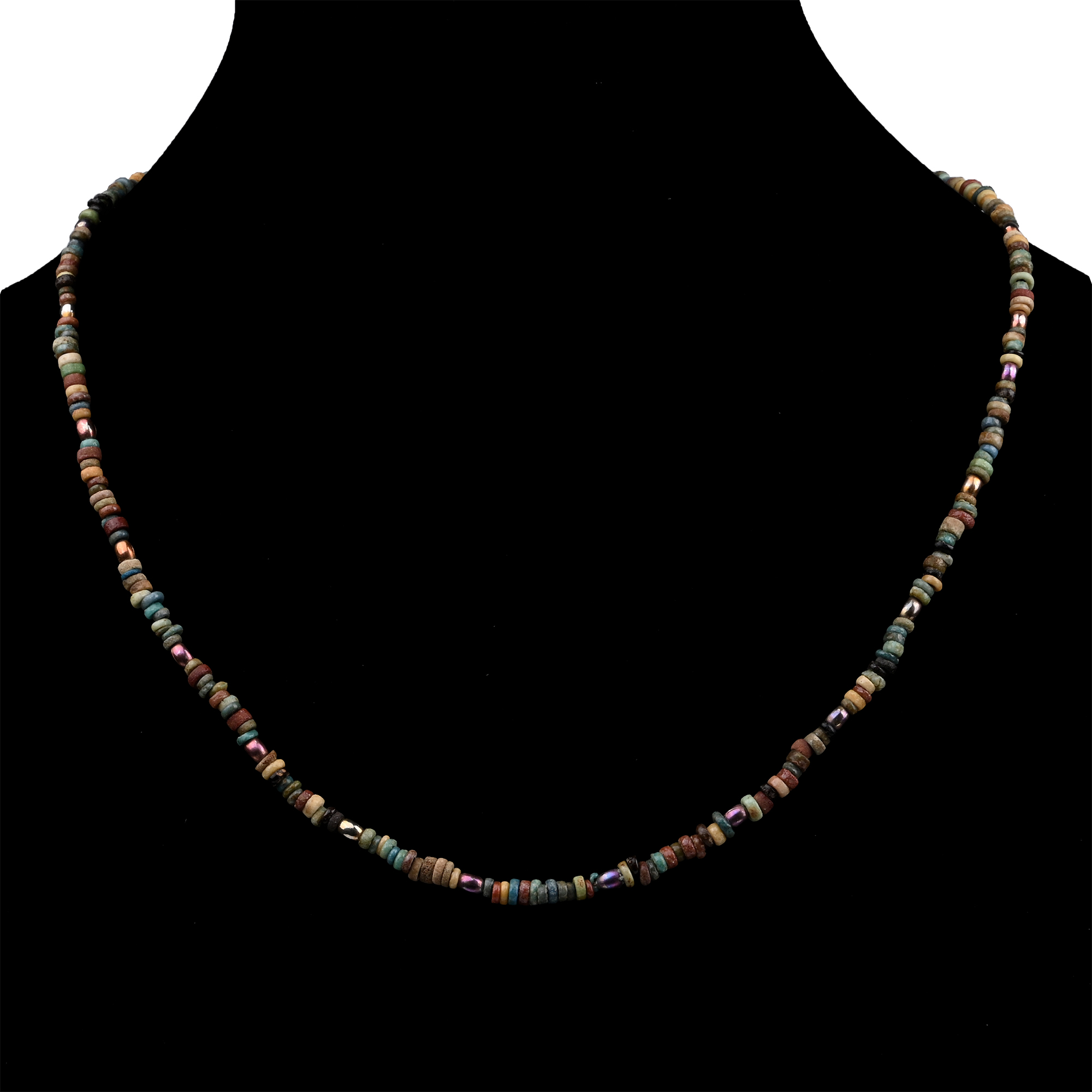
Egyptian Mummy Bead Necklace
LATE PERIOD, 664-332 B.C.
18 1/8 in. (8.48 grams, 46 cm long).
Composed of polychrome annular beads with modern metallic beads and a clasp, restrung. [No Reserve]
ProvenanceAcquired Town Hall Antiques, Market Place, Woburn, Bedfordshire, UK, on 2nd March 2001.
Property of a West Northamptonshire, UK, gentleman.
Accompanied by the original Town Hall Antiques invoice.
TimeLine Auctions follows a vetting process to ensure the authenticity and legality of all items, reinforcing our commitment to integrity and responsible trading. Each antiquity, antique, and coin lot undergoes thorough examination by a vetting committee of at least ten external specialists, professional trade association members, scientists, and archaeologists: Our Vetting Process
AUCTIONS:
TimeLine is a leading auction house specialising in antiquities, ancient art, collectables, natural history, coins, medals, and books. Our auctions offer museums, collectors, historians, and enthusiasts the opportunity to acquire unique and historically significant pieces.
-
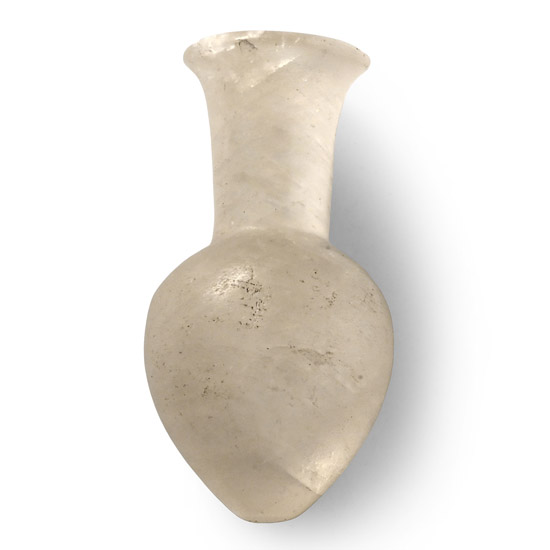
Egyptian Rock Crystal Piriform Vessel
Old Kingdom, 5th-6th Dynasty, circa 2500-2200 B.C.Estimate: £2,500 - 3,500 (+bp*)
Opening Bid: £1,200
Model amphora with trumpet-shaped mouth and piriform body; shallow socket above. 55 grams, 59 mm
with Archaeologia, Switzerland, before 1983. Ex private North American collection. London private collection, 2016. This lot has been checked against the Interpol Database of stolen works of art and is accompanied by a search certificate number no.13231-249997.
This model vessel was probably linked to the "Opening of the Mouth" ritual, which revived the deceased. -
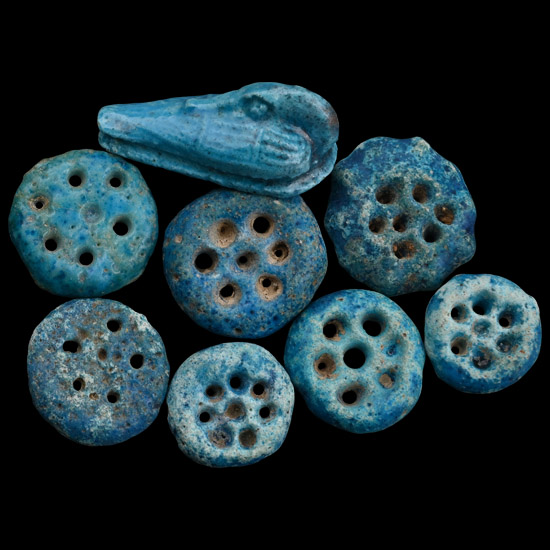
Egypto-Phoenician Faience Amulet Group
4th-2nd century B.C. and laterSold for (Inc. bp): £234
Comprising flat discs with perforations and a trussed duck with its head laid along its spine. 18.74 grams total, 15-30 mm
From the collection of a gentleman, acquired on the London art market in the 1990s. -
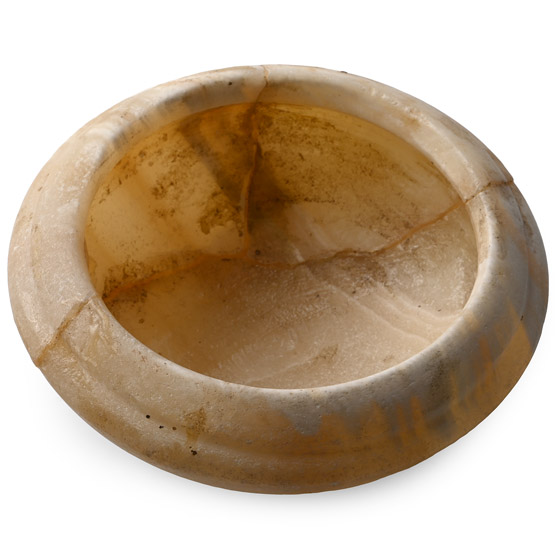
Egyptian Alabaster Bowl
2nd-1st millennium B.C.Sold for (Inc. bp): £260
Of conical profile with flattened base, carinated shoulder and stepped rounded rim. 369 grams, 11 cm wide
From a West Country, UK, collection, 1980-2020s.
