
Loading, please wait...

LOT 0696
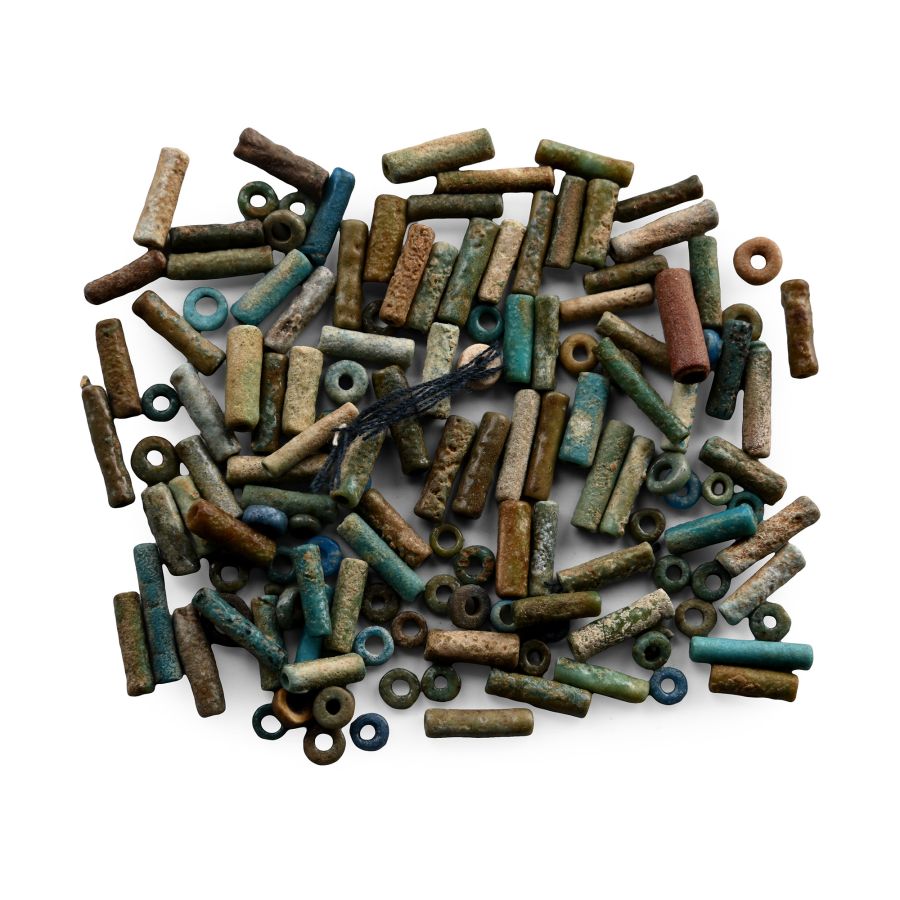
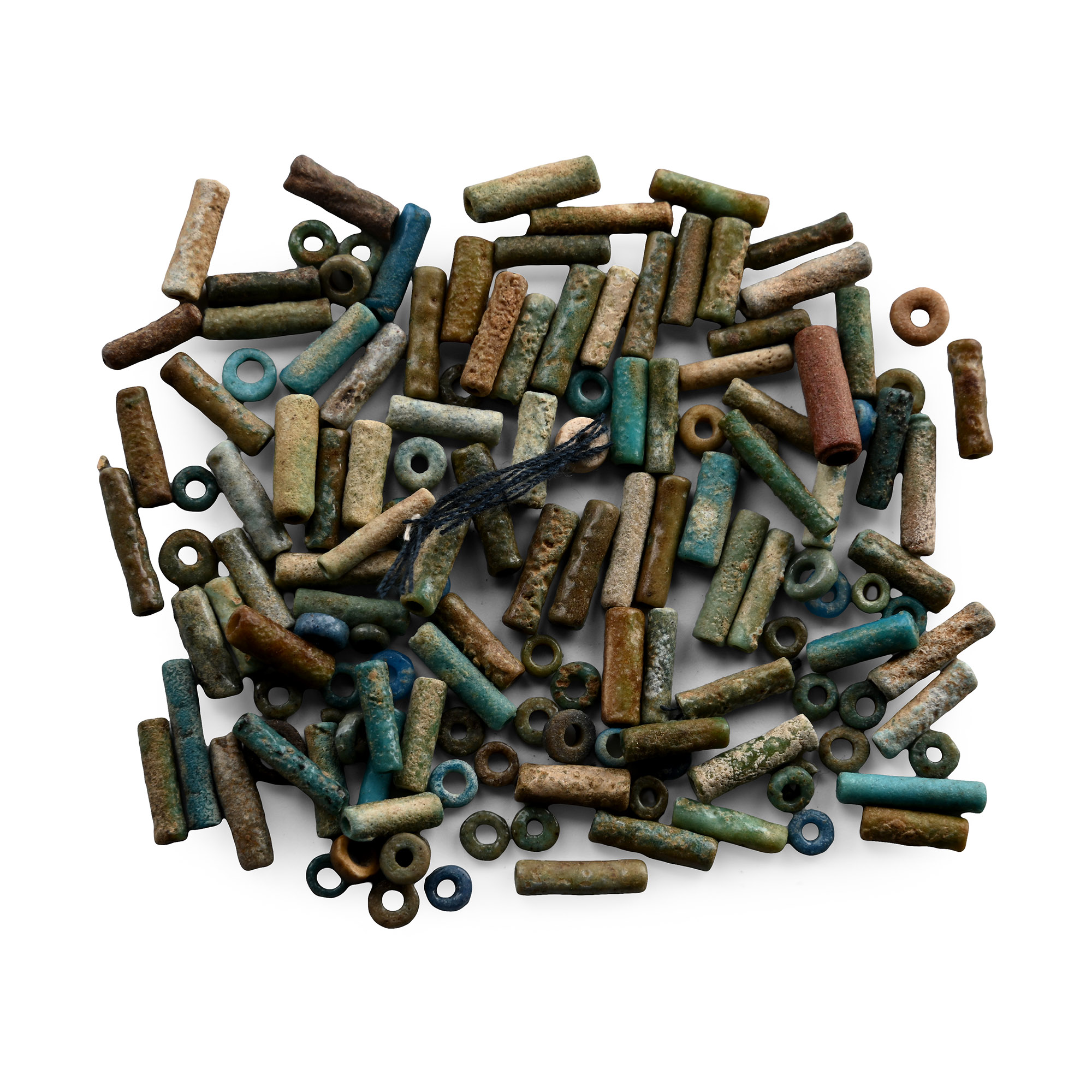
Egyptian Mummy Bead Group
LATE PERIOD-PTOLEMAIC PERIOD, CIRCA 664-30 B.C.
1/8 - 1/2 in. (7.4 grams total, 3-12 mm).
Group of tubular and annular beads in green, blue, and beige colours. [141, No Reserve]
ProvenanceEx Art Shop Windsor, 1990s.
From a private UK collection.
TimeLine Auctions follows a vetting process to ensure the authenticity and legality of all items, reinforcing our commitment to integrity and responsible trading. Each antiquity, antique, and coin lot undergoes thorough examination by a vetting committee of at least ten external specialists, professional trade association members, scientists, and archaeologists: Our Vetting Process
AUCTIONS:
TimeLine is a leading auction house specialising in antiquities, ancient art, collectables, natural history, coins, medals, and books. Our auctions offer museums, collectors, historians, and enthusiasts the opportunity to acquire unique and historically significant pieces.
LOT 0696
Egyptian Mummy Bead Group
Estimate £40 - 60€46 - 70 (for guidance only)$54 - 81 (for guidance only)
Opening Bid
£5 (EUR 6; USD 7) +BP*
-
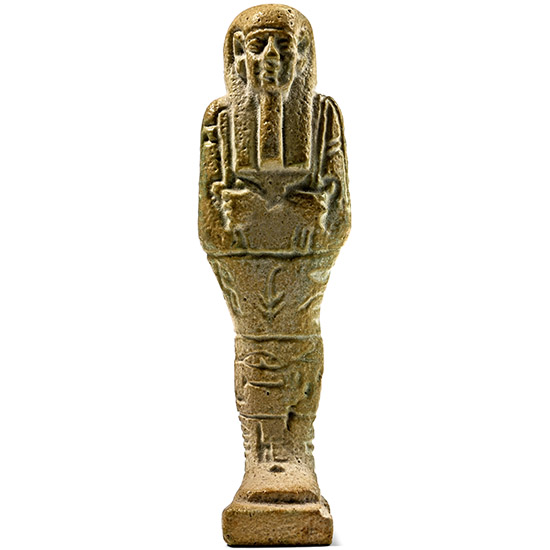
Egyptian Faience Shabti of the Overseer of Royal Children Horirani
Late Period, 26th Dynasty, 664-525 B.C.Estimate: £600 - 800 (+bp*)
Bids: 11 | Current Bid: £70
Mummiform figure standing on a square plinth, wearing a plain, long lappet wig and a long false beard, with a finely modelled face; crossed arms, the left hand holding a pick and the right a hoe and a cord belonging to a plain seed bag suspended over the left shoulder; three horizontal lines of hieroglyphic text on the lower body. 32.1 grams, 88 mm
Acquired from Portobello Road, 18th March 1967, for 30 shillings. From the private collection of Peter Clayton, FCILIP, Dip, Arch, FSA, FRNS, Hemel Hempstead, Hertfordshire, UK; formed since the late 1950s. Accompanied by an old handwritten information card by Peter Clayton, collection no.120. -
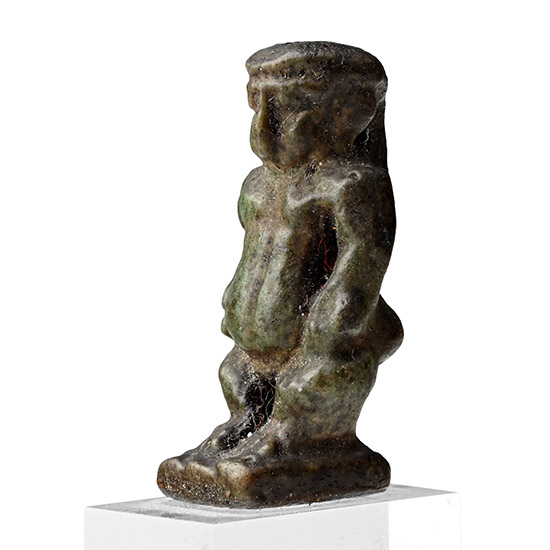
Egyptian Faience Amulet of Pataikos
Late Period, 664-332 B.C.Estimate: £100 - 140 (‡+bp*)
Opening Bid: £45
Depicted as a naked dwarf with short limbs; pierced to rear of the neck for use as an amulet; mounted on a display stand. 7.88 grams total, 40 mm high including stand
Ex Herbert A.Cahn, Basle, 1960s.
Herodotus mentions Pataikos as a dwarf-like depiction of Ptah, although the god’s ancient Egyptian name remains unclear. These small amulets symbolise Ptah’s immense magical power, which helps protect the wearer from dangerous creatures such as snakes and crocodiles. The deity’s role in the funerary sphere is explained in Spell 164 of the Book of the Dead, where Pataikos is used to safeguard the deceased’s heart from attacks by enemies and from bodily decay. -
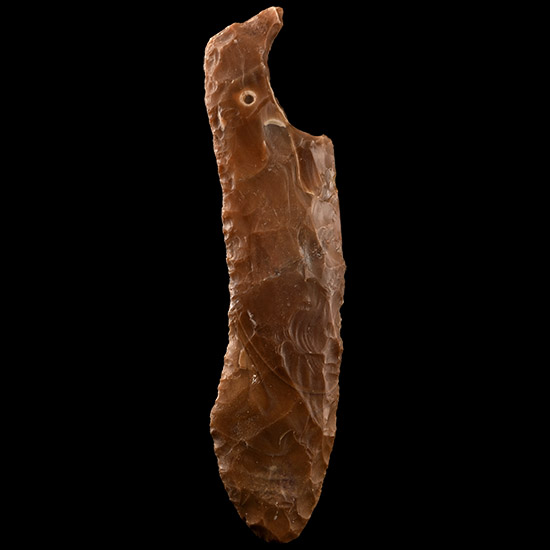
Large Egyptian Stone Age Knapped Flint Knife
Predynastic-Early Dynastic Period, Naqada II-2nd Dynasty, circa 3500-2686 B.C.Estimate: £1,000 - 1,400 (+bp*)
Opening Bid: £400
Large, expertly knapped bifacial tool with a distinct curved spine and relatively straight cutting edge, and an offset, integrated tang or handle section for hafting; the surface displays controlled flaking patterns typical of high-status ritual or funerary implements from this era. 99 grams, 19.8 cm
From the old English private collection of Mr P.D.R., acquired before 1980.
