
Loading, please wait...
LOT 0488
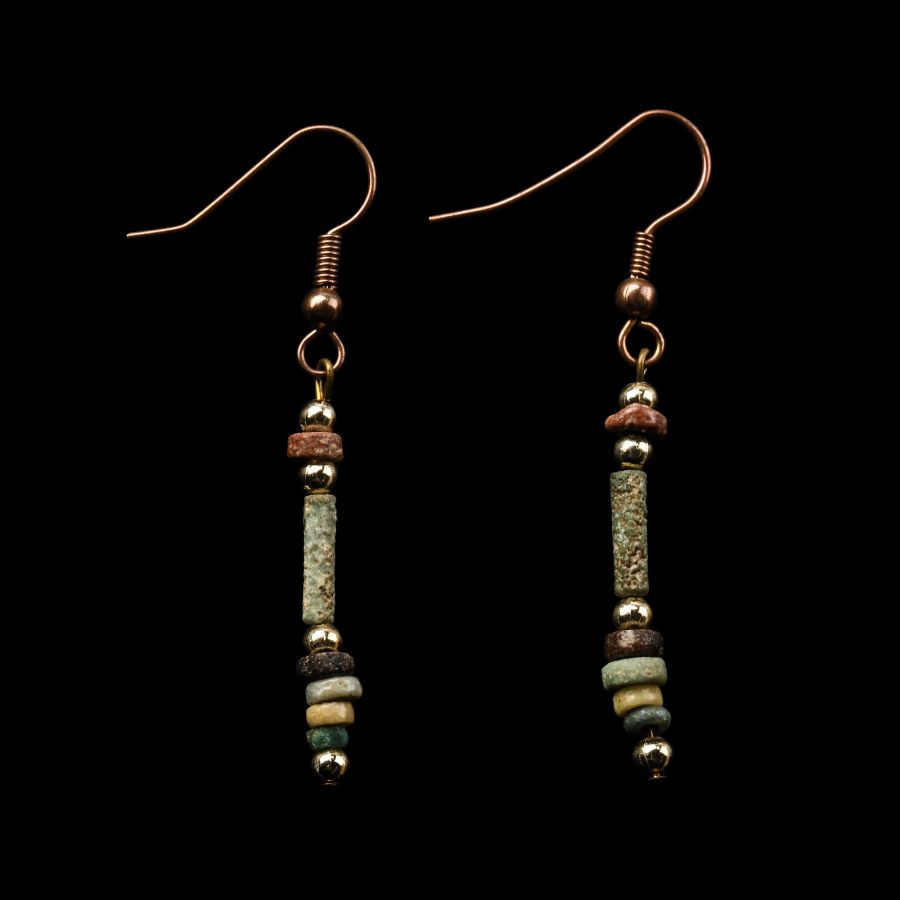
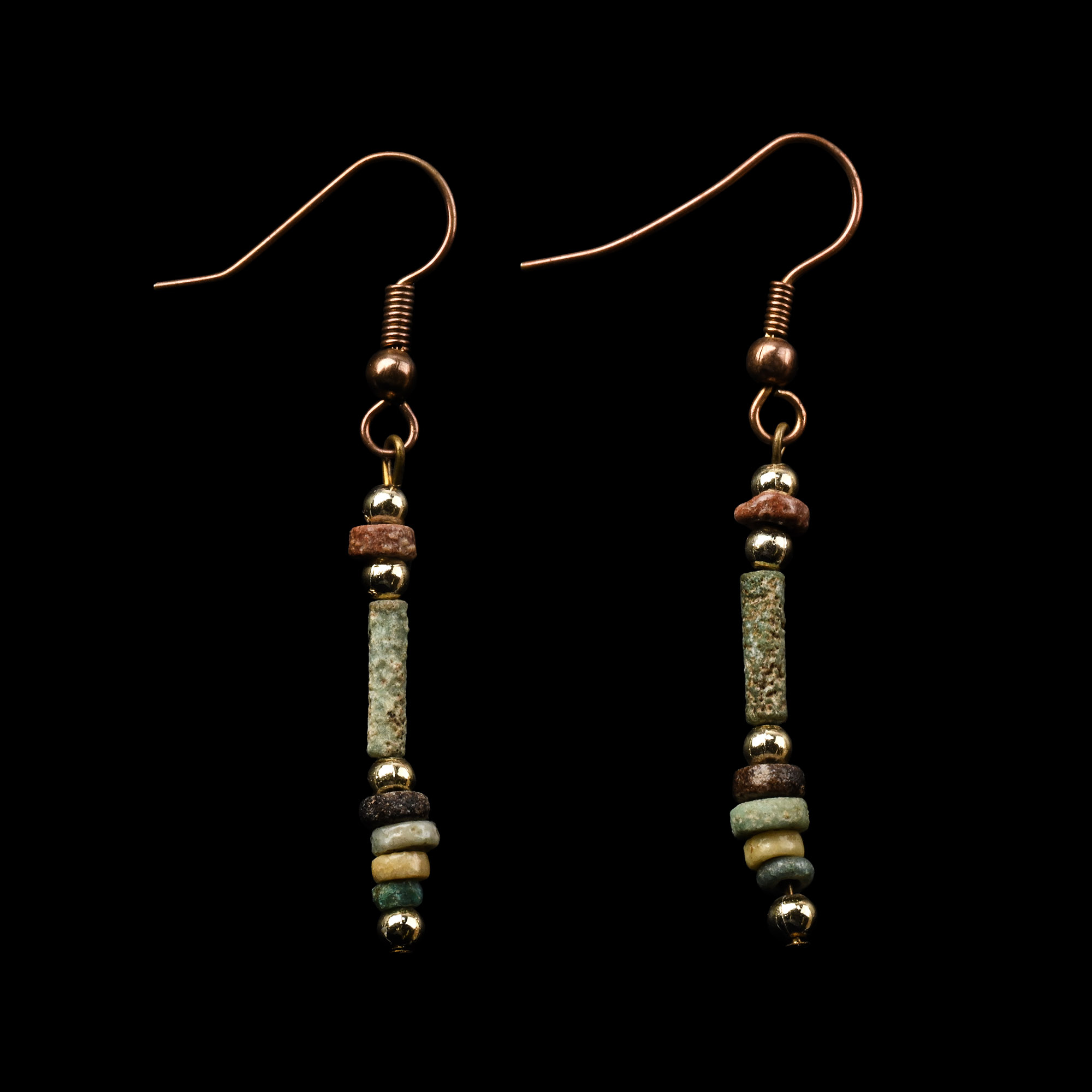
Egyptian Mummy Bead Earring Pair
LATE PERIOD, 664-332 B.C.
2 in. (1.27 grams total, 50-51 mm).
A matched pair formed of annular and cylindrical faience beads; modern hook and bar with gold-coloured beads. [2, No Reserve]
ProvenanceAcquired Town Hall Antiques, Market Place, Woburn, Bedfordshire, UK, on 2nd March 2001.
Property of a West Northamptonshire, UK, gentleman.
Accompanied by a copy of the original Town Hall Antiques invoice.
TimeLine Auctions follows a vetting process to ensure the authenticity and legality of all items, reinforcing our commitment to integrity and responsible trading. Each antiquity, antique, and coin lot undergoes thorough examination by a vetting committee of at least ten external specialists, professional trade association members, scientists, and archaeologists: Our Vetting Process
AUCTIONS:
TimeLine is a leading auction house specialising in antiquities, ancient art, collectables, natural history, coins, medals, and books. Our auctions offer museums, collectors, historians, and enthusiasts the opportunity to acquire unique and historically significant pieces.
-
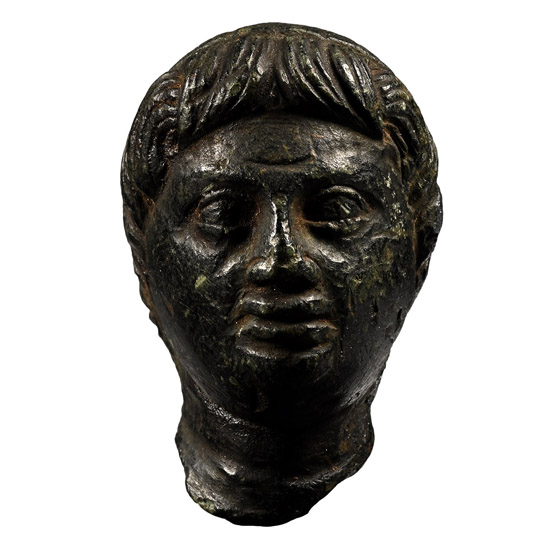
Egyptian Steatite Portrait of a Ptolemaic Prince
2nd-1st century B.C.Sold for (Inc. bp): £975
With a round face, large eyes, a narrow nose that broadens at the end, and full lips downturned at the corners; the forehead with a distinctive deep furrow above the brow; a narrow, twisted diadem encircling his wavy hair; mounted on a custom-made display stand. 84 grams total, 10 cm including stand
Private collection, Bern, Switzerland. with Galerie Rhéa, Zurich, Switzerland. This lot has been checked against the Interpol Database of stolen works of art and is accompanied by a search certificate number no.12631-236408.
The Greek hairstyle is a characteristic feature of Ptolemaic royal portraiture, as is the twisted diadem - a Greek interpretation of the Egyptian headband (the sšd) - which appears on several portrait heads of Ptolemaic boy-kings and princes. The distinctive furrow is intriguing, as it contrasts with the typically blemish-free physiognomy of most Ptolemaic royal sculpture. However, a similar furrow can be seen on the portrait head of a provincial governor from Dendera, dated to the 2nd century B.C. (Bothmer, B.V., Egyptian Sculpture of the Late Period 700 B.C. to A.D. 100, New York, 1960, pp. 144-143, pl. 112, nos. 301-302), which may indicate an artistic trend employed in high-status sculpture at that time. It has been suggested that small royal portrait heads, such as this example, may have served as votives. The lack of an Egyptian-style back pillar on this and similar pieces supports the possibility that they were inserted into statues made of different materials (Ashton, S.-A., Ptolemaic Royal Sculpture from Egypt, BAR International Series 923, Oxford, 2001, p.12). -
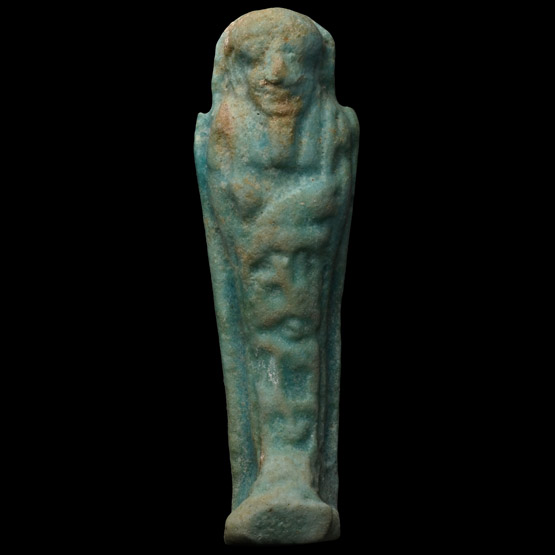
Egyptian Blue-Glazed Faience Shabti with Hieroglyphs
Late Period-Ptolemaic Period, 664-30 B.C.Sold for (Inc. bp): £144
Plano-convex in section with dorsal plaque, impressed hieroglyphs to lower body. 22.14 grams, 72 mm
Acquired on the UK art market before 2000. Property of an Essex, UK, gentleman. -
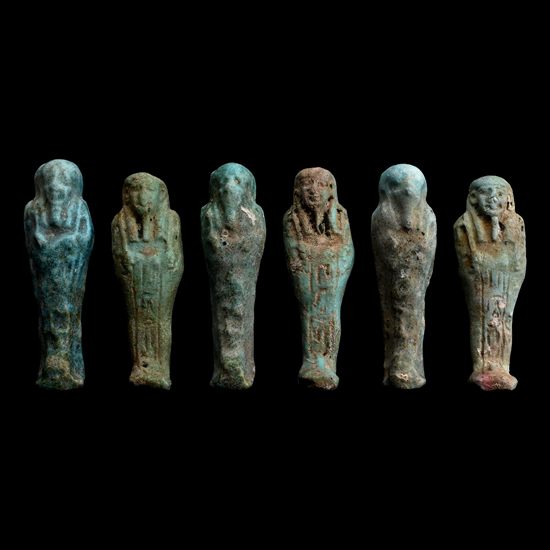
Egyptian Faience Shabti Collection
Late Period-Ptolemaic Period, 664-30 B.C.Sold for (Inc. bp): £468
Comprising mainly D-section types with moulded facial detailing some with vertical band of hieroglyphs to the lower body. 11.1 grams total, 67-72 mm
From the collection of a gentleman, acquired on the London art market in the 1990s.
