
Loading, please wait...
LOT 0482
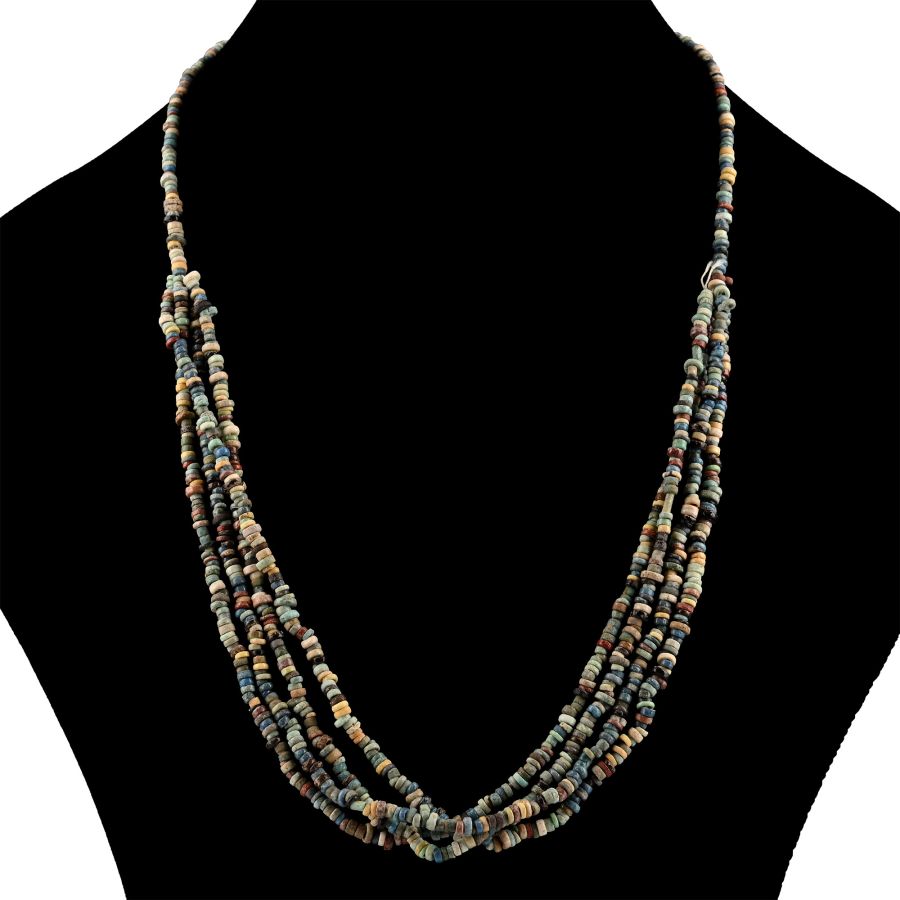
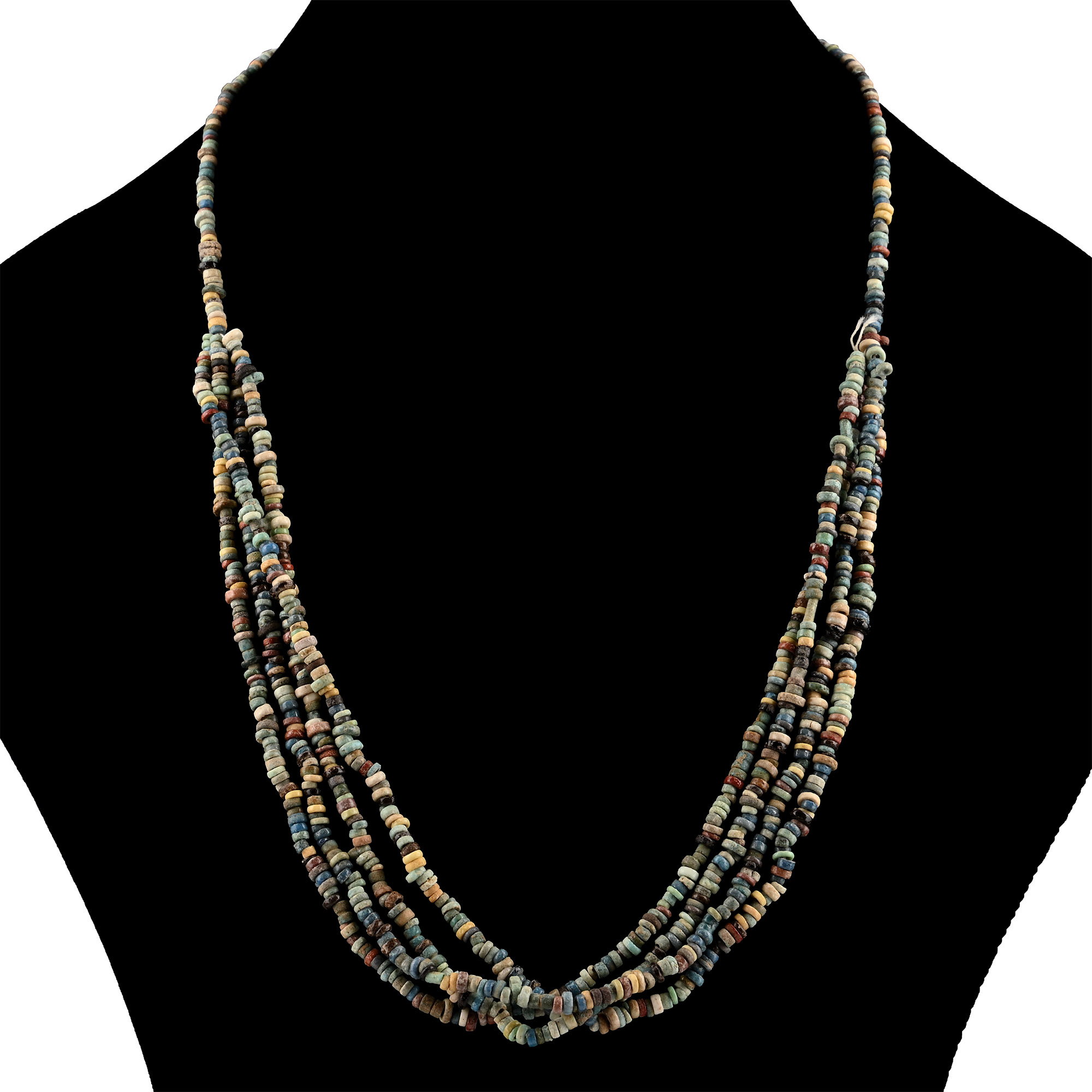
Egyptian Multi-Stranded Mummy Bead Necklace
LATE PERIOD, 664-332 B.C.
25 5/8 in. (25.5 grams, 65 cm).
Four-stranded designer necklace composed of polychrome beads of mainly disc and cylindrical types. [No Reserve]
ProvenanceAcquired before 1979.
From the private collection of Mr F.A., South Kensington, London, UK; thence by descent 2014.
Cf. similar specimens in faience at the Worcester Art Museum, inventory no.1925.539.
FootnotesFor thousands of years, artisans in Egypt created vibrant ceramics to echo the beauty of rare jewels. These ornaments were created with almost every material, colour, and texture imaginable, and they come from across Egypt and beyond: vibrant blue lapis lazuli from Afghanistan, glossy black obsidian from Turkey, and aqua-green turquoise from the Sinai. They were worn in life and, after death, they served as precious ornamentation for mummies.
CONDITIONTimeLine Auctions follows a vetting process to ensure the authenticity and legality of all items, reinforcing our commitment to integrity and responsible trading. Each antiquity, antique, and coin lot undergoes thorough examination by a vetting committee of at least ten external specialists, professional trade association members, scientists, and archaeologists: Our Vetting Process
AUCTIONS:
TimeLine is a leading auction house specialising in antiquities, ancient art, collectables, natural history, coins, medals, and books. Our auctions offer museums, collectors, historians, and enthusiasts the opportunity to acquire unique and historically significant pieces.
-
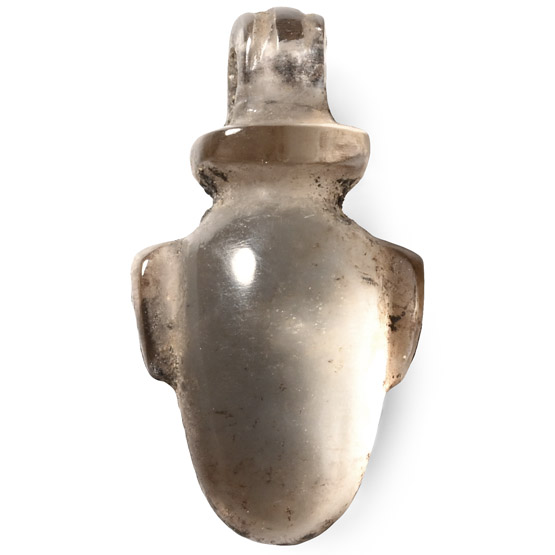
Egyptian Rock Crystal Heart Amulet
New Kingdom, 1550-1295 B.C.Sold for (Inc. bp): £416
Carved with lateral triangular lugs and ribbed bale. 0.9 grams, 17 mm
Ex early 20th century collection. -
.jpg)
Egyptian Faience Bes Amulet
Late Period, 664-332 B.C.Sold for (Inc. bp): £312
Rectangular plaque with a head of Bes modelled in low relief on one side and symbols on the reverse; pierced longitudinally. 3.54 grams, 20 mm
Ex early 20th century collection, London, UK.
From the New Kingdom onwards, Bes became one of ancient Egypt's most popular apotropaic deities. Despite his somewhat fearsome appearance, Bes served as the patron and protector of pregnant women and children, and was also believed to shield them from snakes. Double-sided Bes amulets appear during the Third Intermediate Period and continued into the Late Period, possibly perpetuated in part by Levantine demand (Cf. Pierrat-Bonnefois, G., ”Les questions d'identité culturelle que soulèvent certaines faïences de la première moitié du Ier millénaire”, dans Bonadies, L., Chirpanlieva, I., Guillon, É. (dir.), Les Phéniciens, les Puniques et les autres. Échanges et identités en Méditerranée ancienne, Orient & Méditerranée 31, Paris, 2019, pp. 58-60, fig. 5b). -
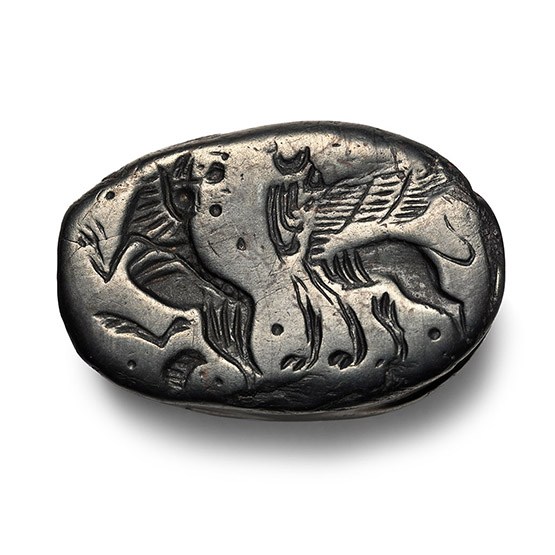
Egypto-Phoenician Haematite Scaraboid Seal
Circa 5th century B.C.Estimate: £2,000 - 3,000 (‡+bp*)
Opening Bid: £1,000
With rampant lion and statant winged gryphon. 8.35 grams, 21 mm
Acquired in the mid 1980s-1990s. Private collection, Switzerland, thence by descent. Private collection, since the late 1990s. Accompanied by a copy of an Art Loss Register certificate, no.3095.WW. This lot has been checked against the Interpol Database of stolen works of art and is accompanied by a search certificate number no.12715-234628.
