
Loading, please wait...


LOT 0408
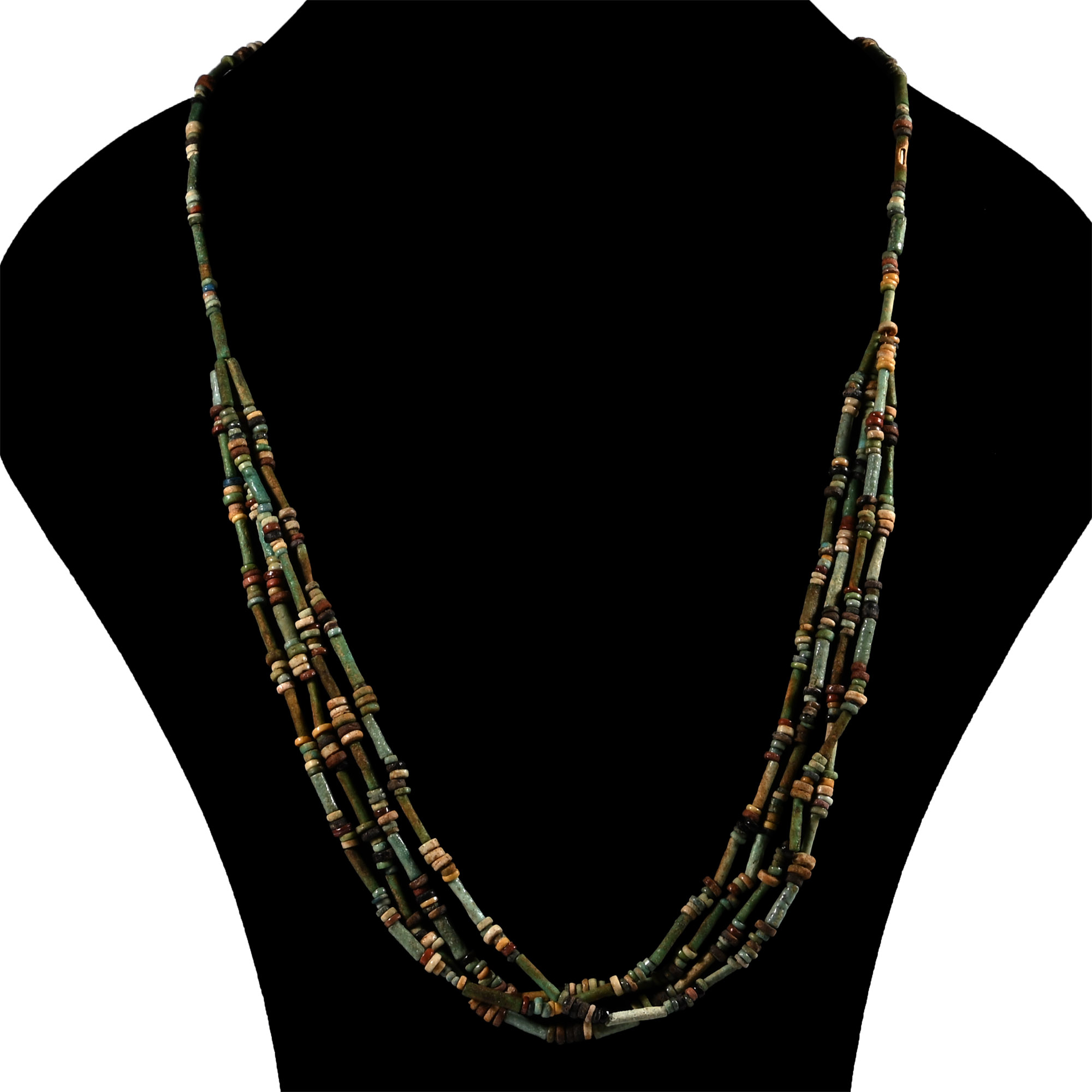
Egyptian Multi-Stranded Mummy Bead Necklace
LATE PERIOD, 664-332 B.C.
30 in. (26 grams, 76 cm).
Multi-stranded designer necklace composed of beads of mainly annular and cylindrical types. [No Reserve]
ProvenanceAcquired before 1979.
From the private collection of Mr F.A., South Kensington, London, UK; thence by descent 2014.
This lot is accompanied by an illustrated lot declaration signed by the Head of the Antiquities Department, Dr Raffaele D’Amato.
Cf. similar specimens in faience at the Worcester Art Museum, inventory no.1925.539.
FootnotesFor thousands of years, artisans in Egypt created vibrant ceramics to echo the beauty of rare jewels. These ornaments were created with almost every material, colour, and texture imaginable and they come from across Egypt and beyond: vibrant blue lapis lazuli from Afghanistan, glossy black obsidian from Turkey, and aqua-green turquoise from the Sinai. They were worn in life and, after death, they served as precious ornamentation for mummies.
CONDITIONTimeLine Auctions follows a vetting process to ensure the authenticity and legality of all items, reinforcing our commitment to integrity and responsible trading. Each antiquity, antique, and coin lot undergoes thorough examination by a vetting committee of at least ten external specialists, professional trade association members, scientists, and archaeologists: Our Vetting Process
AUCTIONS:
TimeLine is a leading auction house specialising in antiquities, ancient art, collectables, natural history, coins, medals, and books. Our auctions offer museums, collectors, historians, and enthusiasts the opportunity to acquire unique and historically significant pieces.
-
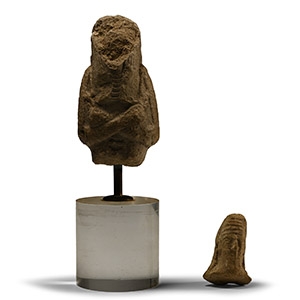
Egyptian Clay Shabti and Babylonian Head Group
Mid 1st millennium B.C.Sold for (Inc. bp): £85
Comprising: fragment of a shabti with tripartite wig and arms crossed at the chest, mounted on a custom-made stand; male head from a figurine. 268 grams total, 4.3-16.5 cm including stand
From an old English deceased estate. Property of a London, UK, collector. This lot is accompanied by an illustrated lot declaration signed by the Head of the Antiquities Department, Dr Raffaele D’Amato. -
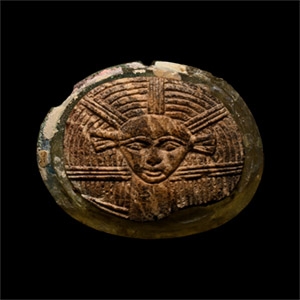
Egyptian Glass Ring with Hathor Cameo
Ptolemaic Period, circa 3rd century B.C.Sold for (Inc. bp): £3,900
Pale green transparent glass hoop with ellipsoid bezel, bevelled edge inlaid with a darker glass low-relief facing mask of the goddess Hathor with cow's ears and banded hairstyle. 17.65 grams, 39.43 mm overall, 20.51 mm internal diameter (approximate size British J, USA 4 3/4, Europe 8.69, Japan 8)
Acquired between 1965-2020. Private collection, London. This lot has been checked against the Interpol Database of stolen works of art and is accompanied by search certificate no.12484-229828. This lot has been cleared against the Art Loss Register database, and is accompanied by an illustrated lot declaration signed by the Head of the Antiquities Department, Dr Raffaele D’Amato.
Images of Hathor with a human face and cow ears combine her human and bovine aspects. She is shown with a serene human face, symbolising her nurturing nature, while the cow ears emphasise her roles in fertility and motherhood. Hathor was one of the most important deities in ancient Egypt, revered as the goddess of love, beauty, music, dance, fertility, and motherhood. She was also associated with joy, childbirth, and women’s health. Hathor was believed to protect and nurture, often depicted as a maternal figure. As such, she was closely linked with Isis. She was closely linked to the sun god Ra, acting as a cosmic force facilitating life. In funerary contexts, Hathor was also seen as a guide for the dead, helping them transition to the afterlife. Her multifaceted role made her one of Egypt's most widely worshipped goddesses. -
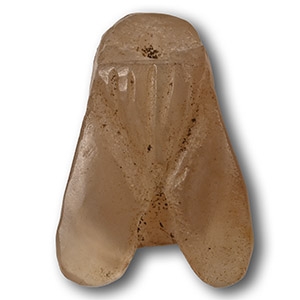
Egyptian Carnelian Fly Amulet
Late-Ptolemaic Period, 664-30 B.C.Sold for (Inc. bp): £52
Formed as a fly with long triangular wings on a tongue-shaped base. 0.65 grams, 12 mm
From an early 20th century collection. This lot is accompanied by an illustrated lot declaration signed by the Head of the Antiquities Department, Dr Raffaele D’Amato.
