
Loading, please wait...
LOT 0484
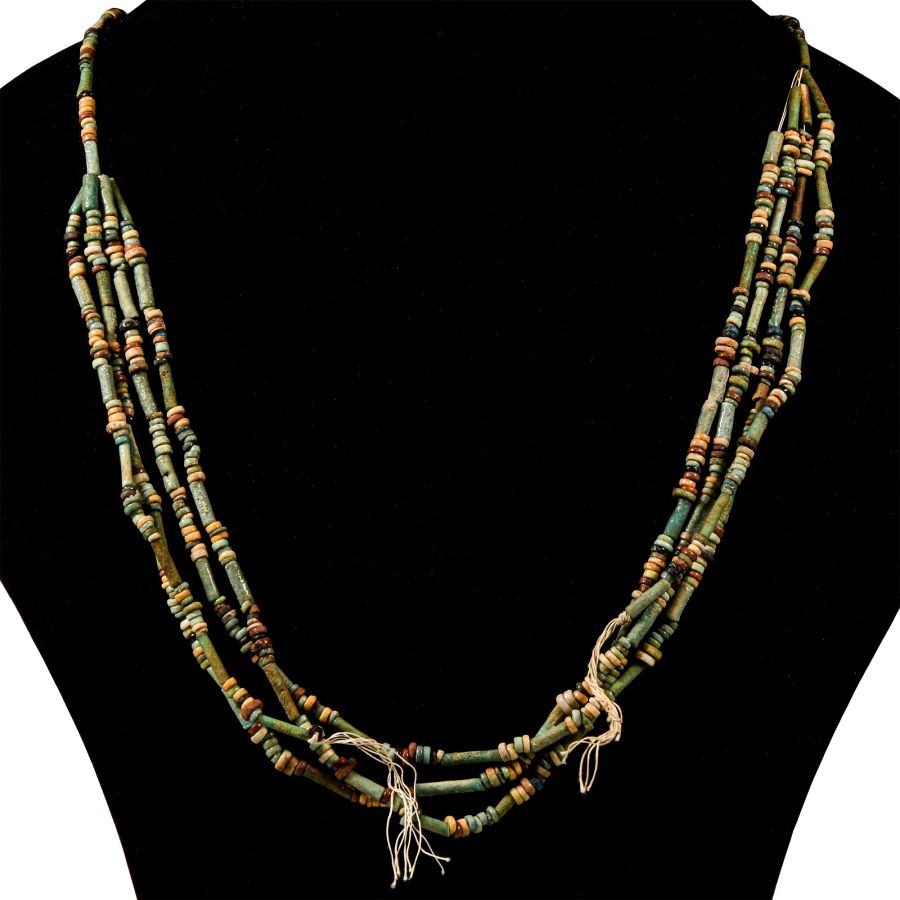
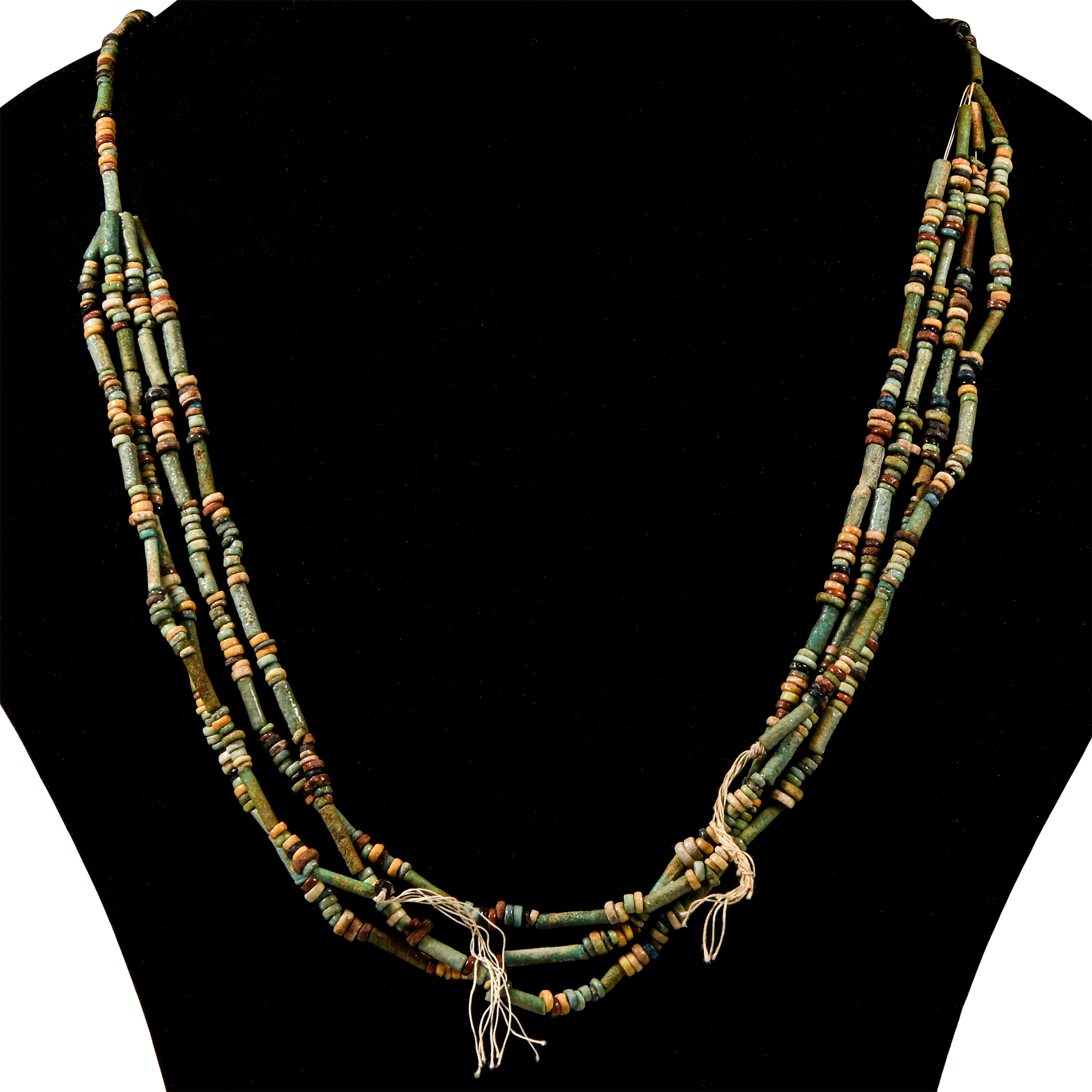
Egyptian Multi-Stranded Faience Mummy Bead Necklace
LATE PERIOD, 664-525 B.C.
29 1/2 in. (29.3 grams, 75 cm long).
Composed of polychrome composition beads of mainly annular and tubular types. [No Reserve]
ProvenanceAcquired before 1979.
From the private collection of Mr F. A., South Kensington, London, UK; thence by descent 2014.
See Derriks, C., Delvaux, L., Antiquités égyptiennes au Musée royal de Mariemont, Morlanwelz, 2009, pp.267-268, for similar.
CONDITIONTimeLine Auctions follows a vetting process to ensure the authenticity and legality of all items, reinforcing our commitment to integrity and responsible trading. Each antiquity, antique, and coin lot undergoes thorough examination by a vetting committee of at least ten external specialists, professional trade association members, scientists, and archaeologists: Our Vetting Process
AUCTIONS:
TimeLine is a leading auction house specialising in antiquities, ancient art, collectables, natural history, coins, medals, and books. Our auctions offer museums, collectors, historians, and enthusiasts the opportunity to acquire unique and historically significant pieces.
-
.jpg)
Large Egyptian Wooden Shabti with Hieroglyphs
New Kingdom, circa 1300 B.C.Sold for (Inc. bp): £1,170
Finely modelled with gesso surface and painted detailing; wearing lappet wig and broad collar, crossed hands holding agricultural implements; frontal column of hieroglyphic text dedicating the shabti to 'The illuminated, the Osiris, Renpt-nefer, true of voice'. 107 grams, 22 cm high
Part of an old collection dating back to the 19th century. Ex property of a gentleman, acquired before the 1980s. Private collection of Mr T.H., Norfolk, UK. -
.jpg)
Egyptian Relief with List of Offerings
Late Old Kingdom, 5th-6th Dynasty, 2495-2181 B.C.Sold for (Inc. bp): £18,200
A section of tomb wall with a central register of eight rectangular panels each containing hieroglyphs naming offerings for the deceased; the top and bottom groups of eight rectangular panels each contain a depiction of a kneeling offering-bearer; all carved in high-relief; mounted on a custom-made display stand. 40 kg total, 74 cm wide
North American gallery, 1981-1990s. with Pierre Bergé & Associés, Paris, France, 1st December 2007, lot 384. London collection, 2016. Accompanied by an academic report by Egyptologist Paul Whelan. This lot has been checked against the Interpol Database of stolen works of art and is accompanied by search certificate no.11942-209839. -
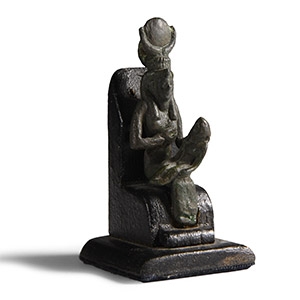
Egyptian Bronze Figure of Isis and Horus
Late Period, 664-332 B.C.Sold for (Inc. bp): £572
Amuletic pendant of seated Isis, wearing a cow's horn headdress with a solar disc, suckling the infant Horus with sidelock of youth, resting on her lap; mounted on a custom-made throne-shaped stand. 30.8 grams total, 65 mm high including stand
Acquired on the London art market prior to 2000. Private collection of Anthony Scammel (1937-2019). Ex Artemission, London SW5, UK. Private collection of Mr T.H., Norfolk, UK. Accompanied by a previous dealer's certificate of authenticity and invoice.
