
Loading, please wait...
LOT 0685
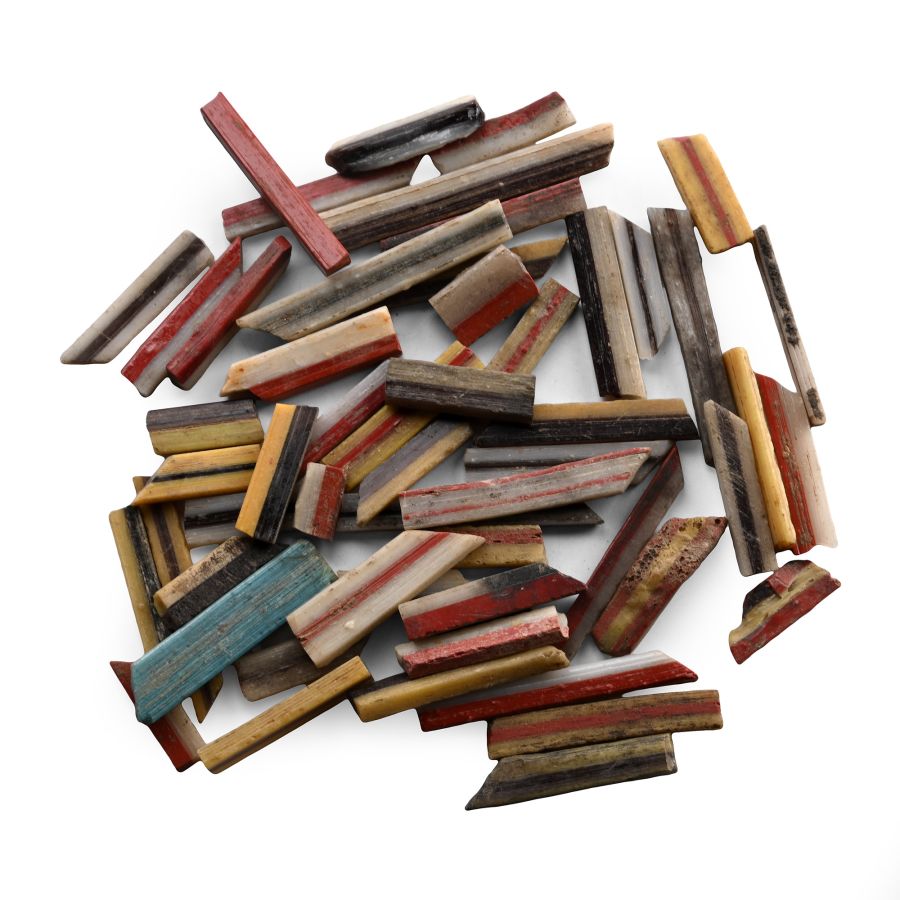
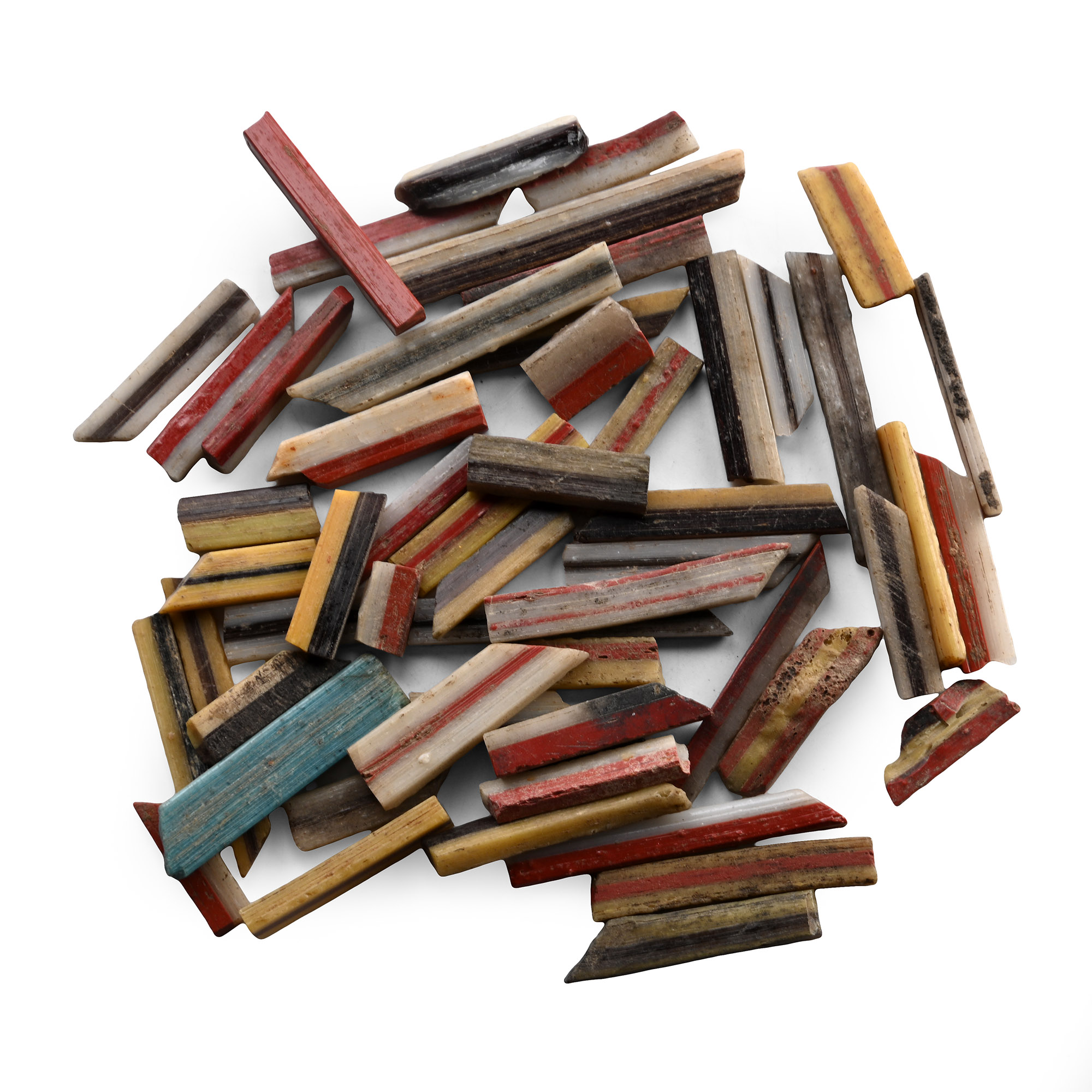
Egyptian Multi-Coloured Glass Inlay Collection
PTOLEMAIC-ROMAN PERIOD, 332 B.C.-323 A.D.
3/8 - 1 1/2 in. (29 grams total, 8-39 mm).
Mixed group of polychrome inlay strips in various sizes. [55]
ProvenanceEx Japanese gallery, 1970s.
From a London gallery collection, 2000s.
TimeLine Auctions follows a vetting process to ensure the authenticity and legality of all items, reinforcing our commitment to integrity and responsible trading. Each antiquity, antique, and coin lot undergoes thorough examination by a vetting committee of at least ten external specialists, professional trade association members, scientists, and archaeologists: Our Vetting Process
AUCTIONS:
TimeLine is a leading auction house specialising in antiquities, ancient art, collectables, natural history, coins, medals, and books. Our auctions offer museums, collectors, historians, and enthusiasts the opportunity to acquire unique and historically significant pieces.
LOT 0685
Egyptian Multi-Coloured Glass Inlay Collection
Estimate £500 - 700€580 - 810 (for guidance only)$680 - 950 (for guidance only)
Opening Bid
£250 (EUR 290; USD 338) +BP*
-
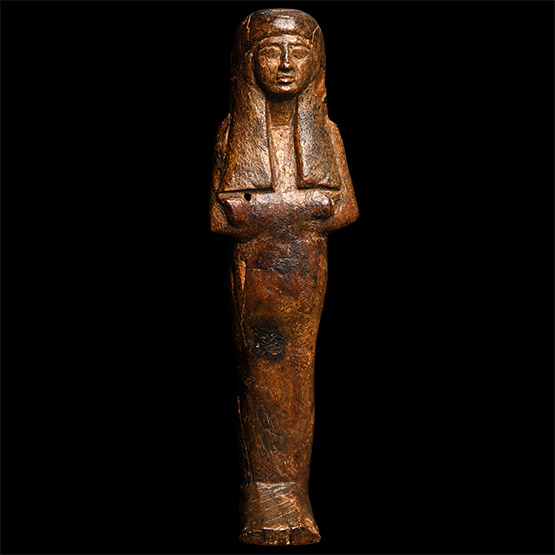
Egyptian Wooden Shabti
New Kingdom, 19th Dynasty, circa 1292-1185 B.C.Estimate: £5,000 - 7,000 (‡+bp*)
Opening Bid: £2,500
Carved in the round in a typical mummiform shape with hands crossed on the chest, wearing a tripartite wig with long, splayed lappets; collector's number to base 'E.803'. 140 grams, 21.5 cm
Ex R. Liechti (1934-2010) collection, Geneva, Switzerland. This lot has been checked against the Interpol Database of stolen works of art and is accompanied by a search certificate no.13228-249321.
A shabti (or ushabti) is a small funerary figurine from ancient Egyptian tombs, dating from around 2000 BCE to 30 BCE. Its main purpose was to assist the deceased in the afterlife by performing tasks like farming. Shabtis were often inscribed with a magical formula from the Book of the Dead to ensure they would come to life when needed. -
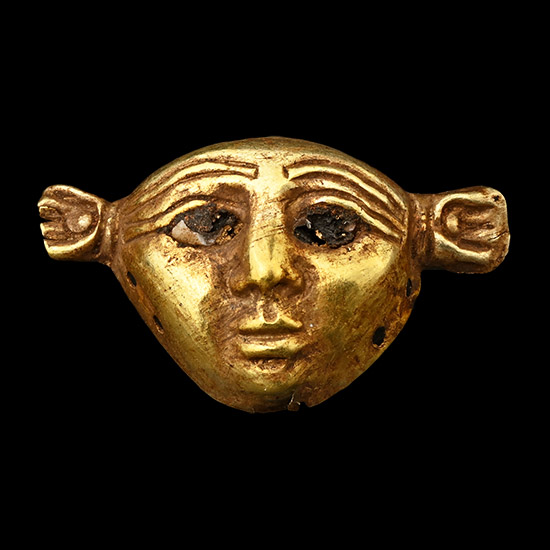
Egyptian Gold Hathor Face Mask
Late Period-Ptolemaic Period, circa 664-30 B.C.Estimate: £1,800 - 2,400 (+bp*)
Opening Bid: £900
Depicted as a woman's head with cow ears, her eyebrows and cosmetic lines carefully defined, with her eyes retaining traces of inlay. 0.96 grams, 28 mm
From the collection of a UK gentleman, London, UK, by descent from his family collection 1970s.
This particular appearance of Hathor, with a human head and cow ears, often appears on columns, particularly in temples associated with goddesses or mammisi-temples ("birth houses"), which were devoted to the birth of a goddess's divine son. The form also appears in the decoration of sistra used in Hathoric and birth-related rituals. Therefore, this diminutive gold image embodies Hathor's symbolic protective potency in all matters maternal. -
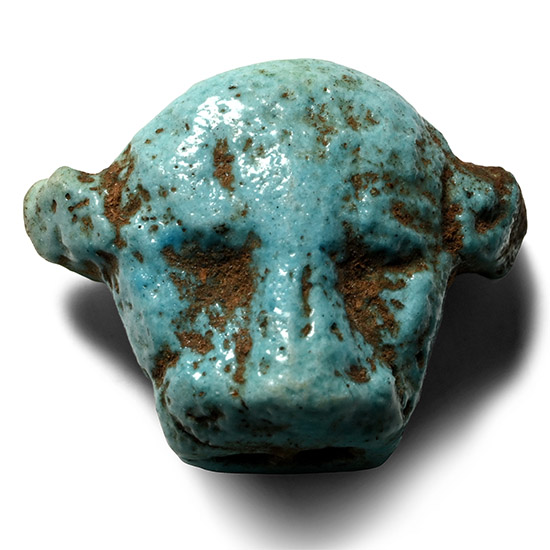
Large Egyptian Faience Lioness Head Amuletic Bead
New Kingdom, 1550-1069 B.C.Estimate: £150 - 200 (+bp*)
Bids: 1 | Current Bid: £75
Blue-glazed faience amuletic bead modelled as a lioness's head, pierced vertically through the nostrils with two holes. 2.5 grams, 21 mm
From a mid 20th century collection.
